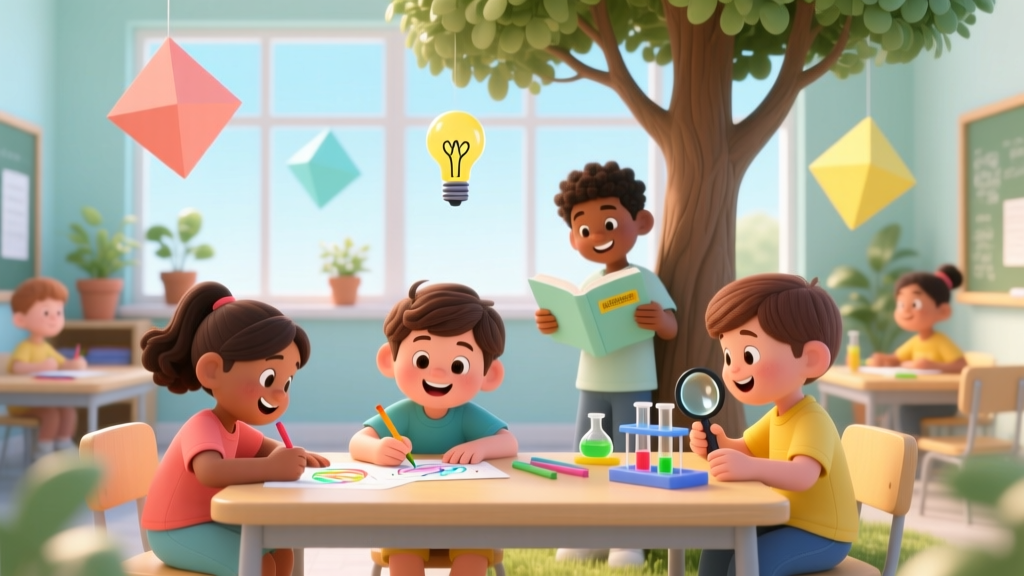
How Old Do Kids Learn to Read? (2026)
Why This Question Keeps Parents Up at Night — And Why It Shouldn’t
Every parent wonders: how old do kids learn to read? It’s one of the most searched developmental questions online — and for good reason. In an era of early academic pressure, kindergarten screenings, and viral social media comparisons, many caregivers feel anxious when their 5-year-old still points to letters instead of sounding out words — or relieved when their 4-year-old reads street signs fluently. But here’s what decades of child development research confirms: reading isn’t a switch that flips at a single age. It’s a layered, neurologically complex skill built over years — and the healthy range spans far wider than most assume.
According to the American Academy of Pediatrics (AAP), foundational literacy skills begin in infancy and unfold across predictable stages — but the age at which children *independently decode text* varies significantly based on language exposure, oral vocabulary, phonological awareness, home literacy environment, and even neurological wiring. In fact, large-scale studies like the NICHD Early Child Care Research Network show that only 17% of children meet all formal ‘reading readiness’ benchmarks by age 5 — yet over 95% achieve functional reading proficiency by age 8. That gap between expectation and reality is where unnecessary stress takes root.
The 4 Stages of Reading Development — Not Ages, But Progressions
Reading doesn’t emerge fully formed. It grows through interlocking cognitive, linguistic, and perceptual milestones. Renowned literacy researcher Dr. Linnea Ehri’s orthographic mapping theory explains how children move from rote memorization to automatic word recognition — and it happens in distinct phases, each with observable behaviors:
- Pre-Alphabetic Stage (Ages 0–4): Children recognize logos (‘McDonald’s’, ‘Disney’), enjoy rhymes and songs, point to pictures while ‘reading’ familiar books from memory, and may scribble or draw letter-like shapes. No letter-sound connection yet — but rich oral language is building critical neural pathways.
- Partial Alphabetic Stage (Ages 4–6): Kids start matching some letters to sounds (e.g., ‘B’ = /b/), recognize beginning sounds, and can spell simple words phonetically (‘HAP’ for ‘happy’). They often rely on visual cues (word shape, first letter) rather than full decoding.
- Full Alphabetic Stage (Ages 5–7): Children systematically apply phonics — blending CVC words (‘cat’, ‘sun’), segmenting sounds, and using spelling patterns. They read simple decodable texts with growing accuracy and begin self-correcting errors.
- Consolidated Alphabetic Stage (Ages 7–9+): Fluent readers recognize thousands of words automatically via orthographic mapping, read with expression and comprehension, infer meaning from context, and tackle multisyllabic words and complex syntax.
Crucially, these stages aren’t rigid calendars — they’re overlapping continua. A child might be partial alphabetic in decoding but consolidated in sight-word recognition for high-frequency words like ‘the’ or ‘and’. That’s normal. What matters isn’t speed, but the quality of support during each phase.
What the Data Really Says: Age Ranges, Not Deadlines
Let’s cut through the noise. Here’s what peer-reviewed research and national assessments reveal about typical reading acquisition timelines — and why averages mislead:
| Developmental Stage | Typical Age Range | Key Indicators (What to Observe) | Red Flags Requiring Support (Not Panic) |
|---|---|---|---|
| Emergent Literacy | Birth–4 years | Loves being read to; names letters; enjoys rhyming games; pretends to write; recognizes own name | No interest in books by age 3; cannot identify any letters by age 4; no response to rhymes or rhythm |
| Early Decoding | 5–6 years (K–1st grade) | Reads simple CVC words; uses picture clues + initial sound; spells phonetically; knows most letter sounds | Cannot blend 3 sounds into a word (e.g., /c/ /a/ /t/ → ‘cat’) by mid-1st grade; avoids reading aloud; confuses similar-looking letters (b/d/p/q) consistently |
| Fluent Word Recognition | 6–8 years (1st–3rd grade) | Reads grade-level texts with >95% accuracy; self-corrects errors; reads with expression; comprehends main ideas | Still relying heavily on finger-pointing or picture guessing beyond 2nd grade; slow, labored reading with frequent omissions; inability to retell a simple story |
| Comprehension & Fluency | 7–10+ years (3rd grade+) | Infers character motives; summarizes chapters; connects text to personal experience; reads silently with stamina | Cannot answer basic ‘who/what/where’ questions after listening to a short passage; struggles to follow multi-step directions; avoids reading for pleasure entirely |
Note: These ranges reflect data from the National Assessment of Educational Progress (NAEP), the Early Childhood Longitudinal Study (ECLS-K), and meta-analyses published in Reading Research Quarterly. Importantly, the ‘typical’ range for independent reading (defined as decoding unfamiliar words with >90% accuracy) is 5.5 to 7.5 years — a full two-year window. Yet standardized curricula often assume mastery by age 6, creating artificial pressure.
What Actually Moves the Needle — Beyond Flashcards and Apps
Parents often ask, “What should I do *right now*?” The answer isn’t more worksheets — it’s strategic, joyful interaction that builds the invisible scaffolding of literacy. Here’s what evidence shows works — and what doesn’t:
- Do: Prioritize Oral Language Richness — Vocabulary size at age 3 predicts reading comprehension at age 11 (Hart & Risley, 1995). Talk constantly: describe textures (“This dough is sticky and cool”), narrate routines (“Now we’re pouring the milk — splash! — see how it flows?”), ask open-ended questions (“What do you think the squirrel will do next?”).
- Don’t: Drill Phonics in Isolation — While phonemic awareness is essential, teaching letter sounds without meaningful context creates fragile learning. Instead, play sound games: “I’m thinking of something that starts with /m/… it’s soft, you sleep on it… mattress!”
- Do: Read Aloud Daily — With Intention — Not just bedtime stories. Pause to predict (“What might happen when she opens the door?”), clarify vocabulary (“‘Perilous’ means dangerous — like walking across ice”), and connect to life (“Remember when we saw geese flying south? That’s migration!”). This builds comprehension architecture.
- Don’t: Correct Every Mistake — Over-correction shuts down risk-taking. If your child says “house” for “home”, ask gently: “Does that make sense? Let’s look at the picture — what’s happening there?” Focus on meaning first, accuracy second.
- Do: Embrace ‘Invented Spelling’ — When your 5-year-old writes “I LUV DAWG”, celebrate the phonetic logic (L-U-V = love; D-A-W-G = dog). This shows active sound-symbol mapping — a stronger predictor of later spelling success than perfect early spelling.
A real-world example: Maya, a preschool teacher in Portland, tracked her students’ literacy growth for 8 years. Her class used no formal reading curriculum before kindergarten — just daily read-alouds, dramatic play with environmental print (menus, signs), and shared writing (“Let’s make a list for our garden!”). By 2nd grade, 92% scored at or above grade level on state assessments — with zero ‘late bloomers’ requiring intervention. Her secret? “We never taught reading. We taught children to be curious, articulate, and confident with language.”
When to Seek Support — And How to Navigate It Gracefully
There’s a crucial difference between developmental variation and persistent difficulty. According to the International Dyslexia Association, 15–20% of people have dyslexia — a neurobiological condition affecting phonological processing. Early signs appear long before formal reading begins:
- Difficulty learning nursery rhymes or remembering song lyrics by age 4
- Struggling to name letters quickly (even if known) by age 5
- Consistently confusing similar-sounding words (“aminal” for “animal”)
- Family history of reading challenges (dyslexia is highly heritable)
If you notice several of these, don’t wait. The AAP recommends universal screening for phonological awareness by the end of kindergarten — but proactive parents can request informal assessments earlier. Key: Seek evaluation, not diagnosis. Start with your child’s pediatrician (who can rule out hearing/vision issues), then request a school-based screening or consult a certified reading specialist (look for credentials from the International Dyslexia Association or Wilson Reading System).
Here’s what effective support looks like: explicit, systematic, multisensory instruction (like Orton-Gillingham), delivered 3–4x/week for 30 minutes. Research shows that children receiving such intervention before 2nd grade close the gap 85% of the time — but delay reduces efficacy dramatically. As Dr. Sally Shaywitz, co-director of the Yale Center for Dyslexia & Creativity, states: “Dyslexia is not a vision problem. It’s not laziness. It’s a difference in brain wiring — and with the right approach, it’s highly remediable.”
Frequently Asked Questions
Can a child learn to read at age 3 or 4 — and is that ‘advanced’?
Yes — some children do decode simple words early (often called ‘hyperlexia’), especially with strong oral language and high motivation. But early reading isn’t inherently ‘better’. Studies tracking early readers show no long-term academic advantage — and sometimes increased anxiety if pressured to perform. What matters is whether the child understands what they read, not just decodes symbols. A 4-year-old who reads ‘STOP’ on a sign but can’t explain why we stop is demonstrating visual memory, not comprehension.
My child is 7 and still struggling — is it too late to catch up?
Absolutely not. Neuroplasticity remains strong through adolescence. Children who receive evidence-based intervention in 2nd or 3rd grade still make significant gains — though it may take longer and require more intensive support. The key is accurate assessment (not labeling) and consistent, structured practice. Many successful adults with dyslexia (like Steven Spielberg or Whoopi Goldberg) didn’t read fluently until middle school — and thrived with appropriate accommodations.
Should I use reading apps or tablets for my preschooler?
Use them sparingly — and only as supplements to human interaction. A landmark 2022 study in Pediatrics found toddlers who used literacy apps for >15 mins/day without adult co-engagement showed lower vocabulary growth than peers who had book-based interactions. Effective tech use means sitting side-by-side: pausing animations to ask questions, tracing letters together, or discussing characters. Avoid passive watching or autoplay features.
Does bilingualism delay reading?
No — but it changes the timeline. Bilingual children often develop literacy in both languages simultaneously, which requires more cognitive flexibility. They may temporarily lag in English-only assessments if school instruction is monolingual, but their overall metalinguistic awareness (understanding how language works) is typically stronger. Best practice: support literacy in the home language first — strong foundation in one language accelerates learning in another.
Common Myths About Learning to Read
Myth #1: “If they’re not reading by 6, they’ll fall behind forever.”
Reality: The ‘Matthew Effect’ (where early advantages compound) applies most strongly to children without access to quality instruction — not innate ability. With responsive teaching, children who begin reading at 7 or 8 often surpass early readers in comprehension and critical thinking by upper elementary, because they’ve developed deeper language foundations.
Myth #2: “Phonics is the only way — or the whole way.”
Reality: Balanced literacy integrates phonics, vocabulary, fluency, comprehension, and motivation. Over-emphasizing phonics without rich text exposure produces ‘word callers’ — kids who decode perfectly but understand little. Conversely, whole-language approaches without explicit sound instruction leave gaps for many learners. The science of reading supports integration — not ideology.
Related Topics (Internal Link Suggestions)
- Phonemic Awareness Activities for Preschoolers — suggested anchor text: "fun phonemic awareness games for 3- to 5-year-olds"
- Best Books to Read Aloud Before Kindergarten — suggested anchor text: "top 25 read-aloud books that build early literacy"
- Signs of Dyslexia in Young Children — suggested anchor text: "early dyslexia indicators by age"
- How to Choose a Reading Curriculum for Homeschooling — suggested anchor text: "evidence-based homeschool reading programs"
- Screen Time Guidelines for Preschoolers — suggested anchor text: "healthy screen time limits for language development"
Your Next Step: Shift From Worry to Wonder
So — how old do kids learn to read? The answer isn’t a number. It’s a process — one that unfolds uniquely for every child, shaped by relationship, language, and joy. Instead of asking “Is my child on track?”, try asking: “What did my child notice in that story today? What word made them giggle? Where did they pause to wonder?” Those moments — the pointing, the questioning, the retelling — are the real milestones. They signal engagement, not just achievement. Your role isn’t to rush the journey, but to light the path with curiosity, patience, and unwavering belief. Start tonight: pick one book you loved as a child, read it aloud slowly, and watch your child’s eyes — not for decoding, but for delight. That’s where literacy truly begins.
More Articles
 What Did Kanye West Say About Jay Z Kids?
 TikTok for Kids 2026: Safety, Risks & Parent Tips
 How Much to Pay a Babysitter for 3 Kids (2026)
 How to Teach Kids About God (2026)
 Purpose of City Government for Kids: A Parent’s Guide
 When Can Kids Write Their Name? (2026) | 5 Gentle Ways
 Why Autistic Kids Spin: The Science & Support Guide
 Homeschool Multiple Kids Without Losing Your Mind
 Hibbett Kids Legitimacy: Verified Safety for Parents (2026)
 What Age Can Kids Brush Their Own Teeth (2026)