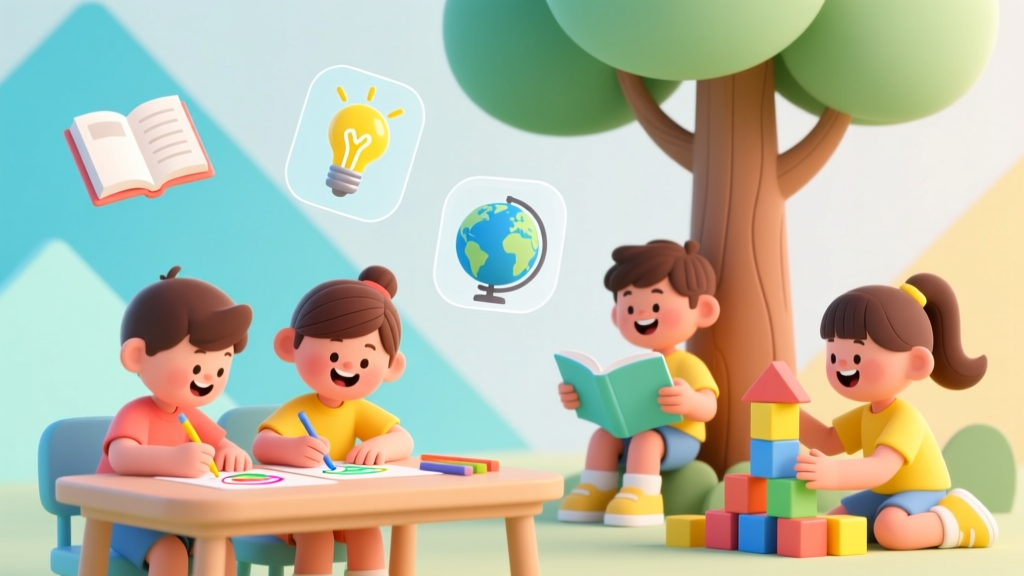
Preschool Age Requirements: Readiness Over Birthdates
Why 'How Old Do Kids Go to Preschool?' Is the Wrong Question to Start With
If you’ve ever typed how old do kids go to preschool into a search bar while scrolling at 2 a.m. — clutching a lukewarm mug of tea and wondering whether your 3-year-old’s refusal to sit still for circle time means they’re ‘behind’ — you’re not alone. But here’s the truth most school brochures won’t lead with: chronological age is only one piece of a much richer puzzle. In fact, according to the American Academy of Pediatrics (AAP), over 68% of preschool admissions decisions hinge more heavily on social-emotional readiness, language comprehension, and self-regulation than on birthdate alone. That’s why this guide doesn’t just tell you ‘most kids start at 3 or 4’ — it helps you assess *your* child’s unique readiness, decode confusing district policies, avoid common enrollment pitfalls, and make a confident, evidence-informed choice — whether that means enrolling this fall… or waiting six months.
What ‘Preschool Age’ Really Means: Beyond the Calendar
The phrase ‘how old do kids go to preschool’ sounds simple — but in practice, it’s layered with policy, pedagogy, and profound developmental science. Most U.S. preschools accept children between ages 2.5 and 5 — yet that 30-month range masks critical variation. A child who turns 3 in August may be developmentally aligned with peers starting at 3 years 1 month, while another turning 3 in July could still struggle with toileting independence or sustained attention — both non-negotiables in many structured programs.
Let’s demystify the numbers. Public pre-K programs (like those funded through Head Start or state initiatives) often have strict cutoff dates — commonly September 1st or December 1st — meaning a child must turn 3 or 4 *by that date* to qualify for that academic year. Private and faith-based preschools tend to be more flexible, sometimes accepting children as young as 2 years 6 months if they meet health, safety, and behavioral benchmarks. Montessori programs, meanwhile, often group by 3-year cycles (e.g., 3–6 year olds together), prioritizing mixed-age learning over rigid age bands.
But here’s where developmental science intervenes: research from the National Institute for Early Education Research (NIEER) shows children who enter preschool *after* demonstrating baseline skills in four key domains — communication, self-help, social interaction, and emotional regulation — show significantly higher gains in kindergarten readiness than peers enrolled solely based on age. In other words: starting ‘on time’ matters less than starting ‘ready.’
7 Non-Negotiable Readiness Indicators (Backed by Early Childhood Specialists)
Before you sign an enrollment form, ask yourself these seven questions — each grounded in the AAP’s Developmental Surveillance and Screening Guidelines and validated by decades of early education research:
- Toileting Independence: Can your child communicate the need to use the bathroom, pull pants up/down unassisted, and wash hands with minimal help? (Note: Diapered children are rarely accepted in full-day programs — even if they’re 4.)
- Separation Tolerance: Can they spend 30+ minutes away from you without prolonged distress? Try a trial playdate with another caregiver — observe for more than 10 minutes.
- Following Two-Step Directions: ‘Put the book on the shelf, then sit on the rug.’ If they consistently miss the second step, their working memory may not yet support classroom routines.
- Expressive Language: Do they use 3–5 word phrases regularly? Can they name basic emotions (‘happy,’ ‘mad’) and describe simple needs (‘I’m hungry,’ ‘My shoe hurts’)?
- Shared Attention: Can they engage in joint focus for 5+ minutes — e.g., watching a short story, building with blocks alongside a peer, or completing a simple puzzle?
- Motor Coordination: Can they hold a crayon with thumb-and-finger grip (not fist), stack 8+ blocks, and walk up stairs alternating feet? These fine and gross motor skills predict success with art, snack time, and transitions.
- Emotional Self-Regulation: When frustrated, do they use words or gestures instead of biting/hitting? Can they calm down within 3–5 minutes with adult support?
Here’s the nuance: meeting 5 of 7 indicators suggests strong readiness; 3–4 indicates ‘watchful waiting’ — consider part-time enrollment or a transitional program; fewer than 3 signals high likelihood of stress and skill gaps. As Dr. Elena Martinez, a pediatric psychologist and early intervention specialist at Boston Children’s Hospital, advises: ‘Pushing a child into preschool before they’re neurologically primed for group settings doesn’t accelerate learning — it often erodes confidence and creates avoidance behaviors that persist into elementary school.’
Navigating Real-World Enrollment: Waitlists, Assessments & State-by-State Variations
Even when your child checks all readiness boxes, practical hurdles remain. Here’s what seasoned parents wish they’d known:
- Waitlists Aren’t Random — They’re Strategic: Top-rated programs often prioritize siblings, staff children, and families who attend open houses *and* submit applications on Day 1. One Chicago parent secured her daughter’s spot by attending three separate info sessions and submitting her application at 8:01 a.m. on launch day — beating 200+ others.
- Assessments Are Not IQ Tests: Most preschool evaluations (like the Brigance Screens or Ages & Stages Questionnaires) assess functional skills — not academic knowledge. You’ll be asked to observe your child during play, answer questions about daily routines, and maybe watch them draw a person or copy shapes. No prep needed — but honesty is critical.
- Cutoff Dates Vary Wildly: While many states use September 1, others like California (for transitional kindergarten) use September 1 for TK but allow preschool enrollment anytime after 2.5 years. Texas uses September 1 for public pre-K but permits private schools to set their own thresholds. Always verify with your specific district or center — never assume.
And don’t overlook financial realities. Full-day preschool averages $9,100/year nationally (National Association for the Education of Young Children, 2023), but sliding-scale options exist. Head Start serves families at or below 100% of the federal poverty level; many states offer subsidized pre-K for families earning up to 300% FPL. Pro tip: Ask about ‘wraparound care’ — some centers offer subsidized before/after-school care for working parents, making full-day feasible even on tight budgets.
When Waiting Is the Smartest Choice (And How to Support Growth at Home)
Contrary to popular fear-mongering, delaying preschool isn’t ‘falling behind’ — it’s strategic scaffolding. Consider deferring if your child was born in the last quarter of the cutoff window (e.g., November–December for a Sept 1 cutoff), has a diagnosed speech delay, experienced significant family stress (divorce, relocation, illness), or shows persistent sensory sensitivities (covering ears in noisy rooms, avoiding textures like glue or sand).
That said, ‘waiting’ ≠ ‘doing nothing.’ Intentional home-based preparation yields measurable gains. A landmark 2022 longitudinal study published in Early Childhood Research Quarterly followed 327 children who delayed preschool by 6–12 months. Those whose families engaged in 15 minutes/day of targeted play-based learning (using free resources like Zero to Three’s ‘Playful Learning’ guides) outperformed same-age peers in kindergarten literacy and executive function by 22%.
Try this evidence-backed 4-week home readiness boost:
- Week 1: Language & Listening — Read aloud 2x/day using ‘dialogic reading’: pause to ask ‘What do you think happens next?’ and expand their answers (child says ‘dog!’ → you say ‘Yes! A fluffy brown dog is chasing a red ball!’).
- Week 2: Routine & Transitions — Create visual schedules with photos (‘snack → read → outside → nap’). Practice ‘clean-up songs’ — 2-minute timers paired with music build time awareness and cooperation.
- Week 3: Social Simulation — Host micro-playdates (30 mins max) with one peer. Coach sharing using scripts: ‘Can I have a turn when you’re done?’ Use puppets to role-play asking for help or handling frustration.
- Week 4: Independence Labs — Set up a ‘self-care station’: low hooks for jackets, step-stool at sink, labeled bins for toys. Track mastery with sticker charts — celebrate effort, not perfection.
| Age Range | Typical Developmental Milestones | Preschool Readiness Signals | Common Gaps & Support Strategies |
|---|---|---|---|
| 2.5–3 years | Uses 50+ words; follows simple directions; plays alongside peers (parallel play); scribbles intentionally; toilet training in progress | Consistently communicates needs verbally; tolerates 20-min group activities; attempts self-dressing (buttons, zippers) | Gaps: Limited attention span, frequent tantrums, no toileting independence Support: Short, predictable routines; emotion cards; ‘potty parties’ with rewards |
| 3–3.5 years | Speaks in 3–4 word sentences; engages in pretend play; sorts by color/shape; copies circles; understands ‘same/different’ | Plays cooperatively for 10+ mins; names 4+ emotions; completes simple 2-step tasks; washes hands independently | Gaps: Difficulty waiting turn, unclear speech, avoids eye contact Support: Turn-taking games (‘Red Light, Green Light’); articulation apps (e.g., Speech Blubs); social stories |
| 3.5–4 years | Tells simple stories; counts 1–10; draws recognizable shapes; understands basic time concepts (‘morning,’ ‘yesterday’); shows empathy | Follows 3-step directions; initiates play with peers; manages backpack/lunchbox; handles minor frustrations with words | Gaps: Overly rigid routines, extreme separation anxiety, difficulty with transitions Support: Visual timers; goodbye rituals; ‘transition warnings’ (‘In 5 minutes, we’ll clean up’) |
| 4–5 years | Knows letters/sounds; tells detailed stories; understands rules; cuts with scissors; draws person with 6+ body parts | Reads environmental print (stop signs, logos); writes name; resolves conflicts with adult mediation; participates in group discussions | Gaps: Poor impulse control, limited fine motor control, inconsistent emotional vocabulary Support: ‘Stop-Breathe-Think’ breathing exercises; play-dough/scissor skills; feeling wheels & journaling |
Frequently Asked Questions
Is there a maximum age for preschool — can my 5-year-old still enroll?
Yes — but context matters. Most preschools cap enrollment at age 5, especially if they feed directly into kindergarten programs. However, children with developmental delays, late birthdays (e.g., turning 5 in August for a Sept 1 cutoff), or those needing extra social-emotional scaffolding may benefit from a ‘pre-K bridge year.’ Many districts offer ‘Transitional Kindergarten’ (TK) for these learners — a hybrid of preschool and kindergarten curriculum. Always consult your child’s pediatrician and request a developmental screening before deciding.
My child has ADHD/sensory processing disorder — is preschool safe or beneficial?
Absolutely — when matched thoughtfully. Look for programs with trained staff in inclusive practices, low student-teacher ratios (ideally 6:1), sensory-friendly spaces (quiet corners, weighted lap pads), and flexible movement breaks. According to the Council for Exceptional Children, children with neurodivergent profiles thrive in preschools using Universal Design for Learning (UDL) frameworks. Avoid centers that require ‘sit still for 20 minutes’ as a condition of enrollment — that’s a red flag for inflexibility.
Do boys and girls typically start preschool at different ages?
No — gender isn’t a developmental factor in preschool readiness. However, research from the Harvard Center on the Developing Child shows boys, on average, mature slightly later in language and impulse control (by ~6–9 months). This doesn’t mean ‘wait for boys’ — it means assessing *individual* skills, not stereotypes. A highly verbal, empathetic 3-year-old boy may be ready; a language-delayed 4-year-old girl may benefit from more time. Let data — not assumptions — drive your decision.
What if my child starts preschool and struggles badly — can we withdraw without penalty?
Most reputable centers have compassionate withdrawal policies, especially within the first 30 days. Review the contract carefully: look for clauses about prorated tuition, notice periods (typically 15–30 days), and re-enrollment guarantees. Ethically, any program should conduct a joint review with you and possibly a specialist before recommending withdrawal — exploring accommodations first (e.g., shorter days, buddy systems, sensory tools). Don’t hesitate to ask for documentation of their inclusion support process.
Are there alternatives to traditional preschool that count toward readiness?
Yes — and many are equally effective. Playgroups with trained facilitators, nature-based forest schools, co-op preschools where parents rotate teaching roles, and high-quality home childcare with structured learning components all build foundational skills. The key isn’t the label ‘preschool’ — it’s consistent, nurturing, play-based learning with intentional adult scaffolding. The NAEYC emphasizes: ‘What matters most is the quality of interactions, not the setting.’
Common Myths About Preschool Age and Readiness
- Myth #1: “If your child isn’t in preschool by age 3, they’ll fall behind academically.”
False. Early academics (letter recognition, counting) are far less predictive of long-term success than executive function, curiosity, and social competence — all cultivated richly at home through play, conversation, and real-world experiences. Stanford’s 2021 longitudinal study found zero correlation between preschool start age and 8th-grade reading scores when controlling for socioeconomic factors.
- Myth #2: “Private preschools are always better than public pre-K.”
Not necessarily. High-quality public pre-K (especially Head Start and state-funded programs) often exceeds private options in teacher credentials, curriculum alignment, and inclusion support. A 2023 NIEER analysis showed public pre-K students gained 27% more in social-emotional growth than private peers — largely due to mandated specialist access (speech, OT, mental health consultants).
Related Topics (Internal Link Suggestions)
- Preschool vs. Pre-K Differences — suggested anchor text: "what's the difference between preschool and pre-k"
- Signs Your Child Isn't Ready for Preschool — suggested anchor text: "preschool readiness checklist PDF"
- How to Choose a Preschool Program — suggested anchor text: "best questions to ask on preschool tours"
- At-Home Preschool Curriculum Ideas — suggested anchor text: "free preschool learning activities at home"
- Financial Assistance for Preschool — suggested anchor text: "how to get preschool paid for"
Your Next Step Isn’t ‘Enroll’ — It’s ‘Observe’
You now know that how old do kids go to preschool is less about a number and more about a constellation of skills, supports, and thoughtful timing. So before you call the director or click ‘submit application,’ spend one week observing your child with fresh eyes: track how long they sustain play, note how they handle transitions, listen to how they express big feelings, and document moments of independence. Then, compare those observations to the Age & Readiness Guide table above. If you land solidly in the 3–3.5 year row with 5+ readiness signals? Great — start touring. If you see gaps? Celebrate the insight — and begin your 4-week home boost. Either way, you’re not behind. You’re exactly where you need to be: informed, intentional, and deeply attuned to your child’s singular journey. Ready to download our free printable Preschool Readiness Tracker? Join 12,000+ parents who’ve used it to make confident enrollment decisions — no email required.
More Articles
 Vasectomy Reversal Success Rates & IVF Options (2026)
 How Old Are Angie Stone’s Kids? (2026)
 Dog Sitting Pay for Neighbor Kids (2026)
 Where Kids Eat Free in 2026: Real Deals & Tips
 Kids Nosebleeds: Causes, First Aid & Prevention
 How Much Can I Give My Kids Tax Free in 2026
 How Many Kids Does Karl Malone Have? (2026)
 Erika Kirk Custody: What Parents Need to Know
 Where Are AJikes Kids Now? (2026)
 What to Pack for Vacation with Kids (2026)