Preschool Age: Optimal Enrollment Guide (2026)
Why This Question Is More Urgent Than Ever
How old are kids when they go to preschool? That simple question sits at the heart of one of the most emotionally charged, logistically complex, and developmentally consequential decisions parents face before kindergarten — and yet, it’s rarely answered with nuance. With preschool waitlists swelling (up to 18 months in major metro areas), rising tuition costs averaging $10,500/year nationally (National Association for the Education of Young Children, 2023), and mounting pressure to ‘get ahead,’ many families default to calendar age alone — only to discover mid-year that their 3-year-old isn’t ready for group transitions, or that their academically advanced 4-year-old is bored and disengaged. The truth? Chronological age is just one piece of a five-part readiness puzzle — and getting it wrong can delay social-emotional growth, erode confidence, or even trigger avoidant behaviors that persist into elementary school. Let’s cut through the noise with what pediatricians, early childhood educators, and longitudinal studies actually recommend.
What the Research Says: It’s Not Just About Birthdays
While the most common enrollment age falls between 3 and 4 years old, the American Academy of Pediatrics (AAP) explicitly advises against using age as the sole determinant. In its 2022 clinical report on school readiness, the AAP states: “Chronological age is a poor proxy for developmental readiness; children mature along individual trajectories across domains — physical, cognitive, language, social-emotional, and self-regulatory.” This is critical: a child born in December may be nearly a full year less mature than a peer born in January — yet both face the same September cutoff in most public pre-K programs.
Dr. Lena Chen, a developmental pediatrician at Boston Children’s Hospital and co-author of the AAP’s readiness framework, emphasizes timing’s ripple effects: “We see clear patterns in our clinic. Kids enrolled before they consistently demonstrate basic self-help skills — like toileting independently or managing transitions without prolonged distress — are 2.3x more likely to be referred for behavioral support by kindergarten. Conversely, those held back without developmental justification often show diminished motivation and peer comparison anxiety by age 5.” Her team’s 2021 cohort study tracked 1,247 children over three years and found peak engagement and skill retention occurred not at fixed ages, but when children met ≥4 of 6 key readiness benchmarks — regardless of birth month.
So what *are* those benchmarks? They’re not academic. They’re biological and behavioral:
- Self-regulation: Can stay calm during minor frustrations (e.g., waiting turn, losing a game) for ≥3 minutes without adult intervention
- Communication: Uses full sentences (4–5+ words), asks ‘why’ and ‘how’ questions, and follows 2-step verbal directions (“Put your shoes away, then wash your hands”)
- Motor independence: Dresses/undresses with minimal help, uses utensils without spilling, and manages bathroom routines (wiping, flushing, handwashing)
- Social initiation: Approaches peers to play (not just parallel play), shares toys without prompting, and responds to group instructions (“Line up,” “Clean up time”)
- Attention stamina: Sustains focus on an activity (puzzle, story, art project) for 12–15 minutes without redirection
- Separation resilience: Separates from primary caregiver for ≥2 hours without prolonged crying or refusal
Crucially, these aren’t pass/fail tests — they’re observational anchors. If your child meets 3–4 consistently, they’re likely ready for part-time (2–3 days/week) preschool. At 5–6, full-time is appropriate. Below 3? Consider a playgroup or parent-child class first.
State-by-State Cutoffs & Program Types: Where Calendar Rules — And Where It Doesn’t
Preschool age eligibility varies wildly — not just by state, but by program type. Public pre-K (funded by state or federal grants) almost always enforces strict cutoff dates — typically August 31 or September 1 — meaning a child must turn 4 by that date to enroll. But private, faith-based, and Montessori programs often use developmental assessments instead of rigid birthdays. Here’s how it breaks down:
| Program Type | Typical Age Range | Cutoff Rule | Flexibility Level | Key Consideration |
|---|---|---|---|---|
| Public Pre-K (State-Funded) | 4 years old by start date | Fixed (e.g., Aug 31) | None — statutory requirement | Eligibility often tied to income, English learner status, or disability; no readiness assessment |
| Head Start | 3–4 years old | Must be 3 by Sept 1 | Low — but allows exceptions for children with IEPs | Federal program prioritizes low-income families; includes comprehensive health/developmental screening |
| Private/Independent Schools | 2.5–5 years old | Varies — often “by Dec 31” or “at time of enrollment” | High — many require observation or readiness interview | Look for programs using the Ages & Stages Questionnaires (ASQ-3) or Brigance Screens |
| Montessori Programs | 2.5–6 years old | Rarely enforced — based on developmental grouping | Very high — mixed-age classrooms accommodate wide ranges | Children often enter when they show interest in practical life activities (pouring, sorting, sweeping) |
| Co-op Preschools | 2–4 years old | Often “must be X by first day” | Moderate — parent involvement allows tailored pacing | Requires 1–2 parent volunteer days/week; ideal for cautious transitions |
Note: Some states have moved toward universal pre-K with expanded age windows. Oklahoma and Florida now serve 3-year-olds statewide; Vermont offers sliding-scale tuition for 3–5-year-olds. Always verify current rules via your state’s Department of Education Early Learning Division — policies change annually.
The Hidden Cost of Mis-timing: Real Stories From Real Families
Consider Maya, a Seattle mom who enrolled her daughter Zoe at 3 years 2 months in a highly rated private preschool because “all the other kids were starting.” Zoe struggled with separation anxiety so severely she vomited every Monday for six weeks. Her teacher noted she’d freeze during circle time and avoid peer interaction. After a developmental evaluation, they discovered Zoe’s language processing was at a 2.9-year level — she simply couldn’t decode rapid-fire group instructions. Switching to a play-based parent-child class for 4 months built her confidence and auditory processing skills. By age 3.8, she thrived in preschool — socially engaged and initiating games.
Then there’s David, a Chicago father who delayed preschool for his son Leo until he turned 4.5, believing “he’d be more prepared.” But Leo had already mastered letter sounds and counting to 30 at home. In his first week of pre-K, he disrupted circle time by correcting the teacher’s phonics explanations and refused to do coloring sheets. His teacher recommended moving him to a gifted early learning track — but only after he’d lost crucial months of collaborative play practice. As Dr. Chen notes: “Advanced cognition without peer scaffolding creates isolation. Preschool isn’t about academics — it’s where kids learn to negotiate, compromise, and manage group dynamics. That doesn’t happen in flashcards.”
These aren’t outliers. A 2023 National Institute for Early Education Research (NIEER) analysis found that children whose enrollment aligned with developmental readiness (per ASQ-3 scores) showed 27% higher gains in executive function and 31% stronger peer relationship skills by kindergarten — versus those placed solely by age.
Your Action Plan: Assess, Observe, Decide — Not Just Enroll
Forget the calendar. Here’s your step-by-step readiness protocol — validated by early childhood specialists and used by top-tier preschool admissions teams:
- Baseline Observation (2 Weeks): Track your child’s behavior in unstructured settings (playground, library storytime). Note frequency of independent play, responses to transitions, and ability to follow simple directions without repetition.
- Teacher Consultation: Ask your child’s current caregiver (if applicable) or pediatrician: “Does [Child] initiate interactions? Handle disappointment? Follow multi-step requests? Stay engaged for 10+ minutes?” Use their answers — not your hopes — as data.
- Preschool Visit & Shadow Day: Don’t just tour — request a 90-minute observation. Watch how your child responds to group singing, cleanup routines, and free-choice centers. Do they watch others first? Jump in? Retreat? Note their stress cues (nail-biting, thumb-sucking, silence).
- Readiness Trial: Many schools offer 1–2 trial mornings. Use them. Pay attention to energy levels post-drop-off: Is your child exhausted, withdrawn, or energized and chatty?
- Decision Framework: Score each of the 6 benchmarks (self-regulation, communication, etc.) on a 1–3 scale (1=emerging, 2=consistent, 3=mastered). Total ≥15? Full-time likely appropriate. 12–14? Start part-time. ≤11? Delay or choose a gentler entry point (e.g., 2-day program with parent participation).
And remember: Preschool isn’t a race. According to the landmark Perry Preschool Project — a 50-year longitudinal study — the greatest predictors of lifelong success weren’t early reading scores, but social competence, persistence, and emotional regulation — all nurtured best when timing aligns with the child’s internal clock, not the district’s calendar.
Frequently Asked Questions
Can my 2-year-old attend preschool?
Some programs accept 2-year-olds — especially co-ops, Montessori, or parent-child classes — but developmental readiness is rare before age 2.5. Key red flags: inability to stay dry for 2+ hours, extreme separation anxiety lasting >30 minutes, or limited verbal expression (<10 words). If considering it, prioritize programs with 1:4 staff-to-child ratios and outdoor-focused, sensory-rich curricula — not academic drills.
What if my child has a summer birthday? Should I wait?
Not automatically. While summer-born children are statistically more likely to benefit from a later start (per NIEER’s 2022 birth-month analysis), individual assessment matters more than birth season. A July-born child who’s toilet-trained, speaks in complex sentences, and initiates play may thrive at 3.5 — while a January-born child struggling with impulse control may need more time. Use the 6-benchmark checklist, not the calendar.
Do preschools require vaccinations or health forms?
Yes — all licensed programs in the U.S. require up-to-date immunizations per CDC and state mandates (typically DTaP, IPV, MMR, Varicella, Hepatitis B). Most also require a recent physical exam (within 12 months) and TB screening. Head Start additionally requires dental and vision screenings. Start gathering records 3–4 months before enrollment — delays here cause the most common waitlist bottlenecks.
Is preschool necessary for kindergarten readiness?
No — but high-quality preschool significantly increases kindergarten readiness. Per the 2023 NIEER State of Preschool Yearbook, children in state-funded pre-K scored 22% higher on literacy assessments and demonstrated 34% greater social-emotional competence than non-attendees. However, quality matters: programs emphasizing play-based learning, trained teachers (BA in ECE), and low ratios (≤10:1) drive outcomes — not just attendance.
How do I know if a preschool is high-quality?
Look beyond playgrounds and paint colors. Ask: What’s your staff turnover rate? (Under 15% is excellent.) Do teachers hold ECE degrees? (Required in 12 states, strongly correlated with outcomes.) Is there daily outdoor time — rain or shine? (Minimum 60 mins, per AAP.) Request to observe unannounced — authentic interactions reveal more than polished tours. And check licensing reports online: repeated violations around staffing ratios or safety are major red flags.
Common Myths About Preschool Age
Myth 1: “Starting earlier gives kids a permanent academic edge.”
False. Research consistently shows early academic pressure backfires. A 2020 Vanderbilt University study found children in play-based preschools outperformed those in academically accelerated programs on 3rd-grade math and reading — not because they learned more content, but because their stronger executive function and motivation sustained long-term learning. Pushing letters and numbers before age 4 often leads to burnout and resistance.
Myth 2: “If my child is advanced, they’ll be bored in ‘regular’ preschool.”
Unlikely — and potentially harmful. Preschool’s core value isn’t curriculum delivery; it’s scaffolding peer relationships, emotional vocabulary, and collaborative problem-solving. An advanced child benefits immensely from mentoring younger peers, negotiating shared materials, and practicing patience — skills no enrichment app teaches. As Montessori educator Maria Montessori observed: “The child who teaches learns twice.”
Related Topics (Internal Link Suggestions)
- Preschool readiness checklist — suggested anchor text: "free printable preschool readiness checklist"
- How to choose a preschool — suggested anchor text: "how to choose the right preschool for your child"
- Signs of developmental delay in toddlers — suggested anchor text: "early signs of speech or motor delays"
- Montessori vs. play-based preschool — suggested anchor text: "Montessori vs. traditional preschool differences"
- Cost of preschool by state — suggested anchor text: "average preschool costs in your state"
Next Steps: Trust Your Observations, Not the Calendar
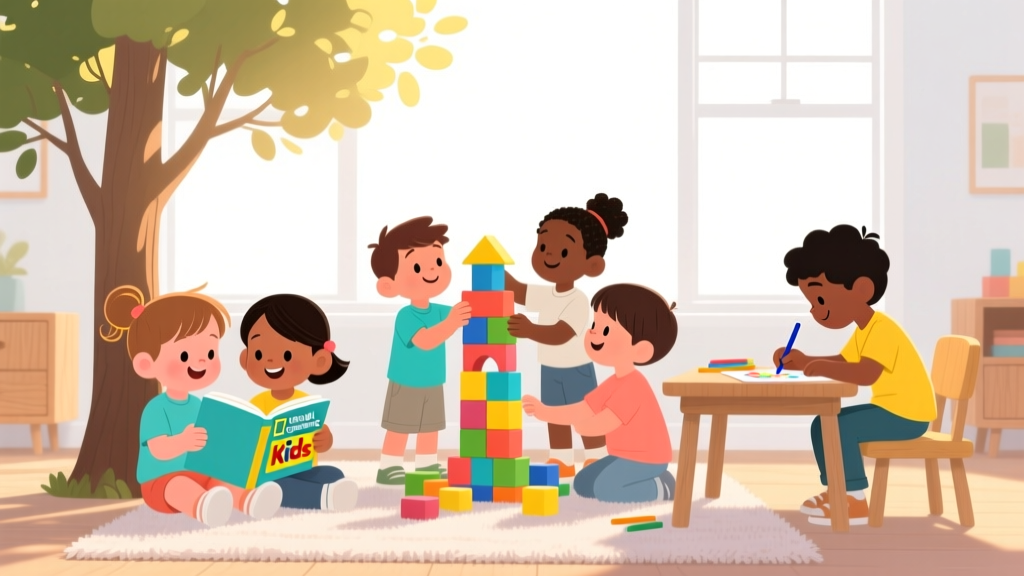
How old are kids when they go to preschool? The answer isn’t a number — it’s a process. It’s the moment your child confidently hands you their backpack, walks into the classroom without looking back, and returns home with grass-stained knees and stories about building a tower with Mateo. That moment arrives when developmental readiness aligns with opportunity — not when the clock strikes a birthday. So put down the enrollment deadline countdown. Pick up your notebook. Observe your child this week — not for what they *should* do, but for what they *do* do. Then consult the 6-benchmark checklist, talk to your pediatrician, and visit two very different programs. Your child’s first formal learning experience should feel like stepping into sunlight — warm, expansive, and perfectly timed. Ready to build your personalized readiness tracker? Download our free, pediatrician-reviewed Preschool Readiness Tracker — complete with observation prompts, milestone benchmarks, and state-specific cutoff calendars.
More Articles
 Bill Gates’ Kids Vaccinated? Pediatrician Truth (2026)
 Board Books for Kids: What They Are & Why They Matter
 What Age Are Kids Free at Disneyland? (2026)
 How Many Kids Does Stefon Digs Have? (2026)
 Obama Kids Name Change Truth & Parent Guide
 Does Markiplier Have Kids? Creator Privacy & Parenthood
 Florida School End Dates 2024–2025 by District
 How to Treat Ear Pain in Kids Safely at Home
 When Can a Kid Sit Without a Booster Seat?
 Did Senna Have Kids? The Truth Behind His Choice