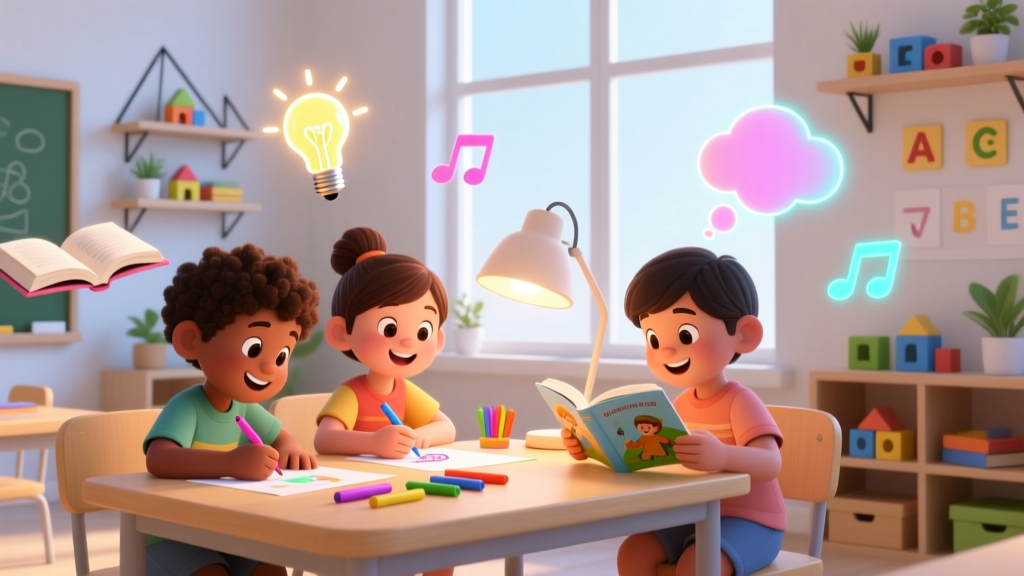
How Old Are Kids in 2nd Grade? Age, Readiness & Rules
Why Knowing How Old Kids Are in 2nd Grade Matters More Than You Think
If you’re asking how old are kids in 2nd grade, you’re likely navigating a pivotal moment: deciding whether your child is truly ready for second grade—or wondering if they’re falling behind peers. This isn’t just about birthdays. It’s about decoding school district policies, understanding neurodevelopmental variability, and recognizing that chronological age tells only part of the story. In fact, according to the National Center for Education Statistics (NCES), over 12% of U.S. second graders are either held back or accelerated—and most of those decisions hinge on misalignment between age, maturity, and curriculum demands. Whether you’re preparing for kindergarten transition, evaluating retention, or supporting a child with ADHD or language delays, getting this right affects confidence, reading fluency, and even long-term academic identity.
What the Law Says: Official Age Cutoffs (and Why They Vary Wildly)
There is no federal mandate for grade-level age requirements. Instead, each state sets its own cutoff date—the last day a child must turn 6 (for 1st grade) or 7 (for 2nd grade) to enroll without exception. But here’s what most parents don’t realize: those dates range from July 1 to December 31, creating up to a 6-month age gap within a single classroom. In Alabama, a child born on August 1, 2017 qualifies for 2nd grade in 2024–2025; in New York, that same child wouldn’t start 2nd grade until September 2025—because NY’s cutoff is December 1. That means your ‘youngest’ 2nd grader could be 6 years, 11 months old while their ‘oldest’ classmate is already 8 years, 5 months—a 17-month spread. And research published in Developmental Psychology (2023) confirms children born just after the cutoff date are 32% more likely to receive an IEP referral by 3rd grade—not due to disability, but because their relative immaturity is misinterpreted as delay.
To help you navigate this, here’s how 2nd grade age eligibility breaks down across key states:
| State | 2nd Grade Minimum Age (as of 2024–2025) | Cut-off Date | Notes |
|---|---|---|---|
| California | 7 years old by Sept. 1 | September 1 | “Kindergarten Continuum” allows flexible 1st-grade entry for summer-born children with readiness assessments. |
| Texas | 7 years old by Sept. 1 | September 1 | Requires proof of age + immunizations; exceptions require superintendent approval & psychological evaluation. |
| Maine | 7 years old by Oct. 15 | October 15 | One of the latest cutoffs—gives late-summer/early-fall births extra time to mature before formal instruction. |
| Georgia | 7 years old by Sept. 1 | September 1 | Mandatory attendance begins at age 6; 2nd grade requires completed 1st grade OR age-based waiver. |
| Oregon | 7 years old by Aug. 31 | August 31 | Allows “early entry” for gifted students via portfolio review—but rarely granted for 2nd grade. |
Developmental Readiness: Why Chronological Age Alone Is Misleading
Think of 2nd grade as the ‘inflection point’ in elementary development. According to the American Academy of Pediatrics (AAP), this year marks the shift from ‘learning to read’ to ‘reading to learn’—a cognitive leap requiring sustained attention, working memory, and executive function skills that don’t develop uniformly across children. A child who turns 7 in June may have strong fine motor control and phonemic awareness but struggle with impulse regulation during group work. Another turning 7 in November might excel socially yet lag in decoding multisyllabic words. That’s why pediatric neuropsychologist Dr. Elena Torres, co-author of Ready, Set, School!, emphasizes: “Age tells you when a child entered the race. Developmental milestones tell you whether they’ve built the muscles to run it.”
Here’s what evidence-based readiness looks like for 2nd grade—regardless of birthdate:
- Academic Foundations: Can independently read simple chapter books (e.g., Frog and Toad), write 3–5 sentence paragraphs with basic punctuation, and add/subtract two-digit numbers mentally or with regrouping.
- Social-Emotional Capacity: Demonstrates self-advocacy (“I need help”), manages frustration without meltdowns >90% of the time, and collaborates in small groups without adult mediation.
- Executive Function: Follows 3-step directions, organizes personal materials (backpack, desk), and transitions between subjects with minimal prompting.
- Physical Stamina: Sits attentively for 30+ minutes, writes legibly for 15 minutes straight, and navigates school routines (lunch line, PE, specials) independently.
When these skills are inconsistent or underdeveloped, holding a child back—or providing targeted Tier 2 interventions—isn’t ‘holding them back.’ It’s aligning instruction with biology. A landmark 2022 longitudinal study in Pediatrics followed 3,200 children across 12 states and found that academically retained 2nd graders who received intensive literacy coaching showed greater gains in reading comprehension by 5th grade than peers who were socially promoted but received no additional support.
Red Flags: When ‘How Old Are Kids in 2nd Grade?’ Signals a Bigger Question
Parents often ask this question not out of curiosity—but because something feels off. Maybe your child is chronologically on track but exhausted daily, avoids homework, or seems perpetually overwhelmed by classroom pace. These aren’t ‘just phases.’ They may indicate mismatched expectations. Here’s how to interpret subtle signals:
"My daughter reads beautifully—but shuts down during timed math drills. Her teacher says she’s ‘not trying.’ But her occupational therapist noticed she’s still using a fisted pencil grip and fatigues after 10 minutes of writing." — Maya R., parent of a July-born 2nd grader in Ohio
This scenario reflects a classic motor-executive mismatch: cognitive ability exceeds physical stamina and self-regulation capacity. It’s especially common among summer-born children whose nervous systems haven’t fully myelinated for sustained focus. Similarly, children with undiagnosed auditory processing disorder may appear ‘inattentive’ in 2nd grade’s fast-paced oral instruction—but thrive with visual supports and written directions.
Actionable steps if you suspect misalignment:
- Request a school-based readiness screening (not just academic testing)—ask for assessment of handwriting fluency, auditory memory, and task initiation using tools like the Behavior Rating Inventory of Executive Function (BRIEF-2).
- Observe classroom dynamics for 20 minutes: note how many transitions occur per hour, average wait time for teacher response, and whether instruction is primarily whole-group vs. differentiated.
- Consult your pediatrician about developmental surveillance—AAP recommends formal screening at ages 2, 3, 4, and 5, but many gaps emerge later. Ask specifically about praxis (motor planning) and interoception (body-awareness), which impact classroom endurance.
- Document patterns for 2 weeks: time-to-completion for homework, frequency of emotional dysregulation, and specific triggers (e.g., ‘meltdowns always happen during silent reading time’). Data trumps anecdotes in IEP meetings.
What to Do Next: Practical Strategies for Every Scenario
Whether your child is the youngest or oldest in 2nd grade—or somewhere in between—proactive support makes all the difference. Here’s what works, backed by classroom research and special education best practices:
- If your child is young for grade (born July–September): Prioritize stamina-building—not academics. Use timers for ‘focus sprints’ (5 min reading → 2 min movement → repeat), provide fidget tools approved by OT, and request preferential seating near the teacher (not the door). Avoid pushing advanced content; instead, deepen conceptual understanding through hands-on math manipulatives and open-ended writing prompts.
- If your child is older for grade (born January–March) but struggling: Rule out learning differences first. Dyslexia often surfaces in 2nd grade when phonics rules become complex. Request a comprehensive evaluation—including rapid automatized naming (RAN) and nonword repetition tests—not just sight-word quizzes. Under IDEA, schools must evaluate within 60 days of parental request.
- If your child excels and feels bored: Advocate for curriculum compacting—not grade skipping. A 2023 study in Gifted Child Quarterly found that 2nd graders given enriched science units (e.g., designing water filtration systems) showed 40% higher engagement than those doing standard worksheets—even when both covered the same NGSS standards.
- If you’re considering retention: Only pursue it with a clear, data-driven plan. Retention without intervention has zero academic benefit (National Association of School Psychologists). Demand a written ‘Readiness Roadmap’ outlining specific goals (e.g., “increase sustained attention from 12 to 25 minutes by March”), weekly progress monitoring, and family training on home reinforcement strategies.
Remember: grade level is an administrative category—not a developmental diagnosis. As Dr. Robert Pianta, dean of UVA’s School of Education, states: “The most powerful predictor of 2nd grade success isn’t birth month—it’s whether a child felt safe, seen, and capable in 1st grade.”
Frequently Asked Questions
Can my child skip 2nd grade if they’re academically advanced?
Technically yes—but it’s rare and rarely advisable. Most districts require IQ testing (≥130), achievement scores ≥2 grade levels above, teacher recommendations, and social-emotional evaluation. Even then, research shows accelerated students often face social isolation and increased anxiety without peer-matched mentoring. A better alternative: subject acceleration (e.g., 3rd-grade math while staying in 2nd-grade ELA/social studies) or enrichment clusters within the classroom.
What if my child is 8 but still in 2nd grade—is that a red flag?
Not necessarily. Many children enter 2nd grade at age 8 due to late kindergarten entry, medical delays (e.g., prolonged illness), or intentional redshirting. What matters is growth trajectory—not absolute age. If your child gained 1.5 years of reading growth in 1st grade (per DIBELS or MAP scores), they’re likely on track. Focus on skill mastery, not grade-level labels.
Do private schools use the same age cutoffs as public schools?
No—private schools set their own policies, often with more flexibility. Some use rolling admissions, developmental portfolios, or multi-age classrooms (e.g., 1st–3rd combined). However, accreditation bodies like NEASC or NAIS require documented readiness criteria. Always ask for their specific 2nd grade entry rubric—not just ‘we follow state guidelines.’
How does homeschooling affect 2nd grade age expectations?
Homeschoolers aren’t bound by cutoff dates—but must meet state compulsory attendance laws (typically ages 6–18). Most families assess readiness holistically: reading fluency, math reasoning, and emotional regulation—not calendar age. Curricula like Time4Learning or Oak Meadow include scope-and-sequence guides aligned to national standards, allowing custom pacing. Still, consider benchmarking annually with standardized assessments (e.g., Stanford Achievement Test) to ensure alignment with grade-level expectations if re-entering traditional school.
Is there a link between 2nd grade age and ADHD diagnosis rates?
Yes—and it’s well-documented. A 2021 JAMA Pediatrics study analyzing 400,000 children found that the youngest in grade were 60% more likely to be diagnosed with ADHD than the oldest—despite identical neurology. Teachers interpreted normal immaturity as hyperactivity. Key takeaway: If ADHD is suspected, insist on multi-setting observation (home, school, clinic) and rule out sleep deprivation, anxiety, or gifted under-stimulation first.
Common Myths
- Myth #1: “If they’re age-eligible, they’re automatically ready.” Reality: Eligibility is legal—not developmental. A child can legally enroll at age 7 but lack the working memory to hold multi-step math instructions. Readiness requires integrated cognitive, motor, and emotional systems—not just a birthday.
- Myth #2: “Holding a child back stigmatizes them.” Reality: Modern retention models (like Response to Intervention) embed support invisibly—small-group pull-outs, embedded accommodations, and strength-based goal setting—making it indistinguishable from differentiation. Stigma comes from labeling, not structure.
Related Topics (Internal Link Suggestions)
- When to Start Kindergarten: Age Guidelines & Readiness Signs — suggested anchor text: "kindergarten readiness checklist"
- IEP vs. 504 Plan: Which Supports Your 2nd Grader Needs — suggested anchor text: "2nd grade IEP accommodations"
- Summer-Born Children: Navigating School Entry & Social Fit — suggested anchor text: "late birthday school challenges"
- Executive Function Skills by Grade: What to Expect in 2nd Grade — suggested anchor text: "2nd grade executive function milestones"
- Reading Milestones for 2nd Graders: Fluency, Comprehension & Beyond — suggested anchor text: "2nd grade reading benchmarks"
Conclusion & CTA
So—how old are kids in 2nd grade? Legally, most are 7–8. Developmentally, they span a spectrum from emerging independence to budding self-advocacy—and that variation is normal, expected, and worthy of thoughtful support. Don’t let a birthday dictate your child’s learning journey. Instead, gather data, consult professionals, and advocate for what your child needs—not what the calendar says they ‘should’ have. Your next step: Download our free 2nd Grade Readiness Snapshot Kit—a printable checklist with observational prompts, milestone trackers, and conversation starters for teachers and pediatricians. Because understanding age is just the beginning. Building confidence, competence, and joy in learning? That’s where real readiness begins.
More Articles
 Who Plays Adam Sandler’s Kids in Happy Gilmore 2?
 Why Autistic Kids Like Water: Sensory Science & Tips
 Where Are Ruby’s Kids Now? (2026)
 Tooth Fairy Appearance: Shaping Kids’ Imagination & Sleep
 Is Moringa Safe for Kids? Pediatrician-Reviewed Guide
 Where Are OJ Simpson’s Kids Now? (2026)
 Diane Keaton’s Kids Adoption and Solo Parenthood
 Catherine O'Hara’s Kids: Her Low-Profile Parenting (2026)
 Where to Donate Suitcases for Foster Kids (2026)
 How Many Kids Did Angie Stone Have? (2026)