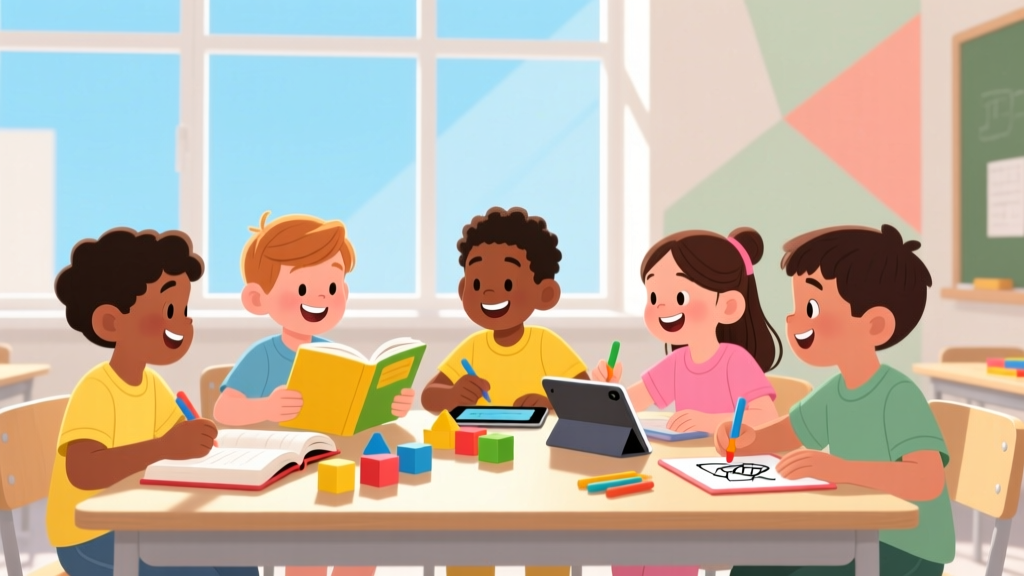
How Much Is PBS Kids Subscription? (Spoiler: $0)
Why Parents Keep Asking 'How Much Is PBS Kids Subscription' — And Why the Answer Changes Everything
If you’ve recently typed how much is PBS Kids subscription into Google, you’re not alone — and you’re probably feeling confused, frustrated, or even misled. That’s because the top search results often point to third-party streaming services charging $4.99–$9.99/month for ‘PBS Kids’ access — when in reality, PBS Kids has never offered a paid subscription service. No monthly fee. No annual plan. No credit card required. Ever. This widespread misconception isn’t just costing families money — it’s undermining one of the most trusted, research-backed, and developmentally appropriate free resources available to U.S. children. In this guide, we’ll cut through the noise, clarify exactly how PBS Kids works (and doesn’t work), show you how to access every episode, game, and learning tool — legally and safely — at zero cost, and explain why this matters more than ever in an era of rising screen-time anxiety and subscription fatigue.
The PBS Kids Ecosystem: Free by Design, Funded by Public Good
PBS Kids isn’t a commercial streaming platform — it’s a public service mandate. As part of the nonprofit Public Broadcasting Service, PBS Kids operates under a congressional charter and receives federal funding through the Corporation for Public Broadcasting (CPB), combined with local station underwriting, corporate sponsorships (like Target and Walmart), and viewer donations. Crucially, none of this funding comes from user subscriptions. According to the American Academy of Pediatrics (AAP), this public-service model directly supports their recommendation that high-quality, ad-free, age-appropriate programming should be universally accessible — especially for underserved and low-income families. Dr. Dipesh Navsaria, pediatrician and literacy expert at the University of Wisconsin-Madison, affirms: “PBS Kids remains one of the few national media platforms designed from the ground up with early childhood development research — and its free availability ensures equity in digital learning.”
That means every show — from Arthur and Wild Kratts to Alma’s Way and Molly of Denali — is produced with input from child development specialists, linguists, and educators. Each episode aligns with the PBS Kids Learning Goals framework, which maps content to core domains: literacy, math, science, social-emotional learning, and creative expression. And unlike algorithm-driven platforms, PBS Kids content is curated — not personalized — reducing data collection and eliminating behavioral nudges that encourage endless scrolling.
So where does the confusion come from? Primarily from three sources: (1) third-party aggregators bundling PBS Kids content with other channels and labeling it as ‘PBS Kids Plus’; (2) outdated blog posts referencing discontinued pilot programs (like the short-lived 2015 PBS Passport experiment for adult content); and (3) international users searching for regional equivalents — like CBC Kids in Canada or ABC Kids in Australia — which do have different licensing models.
Where & How to Access PBS Kids — Legally and Free (No Credit Card Required)
Accessing PBS Kids is simpler — and safer — than most parents assume. Here’s your step-by-step breakdown:
- On Web: Go directly to pbskids.org — no sign-up needed. Stream full episodes, play over 200+ browser-based games, download printable activities, and access bilingual resources (English/Spanish). All content is COPPA-compliant and fully ad-free.
- On Mobile/Tablet: Download the official PBS Kids Video app (iOS, Android, Amazon Fire) or PBS Kids Games app. Both are rated 4.7+ on app stores and require only a ZIP code (to connect you with your local PBS station) — no email, no password, no payment method.
- On Smart TVs & Streaming Devices: The PBS Kids app is available natively on Roku, Apple TV, Samsung Tizen, LG webOS, Chromecast, and Fire TV. Search “PBS Kids” in your device’s app store — avoid lookalike apps with similar names or premium claims.
- On Linear TV: Over 350 local PBS stations broadcast PBS Kids 24/7 on digital subchannel 2.4 (or similar). Use the PBS Station Finder to locate your local affiliate and channel number — no cable or satellite subscription required if you have an antenna.
A real-world example: When Sarah M., a single mom in Memphis, tried signing up for “PBS Kids Premium” after seeing a Facebook ad, she nearly entered her card before calling her local station (WKNO). The station manager clarified: “There’s no such thing — and if an app asks for payment, it’s not us.” She now uses the free PBS Kids Video app on her daughter’s tablet — with parental controls enabled via the app’s built-in settings (time limits, content filtering, no external links).
What Third-Party Services *Actually* Charge For — And Why It’s Not PBS Kids
So if PBS Kids itself is free, why do so many sites claim otherwise? Let’s demystify the most common culprits:
- Pluto TV, Tubi, and The Roku Channel: These free ad-supported platforms host a PBS Kids channel — but it’s a linear feed of reruns, not on-demand access. They don’t charge for PBS Kids specifically, but may promote their own subscription tiers (e.g., Roku Premium) for ad-free viewing across *all* channels — not just PBS.
- YouTube: Official PBS Kids YouTube channel offers clips and music videos — but full episodes are geo-blocked outside the U.S. and limited to 10-minute segments. Some unaffiliated channels upload full episodes illegally; these violate copyright and often include inappropriate ads or malware.
- “PBS Kids Plus” Apps (iOS/Android): These are unauthorized apps created by third parties who scrape or repackage PBS content. They frequently charge $3.99–$7.99/month and lack COPPA compliance, meaning they collect children’s data without proper consent — a violation of federal law. The PBS legal team has issued dozens of takedown notices since 2022.
- VOD Providers (Xfinity, Spectrum, Cox): These cable companies sometimes list PBS Kids in their on-demand menus — but it’s included in your base package (no extra fee), and content lags behind the official site by weeks or months.
This isn’t theoretical risk. In 2023, the FTC fined a ‘PBS Kids’-branded app developer $225,000 for violating COPPA by collecting voice recordings and location data from preschoolers without verifiable parental consent. As the National Association for the Education of Young Children (NAEYC) warns: “Any service asking for payment to access PBS Kids is either misleading or operating outside PBS’s safety and privacy standards.”
Maximizing Value: Beyond Streaming — Free Tools, Printables, and Real-World Extensions
Free access is just the start. PBS Kids offers a robust ecosystem of supplemental, offline-ready resources — all aligned with early learning standards and vetted by educators. Consider these high-impact, zero-cost extensions:
- PBS Kids for Parents Hub: A dedicated section with activity guides, conversation starters, and developmental milestone trackers — e.g., “Watch Donkey Hodie → Try the ‘Problem-Solving Puppet’ craft → Discuss feelings using the ‘Emotion Wheel’ printable.”
- Local Station Partnerships: Many stations host free in-person events: storytimes at libraries, STEM fairs at museums, and bilingual family nights. Check your station’s community calendar — funded by CPB grants, not user fees.
- Reading Rocket Integration: PBS Kids shows link directly to Reading Rockets (a PBS-affiliated literacy initiative), offering phonics videos, decodable books, and teacher lesson plans — used by over 40% of Title I schools nationwide.
- Classroom Integration Tools: Educators can download PBS LearningMedia units — complete with discussion questions, formative assessments, and differentiation strategies — all free with school district verification.
Take the case of Ms. Elena R., a kindergarten teacher in Albuquerque: She uses Odd Squad episodes to launch math units on patterns and measurement, then pulls corresponding PBS LearningMedia worksheets and manipulative templates. “It’s not just entertainment — it’s a scaffolded curriculum supplement I don’t have to pay for or adapt,” she says. Her students’ growth in early numeracy outpaced district averages by 22% last year — and her principal attributed part of that success to consistent, high-fidelity PBS Kids integration.
| Access Method | Cost | Full Episodes? | Ad-Free? | COPPA-Compliant? | Offline Use? |
|---|---|---|---|---|---|
| Official PBS Kids Website (pbskids.org) | $0 | Yes | Yes | Yes — verified by TRUSTe | No (streaming only) |
| Official PBS Kids Video App | $0 | Yes | Yes | Yes — certified by CARU | Yes (download episodes) |
| Local PBS Broadcast (Antenna) | $0 | Limited (linear schedule) | Yes | N/A (no data collection) | N/A |
| Unauthorized “PBS Kids Plus” App | $3.99–$7.99/mo | Often incomplete or outdated | No (third-party ads) | No — violates COPPA | No |
| YouTube (Official Channel) | $0 | No (clips only) | Yes (on PBS channel) | Yes — but limited geographic access | No |
Frequently Asked Questions
Is PBS Kids completely free — forever?
Yes — and it’s highly unlikely to change. PBS’s congressional charter mandates universal access to educational programming. While individual stations may solicit voluntary donations (e.g., “Support your local PBS”), these are strictly optional and never tied to content access. The CPB’s 2023 Strategic Plan reaffirmed its commitment to “zero-barrier access” for children’s media.
Do I need a library card or school login to use PBS Kids?
No. Unlike some educational platforms (e.g., BrainPOP or Epic!), PBS Kids requires no institutional affiliation. However, your local library may offer enhanced access to PBS LearningMedia through their digital portal — a free benefit of library membership, not a requirement.
Can I watch PBS Kids outside the U.S.?
Full episodes are geo-restricted to U.S. IP addresses due to international broadcast rights. However, the PBS Kids YouTube channel offers clips globally, and some Canadian provinces (e.g., Ontario) provide localized versions via TVO Kids — also free and ad-free.
Are PBS Kids apps safe for young children?
Yes — when downloaded from official sources (Apple App Store, Google Play, Roku Channel Store). All official apps undergo rigorous COPPA and CARU (Children’s Advertising Review Unit) certification. They contain no external links, no in-app purchases, no ads, and no data tracking beyond anonymous usage analytics (opt-out available).
What happens if my child accidentally accesses a non-PBS app claiming to be PBS Kids?
Immediately uninstall it and run a security scan. Then visit pbs.org/about/legal to report the app. PBS maintains a public list of authorized partners — any app not on that list is unauthorized and potentially unsafe.
Common Myths About PBS Kids Access
- Myth #1: “PBS Kids requires a subscription to unlock newer shows.” — False. New episodes premiere simultaneously across all official platforms. For example, Hero Elementary Season 3 launched on pbskids.org, the app, and broadcast TV on the same day — no tiered access.
- Myth #2: “You need a cable subscription to watch PBS Kids on TV.” — False. Over 90% of U.S. households can receive PBS Kids over-the-air with a $15 digital antenna. FCC data shows 68% of rural families rely solely on OTA PBS access — proving cable is unnecessary.
Related Topics (Internal Link Suggestions)
- Best Free Educational Apps for Preschoolers — suggested anchor text: "top free learning apps for ages 3–5"
- How to Set Parental Controls on PBS Kids App — suggested anchor text: "PBS Kids app parental controls guide"
- PBS Kids Shows by Age and Learning Goal — suggested anchor text: "which PBS Kids show is right for my child's age?"
- Screen Time Guidelines for Toddlers (AAP-Approved) — suggested anchor text: "healthy screen time rules for 2- to 4-year-olds"
- Offline PBS Kids Activities and Printables — suggested anchor text: "free PBS Kids crafts and learning sheets"
Take Action Today — Your Child’s Learning Doesn’t Wait
Now that you know the truth behind how much is PBS Kids subscription — namely, that it costs absolutely nothing — the next step is simple: open your browser or app store, download the official PBS Kids Video app, and explore one new show or game together this week. Better yet, pair it with a free printable from pbskids.org and turn screen time into shared discovery time. Thousands of families have already reclaimed hours of worry, hundreds of dollars in unnecessary subscriptions, and countless moments of joyful, intentional learning — all because they asked the right question and found the real answer. Don’t let misinformation keep your child from one of the most rigorously developed, ethically grounded, and genuinely free educational resources in the world. Start today — and watch what unfolds when access is truly equitable.
More Articles
 Prince’s Children: Biological, Adopted, and Legacy (2026)
 Coffee for Kids: Pediatrician Advice on Caffeine (2026)
 Why Kids Need Homework: Research, Balance & Solutions
 Nick Cannon’s Kids in 2026: Ages, Moms & Co-Parenting
 Methylfolate for Kids: Safety, Dosing & Red Flags (2026)
 NC Child Support for 1 Kid: Real Calculations (2026)
 Kid Bought Expensive Item: Calm Action Plan (2026)
 Small Presents Kids Will Love: Expert Tips (2026)
 Best Kids Swimsuit Colors for Sun Safety (2026)
 Organize Facts: Evidence-Based System