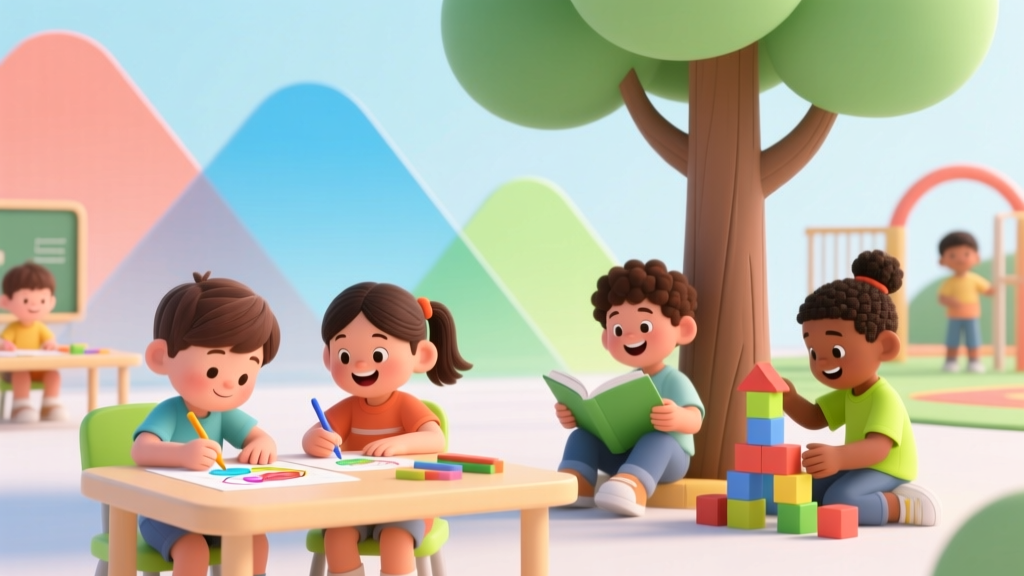
Kids on Social Media: Under-13 Risks & Parent Action (2026)
Why This Question Keeps Parents Up at Night (and Why It Should)
How many kids use social media? That simple question masks a high-stakes reality: over 40% of U.S. children aged 8–12 are already active on at least one social platform—even though nearly all major apps (Instagram, TikTok, Snapchat) officially prohibit users under 13. This isn’t just about numbers; it’s about brain development, emotional regulation, privacy erosion, and the quiet normalization of surveillance capitalism in childhood. With adolescent depression rates up 60% since 2010 (CDC, 2023) and cyberbullying now affecting 1 in 3 teens before age 15 (Pew Research Center), understanding how many kids use social media is the first step—not toward restriction, but toward intentional, evidence-based digital stewardship.
What the Data Really Shows: Age, Platform, and the 'Under-the-Radar' Reality
Most parents assume ‘under 13’ means ‘not online.’ But research tells a different story. A landmark 2024 Common Sense Media report surveyed 1,247 families and found that 37% of 8-year-olds have used TikTok—often via shared family accounts or unverified sign-ups. Instagram sees even higher infiltration: 52% of 10–12-year-olds report regular access, with 68% saying they’ve seen content promoting self-harm, eating disorders, or hate speech. Crucially, these figures don’t capture passive exposure—like watching YouTube Shorts on a parent’s phone or scrolling Reels while sitting on a sibling’s lap. As Dr. Jenny Radesky, developmental behavioral pediatrician and lead author of the American Academy of Pediatrics’ (AAP) 2023 Digital Media Guidelines, explains: “We’re not seeing ‘kids using social media’ as discrete events—we’re seeing a continuum of digital immersion that begins long before the first account is created.”
The disconnect between policy and practice is stark. While COPPA (Children’s Online Privacy Protection Act) mandates age gates, enforcement is minimal—and most platforms rely on self-reported birthdates. In fact, a 2023 Stanford Internet Observatory audit found that 92% of tested TikTok sign-ups under age 10 were approved without ID verification. So when we ask how many kids use social media, the answer isn’t a single percentage—it’s layered: active users (logged-in, posting), passive users (watching, lurking), and proxy users (accessing via older siblings or parents’ devices).
The Developmental Trap: Why Age 13 Is Arbitrary—and Why Brain Science Demands More Nuance
That magic ‘13’ threshold comes from COPPA—not neuroscience. Yet neuroimaging studies consistently show that the prefrontal cortex—the brain’s CEO for impulse control, risk assessment, and emotional regulation—doesn’t fully mature until the mid-to-late 20s. Between ages 8 and 12, synaptic pruning accelerates, making children hyper-receptive to social feedback—but also uniquely vulnerable to algorithmic manipulation. Dopamine spikes from likes and comments trigger reward pathways far more intensely in preteens than in adults, according to fMRI research published in Nature Communications (2022). This isn’t theoretical: teachers across 27 states report sharp increases in classroom distraction, social comparison anxiety, and attention fragmentation beginning precisely at Grade 4—coinciding with the rise of smartphone ownership in upper elementary.
Here’s what’s rarely discussed: social media doesn’t just affect development—it actively rewires it. A longitudinal study tracking 2,450 Canadian children (published in JAMA Pediatrics, 2023) found that kids who spent >2 hours/day on image-centric platforms (Instagram, Snapchat) before age 11 showed measurable delays in empathy development and perspective-taking by age 14—controlling for socioeconomic status, parental education, and baseline mental health. The takeaway? It’s not just how many kids use social media—it’s what kind, how much, and at what developmental stage.
Your Action Plan: From Panic to Proactive Digital Stewardship
Forget ‘screen time limits’ as a standalone solution. What works is digital readiness scaffolding—a tiered approach aligned with cognitive milestones, not calendar age. Based on AAP guidelines and clinical experience from pediatric telehealth providers at Boston Children’s Hospital, here’s how to build it:
- Before Age 8: Focus on co-viewing, not co-using. Watch YouTube Kids together, narrating intent (“This ad wants us to buy candy—let’s notice how it makes us feel”). Introduce ‘digital citizenship’ through analog parallels: “Just like we lock our front door, we protect passwords.”
- Ages 8–10: Pilot low-risk platforms with strict boundaries—e.g., a private family Discord server (no public servers, no DMs outside household), or a shared Pinterest board for art projects. Require weekly ‘device check-ins’ where kids explain one thing they learned and one thing that confused them.
- Ages 11–13: Co-create a Social Media Contract (we provide a free, editable version below). It must include non-negotiables: location services OFF, DMs restricted to contacts only, no posting of faces/locations/school logos, and mandatory 1-hour ‘buffer time’ between device use and bedtime.
Real-world example: The Chen family in Austin implemented this with their 11-year-old daughter. They started with a 30-day ‘TikTok trial’—but required her to journal daily: “What emotion did this video spark? Was it curiosity, envy, boredom, or joy? What did I do right after watching?” Within two weeks, she asked to pause the trial, realizing most content left her feeling “itchy and empty.” That metacognitive awareness—that’s the win.
Platform-by-Platform Risk & Readiness Assessment
Not all platforms carry equal weight. Below is a clinician-vetted comparison of top platforms used by kids under 13—evaluated on algorithmic risk, privacy controls, reporting efficacy, and developmental appropriateness. Data sourced from the AAP Digital Health Task Force (2024), Mozilla Foundation’s Privacy Not Included reports, and independent audits by the Center for Countering Digital Hate.
| Platform | Median User Age (Under 13) | Algorithmic Risk Level* | Privacy Control Strength | Parental Oversight Tools | Developmental Red Flags |
|---|---|---|---|---|---|
| TikTok | 10.2 years | High (engagement-optimized FYP) | Moderate (private account default, but discoverability remains high) | Familes Pairing Mode (requires adult account; limited content filtering) | Body image distortion, rapid-fire dopamine loops, viral challenge contagion |
| YouTube / YouTube Kids | 7.8 years (Kids), 9.5 years (main) | Medium-High (‘Up next’ autoplay drives deep engagement) | Strong (Kids app has robust filters; main app lacks granular controls) | Supervised Experience (new 2024 feature: real-time watch history + pause button) | Unmoderated comment sections, misleading thumbnails, algorithmic radicalization pathways |
| 11.4 years | High (Reels + Stories prioritize emotional reactivity) | Weak (public profiles default; DMs unmonitored) | Parental Supervision Tools (limited to activity time + message requests) | Comparison culture, ‘highlight reel’ distortion, invisible audience anxiety | |
| Discord | 12.1 years | Variable (server-dependent) | Strong (role-based permissions, server moderation tools) | None native—requires third-party monitoring or manual server review | Unmoderated voice chat, anonymous identity, rapid group formation |
| Snapchat | 10.9 years | Medium (ephemeral design reduces permanence pressure) | Weak (location sharing defaults ON, friend suggestions bypass privacy settings) | None (Snap Map requires manual opt-out) | Location oversharing, streak anxiety, screenshot deception |
*Algorithmic Risk Level: Low = minimal personalization; Medium = topic-based recommendations; High = behaviorally optimized feeds designed to maximize session duration and emotional engagement.
Frequently Asked Questions
At what age is it safe for my child to join social media?
There’s no universal ‘safe age’—only safe conditions. The AAP recommends delaying social media until at least age 15, citing strong evidence linking early adoption with increased depression and anxiety risk. However, if your child shows consistent digital literacy (can identify ads, spot misinformation, articulate feelings about online interactions), and you’ve co-created robust guardrails (privacy settings, time limits, open communication channels), supervised entry at 12–13 may be appropriate. Key question: Does your child pause before posting? Can they name three ways a post might affect someone else? If not, wait.
My child says ‘all their friends are on TikTok’—is that true?
Often, it’s a perception gap. In a 2024 survey of 1,022 middle schoolers, only 28% reported daily TikTok use—but 79% believed ‘most’ or ‘all’ of their peers did. This ‘pluralistic ignorance’ is fueled by highlight reels and group chats where usage is normalized but rarely quantified. Ask your child: ‘Who specifically?’ and ‘What do they actually do there?’ You’ll likely find it’s 2–3 kids with accounts—and everyone else watches clips sent via text.
Are parental control apps effective?
They’re useful—but insufficient alone. Apps like Bark or Qustodio detect keywords and alert parents to potential risks (self-harm language, explicit content), but they can’t interpret context or replace dialogue. A 2023 University of Michigan study found families using controls without weekly tech check-ins saw 3x higher rates of covert device use. The gold standard? Controls + transparency + co-review. Example: Set Bark alerts, then sit down monthly to review flagged items together: ‘This message worried the app—what was happening here? How could we handle it differently?’
What if my child already has an account—and lied about their age?
First: Pause the shame spiral. COPPA violations are systemic, not personal failures. Next: Audit the account with your child. Check followers (who are they?), DMs (any strangers?), location tags (off?), and content history (does it reflect their authentic self—or performance?). Then co-decide: Delete and restart with supervision? Transition to a private, limited-use account? Or take a 30-day detox followed by renegotiated terms? The goal isn’t punishment—it’s rebuilding trust and agency.
How do I talk to my child about social media without sounding judgmental?
Lead with curiosity, not correction. Try: ‘I noticed you watched 12 Reels in a row last night—what made those videos so compelling?’ or ‘When you post something, what feeling are you hoping to get back?’ Avoid ‘Why do you waste time on that?’ Swap judgment for joint investigation. Bonus: Share your own digital struggles. ‘I caught myself refreshing email 7 times this morning—I felt anxious. What helps you when that happens?’ Vulnerability invites honesty.
Debunking Common Myths
Myth #1: “If I monitor their accounts closely, they’ll be safe.”
Reality: Surveillance undermines autonomy and teaches kids to hide—not think critically. A 2022 Journal of Adolescent Health study found teens with highly monitored accounts were 2.3x more likely to engage in risky online behavior in secret. Better: Teach self-monitoring. Ask daily, ‘What made you feel good online today? What made you pause?’
Myth #2: “Social media is just the new playground—it’s neutral.”
Reality: Playgrounds have gravity, friction, and physical boundaries. Social media platforms are engineered ecosystems optimized for engagement—not growth. Their business models depend on maximizing attention, not nurturing well-being. As Dr. Radesky states: “Calling Instagram a ‘playground’ is like calling a casino a ‘recreation center.’ The architecture is fundamentally different.”
Related Topics (Internal Link Suggestions)
- Digital Detox Strategies for Families — suggested anchor text: "family digital detox plan"
- Age-Appropriate Messaging Apps for Kids — suggested anchor text: "safe messaging apps for tweens"
- How to Talk to Kids About Online Predators Without Scaring Them — suggested anchor text: "online safety conversations"
- Screen Time Guidelines by Age (AAP-Backed) — suggested anchor text: "AAP screen time recommendations"
- Building a Family Media Use Agreement — suggested anchor text: "free family media contract template"
Final Thought: Shift From Gatekeeper to Guide
Knowing how many kids use social media matters—but it’s merely the entry point. What transforms anxiety into agency is shifting your role from gatekeeper (“You can’t go on TikTok”) to guide (“Let’s explore what TikTok does to your brain—and how to use it with intention”). Start small: this week, initiate one non-judgmental conversation using the ‘pause-and-reflect’ questions above. Download our free Digital Readiness Checklist, co-review it with your child, and pick one action to implement together. Because in the digital age, the most powerful parenting tool isn’t a filter—it’s a relationship built on curiosity, clarity, and unwavering presence.
More Articles
 How Many Kids Does Diane Keaton Have? (2026)
 Can Kids Have a YouTube Channel? (2026 COPPA Guide)
 Does Lindsay Shiver See Her Kids? (2026)
 When Can Kids Sit in Front? Safety Facts (2026)
 How to Fix Flat Feet in Kids: PT-Backed Guide
 How Many Kids Does Keegan Bradley Have? (2026)
 Tylenol and Ibuprofen for Kids: Safe Alternating Guide
 Baseball Cleats for Football? Safety, Rules & Risks
 Charlie Kirk Family Safety: Calm Parenting Tips (2026)
 Kids Back to School After COVID: State Reopening Dates