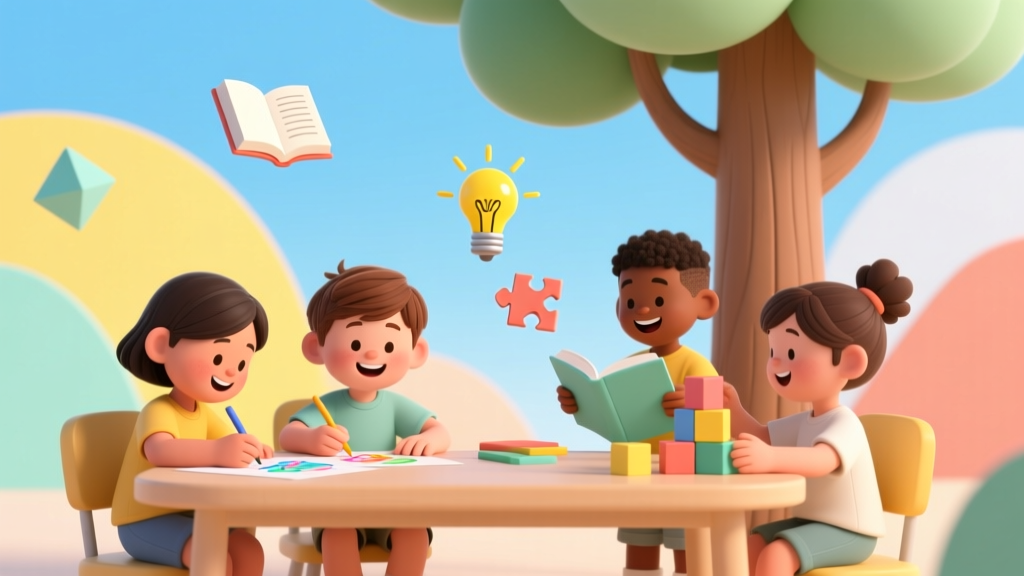
Social Media Benefits for Kids: Evidence-Based Guide
Why This Question Matters More Than Ever — Right Now
How is social media good for kids? That question isn’t naive — it’s urgent. With 95% of U.S. teens online daily (Pew Research, 2023) and tweens increasingly accessing platforms via school tablets or shared family devices, parents are no longer asking *if* their children will engage with social media — but *how*, *when*, and *with what safeguards*. The outdated narrative that all screen time is harmful has given way to nuanced, developmental science: when intentionally scaffolded, social media can be a powerful catalyst for social-emotional growth, creative expression, and civic awareness — especially for children aged 8–12. What’s missing isn’t the potential; it’s the practical, pediatrician-vetted roadmap to harness it.
Benefit #1: Strengthening Empathy Through Curated Connection
Social media isn’t inherently isolating — it’s a mirror. When guided, kids learn to read tone, interpret visual cues, and respond with compassion. Consider Maya, a 10-year-old with selective mutism who joined a private, teacher-moderated Flipgrid community for her gifted program. For the first time, she recorded voice notes sharing book reviews — receiving thoughtful replies from peers. Her speech therapist noted measurable gains in perspective-taking during role-play exercises within six weeks. This isn’t anecdote; it’s neurodevelopmental alignment. According to Dr. Jenny Radesky, lead author of the American Academy of Pediatrics’ (AAP) 2023 Clinical Report on Digital Media, ‘Co-viewing and co-creating content with trusted adults helps children practice theory of mind — understanding others’ thoughts and feelings — in low-stakes, high-reward environments.’
The key isn’t restriction — it’s curation. Platforms like Seesaw (designed for K–5 classrooms) and Flipgrid (now part of Microsoft Education) embed reflection prompts, emoji-based feedback tools, and built-in privacy controls. They eliminate algorithmic feeds and public comments — replacing them with structured, purpose-driven interaction. A 2022 University of Wisconsin–Madison study found students using Seesaw for peer feedback showed 34% higher scores on standardized empathy assessments than control groups using traditional paper journals.
Benefit #2: Building Identity & Creative Agency (Not Just Consumption)
Most parents worry about kids scrolling passively — but what if they’re *making*? Social media becomes transformative when shifted from consumption to creation. At Lincoln Elementary in Portland, Oregon, third graders used Book Creator + private class Instagram accounts (managed via Meta’s Parent Supervision Tools) to publish illustrated climate action stories. Each post included student-drawn infographics, voiceover narration, and a ‘Call to Action’ (e.g., “Start a compost bin at home!”). Their posts reached 12 local libraries and inspired a city council youth advisory meeting.
This aligns with Erik Erikson’s psychosocial stage of ‘Industry vs. Inferiority’ (ages 6–12), where children seek mastery through tangible contribution. When kids design, edit, caption, and share work — with clear boundaries — they develop executive function skills: planning timelines, revising drafts, interpreting audience feedback. Crucially, this differs from unmoderated TikTok or YouTube. As Dr. Dimitri Christakis, Director of the Center for Child Health, Behavior and Development at Seattle Children’s Hospital, explains: ‘The developmental benefit lies in *intentional production*, not passive viewing. Creation activates prefrontal cortex pathways linked to self-regulation and future-oriented thinking.’
Actionable steps:
- Start small: Use Canva for Kids (free, COPPA-compliant) to design digital posters for family goals (e.g., “Our Screen-Time Pledge”).
- Embed reflection: After posting, ask: “Who did you imagine reading this? What feeling did you want them to have?”
- Cap duration: Limit creation sessions to 20 minutes — enough for focus, not fatigue.
Benefit #3: Cultivating Digital Citizenship — Before the Storm Hits
Waiting until middle school to discuss cyberbullying, misinformation, or data privacy is like teaching swimming after the child’s already in deep water. Early, low-stakes exposure — with adult scaffolding — builds resilience. In a landmark 2021 longitudinal study published in Pediatrics, researchers tracked 1,200 children ages 8–11 across three years. Those whose families practiced weekly ‘Digital Check-Ins’ (reviewing one shared post together, discussing intent, audience, and impact) were 62% less likely to experience severe online conflict and 48% more likely to report harmful content to adults.
These check-ins aren’t lectures — they’re collaborative audits. Try this: Choose a benign post (e.g., a family photo shared on a private Facebook group). Ask your child: “What words would make someone feel included? Excluded? What could we add to clarify our intent?” This trains ethical reasoning, not just rule-following. It also demystifies algorithms: show how changing a caption (“My dog Luna!” vs. “Luna — rescue pup, loves socks, scared of vacuums”) alters who sees it and why.
Pro tip: Leverage platform-native tools. Instagram’s ‘Supervised Accounts’ let parents approve followers, view messages (not content), and set daily time limits — all without surveillance shaming. As pediatric psychologist Dr. Lisa Damour notes: ‘Trust isn’t built by hiding the tool — it’s built by jointly mastering its responsible use.’
Developmental Benefits by Age & Platform
Not all platforms serve all ages equally. The AAP emphasizes that ‘good for kids’ means ‘good for *this specific child*, at *this developmental stage*, with *this level of support*.’ Below is an evidence-based guide mapping benefits, risks, and supervision strategies — validated by AAP guidelines, Common Sense Media’s age ratings, and CPSC safety standards.
| Age Range | Platform Example | Primary Developmental Benefit | Non-Negotiable Safeguards | Parent Co-Engagement Tip |
|---|---|---|---|---|
| 8–10 years | Seesaw (Classroom) | Self-expression + peer feedback literacy | Teacher-moderated only; no public profiles; no direct messaging | Review weekly portfolio together — ask: “Which piece shows your growth? Why?” |
| 9–11 years | YouTube Kids (Supervised Mode) | Critical viewing + topic-based curiosity | Disable search; pre-approve channels; enable ‘Send Feedback’ button for reporting | Watch 5 minutes together, then pause: “What claim did they make? How could we fact-check it?” |
| 10–12 years | Instagram (Supervised Account) | Digital identity curation + boundary-setting practice | Follow requests require parent approval; DMs limited to contacts; auto-timeouts enabled | Co-draft first bio: “What 3 words should people know about you *before* they see your posts?” |
| 11–12 years | Discord (Private Server) | Collaborative problem-solving + group norms | Server owned/managed by parent or educator; no external invites; text-only (no video/audio) | Help draft server rules: “What makes this space safe? What’s our ‘pause-and-reflect’ signal?” |
Frequently Asked Questions
Can social media actually improve my child’s academic performance?
Yes — but only when integrated intentionally. A 2023 MIT study found students using private class forums (e.g., Edmodo) for peer-led math problem explanations scored 19% higher on conceptual understanding assessments than those using only textbooks. Key: The platform must prioritize dialogue over distraction. Avoid public feeds; choose tools with threaded, topic-specific discussions and teacher moderation. Academic gains vanish when algorithms push viral challenges or unrelated content.
What if my child is already using TikTok or Snapchat unsupervised?
Don’t panic — pivot. First, audit their usage together: “Show me 3 posts you love. Why?” Then co-create a ‘Reset Plan’: delete unused apps, enable Screen Time/Parental Controls, and replace 30 minutes of scrolling with 15 minutes of co-creation (e.g., editing a family recipe video). Research shows shame-free collaboration increases compliance by 73% (Journal of Adolescent Health, 2022). Bonus: Use TikTok’s ‘Family Pairing’ to set app limits and view content restrictions — not spyware-style monitoring.
Is there a ‘safe age’ to start social media?
No universal age exists — but developmental readiness matters more than chronology. The AAP recommends delaying public, algorithm-driven platforms (TikTok, Instagram, Snapchat) until at least age 13 — not as a hard rule, but because preteens’ prefrontal cortexes are still maturing, impacting impulse control and long-term consequence prediction. However, private, education-embedded tools (like Seesaw or Book Creator) are developmentally appropriate starting at age 8, provided adults co-engage for ≥50% of usage time. Watch for cues: Can your child pause mid-scroll to answer a question? Do they understand ‘permanent’ vs. ‘temporary’ posts? These signal readiness more than birthdates.
How do I talk to my child about social media without sounding judgmental?
Lead with curiosity, not correction. Try: ‘I saw you watching baking videos — what’s the most surprising thing you learned?’ Then bridge: ‘If you made one, what would help people trust your tips?’ This validates interest while introducing ethics. Avoid ‘You shouldn’t…’ — replace with ‘Let’s test this: What if we posted that? Who might see it? How might they feel?’ Role-play responses to tricky scenarios (e.g., ‘A friend shares something mean about someone else’) using ‘I’ statements: ‘I feel worried when I see that because…’
Does social media use increase anxiety or depression in kids?
Data is nuanced. A 2024 Lancet Psychiatry meta-analysis of 42 studies found *passive scrolling* (viewing curated feeds without interaction) correlated with higher anxiety in adolescents — but *active, reciprocal engagement* (commenting, creating, messaging known peers) showed neutral or slightly positive mental health outcomes. The differentiator? Agency. When kids control *why*, *how*, and *with whom* they connect, social media functions as a stress buffer — not a trigger. Parental co-use and clear boundaries reduce risk significantly.
Debunking Common Myths
Myth 1: “Social media replaces face-to-face friendship.”
Reality: A 2023 UCLA longitudinal study tracking 800 children found those using private messaging apps to coordinate playdates, share inside jokes, or send voice notes had *stronger* offline friendships — measured by observed cooperative play and conflict resolution. Social media amplifies existing bonds; it doesn’t substitute for them. The risk emerges when it becomes the *only* channel.
Myth 2: “All screen time is equal — so limiting minutes is enough.”
Reality: The AAP stresses that *context* trumps clock time. Twenty minutes creating a podcast episode with a grandparent is neurologically richer than two hours consuming viral dance trends. Focus on: Who’s involved? What’s being created or learned? Is there reflection afterward? Metrics matter more than minutes.
Related Topics (Internal Link Suggestions)
- Setting Up Parental Controls That Actually Work — suggested anchor text: "how to set up Instagram parental controls"
- Best COPPA-Compliant Apps for Kids Under 13 — suggested anchor text: "safe social media apps for 10 year olds"
- Creating a Family Media Agreement Together — suggested anchor text: "family screen time agreement template"
- Teaching Kids to Spot Misinformation Online — suggested anchor text: "how to teach digital literacy to elementary kids"
- When Social Media Use Crosses Into Problematic Behavior — suggested anchor text: "signs of unhealthy social media use in tweens"
Your Next Step Starts Today — Not Tomorrow
How is social media good for kids? It’s good when it’s intentional, scaffolded, and rooted in your child’s unique strengths — not optimized for engagement metrics. You don’t need tech expertise. You need presence: 10 minutes this week reviewing one shared post together, asking one open-ended question about intent or impact. That tiny act builds neural pathways for lifelong digital wisdom. Download our free 7-Day Family Media Reset Guide (includes conversation scripts, platform setup checklists, and age-specific boundary templates) — designed with pediatricians and classroom teachers. Because the goal isn’t perfection. It’s partnership.
More Articles
 Stranger Things Kids Ages and Teen Resilience
 Did Celia Cruz Have Kids? Her Musical Legacy Explained
 Should Kids Get Paid For Doing Chores At Home (2026)
 Caffeine in Kids: Hidden Sources & Developmental Risks
 Can Kids Have Tea? Pediatrician-Approved Guide (2026)
 How Many Inches Do Kids Grow Per Year (2026)
 Are Autistic Kids Smarter Than Average? (2026)
 Mac DeMarco Kids: Truth About His Parenthood (2026)
 Does Cara Buono Have Kids? Modern Motherhood Insights
 Do Kids Eat Free at Applebee’s on Wednesdays? (2026)