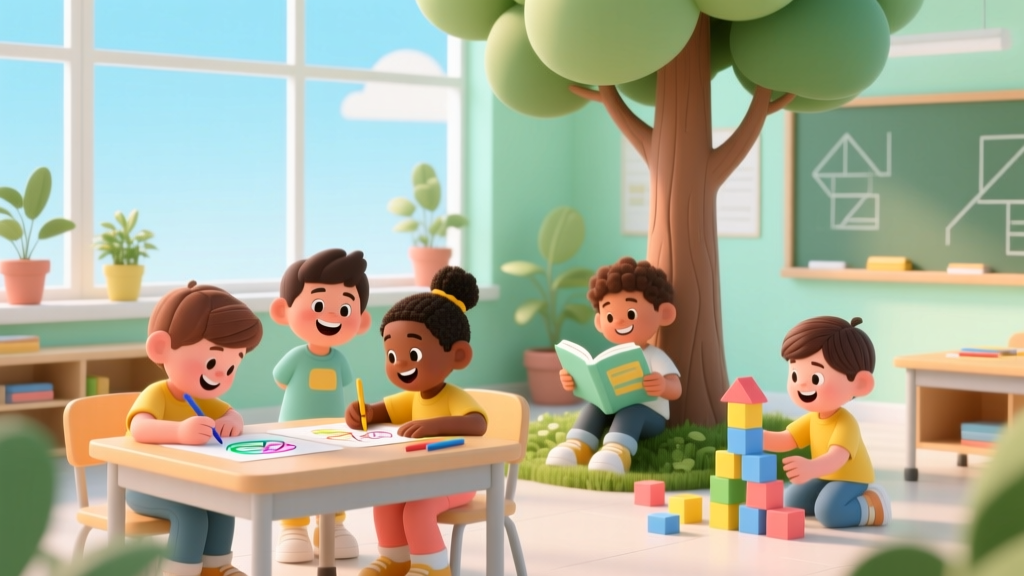
Kids' Civic Responsibility: 7 Age-Adaptable Ways (2026)
Why Teaching Civic Responsibility Starts Long Before Voting Day
How can kids show civic responsibility is a question echoing across dinner tables, PTA meetings, and elementary classrooms — and it’s more urgent than ever. With rising polarization, declining trust in institutions, and record-low youth civic engagement (only 28% of U.S. 12–14-year-olds report feeling 'very prepared' to participate in democracy, per the 2023 CIRCLE Youth Survey), parents and educators are rightly asking: What does meaningful, developmentally appropriate civic action look like for children under 12? It’s not about memorizing the Preamble or staging mock elections—it’s about cultivating empathy, agency, and belonging through daily, tangible acts that honor their growing capacity to care, contribute, and lead.
Start Small, Root Deep: The Developmental Science Behind Early Civic Identity
Civic identity isn’t born at 18—it’s built incrementally, beginning in toddlerhood. According to Dr. Stephanie Jones, developmental psychologist and director of Harvard’s EASEL Lab, "Children begin forming moral frameworks as early as age 2—when they notice fairness, protest injustice, and offer comfort to peers. These aren’t ‘pre-civic’ behaviors; they’re the foundational neural and emotional scaffolding for lifelong civic competence." What matters most isn’t scale, but consistency and intentionality: linking everyday actions to shared values like respect, fairness, and care for others.
Consider Maya, a 6-year-old in Portland whose classroom adopted a ‘Kindness Post Office.’ Students wrote anonymous notes of appreciation for cafeteria staff, custodians, and bus drivers—then delivered them weekly with hand-drawn stamps. Within two months, teachers observed a 40% drop in playground conflicts and sustained increases in peer-helping behaviors (tracked via observational rubrics). Why did it work? Because it was visible, relational, and reciprocal—not abstract or performative. It connected Maya’s actions to real people, real impact, and her own sense of dignity.
Key principles for grounding civic learning in development:
- Under age 5: Focus on empathy-building (e.g., naming feelings, role-playing sharing), simple routines (feeding pets, watering plants), and recognizing helpers (firefighters, librarians).
- Ages 5–8: Introduce concepts of fairness and rules through games, family meetings, and collaborative chores—always linking ‘what we do’ to ‘why it matters for our group.’
- Ages 9–12: Support voice and agency—co-designing class contracts, researching local issues (e.g., park cleanliness, food insecurity), and leading small-scale projects with adult scaffolding.
From Theory to Action: 4 Proven, Low-Cost Strategies Families Can Start Tomorrow
Forget expensive kits or curriculum subscriptions. The most effective civic habits grow from ordinary moments—reimagined with purpose. Here’s how to embed them authentically:
1. Turn Chores into Community Contributions
Instead of framing tidying as obedience, reframe it as stewardship. Say: “When you put your toys away, you’re helping keep our home safe and welcoming for everyone—including your baby cousin who visits next week.” This connects personal action to collective well-being. For older kids, co-create a ‘Family Contribution Board’ listing tasks alongside their civic ‘why’: e.g., “Sorting recycling → protects animals’ habitats” or “Baking cookies for neighbors → builds neighborhood trust.”
2. Practice ‘Micro-Advocacy’ Daily
Advocacy isn’t just protests or petitions—it’s respectfully speaking up when something feels unfair. At dinner, ask: “When did you notice something wasn’t fair this week? How did you respond—or wish you had?” Then brainstorm kind, clear responses (“I feel upset when…” or “Can we try a different way?”). Role-play scenarios: a friend taking someone’s lunch, a teacher calling on only certain students. This builds emotional regulation *and* civic courage—skills the American Academy of Pediatrics calls “essential for healthy adolescent development.”
3. Map Your Neighborhood Like a Citizen-Scientist
Grab sidewalk chalk, a notebook, or a free app like iNaturalist and go on a ‘Civic Walk.’ Document what’s working (clean sidewalks, accessible benches) and what’s not (broken streetlights, overflowing trash bins). Then, choose one issue to address: write a polite email to the city council (with parent support), create a ‘Fix This!’ poster for the local library bulletin board, or start a ‘Park Patrol’ where kids collect litter every Saturday. A 2022 University of Michigan study found children who engaged in place-based observation were 3x more likely to initiate solutions—and reported higher self-efficacy scores.
4. Host a ‘Gratitude Exchange’ Instead of a Birthday Party
Swap gifts for contributions. Invite guests to bring gently used books for the school library, pet supplies for the animal shelter, or handmade cards for nursing home residents. Co-create a ‘Gratitude Wall’ where each child shares why their contribution matters. One Chicago family replaced their daughter’s 10th birthday party with a ‘Community Care Day’—making 50 hygiene kits for unhoused teens. “She didn’t miss presents,” said her mom. “She kept showing me photos of the kits for weeks. She felt like she’d done real work.”
Age-Appropriate Civic Actions: A Practical Guide
Not all civic acts are equally safe, meaningful, or developmentally aligned. Below is a research-informed, pediatrician-reviewed guide matching actions to cognitive, social-emotional, and physical readiness—with supervision notes and red-flag warnings.
| Age Range | Action Example | Developmental Benefits | Safety & Supervision Notes | Red Flags to Avoid |
|---|---|---|---|---|
| 3–5 years | Helping plant flowers in a community garden plot | Builds cause-effect understanding, fine motor skills, connection to nature | Adult must handle tools; use non-toxic, native plants; supervise soil contact | Forcing participation; using language like “good citizen” without explanation |
| 6–8 years | Writing thank-you letters to local first responders | Strengthens literacy, perspective-taking, gratitude expression | Use pre-approved templates; verify mailing addresses with school or fire station; no personal info shared | Letters containing political opinions or unsupervised online submissions |
| 9–11 years | Organizing a school supply drive for refugee families | Develops project planning, collaboration, cultural humility, budgeting basics | Partner with school counselor or nonprofit; vet recipient orgs via BBB Wise Giving Alliance; never share donor names publicly | Public shaming of peers who don’t donate; unvetted social media campaigns |
| 12+ years | Co-facilitating a ‘Civic Literacy Lunch & Learn’ for younger students | Reinforces knowledge retention, leadership, public speaking, mentoring skills | Require adult co-facilitator; pre-screen content with school librarian; avoid partisan topics (focus on process: voting mechanics, media literacy) | Assigning teens to debate controversial legislation without training or emotional support |
Frequently Asked Questions
Can civic responsibility be taught—or is it purely inherited?
It’s overwhelmingly teachable—and research confirms it’s more influenced by environment than genetics. A landmark 2021 longitudinal study in Child Development tracked over 1,200 children from age 4 to 16 and found that consistent modeling (e.g., parents discussing community news calmly), participatory family routines (e.g., volunteering together monthly), and explicit value conversations (“Why do you think libraries matter?”) predicted strong civic identity at age 16—even after controlling for socioeconomic status and IQ. Genetics may influence temperament (e.g., empathy sensitivity), but civic habits are learned behaviors reinforced through repetition and reflection.
My child seems apathetic—what’s the best way to spark interest?
Don’t lead with duty—lead with curiosity and connection. Ask open-ended questions rooted in their world: “What makes you feel proud of our neighborhood?” or “If you could change one thing about your school, what would it be—and how might you start?” Then, co-research solutions. Apathy often masks overwhelm or disconnection—not indifference. When 11-year-old Leo told his dad he “didn’t care” about climate change, his dad responded, “What if we spent 20 minutes this weekend watching how bees pollinate flowers in our backyard? No agenda—just noticing.” That sparked a year-long citizen science project tracking local pollinators. Start where their attention already lives.
Is it okay to tie civic actions to rewards (stickers, screen time)?
Short-term incentives can launch engagement—but they risk undermining intrinsic motivation if overused. According to Dr. Mark Lepper’s decades of research on motivation, extrinsic rewards are most effective when they’re unexpected, symbolic (e.g., a ‘Civic Helper’ badge made from recycled materials), and paired with genuine praise focused on effort and impact (“You listened so carefully to Ms. Rosa’s needs—that’s how great helpers act”). Avoid transactional language: “If you volunteer, you get iPad time.” Instead, frame rewards as celebrations of growth: “Let’s bake cookies to share with the team—you’ve been such a thoughtful collaborator!”
How do I talk about difficult civic issues (racism, inequality) with young kids?
Use age-appropriate, concrete language—and center humanity, not ideology. For ages 3–7: “People have different skin colors, hair textures, and family traditions—and that makes our world beautiful and strong. Sometimes, unfair rules hurt some people more than others. We fix that by listening, speaking up kindly, and making sure everyone feels welcome.” For ages 8–12: Introduce historical context simply (“A long time ago, laws treated people unfairly based on skin color. People protested peacefully to change them—and we still work to make things fair today”). Always emphasize agency: “What’s one way we can help make things fairer right here, right now?” Rely on trusted resources like EmbraceRace.org and the Anti-Defamation League’s age-specific toolkits.
Does civic responsibility look different across cultures or family structures?
Yes—and honoring those differences is itself a civic act. In many Indigenous communities, civic responsibility centers on reciprocity with land and ancestors; in immigrant families, it may manifest as translating for elders or navigating systems. A 2023 study in Journal of Adolescent Research found Latino adolescents who engaged in familismo-driven service (e.g., caring for younger siblings, supporting grandparents) showed equal or higher levels of civic commitment than peers in formal volunteer programs. The goal isn’t uniformity—it’s helping each child recognize their unique strengths and relationships as sources of power and contribution.
Debunking Common Myths About Kids and Civic Life
Myth #1: “Kids are too young to understand politics or society—they should just focus on school and play.”
Reality: Children absorb societal messages constantly—from ads, news snippets, and adult conversations. Ignoring civic themes doesn’t shield them—it leaves them vulnerable to misinformation and disengagement. As Dr. Beverly Daniel Tatum, psychologist and former Spelman College president, states: “Silence is not neutrality. When adults avoid talking about fairness, power, or community, children fill the void with assumptions—often biased ones.” Play *is* civic practice: negotiating rules in tag, resolving disputes in pretend play, and designing inclusive games all build democratic muscles.
Myth #2: “Volunteering at a soup kitchen is the gold standard for teaching civic responsibility.”
Reality: While valuable, one-off service trips can unintentionally reinforce saviorism or oversimplify complex issues like poverty. More impactful are sustained, reciprocal engagements: tutoring a peer, co-designing a school garden with refugee families, or partnering with a local elder to record oral histories. The National Youth Leadership Council emphasizes “service-learning”—where action is paired with critical reflection and academic connection—as the highest-impact model.
Related Topics (Internal Link Suggestions)
- How to raise empathetic children — suggested anchor text: "building empathy in kids"
- Age-appropriate chores for children — suggested anchor text: "developmentally appropriate chores"
- Teaching kids about kindness and respect — suggested anchor text: "kindness education for elementary students"
- Screen time balance for school-age children — suggested anchor text: "healthy digital citizenship for kids"
- Montessori-inspired community service ideas — suggested anchor text: "Montessori civic learning activities"
Ready to Grow Civic Confidence—One Small Step at a Time
How can kids show civic responsibility isn’t a question with a single answer—it’s an invitation to witness, nurture, and celebrate the ways your child already contributes to the world. You don’t need grand gestures or perfect execution. Start tonight: ask one question at dinner (“Who helped you today—and how did it feel to receive that help?”). Notice the response. Reflect on it together. That moment—curious, connected, grounded in relationship—is where civic life begins. Then, pick one action from the Age-Appropriateness Guide above and commit to trying it within 72 hours. Share your story with us using #CivicKids—we’ll feature authentic family experiments in our monthly newsletter. Because the health of our democracy isn’t measured in votes alone—it’s measured in how many children feel seen, capable, and deeply, joyfully part of something bigger than themselves.
More Articles
 Brooke’s Kids on Bold and Beautiful: Family Truths (2026)
 Can Kids Take Afrin? Safety, Age Limits & Alternatives
 Kid Lunch Ideas: Nutritionist-Approved & Allergy-Safe (2026)
 Caroline Kennedy Schlossberg Kids: How Many in 2026
 Kevin Jonas Kids: Parenting Philosophy & Privacy
 Is Ashwagandha Safe for Kids? Pediatrician-Reviewed (2026)
 Where Are Ruby Franke Kids Now Reddit (2026)
 Jurassic World Rebirth: Age Guide & Anxiety Tips (2026)
 Kids Melanoma: Early Signs & Skin Check (2026)
 Does Tom’s Kids Toothpaste Have Lead? (2026)