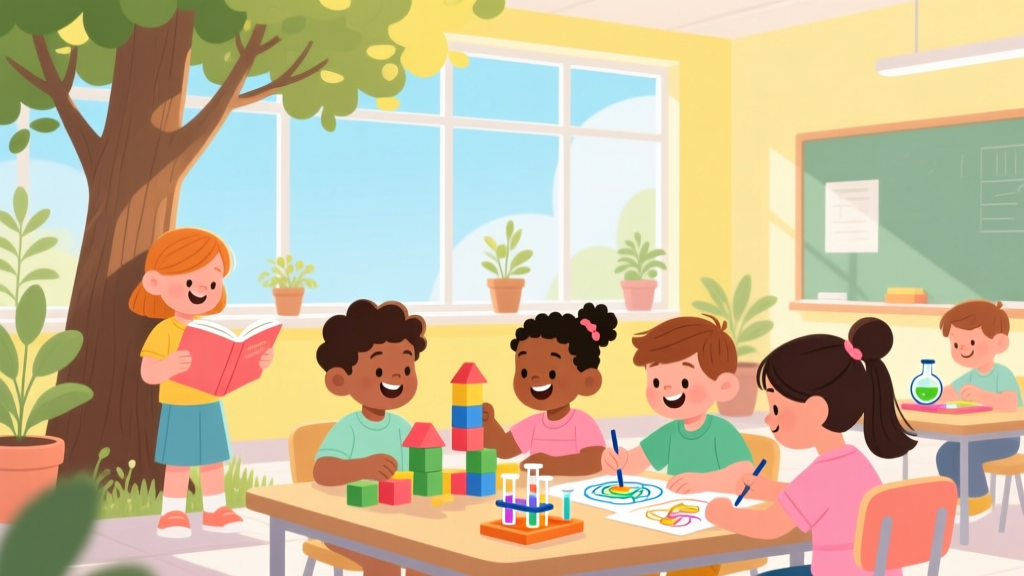
Does My Kid Need Speech Therapy? 7 Early Red Flags
When Your Gut Says Something’s Off — And Why That Matters
If you’ve ever whispered to yourself, "Does my kid need speech therapy?" while watching your 22-month-old point silently instead of naming the dog, or heard your 3-year-old say "wabbit" consistently without self-correcting — you’re not overreacting. You’re noticing. And that noticing is the single most powerful first step toward supporting your child’s communication development. In fact, according to the American Speech-Language-Hearing Association (ASHA), children who begin speech-language intervention before age 3 show significantly stronger language outcomes — up to 2.5x faster progress in expressive vocabulary growth compared to those who start after age 4. Yet nearly 60% of parents delay seeking evaluation because they’re told, 'He’ll grow out of it' or 'Girls talk earlier — just wait.' This isn’t patience. It’s missed opportunity. Let’s replace uncertainty with clarity — grounded in science, seasoned by clinical experience, and written for the exhausted, loving parent holding their child’s hand at the playground, wondering if they’re doing enough.
What ‘Delayed’ Really Means — And Why Milestones Are Just One Piece of the Puzzle
Developmental milestones are useful signposts — but they’re not diagnostic stoplights. The CDC’s updated 2022 milestone checklist flags key markers like using 50+ words by age 2 or combining two words (“more juice,” “daddy go”) by 24 months. But here’s what many well-meaning pediatricians don’t emphasize: it’s not just *what* your child says — it’s *how* they communicate, *how* they respond, and *how much effort* it takes them.
Consider Maya, a bright, socially engaged 28-month-old referred by her daycare teacher. She used 60+ words — technically “on track” — but rarely initiated conversations, didn’t follow two-step directions (“Get your shoes and put them by the door”), and became visibly frustrated when misunderstood, often shutting down or hitting rather than trying alternative ways to express herself. Her pediatrician initially said, “She’s verbal — no referral needed.” A pediatric speech-language pathologist (SLP) saw something deeper: a significant receptive language gap and pragmatic (social use of language) delay. Within 10 weeks of therapy, Maya began using gestures + words (“me juice!”), responding to her name from another room, and taking turns in simple games — changes her parents described as “like a light switch flipped.”
So beyond counting words, watch for these five functional indicators — backed by ASHA’s Clinical Practice Guidelines and validated in longitudinal studies (Journal of Speech, Language, and Hearing Research, 2021):
- Consistent lack of response to their name by 12 months — especially when not distracted and in quiet settings
- No babbling with consonant-vowel combinations (e.g., “ba-ba,” “da-da”) by 12 months — not just cooing or vowel-only sounds
- No gestures (waving, pointing, reaching) by 12 months — gesture is the strongest predictor of later spoken language
- No single words by 16 months OR no two-word phrases (not just imitations) by 24 months
- Loss of any previously acquired words or social skills at any age — this is a critical red flag requiring immediate evaluation
Importantly: bilingual households are not at higher risk for true language disorder — but may show temporary “silent period” or code-mixing. A qualified bilingual SLP can distinguish typical dual-language development from delay. As Dr. Elena Rodriguez, a pediatric SLP and researcher at Boston Children’s Hospital, states: “Bilingualism doesn’t cause delay — but it does require assessment in *both* languages to avoid misdiagnosis.”
The 3-Step Parent Action Plan: From Doubt to Diagnosis (Without the 6-Month Wait)
You don’t need a doctor’s referral to start — and you shouldn’t wait for one. Here’s how to move forward efficiently, ethically, and compassionately:
- Document & Compare (15 minutes): Grab your phone or notebook. Record 3–5 short clips (even 30 seconds each) of your child playing independently, interacting with you, and during a routine (mealtime, bath). Note: What words do they use? Do they look at your face when you speak? Do they try to get your attention *before* asking for something? Use ASHA’s free Speech & Language Development Chart as your baseline — but remember: charts show averages, not absolutes.
- Request a Free Evaluation (No Referral Needed): In all 50 U.S. states, Early Intervention (EI) services provide no-cost evaluations for children birth–3 years under IDEA Part C. Call your state’s EI program directly (find yours at CDC’s Early Intervention Directory). They’ll assign a service coordinator within 5 business days. No pediatrician signature required. For kids 3+, contact your public school district’s Child Find office — also free and federally mandated.
- Prepare for the Evaluation Like a Pro: Bring your notes, videos, and a list of your top 3 concerns (e.g., “He understands everything but only uses 8 words,” “She avoids eye contact when I ask questions”). Ask the SLP: “What specific skills will you assess?” and “How will you differentiate between delay and disorder?” A skilled clinician will observe play, interact naturally, and test both receptive (understanding) and expressive (speaking) language — plus speech sound production, fluency, and social communication.
Pro tip: If your insurance covers private SLPs, call ahead and ask: “Do you accept new patients for diagnostic evaluations? What’s your average wait time?” Many top-tier clinics have 2–4 week slots for assessments — far faster than the 3–6 month pediatrician-to-specialist pipeline.
What Therapy Actually Looks Like — And Why Play Is the Most Powerful Tool
“Speech therapy” conjures images of flashcards and drills — but for young children, it’s nothing like that. Modern, evidence-based pediatric SLP practice is deeply embedded in play, routines, and relationships. Think: blowing bubbles to strengthen oral muscles, hiding toys in a sensory bin to build vocabulary (“find the duck!”), singing repetitive songs with gestures (“Itsy Bitsy Spider”), or using picture cards during snack time to request “cracker” or “more.”
According to the Hanen Centre’s research on parent-coached interventions, children whose caregivers are trained in responsive communication strategies (like following the child’s lead, expanding utterances, and waiting 5+ seconds for response) make gains equivalent to 2x weekly clinic sessions — without stepping foot in an office. That’s why the best SLPs spend session time coaching *you*, not just your child.
Here’s what to expect across common needs:
- Articulation delays: Focus on motor planning and sound discrimination — often resolved in 6–12 months with consistent practice.
- Expressive/receptive language delays: Target vocabulary, sentence structure, and comprehension through play-based modeling and visual supports (like core word boards).
- Childhood apraxia of speech (CAS): A neurological motor speech disorder requiring intensive, frequent therapy (3x/week) using multisensory cues (touch, visual, auditory).
- Stuttering: Early intervention (before age 5) has >80% success rate using the Lidcombe Program — a behavioral, parent-delivered approach proven in RCTs.
Crucially: therapy isn’t about “fixing” your child. It’s about removing barriers so their brilliant mind can connect with the world — clearly, confidently, and joyfully.
Early Intervention Impact: The Data Behind the Hope
Let’s cut through the noise with hard evidence. The table below synthesizes findings from three landmark studies (ASHA 2023 Evidence Map, NIH Early Childhood Longitudinal Study, and a 2022 meta-analysis in Pediatrics) tracking children who received EI speech-language services before age 3 versus those who waited:
| Outcome Measure | Children Receiving EI Before Age 3 | Children Starting After Age 4 | Statistical Significance |
|---|---|---|---|
| Average expressive vocabulary at age 5 | 280+ words | 140–160 words | p < 0.001 |
| Need for ongoing special education services (K–3) | 18% | 62% | p < 0.001 |
| Parent-reported stress levels (validated scale) | Decreased 42% within 6 months | No significant change | p = 0.003 |
| Academic readiness scores (Bracken Basic Concept Scale) | 92nd percentile | 58th percentile | p < 0.001 |
| Cost to family (out-of-pocket, lost wages, travel) | $1,200 avg. (EI covered 95%) | $8,700+ avg. (private therapy + tutoring) | p < 0.001 |
This isn’t theoretical. It’s measurable, replicable, and profoundly life-shaping. As Dr. Lisa Chen, a developmental pediatrician and AAP Council on Children with Disabilities member, affirms: “Early speech-language intervention is among the highest-yield investments we can make in a child’s future — academically, socially, and emotionally. Delaying is never neutral.”
Frequently Asked Questions
Will speech therapy make my child feel “different” or damage their self-esteem?
No — when done right, therapy builds confidence. Skilled pediatric SLPs embed goals into play, never shame or correct harshly, and celebrate every attempt. We teach children that communication is powerful — not perfect. In fact, studies show children in play-based therapy report higher self-efficacy and social motivation than peers receiving drill-based instruction. The key is finding a therapist who prioritizes relationship-building and follows your child’s lead.
My pediatrician says “wait and see” — should I trust that?
Trust your instincts first. While some variation is normal, “wait and see” is outdated guidance. The AAP now recommends referring immediately for evaluation if any red flag is present — not waiting 2–3 months. A 2023 AAP policy statement explicitly cautions against delayed referrals, citing evidence that even 3 months of delay reduces treatment efficacy by 15–20%. Get a second opinion — from a certified SLP, not another general practitioner.
Can screen time cause speech delays?
Passive screen exposure (background TV, endless videos) is linked to language delays — especially under age 2. The AAP recommends zero screen time (except video-chatting) for infants/toddlers under 18 months. Why? Screens don’t respond, don’t follow gaze, and don’t engage in contingent conversation — the very interactions that wire language networks in the brain. But interactive, co-viewed video calls with grandparents? That’s rich social language practice.
Is speech therapy covered by insurance or schools?
Yes — robustly. Early Intervention (birth–3) is fully funded by state/federal funds (no cost to families). Public schools (age 3+) must provide free, appropriate services if a child qualifies under IDEA. Private insurance coverage varies, but most plans cover diagnostic evaluations and medically necessary therapy (check your plan’s “speech-language pathology” benefit). Denials happen — but are often appealable with a letter from your pediatrician citing functional impact (e.g., “child cannot follow classroom instructions”).
What if my child is diagnosed with autism — is speech therapy still helpful?
Not just helpful — essential. Over 90% of autistic children experience language differences, ranging from nonverbal to highly verbal with pragmatic challenges. SLPs are core members of autism diagnostic and intervention teams. They address core areas: functional communication (AAC devices if needed), social-pragmatic skills (turn-taking, reading facial cues), narrative development, and sensory regulation strategies tied to communication. Research shows early SLP involvement improves long-term social outcomes more than any other single intervention.
Common Myths
Myth #1: “Boys talk later — it’s totally normal.”
While boys *average* slightly later first words (by ~1–2 months), clinically significant delay affects boys and girls equally. Waiting “because he’s a boy” leads to 40% longer delays in identification and intervention — per a 2022 study in JAMA Pediatrics.
Myth #2: “If they understand everything, their speech will catch up.”
Receptive language (understanding) and expressive language (speaking) develop along parallel but distinct neural pathways. A child can comprehend complex sentences yet struggle to produce even simple ones — indicating a specific expressive language disorder requiring targeted support. Understanding ≠ speaking ability.
Related Topics (Internal Link Suggestions)
- Signs of autism in toddlers — suggested anchor text: "early autism signs parents miss"
- Best AAC devices for nonverbal toddlers — suggested anchor text: "simple AAC tools for preschoolers"
- How to choose a pediatric speech therapist — suggested anchor text: "questions to ask before hiring an SLP"
- Free speech therapy activities at home — suggested anchor text: "play-based language boosters"
- Understanding IEP vs. 504 plan for speech — suggested anchor text: "school support for language delays"
Your Next Step Isn’t Waiting — It’s Connecting
You asked, "Does my kid need speech therapy?" — and the answer isn’t a yes/no binary. It’s a compassionate, informed next step. Whether that’s calling your state’s Early Intervention office today, filming a 30-second video of your child’s morning routine, or simply sharing this article with your pediatrician at your next visit — you’re already advocating. You’re already supporting. You’re already building the foundation for your child’s voice to be heard, understood, and valued. Don’t wait for permission. Don’t wait for certainty. Start where you are, use what you have, and reach out — because every day of connection, every shared glance, every attempted word matters. Your awareness is the first, most vital therapy session. Now, take that breath — and make the call.
More Articles
 How Many Kids Does Donald Trump Jr. Have? (2026)
 Disney World Must Haves for Kids (2026)
 Can You Claim Foster Kids on Taxes? (2026)
 How Many Kids Bud Crawford Have (2026)
 Hydrogen Water for Kids: Pediatrician-Reviewed Facts
 Is 100.2°F a Fever in Kids? Pediatrician Tips
 Kids Braces Cost: Real 2026 Prices & Smart Savings
 Can Kids Get Tattoos? A Parent’s Evidence-Based Guide
 How Often Should Kids See a Dentist? (2026)
 Booster Seat Readiness Guide: When & How to Switch Safely