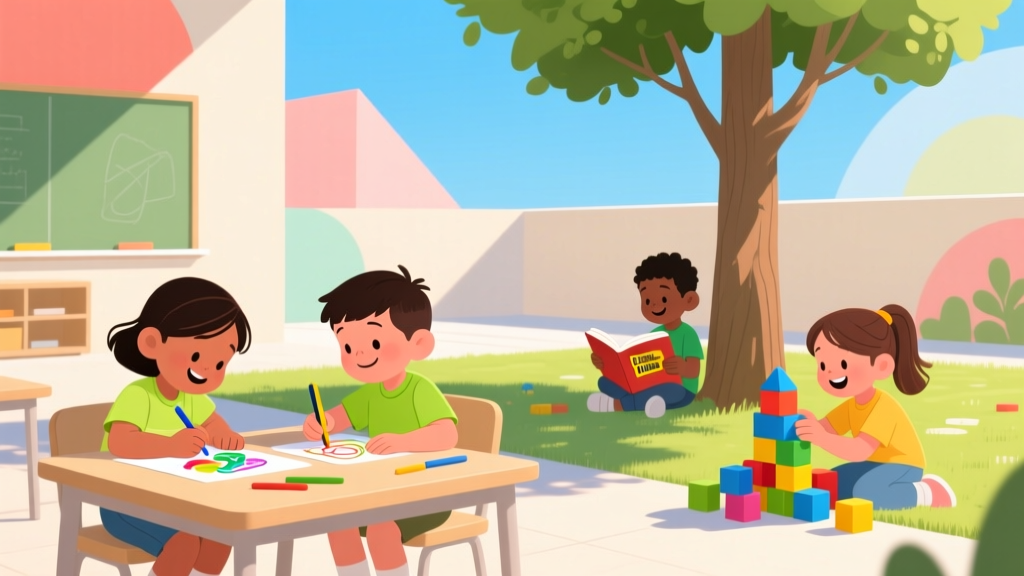
Kids Homework: What Research Shows (2026)
Why This Question Isn’t Just About Assignments — It’s About Childhood Itself
Every night, in kitchens and living rooms across the country, parents ask themselves: do kids need homework? Not as an abstract debate — but as a visceral reality: the sigh before math worksheets, the 8 p.m. meltdown over spelling lists, the guilt of choosing between helping with fractions or reading aloud, the exhaustion when your third grader still hasn’t touched their ‘optional’ science journal. This isn’t just about academic rigor — it’s about sleep deprivation, eroded family time, widening equity gaps, and the quiet unraveling of intrinsic motivation. And right now, it matters more than ever: after three years of pandemic-related learning disruption, schools are doubling down on traditional homework loads — even as neuroscientists and developmental psychologists sound urgent alarms about cognitive overload in developing brains.
The Evidence Is Clear — But Not Simple
Let’s start with what decades of research actually say — not what textbooks or school handbooks assume. According to a landmark 2022 meta-analysis published in Educational Researcher, which reviewed 195 studies spanning 62 years, homework shows no measurable academic benefit for elementary students (Grades K–5). For middle schoolers (Grades 6–8), the correlation with achievement is weak — and only emerges when assignments are purposeful, brief (≤60 minutes total), and directly tied to classroom instruction. High school students see modest gains — but only up to 90–120 minutes per night. Beyond that, performance plateaus — then declines.
Dr. Harris Cooper, Duke University psychologist and author of The Battle Over Homework, puts it plainly: “Homework is not inherently good or bad. Its value depends entirely on who it’s assigned to, what it asks them to do, how much is assigned, and how supported the student feels at home.” Yet most districts operate without this nuance — assigning uniform worksheets regardless of reading level, home resources, or neurodiversity.
Consider Maya, a 9-year-old in Austin, TX, diagnosed with ADHD and dyslexia. Her daily 45-minute homework load included copying vocabulary definitions, timed multiplication drills, and handwriting practice — none of which aligned with her IEP goals. After six weeks of stress-induced stomachaches and bedtime resistance, her parents collaborated with her teacher to replace written tasks with audiobook reflections, voice-recorded summaries, and hands-on fraction games using measuring cups and recipes. Within two weeks, Maya’s engagement soared — and her math fluency improved faster than with rote practice. Her story isn’t exceptional; it’s evidence of what happens when homework serves the child, not the system.
What ‘Purposeful Homework’ Actually Looks Like (With Real Examples)
Purposeful homework isn’t defined by volume — it’s defined by intentionality, accessibility, and alignment. Here’s how top-performing schools and progressive educators structure it:
- Grade K–2: Zero mandatory assignments. Instead: 10 minutes of shared reading (with caregiver), one open-ended drawing prompt (“Draw something that made you curious today”), or a 5-minute ‘family observation walk’ (notice shapes, sounds, textures).
- Grades 3–5: Max 20 minutes/day, 3x/week. Must be self-directed: choice boards (e.g., “Pick ONE: interview a grandparent about childhood games, build a bridge with toothpicks and marshmallows, write 3 questions you’d ask a scientist”), not fill-in-the-blank packets.
- Grades 6–8: Max 45 minutes/day, focused on synthesis: annotate a short article, record a 90-second video explaining a concept in their own words, or design a survey about a class topic and analyze results.
- Grades 9–12: Project-based, scaffolded, and differentiated: e.g., “Revise your lab report using peer feedback” instead of “Answer questions 1–10,” or “Draft one paragraph of your college essay reflecting on resilience” instead of “Read Chapter 7 and summarize.”
Crucially, purposeful homework includes built-in flexibility: no penalties for incomplete work due to illness, tech issues, or caregiving responsibilities — because, as Dr. Lisa Damour, clinical psychologist and author of The Emotional Lives of Teenagers, reminds us: “When we equate compliance with competence, we teach kids that their worth hinges on performance — not growth, curiosity, or integrity.”
The Hidden Costs: When Homework Undermines What It’s Meant to Build
Too often, homework backfires — not because children are lazy or unmotivated, but because it contradicts how learning actually works. Neuroscience confirms that memory consolidation happens during sleep — yet 42% of U.S. middle schoolers get less than 8 hours of sleep on school nights (CDC, 2023), largely due to homework pressure. Chronic sleep loss impairs prefrontal cortex function — the very brain region responsible for focus, emotional regulation, and executive function. In other words: excessive homework literally makes kids worse at doing homework.
Then there’s the equity crisis. A 2021 UCLA study found that low-income students spend 37% less time on homework than peers from high-income families — not due to effort, but because of competing demands: caring for siblings, working part-time jobs, unstable internet access, or lack of quiet study space. When homework counts toward grades, it becomes a proxy for privilege — not academic ability.
And let’s talk about joy. Dr. Peter Gray, research professor at Boston College and leading advocate for self-directed learning, tracked over 500 homeschooled and democratic-school children for 10 years. His finding? Students who engaged in zero traditional homework showed higher levels of sustained curiosity, deeper conceptual understanding, and stronger long-term retention — because they spent evenings reading novels of choice, building robots, gardening, or debating ethics with family. “Learning isn’t confined to desks or deadlines,” he writes. “It’s woven into lived experience — when children have agency, time, and space to explore what matters to them.”
Your Action Plan: A 4-Step Framework to Advocate (and Adapt)
You don’t need to wait for district policy to change. You can protect your child’s well-being — and still support their growth — starting tonight. Here’s how:
- Observe & Document: For one week, track: time started/ended, emotional state (1–5 scale), assistance needed, and whether work felt connected to class learning. Note patterns — e.g., “Math worksheet always triggers tears after 12 minutes,” or “Science diagram took 30 minutes but she explained concepts clearly afterward.”
- Reframe the Conversation: Approach teachers not with complaints, but with collaboration: “We love supporting [Child’s Name]’s learning — could we discuss how this assignment connects to current classroom goals? Are there alternative ways to demonstrate understanding?” Bring your documentation.
- Co-Create Alternatives: Propose 1–2 low-lift swaps: audio summaries instead of written responses, concept mapping instead of flashcards, teaching the idea to a pet or sibling instead of re-reading notes. Most educators welcome thoughtful suggestions — especially when grounded in your child’s strengths.
- Protect Non-Negotiables: Enforce sacred time blocks: 30 minutes of unstructured play, 20 minutes of reading for pleasure, and 8+ hours of sleep — no exceptions. These aren’t luxuries; they’re neurobiological necessities for learning.
| Age Group | Research-Backed Max Time | High-Value Alternatives | Red Flags to Discuss with Teacher |
|---|---|---|---|
| K–2 | 0 minutes (optional, family-led) | Shared storytelling, nature scavenger hunts, cooking measurements, singing counting songs | Worksheets requiring fine motor precision beyond developmental norms; assignments requiring >10 min of sustained focus |
| Grades 3–5 | 20 min max, 3x/week | Choice-based inquiry projects (e.g., “How do birds build nests?” → build model, film documentary, draw field guide), family math games (Set, Prime Climb), reflective journals | Repetitive drill-and-kill; no choice or voice; requires parental teaching to complete |
| Grades 6–8 | 45 min max, daily | Peer teaching videos, annotated real-world articles (news, podcasts), design challenges (e.g., “Design a water filter using household items”), community interviews | Assignments unrelated to class content; grading penalizes late submissions without accommodation; tech requirements inaccessible at home |
| Grades 9–12 | 90–120 min max, subject-specific | Self-paced skill modules (Khan Academy, PhET sims), interdisciplinary research proposals, mentorship logs, creative adaptations (e.g., rewrite Shakespeare scene as TikTok script) | “Busywork” (e.g., copying definitions); no rubric or feedback loop; conflates effort with mastery |
Frequently Asked Questions
Does homework improve test scores?
Not consistently — and rarely for younger students. A 2020 Stanford study tracking 4,300 students found zero correlation between elementary homework volume and standardized test performance. For older students, gains appear only when homework reinforces recently taught concepts, includes timely feedback, and allows for revision — conditions rarely met in large-classroom settings. As education researcher Dr. Alfie Kohn states: “If homework were truly effective, we’d see massive achievement gains in countries like Finland, where students average zero minutes of nightly homework until high school — yet rank among the world’s top performers.”
What should I do if my child’s teacher insists on heavy homework loads?
Start with empathy — many teachers assign homework out of habit, district pressure, or genuine (but outdated) belief in its efficacy. Request a 15-minute meeting to share your observations and ask: “What specific skill or standard does this assignment target? How will you assess mastery beyond completion? Are there flexible options for students with different learning needs?” Bring research (like the table above) — not as confrontation, but as partnership. If resistance persists, escalate respectfully to the grade-level team or curriculum coordinator, citing AAP (American Academy of Pediatrics) guidelines recommending homework-free weekends and holidays to support mental health.
Is there any type of homework that’s truly beneficial for young children?
Yes — but only if it’s authentic, joyful, and relational. Think: interviewing a family elder about immigration stories (language arts + social studies), tracking weather patterns for a week and graphing results (math + science), planting seeds and journaling growth (biology + writing). The key isn’t ‘schoolwork at home’ — it’s extending curiosity into daily life. As Montessori educator Angeline Lillard emphasizes: “Children learn through movement, choice, and real consequence — not passive repetition. When homework mirrors those principles, it becomes play with purpose.”
How do I know if my child is overwhelmed — not just resistant?
Resistance is common; overwhelm shows in physiological and behavioral shifts: chronic fatigue, increased irritability or tearfulness *before* starting work, physical complaints (headaches, stomachaches), avoidance tactics (suddenly needing snacks, bathroom breaks, or ‘finding’ supplies), or perfectionism (erasing repeatedly, refusing to submit unfinished work). These aren’t defiance — they’re nervous system signals. Pause. Observe. Connect first. Then co-design solutions — never punish the symptom.
Common Myths
Myth #1: “Homework builds responsibility and time management.”
Reality: Responsibility grows through meaningful contribution — not compliance. Chores, volunteering, caring for pets, or managing a small budget teach accountability far more authentically than completing worksheets. Time management develops best when children plan *their own* projects — not when adults dictate deadlines for arbitrary tasks.
Myth #2: “More practice = better mastery.”
Reality: Cognitive science shows spaced, interleaved, and self-explained practice beats massed repetition. A 2023 study in Journal of Educational Psychology found students who spent 15 minutes reviewing flashcards over 3 days retained 68% more than peers who crammed for 45 minutes. Purpose trumps volume — every time.
Related Topics (Internal Link Suggestions)
- How to Talk to Teachers About Homework — suggested anchor text: "collaborative homework conversations"
- Best Educational Activities for Kids Without Screens — suggested anchor text: "screen-free learning ideas"
- Signs of Academic Burnout in Children — suggested anchor text: "childhood burnout symptoms"
- Montessori-Inspired Learning at Home — suggested anchor text: "Montessori home activities"
- Sleep Needs by Age: Why Rest Is Non-Negotiable Learning Time — suggested anchor text: "sleep and academic performance"
Final Thought: Your Child’s Mind Is Not a Container to Fill — It’s a Fire to Kindle
So — do kids need homework? The answer isn’t yes or no. It’s only if it ignites curiosity, deepens connection, and honors their humanity. When homework replaces wonder with worry, exploration with exhaustion, or family time with frustration — it fails its deepest purpose. You hold more power than you realize: to observe, question, adapt, and advocate. Start small. Protect one evening. Swap one worksheet for a conversation. Watch what blooms when learning breathes. Then — share what works. Because the future of education won’t be redesigned in boardrooms alone. It will be reclaimed, one kitchen table, one bedtime, one compassionate choice at a time. Ready to take your first step? Download our free Homework Audit Toolkit — a printable checklist, sample teacher scripts, and 20+ no-prep alternative activities — all designed by child development specialists and veteran educators.
More Articles
 Does Corey Gamble Have Kids? Truth & Privacy Insights
 Scream 7 for Kids? Age-Readiness Checklist (2026)
 How Many Kids Does RFK Have? Meet His 7 Children
 How Many Kids Does Trevor Lawrence Have? (2026)
 The Simpsons for Kids: Pediatrician-Approved Episodes (2026)
 When Do Kids Grow Molars? Timeline & Red Flags
 Belgian Malinois with Kids: Truth, Temperament & Red Flags
 How Many Kids Does Lauren Sanchez Have? (2026)
 Why Have Kids? 7 Evidence-Based Reasons (2026)
 Candy Bomber Berlin: How Halvorsen Delivered Joy Safely