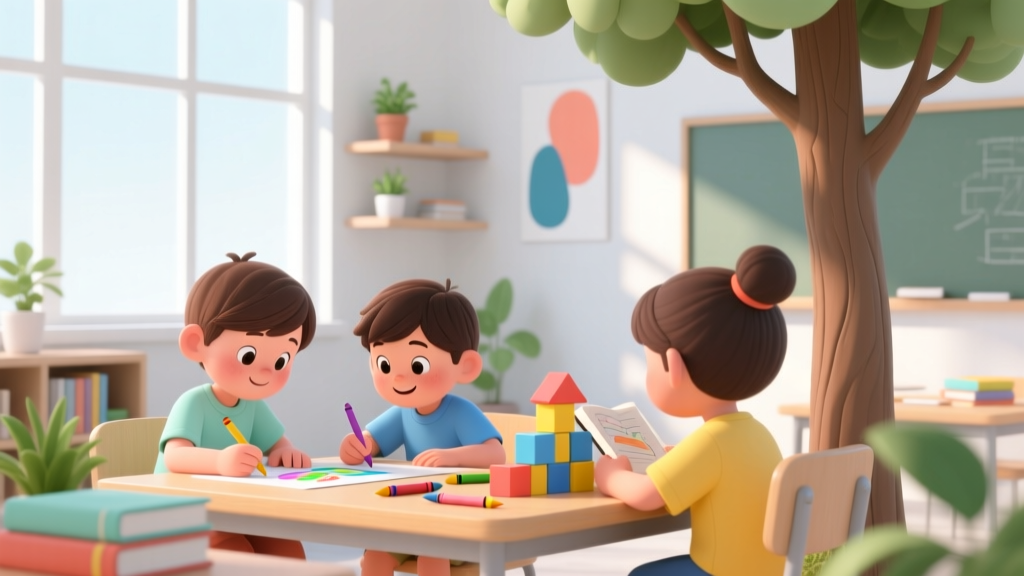
Preschool Required? Rules, Benefits & Pediatrician Advice
Why This Question Matters More Than Ever
Do kids have to go to preschool? That simple question carries the weight of sleepless nights, budget spreadsheets, and whispered comparisons at playgrounds — especially as kindergarten expectations rise and waitlists for quality programs grow longer. In today’s landscape, where 72% of U.S. kindergarteners arrive with formal pre-academic exposure (National Center for Education Statistics, 2023), parents are increasingly torn between pressure to enroll and instinctive hesitation about pushing too soon. But here’s what most sources won’t tell you upfront: preschool is almost never legally required — yet skipping it *can* carry subtle, long-term consequences depending on your child’s temperament, home environment, and local school system. This isn’t about ‘keeping up’ — it’s about understanding what your child truly needs to thrive, not just survive, in their first structured learning years.
What the Law Actually Says (Spoiler: It’s Not What You Think)
Let’s start with the hard facts. In all 50 U.S. states and Washington D.C., no law mandates preschool attendance. Compulsory education begins at age 5 or 6 — typically aligned with kindergarten entry. However, that doesn’t mean preschool is irrelevant. Thirteen states (including New York, Illinois, and Oklahoma) fund universal pre-K programs — but enrollment remains voluntary. Even in states like California, which expanded transitional kindergarten (TK) to include all 4-year-olds starting in 2025, participation is still optional. As Dr. Elena Martinez, a pediatrician and co-author of the American Academy of Pediatrics’ (AAP) 2022 policy statement on early learning, explains: “Mandating preschool would ignore vast socioeconomic, cultural, and neurodevelopmental diversity. Our goal isn’t uniformity — it’s equitable access to readiness support.”
That said, legal nuance matters. Some districts use preschool screening data to identify children eligible for early intervention services under IDEA (Individuals with Disabilities Education Act). Others tie preschool enrollment to priority placement in magnet or dual-language kindergarten programs. And internationally? Requirements differ sharply: France mandates école maternelle for children aged 3–5; Germany offers optional Kindergarten but requires Vorschule (pre-school year) only for children deemed unready for primary school after assessment. So while the answer to “do kids have to go to preschool?” is consistently no, the stakes of *choosing not to* vary dramatically by zip code and context.
The Real Developmental Trade-Offs: Beyond the ‘School Readiness’ Buzzword
“School readiness” is often cited as the top reason to enroll — but what does that actually mean? According to the National Association for the Education of Young Children (NAEYC), readiness encompasses four interlocking domains: cognitive, language, social-emotional, and physical development. Preschool can accelerate growth in each — but only when it’s high-quality, play-based, and responsive to individual rhythms.
Consider two contrasting real-world cases:
- Ava, age 4, from Portland, OR: Attended a Montessori-inspired preschool three mornings/week. Her teacher documented steady gains in self-regulation (e.g., using a ‘peace corner’ during frustration), emergent literacy (writing her name, recognizing letter sounds), and cooperative play. At kindergarten screening, she scored in the 85th percentile for social-emotional skills — a predictor strongly linked to later academic persistence (Harvard Center on the Developing Child, 2021).
- Liam, age 5, from rural Tennessee: Stayed home with his grandmother, who read daily, visited libraries, gardened, and enrolled him in weekly community music and nature classes. His kindergarten teacher noted he was ‘exceptionally curious and verbally fluent’ but initially struggled with group transitions and sustained circle-time attention — challenges that resolved within 8 weeks with gentle scaffolding.
The takeaway? Preschool isn’t magic — it’s one pathway among many. What matters more than attendance is intentional stimulation. A landmark 2023 longitudinal study in JAMA Pediatrics tracked 2,800 children across 12 states and found that children who missed preschool but had high-quality home learning environments (measured by the Home Observation for Measurement of the Environment scale) performed statistically identically to preschool attendees on 3rd-grade reading and math assessments — except in social-emotional regulation, where the preschool group held a modest but persistent edge (effect size d = 0.21).
Cost vs. Value: Breaking Down the Hidden ROI (and Hidden Costs)
Let’s talk numbers — because “do kids have to go to preschool?” often translates to “can we afford *not* to?” or “can we afford *to*?” The national median cost for center-based preschool is $9,100/year (Child Care Aware of America, 2024), ranging from $4,200 in Mississippi to $22,700 in Massachusetts. Yet the true cost extends beyond tuition:
- Time tax: Average daily commute + drop-off/pick-up adds 1.8 hours/week — over 90 hours/year.
- Supply strain: Uniforms, snack contributions, field trip fees, and ‘donation requests’ average $320/year.
- Opportunity cost: For stay-at-home caregivers, enrolling may mean sacrificing flexible, relationship-rich time for rigid schedules.
So where’s the return? Research points to concrete, long-term value — but not always where you’d expect. A 2022 Vanderbilt study tracking Tennessee’s pre-K cohort found no significant K–3 academic advantage for the full group — but children from low-income households showed 12% higher 3rd-grade proficiency rates and were 23% less likely to be placed in special education. Meanwhile, high-income families saw greater ROI in social capital: peer networks, parent-teacher alliances, and early access to gifted program referrals.
Here’s how to weigh your personal equation:
| Factor | Preschool Path | High-Quality Home-Based Path | Hybrid Path (e.g., 2 days/week + enriching home routine) |
|---|---|---|---|
| Academic Foundation | Structured literacy/math exposure; consistent routines | Customizable pace; deep dives into child’s interests (e.g., counting shells, mapping constellations) | Builds familiarity with group learning without full immersion |
| Social-Emotional Growth | Peer negotiation, conflict resolution with adult mediation | Stronger 1:1 attachment; may need intentional playdate planning | Gradual exposure to group dynamics; lower anxiety threshold |
| Parent Stress Level | Can reduce isolation; but adds scheduling pressure & financial worry | Greater flexibility; but requires intentional planning & energy investment | Balance of structure and autonomy; moderate time commitment |
| Long-Term ROI Evidence | Strongest for vulnerable populations (low-income, language learners, neurodiverse) | Comparable academic outcomes; superior emotional security metrics | Emerging data shows strongest resilience in kindergarten transition |
When Skipping Preschool Is Strategic (and When It’s Risky)
Not all ‘no’ decisions are equal. Here’s how to discern if opting out serves your child — or inadvertently undermines them:
Green Light to Skip (with intention):
- Your child has strong executive function foundations (follows 3-step directions, manages big emotions with co-regulation, engages in sustained pretend play).
- You have reliable access to rich, varied experiences: bilingual storytimes, museum free days, intergenerational gardening projects, and consistent peer interaction (not just screen-based).
- Your local kindergarten uses play-based, differentiated instruction — not rigid worksheets or standardized readiness screenings.
Yellow Light (Proceed with Assessment):
- Your child shows signs of sensory processing differences (avoids messy play, covers ears frequently, struggles with transitions).
- There’s limited access to community resources (e.g., no public library, few safe outdoor spaces, no affordable playgroups).
- Your district uses high-stakes kindergarten readiness assessments tied to retention or remediation placement.
Red Flag to Reconsider: If your child exhibits multiple developmental concerns — such as minimal joint attention, no symbolic play by age 4, difficulty understanding simple questions, or extreme avoidance of peer interaction — delaying preschool may miss a critical window for early intervention. As Dr. Amara Chen, a developmental-behavioral pediatrician at Boston Children’s Hospital, advises: “Preschool isn’t just preparation for kindergarten — for some children, it’s their first opportunity for diagnosis, therapy integration, and peer modeling. Don’t confuse ‘optional’ with ‘unnecessary.’”
Frequently Asked Questions
Is preschool required for kindergarten enrollment?
No — kindergarten is the first legally required grade in every U.S. state. However, some districts use preschool as a ‘feeder’ for gifted programs or language immersion tracks. Always verify your specific school’s policies; don’t assume universal rules apply.
What’s the difference between preschool, pre-K, and transitional kindergarten (TK)?
Preschool typically serves ages 2.5–4.5, focuses on holistic development through play, and is usually private or community-based. Pre-K (often publicly funded) targets 4-year-olds with curriculum-aligned literacy and math goals. Transitional Kindergarten (TK), offered in CA and expanding elsewhere, is a bridge year for children with fall birthdays who miss the cutoff — it blends pre-K and kindergarten standards with extra social-emotional scaffolding.
My child has ADHD/autism/sensory needs — is preschool beneficial or overwhelming?
It depends entirely on program quality and fit. Small-class, trauma-informed, sensory-friendly preschools with trained staff often provide invaluable support and early skill-building. Conversely, large, rigid, or under-resourced settings can exacerbate challenges. Request classroom observations, ask about staff training in inclusive practices, and prioritize programs with embedded occupational or speech therapists. The AAP emphasizes: “Early inclusion isn’t about ‘fixing’ a child — it’s about adapting the environment to nurture their strengths.”
How do I know if my child is ‘ready’ for preschool?
Readiness isn’t about academic skills — it’s about regulatory capacity. Key signs: Can they separate from you for 2+ hours without prolonged distress? Do they communicate basic needs (‘I’m hungry,’ ‘I need help’)? Can they follow simple routines (e.g., hang coat, sit for storytime)? If 2/3 are consistently true, they’re likely ready. If not, consider a ‘soft launch’ — starting with half-days or parent-accompanied classes.
Are there free or low-cost preschool options?
Yes — but access varies widely. Check for: Head Start (income-eligible, comprehensive services), state-funded pre-K (varies by eligibility), Early Head Start (for infants/toddlers), and community-based nonprofits (e.g., YMCA sliding-scale programs). Also explore public library ‘story lab’ initiatives and university training schools offering low-cost slots supervised by early childhood education students.
Common Myths
Myth 1: “Preschool gives kids a permanent academic head start.”
Reality: While preschool boosts kindergarten entry skills, meta-analyses show this advantage often fades by 3rd grade — unless paired with sustained, high-quality elementary instruction. The lasting benefits are primarily social-emotional and behavioral: better attendance, fewer disciplinary referrals, and stronger teacher-student relationships.
Myth 2: “If my child is bright, they don’t need preschool.”
Reality: Intellectual curiosity doesn’t equate to social or regulatory readiness. Many gifted children struggle with peer negotiation, handling constructive feedback, or tolerating ambiguity — all skills nurtured in well-designed preschool settings. As NAEYC notes: “Cognitive precocity requires social scaffolding, not just academic acceleration.”
Related Topics (Internal Link Suggestions)
- Signs Your Child Is Ready for Preschool — suggested anchor text: "preschool readiness checklist"
- How to Choose a High-Quality Preschool Program — suggested anchor text: "what to look for in preschool"
- Free & Low-Cost Early Learning Activities at Home — suggested anchor text: "preschool at home activities"
- Understanding Transitional Kindergarten (TK) Requirements — suggested anchor text: "what is TK"
- Early Intervention Services for Preschool-Aged Children — suggested anchor text: "early childhood evaluation"
Make Your Decision With Confidence — Not Comparison
So — do kids have to go to preschool? Legally, no. Developmentally, it depends. Financially, it’s a significant investment. Emotionally, it’s deeply personal. What’s non-negotiable is this: your child’s first structured learning experience should feel like an invitation — not an obligation. Whether that happens in a sunlit classroom with 12 peers or at your kitchen table with magnetic letters and shared stories, what fuels lifelong learning is safety, curiosity, and the unwavering message: “You are capable, and I am here to help you discover how.” Your next step? Download our free Preschool Readiness Assessment Tool — a 7-minute, research-backed reflection guide that helps you weigh your child’s unique profile against local options, without judgment or jargon.
More Articles
 How to Audition for Netflix as a Kid (2026)
 BitLife for Kids? Safety, Risks & Safer Alternatives
 How Many Kids Does Geno Smith Have? (2026)
 Kids' Athleticism: Mom or Dad? (2026)
 How Many Kids Does Maddie Brown Have? (2026)
 Where to Buy Kids Shoes Near Me (2026)
 Famotidine for Kids: FDA Ages, Dosing, & 2026 Guidelines
 When Do Kids Start School in Texas? (2026)
 Early Crushes at 6–7: What Parents Need to Know
 Florida School End Dates 2024–2025 by District