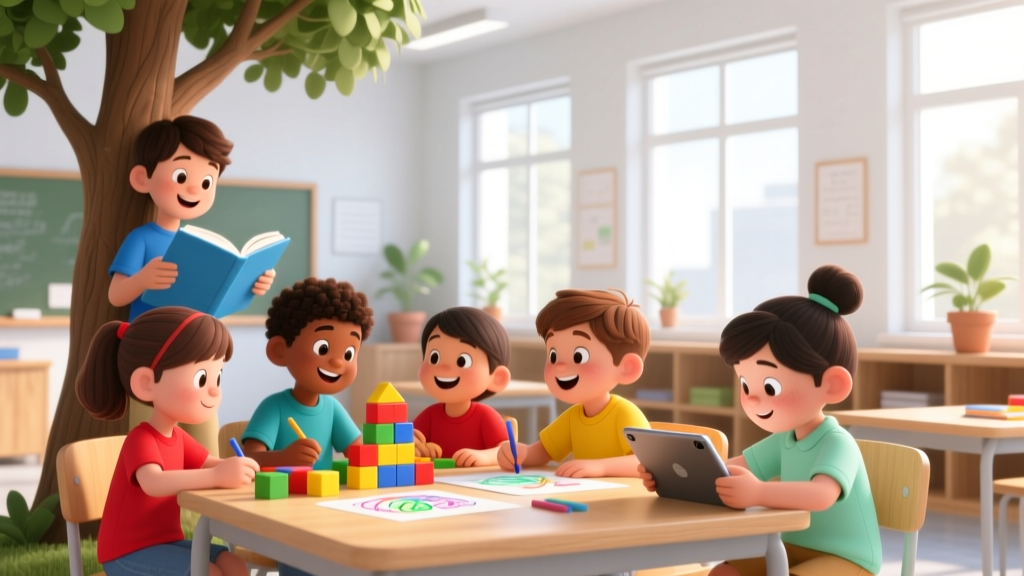
Kids’ Freedom of Speech: Rights & Limits Explained
Why This Question Isn’t Just Legal—It’s Developmental, Emotional, and Daily
Do kids have freedom of speech? Yes—but not the same way adults do, and not without critical limits shaped by age, context, safety, and developmental readiness. In an era where elementary students post TikTok videos, middle schoolers debate politics in group chats, and high schoolers organize walkouts, this question has moved from abstract civics lesson to urgent parenting reality. Misunderstanding children’s speech rights doesn’t just risk disciplinary consequences—it can unintentionally stifle their moral reasoning, erode trust, or leave them unprepared to navigate digital public squares with integrity and resilience.
What the Constitution Says (and What It Doesn’t)
The First Amendment states: “Congress shall make no law… abridging the freedom of speech.” But crucially, it applies to government action—not private platforms, schools acting as educators (not lawmakers), or parents exercising lawful authority in the home. That distinction is the bedrock most parents miss. As Dr. Laura Kastner, clinical psychologist and co-author of The Power of Showing Up, explains: “Children aren’t miniature citizens with full constitutional standing—they’re developing neurobiological systems. Their ‘rights’ are always balanced against their need for guidance, protection, and scaffolding toward mature judgment.”
The Supreme Court has repeatedly affirmed that students don’t “shed their constitutional rights to freedom of speech or expression at the schoolhouse gate” (Tinker v. Des Moines Independent Community School District, 1969). Yet that landmark ruling also established three key exceptions where schools may restrict speech: if it causes a substantial disruption, invades the rights of others, or is lewd, vulgar, or plainly offensive (Frasier v. Westridge, 1986; Morse v. Frederick, 2007).
Here’s what’s often overlooked: These standards apply almost exclusively to public schools. Private schools, charter schools with specific missions, and homeschool co-ops operate under different governance—and may enforce stricter speech policies without constitutional challenge. And critically: Parents retain broad authority to set speech norms at home, including limiting screen time, reviewing messages, or requiring respectful language—even when that feels like censorship. This isn’t suppression; it’s stewardship.
Age-by-Age Boundaries: What’s Protected, What’s Guided, What’s Off-Limits
Developmental science shows speech capacity evolves dramatically between ages 5 and 18—not linearly, but in leaps tied to prefrontal cortex maturation, empathy growth, and metacognitive awareness. The American Academy of Pediatrics (AAP) emphasizes that “freedom of expression must be matched with increasing responsibility—and that match changes year by year.” Below is a research-backed framework for aligning speech expectations with cognitive milestones:
| Age Range | Neurodevelopmental Capacity | Constitutional Protections (School Context) | Parental Guidance Priorities | Risk if Unaddressed |
|---|---|---|---|---|
| 5–8 years | Limited impulse control; concrete thinking; emerging sense of fairness | Nearly none in practice—courts defer heavily to school discipline for safety/order | Teach “voice vs. volume,” naming feelings, listening before speaking; model respectful disagreement | Shame around expressing emotions; confusion about why “telling the truth” sometimes leads to consequences |
| 9–12 years | Growing ability to consider perspectives; early abstract reasoning; peer-influenced identity formation | Protected under Tinker if non-disruptive (e.g., wearing symbolic bracelets); vulnerable to restriction for cyberbullying or hate speech | Introduce digital citizenship: “Would you say this face-to-face?”; co-create family communication agreements; discuss intent vs. impact | Normalization of online aggression; conflating ‘free to post’ with ‘free from consequence’ |
| 13–15 years | Heightened emotional reactivity; strong moral idealism; developing ethical reasoning | Stronger protections for political/activist speech (e.g., walkouts, protest signs)—but still limited for school-sponsored forums (yearbooks, newspapers) | Practice civil discourse: host respectful debates on current events; analyze news sources together; role-play responding to misinformation | Polarization without nuance; burnout from performative activism; vulnerability to radicalization via algorithmic feeds |
| 16–18 years | Near-adult executive function; capacity for long-term consequence analysis; identity consolidation | Closest to adult protections—especially off-campus speech (per Mahanoy Area School District v. B.L., 2021), though schools retain some authority over severe harassment or threats | Co-draft social media contracts; discuss legal liability (defamation, copyright); support advocacy with mentorship—not just permission | Underestimating permanence of digital speech; misreading platform terms of service as ‘free speech zones’ |
Three Real-World Scenarios (and What to Do Differently)
Legal theory means little without application. Here are three common parenting pain points—with evidence-backed responses:
Scenario 1: “My 10-year-old got suspended for posting a meme mocking his teacher on Instagram.”
This is increasingly common—and often mismanaged. Under Mahanoy, off-campus speech receives heightened protection, but only if it doesn’t target individuals with harassment or credible threats. A sarcastic meme shared privately among friends likely falls under protected satire. However, if it went viral in the school community, included doxxing elements, or caused documented distress to the teacher, the school may argue substantial disruption. Action step: Request the district’s written justification citing Tinker or Mahanoy. Most suspensions in these cases stem from vague “disruption” claims—not rigorous legal analysis. Partner with your child to draft a restorative apology (not just “I’m sorry”—but “Here’s how my post affected you, and here’s how I’ll repair it”).
Scenario 2: “My teen wants to start a podcast criticizing school board policies—and the principal said ‘no podcasts during school hours.’”
Schools can regulate time, place, and manner—but not viewpoint. If the podcast is recorded on personal devices, outside school hours, and distributed independently, the ban is likely unconstitutional. However, if they use school equipment, Wi-Fi, or promote it during class, the school gains regulatory ground. Action step: Help your teen distinguish between school-sponsored and student-initiated speech. Suggest they publish under a pseudonym, avoid using school logos, and add a disclaimer: “Views expressed are my own and not endorsed by [School Name].” This strengthens their First Amendment position while modeling accountability.
Scenario 3: “My 7-year-old yelled ‘I hate you!’ during a meltdown—and I sent him to his room. Was that violating his free speech?”
No—and this reveals a vital distinction. The First Amendment protects speech from government punishment, not parental consequences. More importantly, developmental psychology tells us that young children lack the self-regulation to express anger constructively. Sending them to calm down isn’t suppressing speech—it’s teaching co-regulation. As Dr. Becky Kennedy, child psychologist and founder of Good Inside, advises: “We don’t stop kids from having feelings—we help them find safer, more effective ways to voice them. ‘I hate you’ is rarely literal; it’s a cry for connection disguised as rejection.” Replace time-outs with “time-ins”: sit beside them, name the feeling (“You’re so frustrated right now”), then co-create alternatives (“Next time, you can stomp pillows or draw your anger”).
Frequently Asked Questions
Can schools punish students for things they post on Snapchat or TikTok after school?
Yes—but only under narrow conditions. Per the 2021 Mahanoy decision, schools must prove the off-campus speech caused a “substantial disruption” to school operations or invaded the rights of others. Mere embarrassment or dislike isn’t enough. Courts now require specific evidence—not just “it made people upset.” Parents should request documentation of the alleged disruption and consult a student rights attorney if the punishment seems disproportionate.
Does freedom of speech mean my child can say anything they want at home?
No—parental authority includes setting respectful communication norms. While the First Amendment doesn’t apply to private homes, healthy development requires boundaries. You can require “no name-calling,” “no yelling during meals,” or “use ‘I feel’ statements.” These aren’t censorship; they’re relational guardrails. Research from the Yale Child Study Center shows children raised with consistent, empathetic communication boundaries develop stronger emotional intelligence and conflict-resolution skills.
What if my child’s speech violates someone else’s rights—like bullying or hate speech?
This is where rights intersect—and why “freedom” isn’t absolute. Speech that targets individuals based on protected characteristics (race, religion, disability, gender identity) or creates a hostile environment may violate federal civil rights laws (e.g., Title VI, Title IX), even in schools. Importantly, addressing this isn’t about silencing opinion—it’s about teaching that rights carry responsibilities. Use restorative practices: help your child understand impact, make amends, and learn inclusive language through books, documentaries, and diverse friendships—not just punishment.
Do homeschooled kids have the same speech rights as public school students?
Homeschooled children retain all constitutional rights as private citizens—but those rights aren’t enforced against parents or co-op organizers. When enrolled in public school programs (like part-time classes or sports), they gain Tinker-level protections during those activities. For purely private settings, speech norms are governed by family values and state compulsory education laws—not the First Amendment. This makes intentional media literacy and civic dialogue at home even more essential.
Is it legal for schools to censor school newspaper articles?
Yes—if the publication is school-sponsored (funded, supervised, part of curriculum). The 1988 Hazelwood decision allows schools to exercise editorial control over such forums to ensure content is “reasonably related to legitimate pedagogical concerns.” But if the paper is designated as a public forum (e.g., student-run with independent funding and editorial autonomy), Tinker applies. Ask your school for its official designation—and advocate for public forum status if journalism is taught as a civic skill, not just a class.
Common Myths
Myth 1: “If it’s on the internet, it’s free speech—and schools can’t touch it.”
Reality: Platforms like TikTok and Discord are private companies bound by their own terms—not the First Amendment. Schools intervene only when speech crosses into harassment, threats, or substantial disruption. Teaching kids that “free speech” ≠ “consequence-free speech” is foundational digital literacy.
Myth 2: “Teaching kids to ‘respect authority’ means discouraging questioning.”
Reality: AAP guidelines emphasize that respectful dissent—backed by evidence and empathy—is a hallmark of healthy development. The goal isn’t obedience; it’s cultivating civic courage: the ability to speak up thoughtfully, listen deeply, and act ethically. Children who learn to respectfully challenge ideas (e.g., “I see it differently because…” instead of “That’s stupid”) show higher academic engagement and leadership potential.
Related Topics (Internal Link Suggestions)
- How to Talk to Kids About News and Politics — suggested anchor text: "age-appropriate news discussions for children"
- Digital Citizenship Skills by Grade Level — suggested anchor text: "teaching responsible online behavior"
- Restorative Practices for Family Conflict — suggested anchor text: "non-punitive ways to address hurtful speech"
- Signs Your Child Is Struggling with Self-Expression — suggested anchor text: "when silence or outbursts signal deeper needs"
- Montessori and Democratic Classrooms — suggested anchor text: "schools that embed speech rights in daily practice"
Your Next Step: Start Small, Think Big
Do kids have freedom of speech? Yes—but it’s a living, evolving right anchored in relationship, not just law. You don’t need a constitutional law degree to nurture it. Begin this week with one intentional practice: At dinner, replace “What did you do today?” with “What’s something you agreed or disagreed with—and why?” Listen without correcting. Validate the thinking, not just the conclusion. That tiny shift builds the neural pathways for courageous, compassionate speech. And when questions arise—about protests, memes, or meltdowns—return to this truth: Freedom isn’t the absence of boundaries. It’s the presence of trust, tools, and unwavering belief in your child’s capacity to grow into their voice.
More Articles
 What Restaurants Kids Eat Free in 2026
 How Many Kids Does Playboi Carti Have? (2026)
 What Age Do Kids Lose Baby Teeth? (2026)
 Are You Kidding Me" Is a Stress Signal—Not a Joke
 Kids Clothes Stain Removal: Pediatrician-Approved Method
 Cody Johnson Kids: Balancing Stardom & Fatherhood (2026)
 Kids Before Marriage: Theology, Psychology & Real Outcomes
 Ghostbusters for Kids: Age Guide & Scene Tips
 How Many Kids Do Summer Walker Have (2026)
 Do Kids Die in Welcome to Derry? Pediatrician Guide