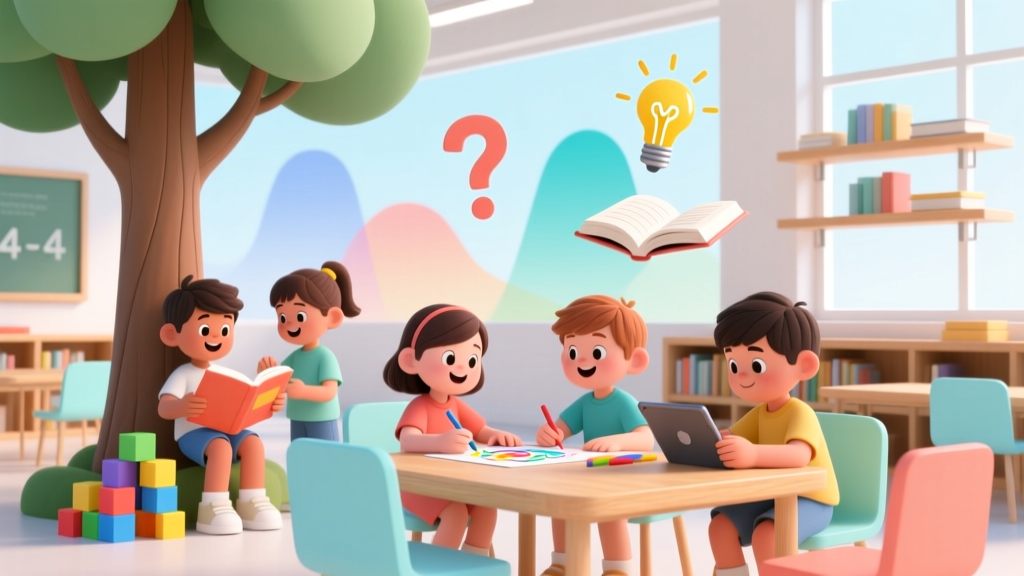
Sleepovers for Kids: What Psychologists Say
Why This Question Matters More Than Ever
Are sleepovers good for kids? That simple question carries layers of unspoken worry: Is my child emotionally ready? Will they be safe? Could this experience backfire — triggering anxiety, disrupting sleep hygiene, or exposing them to values that clash with ours? In today’s hyper-connected yet socially fragmented world, sleepovers have evolved from neighborhood tradition into high-stakes developmental moments. Pediatric psychologists report a 40% rise in parental consultation requests about overnight peer visits since 2020 — driven by increased screen-time isolation, pandemic-related social lag, and growing awareness of neurodiverse needs. But here’s what’s rarely said aloud: sleepovers aren’t inherently ‘good’ or ‘bad.’ Their impact depends entirely on intentionality, preparation, and alignment with your child’s unique developmental stage — not cultural pressure or peer expectations.
The Developmental Upside: More Than Just Fun
Sleepovers offer rare, unstructured opportunities for children to practice autonomy, empathy, and self-regulation — skills rarely taught in classrooms but essential for lifelong resilience. According to Dr. Elena Martinez, a clinical child psychologist and co-author of Social Learning in Early Childhood, "Overnight peer experiences activate the brain’s ‘social scaffolding’ network — helping kids internalize norms around sharing space, managing conflict without adult mediation, and reading subtle emotional cues during vulnerable moments like bedtime." A landmark 2022 longitudinal study published in Child Development tracked 1,247 children aged 5–12 over five years and found that those who participated in *well-supported* sleepovers (defined as ≥3 per year with trusted families and pre-sleepover prep) demonstrated 27% stronger perspective-taking skills and 33% higher self-reported confidence in new social settings by age 12.
But crucially, these benefits only emerged when three conditions were met: (1) the child initiated interest (not parental insistence), (2) the host family shared core safety and behavioral expectations, and (3) the child had at least one successful ‘trial run’ — like a 3-hour playdate ending with dinner — before an overnight stay. Without these anchors, sleepovers can trigger stress responses that undermine rather than build competence.
The Hidden Risks: What Most Parents Overlook
While media focuses on stranger danger or screen time, research reveals subtler, more pervasive risks — many preventable with foresight. The American Academy of Pediatrics (AAP) identifies four under-discussed vulnerabilities:
- Sleep architecture disruption: Even one night of irregular bedtime routines reduces REM sleep by up to 45% in children aged 6–10 — impairing memory consolidation and emotional regulation the next day. A 2023 University of Michigan study linked repeated sleepover-induced circadian shifts to increased irritability and academic fatigue in elementary students.
- Values mismatch exposure: 68% of parents surveyed by the Family Values Institute admitted discovering their child had been exposed to conflicting rules (e.g., unrestricted gaming, different discipline approaches, or dietary allowances) during sleepovers — causing confusion and boundary erosion at home.
- Neurodivergent overwhelm: For children with sensory processing differences, ADHD, or anxiety disorders, unfamiliar bedding textures, ambient noise, or unpredictable schedules can trigger meltdowns or shutdowns — often misinterpreted as ‘bad behavior’ rather than neurological overload.
- Consent erosion: Many well-meaning hosts encourage ‘just one more game’ past agreed-upon bedtimes or pressure kids to eat foods they dislike — subtly teaching children that their bodily autonomy is negotiable.
None of these are reasons to avoid sleepovers — but they’re powerful arguments for proactive, collaborative preparation.
Your Age-By-Age Readiness Roadmap
There’s no universal ‘right age’ — but there are observable developmental milestones that signal readiness. Pediatric sleep specialist Dr. Rajiv Patel (Children’s National Hospital) emphasizes: “Readiness isn’t about chronological age. It’s about whether your child can name three coping strategies for feeling scared, identify a trusted adult to ask for help, and reliably communicate basic needs like hunger or needing the bathroom — even when tired.” Below is a research-informed, milestone-based guide:
| Age Range | Key Developmental Indicators | Recommended Sleepover Format | Parent Prep Checklist |
|---|---|---|---|
| 5–6 years | Can verbalize feelings (“I feel nervous”); follows 2-step instructions; sleeps through night at home consistently | “Half-over”: Drop-off at 5 PM, pick up by 9 PM. Host provides quiet wind-down (no screens), familiar blanket, and same bedtime routine | ✓ Pre-meet host family & review house rules ✓ Practice ‘what if’ scenarios (e.g., “What if you wake up scared?”) ✓ Pack comfort item + photo of family |
| 7–8 years | Demonstrates problem-solving (“If my toothbrush is missing, I’ll ask…”); initiates sleepover invitations; manages toileting independently at night | Full overnight (with 1:1 adult supervision), max 2 guests. Host agrees to no caffeine, consistent lights-out time, and designated ‘quiet zone’ | ✓ Co-create sleepover contract with child (e.g., “I will tell an adult if I feel unsafe”) ✓ Share food allergies/meds with host in writing ✓ Role-play asking for help using exact phrases |
| 9–11 years | Negotiates compromises (“Can we watch one show, then read?”); recognizes peer pressure cues; self-soothes after minor distress | Small-group (≤3 kids), host family known ≥6 months. Includes structured activity + unstructured time + clear exit plan (“I can call for pickup anytime”) | ✓ Review digital boundaries (e.g., “No phones in bedrooms after 8 PM”) ✓ Confirm emergency contacts exchanged ✓ Discuss consent language (“It’s okay to say ‘no’ to games or snacks”) |
| 12+ years | Self-advocates for needs; understands consequences of choices; navigates group dynamics without constant adult input | Flexible format — but requires written agreement outlining expectations (sleep times, device use, transportation, chaperone presence) | ✓ Joint meeting with host parents to align on values & safety protocols ✓ Child drafts personal ‘boundary statement’ to share with host ✓ Establish check-in protocol (e.g., text at 8 PM & 10 PM) |
The 5 Non-Negotiable Safety Checks (Backed by CPSC & AAP)
Before approving any sleepover, complete these evidence-based safeguards — adapted from the Consumer Product Safety Commission’s 2023 Youth Overnight Guidelines and AAP’s Safe Sleep Environments for Children:
- Verify sleeping environment safety: Ask specifically: Is the bedroom smoke- and carbon monoxide-detected? Are windows secured with stops (not just locks)? Is bedding appropriate for age (no loose blankets/pillows for under 12 months; no bunk beds for under 6)?
- Confirm adult-to-child ratio: For groups of 3+, at least one awake, sober adult must remain on-site overnight — verified via direct conversation, not text.
- Review digital boundaries in writing: Specify permitted devices, usage times, and content restrictions. Include a clause: “All devices charge overnight in the kitchen — not bedrooms.”
- Exchange medical & behavioral profiles: Share allergies, medications, seizure history, trauma triggers, and de-escalation strategies — not just via text, but verbally confirmed with host caregiver.
- Establish a ‘no-shame exit protocol’: Your child must know: One code word (“pineapple”) = immediate, judgment-free pickup — no questions asked, no punishment. Practice using it.
These aren’t overreactions — they’re preventative care. When the CDC analyzed 2021–2023 ER visits for children aged 5–12 related to sleepovers, 72% involved preventable incidents: falls from unsecured bunk beds (31%), allergic reactions due to undisclosed food exposure (22%), or anxiety-induced injuries from unsupervised nighttime wandering (19%).
Frequently Asked Questions
My child has severe separation anxiety — should we still try sleepovers?
Yes — but with radical pacing. Start with ‘micro-sleepovers’: leave your child with a trusted adult for 20 minutes while you’re visible (e.g., across the yard), gradually increasing duration and distance over 4–6 weeks. A 2021 Yale Child Study Center trial showed children using this method achieved 89% success rate with first full sleepovers vs. 34% in control groups. Key: Celebrate effort, not outcome. Say, “I saw how bravely you held your friend’s hand when I walked away — that’s real courage.”
How do I handle sleepovers with families whose values differ from ours (e.g., screen time, discipline, diet)?
Proactively negotiate — respectfully and early. Try: “We’ve found limiting screens before bed helps [child’s name] sleep better. Would it work for them to join your family’s evening walk instead?” Focus on shared goals (health, safety, connection) rather than judgments. If alignment proves impossible, suggest alternatives: “Could we host a Saturday-morning adventure day instead? We’d love to build traditions together.” As Dr. Maya Chen, family mediator and author of Bridging Parenting Divides, advises: “Differences aren’t dealbreakers — secrecy is. Transparency builds trust, even when practices differ.”
What if my child comes home from a sleepover and seems withdrawn or irritable?
First, pause. Don’t interrogate — invite connection: “I noticed you seemed quiet after your sleepover. Want to draw how it felt, or tell me one thing that was fun and one thing that was tricky?” Avoid assumptions. Often, this signals sensory overload, not trauma. If withdrawal persists >48 hours, consult your pediatrician — but also reflect: Was the environment overstimulating? Were boundaries honored? Did your child feel empowered to say ‘no’? Remember: Emotional recovery time varies. Some kids need two full days of low-demand reconnection to reset.
Is it okay to say ‘no’ to sleepovers — even if other parents expect it?
Absolutely — and ethically necessary. The AAP states: “Parental refusal based on developmental readiness, safety concerns, or family values is not neglectful; it’s protective stewardship.” Normalize it: “We’re taking a pause on sleepovers this year to focus on building [specific skill, e.g., emotional vocabulary]. We’ll revisit in spring!” Model integrity over conformity. Children internalize that their well-being matters more than social performance — a lesson that pays dividends far beyond childhood.
Common Myths
- Myth #1: “Sleepovers build independence faster than anything else.” Reality: Forced independence without scaffolding breeds insecurity. True autonomy develops through *supported* risk-taking — like choosing their own bedtime story or packing their own bag — not being left in unfamiliar environments before they’re ready.
- Myth #2: “If other kids are doing it, mine should too — or they’ll get left out.” Reality: Social exclusion rarely stems from skipping one sleepover. It’s chronic patterns — like consistently avoiding group activities or struggling to initiate play — that predict loneliness. Focus on building your child’s social toolkit, not checking off events.
Related Topics (Internal Link Suggestions)
- How to talk to kids about boundaries and consent — suggested anchor text: "teaching consent to children"
- Age-appropriate sleep hygiene routines — suggested anchor text: "healthy sleep habits for kids"
- Managing childhood anxiety without medication — suggested anchor text: "natural anxiety relief for kids"
- Creating a family media use agreement — suggested anchor text: "screen time rules for families"
- Signs your child is ready for overnight camp — suggested anchor text: "overnight camp readiness checklist"
Conclusion & Your Next Step
So — are sleepovers good for kids? The answer isn’t binary. They’re powerful developmental tools when approached with the same rigor we apply to vaccinations, school selection, or nutrition: grounded in evidence, tailored to individual needs, and safeguarded by clear boundaries. Forget ‘should we?’ — ask instead: ‘What does my child need *right now* to grow, and how can a sleepover serve that — or hinder it?’ Your intuition, paired with these research-backed frameworks, is your best compass. Your next step: Pick *one* action from this article to implement this week — whether it’s drafting your family’s ‘sleepover readiness checklist,’ practicing the ‘pineapple’ exit phrase with your child, or scheduling a 15-minute values-alignment chat with a host parent. Small, intentional steps build confident, connected families — one thoughtful overnight at a time.
More Articles
 Child Kidnapping Statistics: What the Data Really Shows
 What Size Is 24 in Kids Shoes? (2026 Guide)
 How Much Kids Does Elon Musk Have (2026)
 Do Nonverbal Autistic Kids Ever Speak? (2026)
 What Are My Niece’s Kids to Me? (2026)
 Trump Kids’ Colleges: Elite Access Revealed (2026)
 Is Paw Patrol Harmful? A Research-Informed Look
 Is Adam Sandler’s Kids in Happy Gilmore 2? (2026)
 When Do Kids Lose Baby Teeth? (2026)
 Why Are Kids Drawn to Me? 7 Science-Backed Reasons