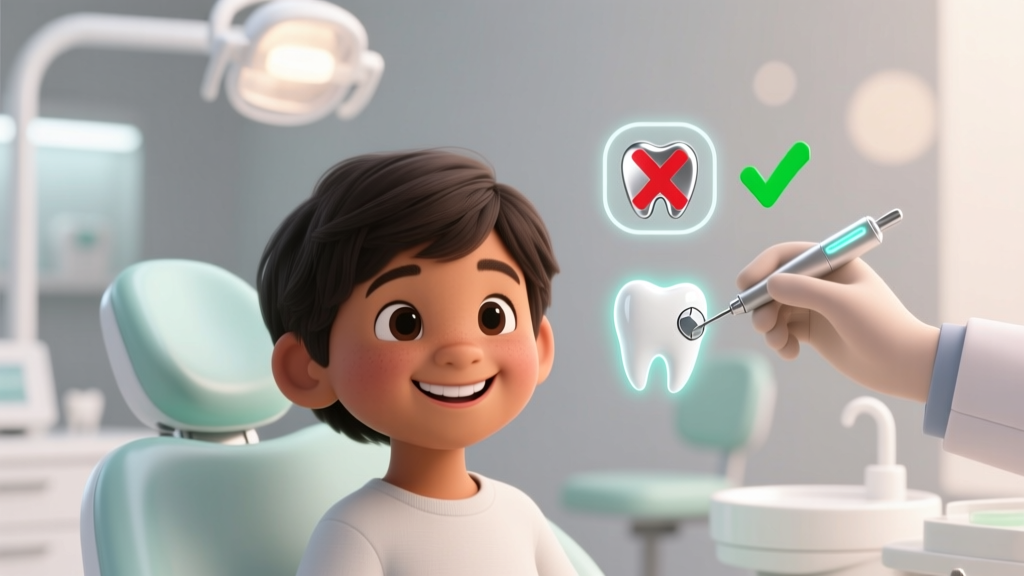
Silver Caps for Kids: Dentist Truth & Safer Alternatives
Why This Question Matters More Than Ever Right Now
Parents across the U.S. and Canada are increasingly asking: are silver caps bad for kids? — especially after seeing alarming social media posts, hearing conflicting advice from friends, or noticing their child’s new filling during a routine check-up. With childhood cavity rates rising (nearly 45% of children aged 2–19 have had at least one cavity, per CDC 2023 data), more families face urgent decisions about restorative dental care. But unlike adult dentistry, children’s developing nervous systems, smaller body mass, and frequent hand-to-mouth behaviors raise unique safety considerations. And while 'silver caps' sound outdated, they’re still used in over 20% of pediatric restorations — particularly in Medicaid-funded clinics and rural areas where cost and durability matter. This isn’t just about aesthetics or nostalgia; it’s about aligning your child’s oral care with current science, regulatory standards, and developmental needs.
What ‘Silver Caps’ Actually Are — And Why They’re Called That
‘Silver caps’ is a colloquial term for dental amalgam fillings — a mixture of roughly 50% elemental mercury, 35% silver, 9% tin, 6% copper, and trace amounts of zinc. When combined, these metals form a stable, corrosion-resistant alloy that has been used safely in dentistry for over 170 years. Despite the name, they aren’t pure silver — and crucially, they’re not ‘caps’ in the crown sense, but rather direct restorations packed into prepared cavities. The mercury binds the metals together, allowing the material to be malleable during placement and harden within minutes. This durability is why amalgam remains the gold standard for large posterior (molar) restorations in high-stress chewing zones — especially for children who may struggle with lengthy, complex procedures or repeated visits.
But here’s what many parents don’t know: the mercury in amalgam is *chemically bound*, not free-floating. Once set, the alloy releases only trace amounts of mercury vapor — far less than what children ingest daily from fish, breast milk, or environmental air. According to Dr. Sarah Lin, pediatric dentist and clinical advisor to the American Academy of Pediatric Dentistry (AAPD), “The amount of mercury vapor released from an intact amalgam filling is orders of magnitude lower than the EPA’s reference dose for chronic exposure — and well below levels linked to any measurable neurodevelopmental effect in children.”
The Real Risks: Not Mercury — But Timing, Technique, and Alternatives
If mercury exposure isn’t the primary concern, what *should* parents focus on? Research points to three higher-impact factors:
- Delayed treatment: Avoiding needed restorations due to fear of amalgam can lead to untreated decay spreading to the pulp — requiring sedation, extraction, or even space maintainers. A 2022 JADA study found children with untreated caries were 3.2x more likely to develop pain, infection, or school absenteeism.
- Material mismatch: Using tooth-colored composite in high-stress molars without proper isolation or technique leads to 2–3x higher failure rates in kids under age 8 (per AAPD 2023 Clinical Report). Premature failure means more drilling, more anxiety, and greater cumulative exposure to dental stressors.
- Unregulated alternatives: Some ‘mercury-free’ clinics promote glass ionomer or compomers without disclosing their significantly lower wear resistance — leading to rapid breakdown, recurrent decay, and repeated interventions.
Dr. Lin emphasizes: “The safest filling isn’t the one with zero mercury — it’s the one that lasts, prevents further decay, and gets placed with minimal trauma. For a 5-year-old with three large occlusal lesions on permanent first molars, amalgam often delivers better long-term outcomes than a poorly placed composite.”
Age-by-Age Guidance: When Amalgam Makes Sense — And When It Doesn’t
Pediatric dentistry isn’t one-size-fits-all. Developmental stage, cooperation level, caries risk, and anatomy all influence material choice. Here’s how top-tier clinicians approach it:
- Ages 3–5: Amalgam is rarely first-line unless decay is extensive and behavior management limits options. Glass ionomer is preferred for small lesions (releases fluoride, bonds without etching), but fails quickly under heavy occlusion.
- Ages 6–10: The ‘sweet spot’ for amalgam — especially for first permanent molars. Children this age often lack the patience for 30+ minute composite placements, and their enamel is still maturing, increasing sensitivity to bonding agents.
- Ages 11–14: Composite becomes more viable as cooperation improves and occlusion stabilizes — but only if the dentist uses rubber dam isolation, moisture control, and incremental layering. Without those, failure rates spike.
- Special needs & high-caries-risk children: Amalgam remains strongly recommended by AAPD for children with developmental delays, autism spectrum disorder, or rampant caries — where efficiency, longevity, and reduced re-treatment are critical to minimizing trauma.
Importantly, the FDA (2022 updated guidance) states amalgam is not contraindicated for children — but recommends shared decision-making, especially for pregnant individuals and children under age 6. That doesn’t mean it’s unsafe; it means clinicians should discuss options transparently.
Safer Alternatives — Ranked by Evidence, Not Hype
Not all ‘silver cap alternatives’ are created equal. Below is a comparison of materials commonly offered to parents — ranked by clinical evidence, longevity in pediatric patients, and safety profile:
| Material | Typical Use Case | Avg. Lifespan in Kids (Molars) | Mercury Content | Key Pediatric Advantages | Key Pediatric Limitations |
|---|---|---|---|---|---|
| Dental Amalgam | Large Class I/II restorations in primary/permanent molars | 10–15 years | 50% elemental mercury (bound in alloy) | High strength, low technique sensitivity, cost-effective, no light-cure needed | Requires more tooth removal; not tooth-colored; requires mercury handling protocols |
| Resin Composite | Small-to-moderate lesions; anterior teeth; cooperative older children | 5–7 years (with ideal placement); drops to 3–4 years if isolation fails | None | Esthetic, conservative preparation, fluoride-free | Technique-sensitive (moisture = failure), higher shrinkage stress, contains BPA derivatives (though leaching is negligible per ADA 2023 review) |
| Resin-Modified Glass Ionomer (RMGI) | Non-carious cervical lesions, small occlusal lesions, interim restorations | 3–5 years | None | Fluoride-releasing, bonds to dentin without etch, low sensitivity | Poor wear resistance, low strength, not for load-bearing areas |
| High-Viscosity Glass Ionomer (HVGI) | ART (Atraumatic Restorative Treatment) in low-resource settings; very young or anxious children | 2–4 years | None | No drill required in some cases, fluoride release, biocompatible | Very low strength, rapid wear, high failure rate in molars |
Frequently Asked Questions
Is mercury from silver caps absorbed by my child’s body?
Yes — but in clinically insignificant amounts. Studies measuring urinary mercury in children with amalgam fillings show levels indistinguishable from controls without fillings (NIH/NIEHS 2021 longitudinal study). The vapor released is <1 microgram/day — less than 1% of the EPA’s Reference Dose (RfD) of 0.1 µg/kg/day. For context, a 20-pound toddler eating one 3-oz serving of canned light tuna weekly ingests ~2.5 µg of methylmercury — a far more bioavailable and concerning form.
Do silver caps cause autism or ADHD?
No credible scientific evidence supports this link. A landmark 2019 study published in JAMA Pediatrics, tracking over 1,000 children from birth through age 8, found zero association between number of amalgam fillings and diagnosis of autism spectrum disorder, ADHD, or cognitive test scores — even after controlling for socioeconomic status, maternal education, and prenatal mercury exposure. The American Dental Association and Autism Science Foundation both explicitly reject this myth.
Can I request removal of my child’s existing silver caps?
Removal is generally not recommended unless the filling is fractured, leaking, or causing symptoms. Drilling out intact amalgam releases significantly more mercury vapor than leaving it in place — and replaces a proven, durable restoration with a less predictable alternative. The AAPD advises against elective removal solely based on mercury concerns. If you’re concerned, ask your pediatric dentist to evaluate marginal integrity and radiographic evidence of recurrent decay first.
Are there ‘mercury-free’ silver-looking fillings?
Yes — but be cautious. Some clinics market ‘silver-colored composites’ or ‘metal-reinforced resins.’ These contain aluminum, titanium, or stainless steel particles — not mercury — but lack the long-term track record of amalgam. Their wear resistance and bond strength in pediatric molars remain unproven in multi-year studies. Always ask for peer-reviewed data before choosing novelty over evidence.
How do I find a dentist who explains options clearly — not just pushes one material?
Look for AAPD-certified pediatric dentists or general dentists with formal pediatric training. Ask: “How do you decide which material to use for my child’s specific cavity?” A strong answer will reference size, location, caries risk, behavior, and longevity — not just ‘we only use white fillings.’ Also check if they use digital radiographs (lower radiation), rubber dam isolation (critical for composite success), and offer pre-visit social stories or tours to reduce anxiety.
Common Myths Debunked
Myth #1: “Amalgam fillings leak mercury continuously and poison kids.”
Reality: Intact amalgam releases negligible vapor — primarily during chewing or brushing, and even then, at levels thousands of times below safety thresholds. The WHO and FDA classify dental amalgam as safe for children over age 6, and note that removal poses greater risk than retention.
Myth #2: “All dentists hide the truth about silver caps because they profit from them.”
Reality: Amalgam is significantly cheaper than composite — meaning dentists earn less per restoration. In fact, most private practices now use composite for >80% of restorations due to patient demand and insurance coverage — not profit motive. Transparency comes from board-certified specialists who prioritize evidence over trends.
Related Topics (Internal Link Suggestions)
- When Do Kids Get Their First Dental X-Ray? — suggested anchor text: "first dental x-ray age guidelines"
- Best Toothpaste for Toddlers With Fluoride Sensitivity — suggested anchor text: "fluoride-free toddler toothpaste safety"
- How to Prepare Your Anxious Child for a Cavity Filling — suggested anchor text: "pediatric dental anxiety tips"
- Signs of Early Childhood Caries Parents Miss — suggested anchor text: "hidden cavity symptoms in toddlers"
- Are Dental Sealants Safe for Kids Under 6? — suggested anchor text: "dental sealants for preschoolers safety"
Your Next Step: Ask the Right Questions at the Next Appointment
You don’t need to become a dental materials scientist — but you *do* deserve clarity. Before your child’s next visit, prepare two questions: “Based on my child’s age, cavity size, and behavior today, which material gives the best chance of lasting until their permanent tooth fully matures — and why?” and “What happens if we delay treatment, or choose a less-durable option that fails in 18 months?” A skilled pediatric dentist will welcome these questions — and use them to co-create a plan grounded in your child’s real-world needs, not internet rumors. Remember: the goal isn’t mercury elimination — it’s lifelong oral health, positive dental experiences, and evidence-informed peace of mind. Schedule a consult with an AAPD member dentist (find one at aapd.org/find-a-pediatric-dentist) and bring this guide with you. Your child’s smile — and your confidence — is worth it.
More Articles
 What Size Is 8 In Womens In Kids (2026)
 i-Ready for Kids: What Works (2026 Data & AAP)
 Kids Size 90 Explained: Why Sizes Change Fast (2026)
 Best Chocolate Candy for Kids (2026)
 Kids Better Off Separated? What Research Reveals
 How Many Kids Kidnapped a Year? The Real Stats (2026)
 Is K-Pop Demon Hunters Good for Kids? (2026)
 Bill Gates’ Kids Vaccinated? Pediatrician Truth (2026)
 How To Measure Kids Shoe Size At Home (2026)
 What Ages Do Kids Lose Teeth? (2026 Guide)