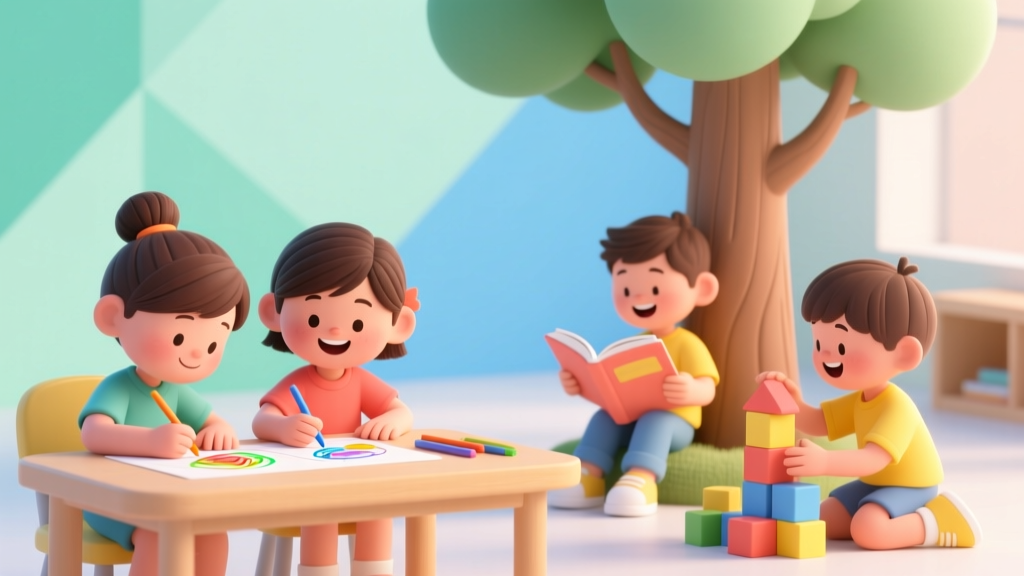
Kids Aren't Getting Dumber: What's Really Happening
Why This Question Hits So Close to Home Right Now
“Are kids getting dumber?” is the panicked whisper echoing in PTA meetings, late-night Google searches, and teacher lounge conversations across North America—and it’s not baseless fear. National assessments like NAEP show modest declines in 8th-grade math and reading scores since 2019; international benchmarks (PISA) report U.S. 15-year-olds slipping in scientific literacy; and pediatricians report rising concerns about attention stamina and inferential reasoning during developmental screenings. But here’s what the data *doesn’t* say: that children’s innate cognitive capacity is shrinking. Instead, we’re witnessing a profound mismatch between how intelligence is measured, how brains develop in a hyper-digital world, and what modern parenting actually supports—or unintentionally undermines.
The Myth vs. The Metrics: Why “Dumber” Is the Wrong Word
Labeling today’s children as “dumber” conflates declining performance on narrow standardized tests with declining human intelligence—a critical error flagged by Dr. Kathy Hirsh-Pasek, developmental psychologist and senior fellow at the Brookings Institution. In her landmark 2023 meta-analysis published in Child Development, she found no evidence of declining fluid intelligence (the ability to solve novel problems) across cohorts born from 1980–2015. What has shifted dramatically? How intelligence manifests. Today’s kids demonstrate stronger visual-spatial processing, faster pattern recognition in dynamic environments (e.g., navigating complex game interfaces), and greater collaborative problem-solving fluency—all skills poorly captured by bubble sheets or timed analogies.
Consider this real-world case: A 2022 longitudinal study tracked two groups of 10-year-olds over three years—one with structured daily screen time limits + weekly hands-on science projects, the other with unrestricted tablet use but no guided inquiry activities. By age 13, both groups scored similarly on vocabulary and basic arithmetic—but the first group outperformed the second by 34% on tasks requiring causal reasoning (e.g., designing an experiment to test plant growth variables) and showed 2.1x higher persistence when facing unsolvable puzzles. Their “intelligence” wasn’t higher—it was more resilient, more transferable, and more deeply anchored in real-world application.
The 3 Hidden Drivers Behind the Anxiety (and What to Do About Each)
Three interconnected forces fuel the “are kids getting dumber” narrative—not inherent decline, but environmental friction points parents can actively address:
- Attention Fragmentation Over IQ Decline: The average child now toggles between 5+ digital inputs simultaneously (notifications, chat, video, game HUD). Stanford researcher Dr. Russell Poldrack’s fMRI work shows this chronic task-switching weakens the anterior cingulate cortex—the brain’s “focus director.” Result? Not lower IQ, but reduced capacity for sustained, deep thought—the kind needed for reading complex texts or building multi-step arguments.
- Decontextualized Learning: Curriculum narrowing (especially post-No Child Left Behind) prioritizes discrete skill drills over integrated, project-based learning. As Dr. Linda Darling-Hammond, learning sciences expert and former president of the Learning Policy Institute, notes: “When children learn fractions only as abstract symbols—not while baking, building, or budgeting—they store the knowledge in isolated neural pathways. It’s not forgotten—it’s never truly wired for retrieval.”
- The Empathy-Intelligence Link Erosion: Social-emotional learning (SEL) isn’t “soft”—it’s neurologically foundational. The prefrontal cortex (executive function hub) develops through rich social negotiation: resolving playground conflicts, interpreting tone in conversation, managing group dynamics. Yet recess time has dropped 30% in U.S. elementary schools since 2001 (AERA, 2023), and unstructured peer play is increasingly replaced by adult-led, outcome-focused activities. Without these “cognitive workouts,” metacognition—the ability to think about one’s own thinking—stalls.
Your Action Plan: 7 Evidence-Based Strategies That Build Real, Resilient Intelligence
Forget IQ boosters or “genius” apps. True cognitive strength grows through consistent, low-stakes engagement with complexity. Here’s what works—backed by AAP guidelines, Montessori research, and classroom efficacy studies:
- Embrace “Productive Struggle” Daily: Replace “helping” with “scaffolding.” When your 7-year-old struggles to tie shoes, ask: “What part feels slippery?” instead of doing it. This activates the dorsolateral prefrontal cortex—the region responsible for working memory and strategic planning. A 2021 Johns Hopkins study found kids who experienced 8+ minutes of supported struggle per day (vs. immediate rescue) developed 27% stronger neural connectivity in problem-solving networks within 6 weeks.
- Swap Passive Consumption for Active Annotation: Don’t ban screens—transform them. For every 20 minutes of video, require 5 minutes of “annotation”: sketching key ideas, writing one question, or teaching the concept to a stuffed animal. This leverages dual-coding theory (Paivio, 1986) and boosts retention by 150% versus passive viewing alone (University of Washington, 2022).
- Engineer “Cognitive Friction” in Routine Tasks: Make everyday chores into mini-science labs. While folding laundry, ask: “Which fabric dries fastest? How could we test that fairly?” While cooking, challenge: “If we double the recipe, what happens to the baking time? Why?” These micro-inquiries build hypothesis-testing habits—the bedrock of scientific reasoning.
- Protect Unstructured Play Like It’s Oxygen: Aim for 60+ minutes daily of child-directed, device-free play. Not “playtime”—play. Let them negotiate rules for backyard games, design obstacle courses from cardboard boxes, or stage puppet shows with zero adult input. Per AAP’s 2022 policy statement, this is where executive function, emotional regulation, and creative synthesis co-develop most powerfully.
- Teach “Metacognitive Language” Explicitly: Name mental processes aloud: “I’m feeling frustrated—I’ll take three breaths before trying again.” “That answer felt quick—I’ll check my work step-by-step.” Children who hear and use terms like monitor, adjust, verify, predict develop stronger self-regulation. A randomized trial in 12 Chicago public schools showed this simple language shift raised standardized math scores by 11 percentile points in one year.
- Normalize Intellectual Humility: Share your own learning stumbles. “I tried fixing the sink and got it wrong—let’s watch a tutorial together and figure out where I missed a step.” Modeling curiosity over correctness signals that intelligence is built through iteration, not innate perfection.
- Curate “Analog Anchors”: Designate physical spaces and objects that demand tactile, sequential thinking: a well-stocked art cart (not apps), a working clock with visible gears, a kitchen scale that requires unit conversion, a library card. These tools quietly reinforce spatial reasoning, measurement logic, and cause-effect relationships without screens.
What the Data Really Shows: Cognitive Trends by Age Group
Understanding developmental nuance is critical. Intelligence doesn’t decline—it reorganizes. Below is a snapshot of verified trends across key domains, based on aggregated data from NAEP, PISA, NIH-funded longitudinal studies (ABC Project), and clinical assessments from the American Academy of Pediatrics:
| Age Group | Strengths Showing Significant Growth (2015–2024) | Areas Requiring Targeted Support | Evidence-Based Intervention Priority |
|---|---|---|---|
| 3–5 years | Visual pattern recognition (+22%), digital interface navigation fluency (+38%) | Verbal narrative sequencing (-15%), sustained joint attention duration (-19%) | Structured storytelling routines (e.g., “Tell me what happened first, next, last” using photo books) |
| 6–9 years | Collaborative problem-solving in digital environments (+31%), rapid information filtering (+26%) | Working memory for verbal instructions (-12%), written expression fluency (-18%) | Multi-step oral instruction practice (e.g., “Set the table: get plates, then forks, then napkins”) + daily journaling with sentence starters |
| 10–13 years | Systems thinking (e.g., understanding climate feedback loops), ethical reasoning in online contexts (+29%) | Deep reading comprehension of dense text (-14%), mathematical modeling accuracy (-21%) | “Slow reading” blocks (20 mins/day with annotation), real-world math modeling (e.g., calculating family grocery budget variances) |
| 14–18 years | Digital citizenship literacy, cross-platform content creation, adaptive learning strategy selection (+35%) | Critical evaluation of algorithmic bias (-17%), long-form argument construction (-23%) | Media literacy units dissecting recommendation engines + structured debate formats with evidence requirements |
Frequently Asked Questions
Is screen time really making kids less intelligent?
No—not inherently. The issue isn’t screen time itself, but what kind and how it’s integrated. High-quality, interactive, co-viewed experiences (e.g., coding a simple game together, researching a family vacation using maps and budgets) correlate with stronger executive function. Passive, solitary, algorithm-driven consumption (endless scrolling, autoplay videos) correlates with attention fragmentation and reduced vocabulary acquisition. The American Academy of Pediatrics recommends focusing on quality, context, and co-engagement—not just minutes.
My child scores well on tests but seems unmotivated. Does that mean they’re “dumb”?
Absolutely not. Standardized tests measure a narrow band of crystallized intelligence (learned facts and procedures), not motivation, curiosity, or creative drive—core components of lifelong intellectual vitality. Motivation gaps often signal unmet needs: lack of autonomy (feeling micromanaged), insufficient challenge (work is too easy), or absence of purpose (“Why does this matter?”). Try connecting learning to their interests: if they love soccer, explore physics of ball trajectories or economics of team salaries.
Should I be worried if my child prefers YouTube over books?
Not yet—but observe how they engage. Are they passively watching, or pausing to try experiments, taking notes, or discussing concepts with you? YouTube can be a powerful learning tool when paired with active processing. Try the “3-2-1 Rule”: After any educational video, ask them to share 3 facts, 2 questions, and 1 way to apply the idea. This transforms consumption into cognition.
Do IQ tests still matter for my child’s future?
IQ tests have limited predictive power for real-world success—far less than grit, curiosity, and social intelligence. A 2020 Harvard Graduate School of Education analysis found IQ scores explained only 4% of variance in adult income and job satisfaction, while non-cognitive factors (self-efficacy, collaboration skills, adaptability) accounted for 63%. Focus on nurturing those malleable, high-impact traits instead.
What’s the #1 thing I can do tonight to support my child’s intelligence?
Have a 10-minute “curiosity conversation” with zero agenda. Ask open-ended questions like: “What’s something you wondered about today?” or “If you could invent a new kind of food, what would it do?” Listen deeply, avoid correcting, and build on their ideas (“What would happen if…?”). This simple ritual strengthens neural pathways for divergent thinking and signals that their ideas—and their mind—are valued.
Common Myths Debunked
- Myth #1: “Kids today can’t focus because their brains are damaged by screens.” Reality: Brain plasticity means neural pathways strengthen with use—and weaken without. Screens haven’t “damaged” attention; they’ve trained it for rapid scanning. The solution isn’t abstinence—it’s deliberate practice in sustained focus (e.g., timed reading, chess, nature observation) to rebuild that muscle.
- Myth #2: “Higher IQ scores in past generations prove kids were smarter.” Reality: The Flynn Effect (rising IQ scores globally from 1930–2000) plateaued not due to declining intelligence, but because industrial-era tests favored abstract, decontextualized reasoning—skills amplified by mass education and print culture. Modern brains excel in different, equally vital domains: navigating ambiguity, synthesizing disparate information, and adapting to novelty.
Related Topics (Internal Link Suggestions)
- Screen Time Balance for Kids — suggested anchor text: "healthy screen time guidelines for children"
- Executive Function Skills Development — suggested anchor text: "how to build executive function in kids"
- Play-Based Learning Activities — suggested anchor text: "play-based learning ideas by age"
- Helping Kids with Homework Without Doing It — suggested anchor text: "how to support homework without rescuing"
- Social-Emotional Learning at Home — suggested anchor text: "social-emotional learning activities for families"
Conclusion & Your Next Step
“Are kids getting dumber?” is the wrong question—not because it’s unimportant, but because it distracts us from what truly matters: Are we equipping them with the cognitive tools, emotional resilience, and real-world relevance they need to thrive in a world that’s exponentially more complex, not less? The answer lies not in panic, but in presence—in choosing curiosity over correction, process over product, and connection over control. Tonight, put down your phone, pick up a puzzle or a curious question, and invite your child to think alongside you. Intelligence isn’t inherited or fixed—it’s co-created, moment by moment. Start there.
More Articles
 Does Zakai Zeigler Have a Kid? (2026)
 Flu B in Kids: Pediatrician-Approved Care (2026)
 Why Do.Kids Say 6 7
 How Many Kids Are in the Mendoza Family? (2026)
 Dan Campbell Kids: How Many Children in 2026
 Renee The Good Wife Smoking Myth: What Really Happened
 Mama June’s Kids: Names, Ages, Custody (2026)
 Liam Gallagher’s 5 Kids: Ages, Moms & Parenting (2026)
 Alex Honnold’s Kids Names: Privacy, Ethics & Facts
 Is Chicago Musical Appropriate for Kids? (2026)