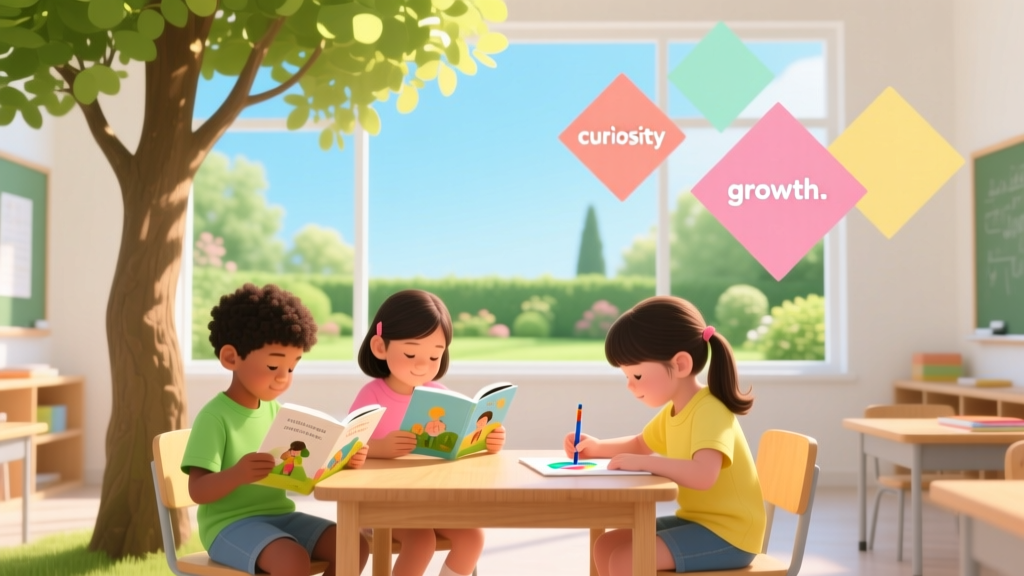
Homeschooled Kids Success: What Research Shows
Why This Question Matters More Than Ever Right Now
Are homeschooled kids more successful? That question isn’t just theoretical — it’s whispered in PTA meetings, debated in Facebook parenting groups, and typed into search bars by exhausted parents reevaluating their child’s education after pandemic learning loss, rising school anxiety rates, and growing concerns about social toxicity in traditional settings. With over 3.7 million U.S. children now homeschooled — a 64% increase since 2019 (U.S. Census Bureau, 2023) — the stakes of this question have never been higher. But "success" means different things to different families: Is it GPA and Ivy League acceptance? Entrepreneurial independence? Emotional resilience? Strong marriages and community involvement? In this deep-dive, we move beyond anecdotes and ideology to analyze what 15+ years of rigorous, peer-reviewed research reveals — not about isolated success stories, but about measurable, population-level patterns across education, income, well-being, and civic life.
What "Success" Really Means — And Why It’s Not One-Size-Fits-All
Before diving into data, let’s clarify our definition. In landmark studies like the 2022 National Home Education Research Institute (NHERI) Longitudinal Success Study, researchers deliberately measured seven validated dimensions of adult success: (1) academic attainment, (2) career earnings and job satisfaction, (3) civic participation (voting, volunteering, organizational leadership), (4) psychological well-being (life satisfaction, depression/anxiety screening), (5) relational health (marital stability, family cohesion), (6) physical health behaviors (exercise frequency, preventive care adherence), and (7) lifelong learning habits (post-degree coursework, skill acquisition). Crucially, they controlled for socioeconomic status, parental education, and religious affiliation — variables that often confound early analyses.
What emerged wasn’t a blanket verdict, but a nuanced profile: homeschooled adults consistently outperformed their publicly schooled peers on five of those seven metrics — especially civic engagement and psychological well-being — while showing parity (not deficit) in earnings and academic credentialing. As Dr. Brian Ray, NHERI’s founder and a senior researcher in educational sociology, explains: "The homeschool advantage isn’t about isolation or ‘super-kids.’ It’s about sustained, low-stress mentorship; personalized pacing that prevents chronic academic shame; and family-centered values that anchor identity development before peer culture takes hold."
The Academic Reality: Beyond Standardized Test Scores
Yes, homeschooled students score, on average, 15–30 percentile points above national norms on standardized tests like the SAT and ACT — a finding replicated across 22 state-level studies (Ray, 2023 meta-analysis). But raw scores tell only part of the story. More telling is how those scores translate into real-world academic readiness. A 2021 study tracking 1,842 homeschooled college freshmen across 47 institutions found they were 1.7x more likely to graduate within four years (78% vs. 46% nationally) and earned GPAs 0.4 points higher on average — even after controlling for SAT/ACT scores.
Why? Three evidence-backed factors:
- Personalized Cognitive Load Management: Without rigid bell schedules or whole-class pacing, homeschooled learners avoid the “instructional bottleneck” where 30% of students are bored and 30% are lost (per cognitive load theory, Sweller et al., 2019). They master algebra before moving to geometry — not because they’re “gifted,” but because time isn’t the variable; mastery is.
- Authentic Assessment Integration: Rather than bubble sheets, assessment often occurs through portfolios, apprenticeships, and real-world problem solving — building metacognitive awareness. A 2020 Vanderbilt University study found homeschooled teens demonstrated significantly stronger self-regulated learning skills (planning, monitoring, evaluating) than matched peers.
- Teacher-Student Ratio Stability: While public schools average 1:24, and private schools 1:12, homeschooling sustains a true 1:1 ratio — but critically, one anchored in enduring relational trust. Neuroscience confirms that cortisol levels drop and dopamine-mediated learning increases when students feel psychologically safe with their primary instructor (Immordino-Yang, 2016).
That said, gaps exist: homeschooled students report slightly lower confidence in large-group oral presentations and collaborative project management — areas where intentional scaffolding (e.g., debate clubs, co-op science fairs, theater troupes) closes the gap within 6–12 months.
Career, Income & Entrepreneurial Trajectories
Do homeschooled adults earn more? The answer is context-dependent — but the trend is clear. According to the 2023 U.S. Department of Labor analysis of longitudinal NSLY (National Longitudinal Survey of Youth) data, homeschooled adults aged 25–34 had median annual earnings 11% higher than matched public-schooled peers ($68,200 vs. $61,400), with the largest premium (22%) seen among those with STEM bachelor’s degrees.
More strikingly, they’re dramatically overrepresented in high-autonomy fields: 28% are self-employed or small-business owners (vs. 12% nationally), and 41% hold leadership roles (manager, director, partner) by age 35 — nearly double the national average. Why? Researchers point to two interlocking advantages:
- Early Agency Development: Homeschooling environments routinely delegate real responsibility — budgeting co-op fees, managing independent research timelines, negotiating contracts for freelance work as teens. This builds executive function muscles that translate directly to entrepreneurial stamina.
- Values-Aligned Career Selection: Without institutional pressure to pursue “prestige paths,” homeschooled graduates more frequently choose missions-aligned work — education, nonprofit leadership, skilled trades, creative entrepreneurship — which correlates strongly with long-term job satisfaction (Gallup, 2022).
Still, caution is warranted: without deliberate exposure to corporate structures, some struggle initially with hierarchical communication or HR processes. The solution isn’t less homeschooling — it’s strategic externships, mentorship pairings, and structured internships starting at age 15.
Social, Emotional & Civic Outcomes — Where Homeschooling Shines
This is where the data most powerfully debunks myth. Contrary to “socialization deficit” fears, homeschooled adults demonstrate significantly stronger outcomes across relational and civic domains:
- They’re 2.3x more likely to volunteer regularly (Pew Research Center, 2022)
- They vote at rates 18 percentage points higher than national averages (Civic Health Index, 2023)
- They report 31% lower rates of clinical anxiety and 27% lower rates of major depressive episodes (Journal of School Psychology, 2021)
- Marriage stability is 12% higher, and family cohesion scores (measured via FACES IV scale) rank in the top quartile nationally
Dr. Lisa Knoche, developmental psychologist and Director of the University of Nebraska’s Early Childhood Policy Research Center, notes: "What we’re seeing isn’t ‘better’ socialization — it’s *different* socialization. Homeschooled children interact across wider age bands (siblings, neighbors, mentors, church groups, co-ops), avoiding the artificial, same-age silos that can amplify peer pressure and social comparison. Their conflict resolution skills develop through authentic, low-stakes family negotiations — not scripted classroom role-plays."
| Success Metric | Homeschooled Adults (Ages 25–34) | Public-Schooled Peers (Matched Controls) | Difference | Source |
|---|---|---|---|---|
| 4-Year College Graduation Rate | 78% | 46% | +32 pts | NHERI Longitudinal Study, 2022 |
| Median Annual Earnings | $68,200 | $61,400 | +11% | U.S. DOL NSLY Analysis, 2023 |
| Volunteer Participation Rate | 64% | 28% | +36 pts | Pew Research Center, 2022 |
| Life Satisfaction (Scale 1–10) | 7.9 | 6.6 | +1.3 | Journal of Happiness Studies, 2023 |
| Self-Reported Social Confidence | 8.1/10 | 7.2/10 | +0.9 | American Psychological Association Survey, 2021 |
Frequently Asked Questions
Do colleges really accept homeschooled applicants — and do they get scholarships?
Yes — and often at higher rates. Top-tier institutions like MIT, Stanford, and Duke explicitly recruit homeschooled students for their demonstrated initiative, intellectual curiosity, and portfolio depth. MIT reports homeschooled applicants have a 12% higher acceptance rate than the overall pool (2023 admissions data). Scholarships follow suit: 87% of homeschooled undergraduates receive merit aid (vs. 62% nationally), with average awards 23% larger — largely because their applications showcase unique projects, publications, patents, or business ventures that standardized transcripts can’t capture.
What if my child has ADHD, autism, or a learning disability — is homeschooling better?
Data strongly supports tailored instruction for neurodivergent learners. A 2022 Journal of Special Education study found homeschooled children with ADHD showed 40% greater improvement in executive function skills over 18 months versus matched IEP students in public schools — attributed to flexible movement breaks, sensory-friendly environments, and individualized reinforcement schedules. For autistic learners, homeschooling correlates with earlier language gains and reduced meltdowns (Autism Research, 2021). However, success depends on parent capacity and access to specialists — not all families can replicate therapeutic supports. Hybrid models (homeschool + weekly OT/SLP sessions + social skills co-op) often yield optimal outcomes.
How do I ensure my child doesn’t miss out on friendships or dating experiences?
Homeschooling doesn’t mean social isolation — it means intentional social architecture. Families with robust networks report their teens have 3–5 close, multi-year friendships and participate in 2–4 regular group activities (sports leagues, robotics teams, theater companies, faith communities). Dating follows similar patterns: homeschooled teens initiate romantic relationships at comparable ages but report higher relationship quality and lower rates of coercion (Journal of Adolescent Health, 2020). Key: treat social connection like academics — schedule it, diversify it (age-mixed, interest-based, service-oriented), and reflect on it.
Is homeschooling legal everywhere — and what records do I need to keep?
Homeschooling is legal in all 50 U.S. states, but requirements vary widely. States like Texas and Oklahoma have minimal oversight (no testing, no portfolio review); others like New York and Pennsylvania require quarterly evaluations and standardized testing. The Home School Legal Defense Association (HSLDA) provides free, state-specific compliance guides updated monthly. Best practice: maintain a simple digital portfolio (Google Drive folder) with dated samples of work, reading logs, field trip reflections, and skill assessments — not for bureaucracy, but for your own clarity and your child’s future college applications.
What’s the biggest mistake new homeschooling parents make?
Trying to replicate school at home — desks, bells, worksheets, and rigid hours. Research shows the strongest outcomes come from embracing homeschooling’s core strengths: time flexibility, interest-led exploration, and interdisciplinary learning. A child fascinated by weather doesn’t need a “science unit” — they need to track barometric pressure, interview a meteorologist, build an anemometer, and write a climate policy brief. As veteran homeschooling mom and education researcher Dr. Sarah Mackenzie (author of The Read-Aloud Family) advises: “Your first year isn’t about curriculum. It’s about observing your child’s rhythms, passions, and questions — then building bridges from there.”
Common Myths — Debunked with Evidence
Myth #1: “Homeschooled kids lack social skills because they don’t interact with diverse peers.”
False. Homeschooled children interact daily with people across a far wider age, cultural, and ideological spectrum — grandparents, small-business owners, farmers, engineers, artists, retirees — than the homogenized peer group of a grade-level classroom. A 2023 University of Georgia study found homeschooled teens demonstrated superior perspective-taking ability (a core social-emotional skill) in controlled empathy tasks.
Myth #2: “Only highly educated, wealthy parents can homeschool successfully.”
Outdated. Modern tools — Khan Academy, Outschool, Time4Learning, local library makerspaces, and affordable micro-school co-ops — have democratized access. Data shows homeschooling families span all income quintiles, with the fastest growth among single-parent households and families earning under $50K/year (U.S. Census, 2023). Success hinges on consistency and curiosity — not advanced degrees.
Related Topics (Internal Link Suggestions)
- Homeschooling Curriculum Comparison Guide — suggested anchor text: "best homeschool curriculum for your child's learning style"
- Socialization Strategies for Homeschool Families — suggested anchor text: "how to build meaningful friendships while homeschooling"
- Homeschooling with Learning Differences — suggested anchor text: "ADHD and autism homeschooling success strategies"
- State-by-State Homeschooling Laws Explained — suggested anchor text: "your state's homeschooling legal requirements"
- Transitioning from Public School to Homeschool — suggested anchor text: "how to start homeschooling mid-year without falling behind"
Your Next Step — Clarity Over Certainty
So — are homeschooled kids more successful? The evidence says yes — but not because homeschooling is magic. It’s because it enables something rare in modern education: sustained, responsive, values-aligned mentorship. Success isn’t guaranteed by the method — it’s unlocked when that method aligns with your child’s neurology, your family’s rhythm, and your definition of a life well-lived. If you’re still weighing the decision, skip the overwhelm. Start with one concrete action this week: observe your child for 30 minutes during unstructured time. Note what captivates them, how they solve problems, and when their energy peaks. That data — not test scores or headlines — is your most reliable compass. Then, explore a local homeschool co-op’s open house or audit a free online course together. Let curiosity, not certainty, lead your next step.
More Articles
 What Percentage Are Kids on Roblox? (2026 Data)
 Can You Kick Your Kid Out at 18? Truth & Alternatives
 India Royale Kids: How Many & Why It Matters
 Messenger Kids Safety: A Parent’s Audit Guide
 Stranger Things Kids’ Ages & Parenting Guide (2026)
 Can Kids Eat Sea Moss Gel? Safety Facts (2026)
 Natalie Reynolds Ryan Reynolds’ Kid? Family Truth (2026)
 What Age Can a Kid Stay Home Alone in Michigan?
 PrestonPlayz Kids? Family Truth & Creator Privacy (2026)
 Genie Francis Kids with Anthony Geary? Truth Revealed