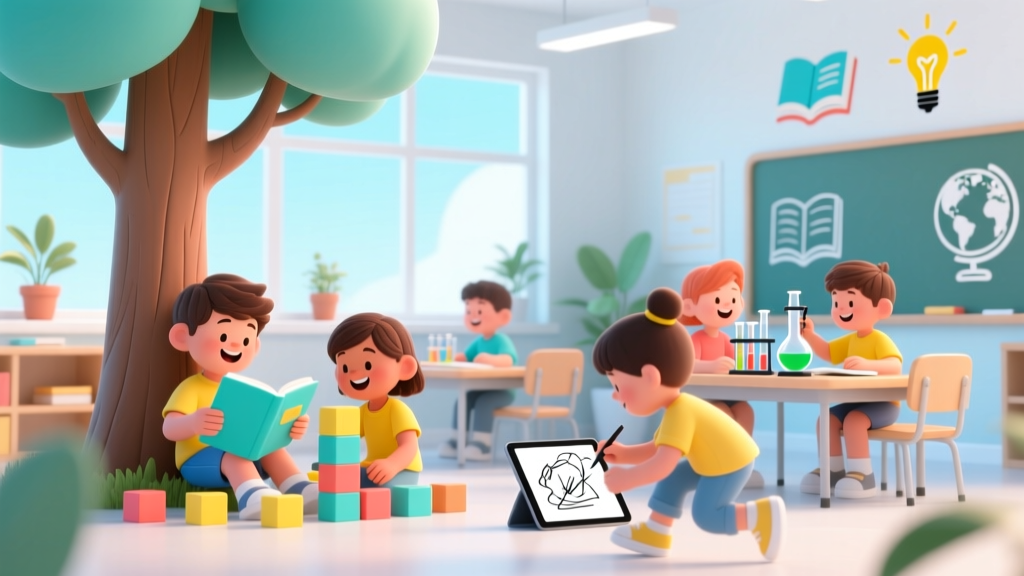
Why Kids Need Recess: Science-Backed Benefits
Why This Isn’t Just About ‘Burn-Off Energy’ Anymore
The question why do kids need recess has never been more urgent—or more misunderstood. In an era of accelerated academics, standardized testing pressure, and shrinking school budgets, recess is often the first ‘nonessential’ cut. Yet mounting evidence from neuroscience, developmental psychology, and public health reveals something counterintuitive: eliminating recess doesn’t create more learning time—it actively sabotages it. Children aren’t miniature adults wired for 6-hour seated focus; their brains require rhythmic bursts of movement, sensory input, and peer-driven social negotiation to consolidate knowledge, regulate emotions, and sustain attention. What looks like ‘free time’ is, in fact, the invisible architecture supporting every other hour of instruction.
The Neuroscience Behind the Break: How Recess Rewires the Brain
Recess isn’t downtime—it’s brain tuning time. When children run, climb, chase, negotiate rules for tag, or build forts in the grass, they activate multiple neural systems simultaneously. Dr. Romina Barros, a pediatrician and researcher at Albert Einstein College of Medicine, explains: ‘Physical activity during recess increases cerebral blood flow by up to 15%, delivering oxygen and BDNF (brain-derived neurotrophic factor)—the brain’s natural fertilizer—to the prefrontal cortex. That’s where working memory, impulse control, and flexible thinking live.’
A landmark 2022 longitudinal study published in JAMA Pediatrics tracked over 4,700 elementary students across 12 U.S. districts for three years. Researchers found that students who received ≥20 minutes of daily unstructured recess showed:
- 27% faster improvement in standardized reading fluency scores
- 31% fewer teacher-reported off-task behaviors during morning lessons
- 43% lower incidence of classroom-based behavioral interventions (e.g., time-outs, behavior contracts)
This isn’t about ‘letting kids blow off steam.’ It’s about leveraging movement to prime neurochemical conditions for learning. Dopamine surges during play enhance motivation pathways. Serotonin release during cooperative games improves mood regulation. And crucially—cortisol levels drop significantly after just 10 minutes of free outdoor play, according to cortisol saliva assays conducted by the University of Illinois’ Child Attention & Play Lab.
More Than Movement: The Social-Emotional Curriculum Hidden in the Playground
Recess is the only daily space where children practice democracy without adult scripting. There are no lesson plans, no rubrics, no grade-level benchmarks—just real-time, high-stakes social problem-solving. A child negotiating turn-taking on the swings learns conflict resolution. A group improvising rules for kickball practices consensus-building and perspective-taking. A shy student initiating a game of hopscotch builds self-efficacy. These aren’t ‘soft skills’—they’re predictive indicators of lifelong success.
Dr. Deborah Leong, co-developer of Tools of the Mind curriculum and developmental psychologist, emphasizes: ‘Classroom instruction teaches children what to think. Recess teaches them how to think socially—how to read nonverbal cues, manage frustration, repair ruptures, and adapt to shifting group dynamics. You cannot simulate this in a worksheet.’
Real-world case in point: After Oakwood Elementary (a Title I school in Columbus, OH) restored 25-minute daily recess and trained staff in ‘recess support—not supervision,’ disciplinary referrals dropped 68% in one year. Teachers reported students returning to class calmer, more verbally expressive, and better able to articulate feelings using ‘I-statements’—a direct carryover from playground mediation practices.
Equity, Access, and the Recess Gap
Recess isn’t equally accessible—and that inequality deepens opportunity gaps. Schools serving low-income communities are 3x more likely to eliminate or shorten recess, citing overcrowded schedules and test-prep mandates. Meanwhile, private and affluent public schools increasingly invest in ‘recess enhancement’—trained play leaders, inclusive equipment, shaded zones, and nature-based play spaces.
This creates what researchers at the Harvard Graduate School of Education term the ‘recess divide’: children who need movement and stress relief most get it least. A 2023 National Center for Education Statistics report revealed that 34% of high-poverty schools offer ≤10 minutes of daily recess versus just 9% of low-poverty schools. Worse, students with IEPs or 504 plans are disproportionately denied recess as a ‘behavioral consequence’—despite AAP guidelines explicitly stating: ‘Withholding recess is countertherapeutic and violates principles of positive behavioral support.’
But equity solutions exist—and they’re surprisingly low-cost. The nonprofit Playworks, which partners with over 1,800 schools, trains student ‘Junior Coaches’ to model inclusive games and de-escalate conflicts. Their randomized controlled trial (published in Pediatrics) found schools using this model saw a 47% reduction in bullying incidents and a 22% increase in participation among girls and students with disabilities—all without adding staff or budget.
What ‘Good’ Recess Actually Looks Like (and What Kills Its Benefits)
Not all recess is created equal. Simply opening the doors and saying ‘go play’ isn’t enough—if the environment lacks safety, inclusivity, or developmental intentionality, benefits vanish. Here’s what research shows makes recess truly effective:
- Unstructured > Structured: While organized games have value, cognitive and social gains peak during child-directed play—not adult-led drills.
- Outdoor > Indoor: Natural light regulates circadian rhythms and vitamin D synthesis; green spaces reduce physiological stress markers more than paved yards.
- Consistent > Intermittent: Daily, predictable recess builds routine and self-regulation. Skipping it for ‘extra math time’ creates dysregulation that undermines that very math lesson.
- Inclusive > Exclusive: Equipment must accommodate diverse abilities (e.g., wheelchair-accessible swings, sensory-friendly zones), and staff must be trained to intervene in bias-based exclusion—not just physical fights.
Conversely, common ‘recess killers’ include: withholding it as punishment, requiring academic work during break (‘recess homework’), using it solely for physical fitness tracking, or allowing chronic adult surveillance that stifles autonomy.
| Developmental Domain | How Recess Builds It | Evidence Source | Real-World Impact Example |
|---|---|---|---|
| Executive Function | Children plan games, hold rules in working memory, inhibit impulses (e.g., waiting for turn), and shift strategies mid-play. | University of Vermont fMRI study (2021): 23% stronger activation in dorsolateral prefrontal cortex post-recess vs. pre-recess. | After implementing ‘choice-based recess zones’ (building, art, active, quiet), Lincoln K–2 saw a 39% decrease in teacher reports of ‘difficulty following multi-step directions.’ |
| Social-Emotional Learning (SEL) | Peer negotiation, empathy development, emotional labeling, and conflict resolution occur organically through unscripted interaction. | AAP Clinical Report (2022): ‘Recess is the primary context for SEL skill acquisition in elementary settings.’ | At Rosa Parks Elementary, student-led ‘Play Ambassadors’ reduced peer exclusion incidents by 51% in one semester through modeled inclusion strategies. |
| Physical Literacy | Varied locomotor patterns (running, jumping, balancing, climbing) build fundamental movement skills far beyond PE class scope. | National Physical Activity Plan Alliance: Children achieve 68% of daily MVPA (moderate-to-vigorous physical activity) during recess. | Schools with ‘loose parts’ play (logs, crates, fabric) saw 2.3x more diverse motor skill use than those with fixed equipment alone (University of North Carolina observational study). |
| Academic Readiness | Improved attentional control, reduced cognitive fatigue, and enhanced information encoding due to neurochemical shifts. | JAMA Pediatrics meta-analysis (2023): 12 studies confirm ≥15-min recess correlates with +0.22 SD gain in literacy/math assessments. | When Jefferson Middle shifted recess to mid-morning (vs. lunchtime), 72% of teachers reported ‘noticeably longer sustained attention’ during core instruction blocks. |
Frequently Asked Questions
Is recess really necessary for older kids—like middle or high schoolers?
Absolutely—and it’s critically underutilized. While formal recess disappears after elementary school, adolescent brains still require movement breaks to maintain focus. The CDC recommends ‘movement snacks’ every 45–60 minutes for teens. Schools like High Tech High in San Diego embed 5-minute ‘brain boost’ walks between classes, resulting in 18% fewer tardies and higher engagement in project-based learning. Neurologically, teen prefrontal cortex development continues into the mid-20s—making strategic movement breaks essential, not optional.
My child has ADHD. Won’t recess make them ‘too wound up’ for class?
Quite the opposite. For children with ADHD, recess is regulatory—not disruptive. Research from CHADD (Children and Adults with Attention-Deficit/Hyperactivity Disorder) shows that skipping recess increases hyperactive behaviors by 300% in the subsequent 90 minutes. Movement helps metabolize excess dopamine and norepinephrine, allowing the brain to reset. In fact, occupational therapists recommend ‘heavy work’ activities during recess (pushing tires, climbing ropes, carrying sandbags) specifically to improve post-recess attention. Withholding recess is medically contraindicated—and violates Section 504 accommodations in most cases.
Can indoor recess provide the same benefits?
Indoor recess can offer social and cognitive benefits—but falls short on key physiological metrics. Without natural light, circadian regulation suffers. Without varied terrain and open space, gross motor development is limited. A 2023 study comparing indoor vs. outdoor recess found outdoor sessions yielded 4.2x more moderate-to-vigorous physical activity and significantly lower salivary cortisol. That said, high-quality indoor options—like obstacle courses, dance zones, or collaborative building challenges—can partially compensate when weather or infrastructure limits outdoor access. The key is intentionality: avoid passive screen time or silent desk work labeled ‘indoor recess.’
How much recess is enough? Is 10 minutes sufficient?
No—10 minutes is the bare minimum threshold, not the target. The American Academy of Pediatrics recommends at least 20 minutes of daily unstructured recess, separate from physical education. Why? Because neurobiological benefits (BDNF surge, cortisol reduction, attentional reset) require sustained, self-directed activity—not just transition time. Schools achieving 20+ minutes see measurable gains in behavior and academics; those stuck at 10 minutes show negligible impact. Importantly, duration matters less than consistency: daily 20-minute recess outperforms sporadic 40-minute sessions.
What if my school won’t change its recess policy?
Start small—but start. Partner with PTA to pilot a ‘Recess Enhancement Team’ focused on low-cost upgrades: painting hopscotch grids, donating inclusive balls, training parent volunteers as play mentors. Share the AAP’s 2022 policy statement with administrators—it cites legal risk (IDEA/Section 504 violations) and academic liability. Most powerfully: collect your own data. Track behavior incidents, on-task time, or even teacher pulse rates pre/post recess for two weeks. Evidence speaks louder than advocacy. One parent in Austin, TX used this approach to restore 15 minutes of recess—then expanded it district-wide.
Common Myths About Recess
Myth #1: “Recess is just for burning off energy—kids today are too hyper anyway.”
Reality: Hyperactivity is often a symptom of under-stimulated nervous systems—not excess energy. Unstructured play provides proprioceptive, vestibular, and tactile input that calms the limbic system. As pediatric occupational therapist Dr. Angela Hanscom states in Rescuing Rebecca: ‘What looks like “too much energy” is frequently a child’s nervous system screaming for the very sensory input recess provides.’
Myth #2: “Academic time lost to recess is time wasted—especially for struggling learners.”
Reality: Withholding recess harms struggling learners most. A 2021 Vanderbilt study found students receiving Tier 2 academic interventions showed greater learning gains when paired with consistent recess versus those pulled for extra instruction. Why? Because their working memory and attentional capacity were too depleted to absorb new content without neurological reset.
Related Topics (Internal Link Suggestions)
- How to Advocate for Recess in Your School — suggested anchor text: "practical steps to restore recess at your school"
- Best Inclusive Playground Equipment for All Abilities — suggested anchor text: "ADA-compliant and sensory-friendly recess gear"
- Mindful Movement Activities for Indoor Recess Days — suggested anchor text: "calming yet energizing indoor play ideas"
- Recess vs. PE: Understanding the Critical Difference — suggested anchor text: "why unstructured play isn’t replaceable by gym class"
- Signs Your Child Is Recess-Deprived (and What to Do) — suggested anchor text: "physical and behavioral red flags to watch for"
Conclusion & Your Next Step
Why do kids need recess? Because it’s not a break from learning—it’s the biological and psychological foundation for learning. It’s where neural pathways strengthen, social intelligence grows, and self-regulation muscles develop. Every minute withheld isn’t recovered in test scores—it’s borrowed from attention, empathy, and resilience. So don’t wait for district policy to shift. Today, observe your child’s energy before and after unstructured play. Notice how they negotiate, create, recover, and connect. Then share one evidence-backed insight—from this article or the AAP’s official stance—with a teacher, principal, or fellow parent. Small acts of informed advocacy compound. Because recess isn’t nostalgia. It’s neuroscience. And it’s non-negotiable.
More Articles
 Geocaching With Kids: A Family Starter Guide
 Backyard Nature Scavenger Hunt Guide (2026)
 Splash Pad for Kids: Safety, Benefits & Facts
 Kids Outdoor Store Front: 7 Steps to CPSC Compliance (2026)
 Treehouse for Kids: Budget-Safe Steps (2026)
 Do Kids Need a Fishing License in Tennessee? (2026)
Water Play Ideas for Hot Summer Days With Kids
Do Kids Need a Fishing License in Tennessee? (2026)
Water Play Ideas for Hot Summer Days With Kids
 Outdoor Play: Evidence-Based Parenting for Resilience
 Best Science-Backed Paper for Outdoor Play Structures
 How to Know What Size Bat for Kid (2026)