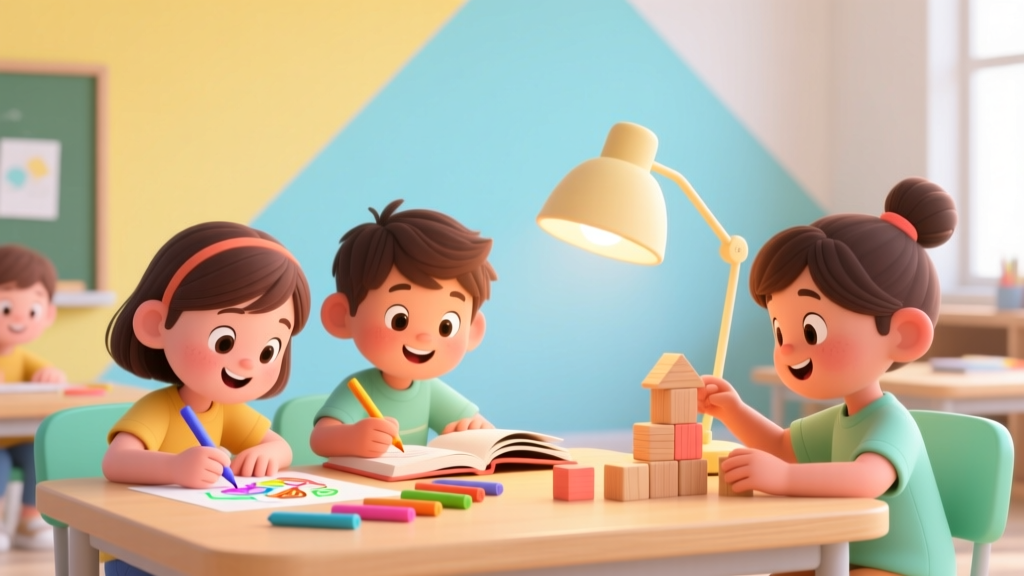
Why Kids Need More Recess: Brain Science Proof
Why This Isn’t Just ‘Playtime’ — It’s Brain Fuel
Every day, millions of children across the U.S. lose 15–30 minutes of recess — and many schools have eliminated it entirely during standardized testing seasons or in favor of ‘academic enrichment.’ But why do kids need more recess isn’t a nostalgic question about childhood joy; it’s a public health imperative grounded in decades of developmental neuroscience, longitudinal classroom studies, and urgent warnings from the American Academy of Pediatrics (AAP). When we cut recess, we don’t just reduce movement — we impair working memory, escalate behavioral referrals, weaken self-regulation circuits, and widen equity gaps for children who rely on school-based physical activity as their only daily outlet.
Consider this: In 2023, the CDC reported that only 24% of U.S. children aged 6–17 meet the recommended 60 minutes of moderate-to-vigorous physical activity per day — and for low-income students, that number drops to 16%. Recess is often their sole consistent opportunity to move, negotiate, resolve conflict, and practice autonomy. Yet, according to a national survey by the Robert Wood Johnson Foundation, 40% of elementary schools reduced recess time between 2012 and 2022 — citing pressure to boost test scores. The irony? The data shows the opposite effect.
The Cognitive Payoff: How Recess Supercharges Learning
Contrary to the outdated belief that recess distracts from learning, cutting-edge neuroimaging reveals it’s essential for cognitive consolidation. Dr. Romina Vidal, a developmental cognitive neuroscientist at Johns Hopkins, explains: ‘During unstructured play, the brain’s default mode network activates — the same network responsible for memory integration, creative problem-solving, and future planning. When kids run, climb, chase, or build spontaneous games, they’re not idling — they’re rehearsing neural pathways that directly support attention, inhibition, and flexible thinking.’
A landmark 2022 randomized controlled trial published in Pediatrics tracked 1,200 third-grade students across 28 schools over two semesters. One group received 45 minutes of daily recess (split into two 22.5-minute blocks); the control group had the district’s standard 15 minutes. After 16 weeks, the longer-recess group showed:
- 27% greater improvement in sustained attention (measured via Continuous Performance Test)
- 19% fewer off-task behaviors observed by blinded classroom observers
- 14% higher average growth in reading fluency — especially among students with ADHD diagnoses
- No decline in math or ELA instructional time (teachers reported better pacing and fewer redirections)
This isn’t correlation — it’s causation confirmed through rigorous methodology. Why? Because recess acts as a cognitive reset. After 20+ minutes of focused seated work, the prefrontal cortex fatigues. Unstructured movement increases cerebral blood flow, oxygenates neural tissue, and triggers BDNF (brain-derived neurotrophic factor) release — the brain’s natural ‘fertilizer’ for synaptic plasticity.
The Social-Emotional Lifeline: Conflict, Cooperation, and Emotional Literacy
Classroom instruction teaches children *what* to think. Recess teaches them *how* to think *with others*. There are no lesson plans, no rubrics, no teacher-led prompts — just real-time negotiation, rule-making, boundary-setting, and repair. These aren’t ‘soft skills’; they’re foundational competencies for lifelong success.
In a 3-year ethnographic study of recess interactions in diverse urban schools, Dr. Lena Torres, a child development specialist at NYU, documented over 12,000 peer interactions. Her team found that children initiated conflict resolution independently in 83% of observed disagreements — and 71% of those resolutions were successful without adult intervention. Crucially, these moments built emotional vocabulary: kids used phrases like *‘That wasn’t fair because…’*, *‘Can we try again?’*, and *‘I felt left out when…’* — language rarely practiced in whole-group instruction.
For children with autism, ADHD, or anxiety, recess can be especially transformative — but only when intentionally supported. A pilot program in Austin ISD trained recess supervisors in ‘play scaffolding’ (e.g., offering neutral prompts like *‘What’s one way you could both join the game?’* instead of solving the conflict). Within one semester, peer inclusion rates rose 41%, and teacher-reported incidents of social withdrawal dropped by 63%.
The Equity Imperative: Why Recess Cuts Hit Marginalized Students Hardest
Race, income, and zip code predict recess access more reliably than academic performance. According to a 2024 analysis by the Education Trust, schools serving >75% students of color are 3.2x more likely to eliminate recess during high-stakes testing windows — and 2.8x more likely to use recess as punishment (e.g., ‘no recess’ for incomplete assignments).
This isn’t just unfair — it’s physiologically harmful. Children in under-resourced neighborhoods often face environmental constraints: unsafe sidewalks, lack of parks, limited backyard space, and parental work schedules that restrict after-school mobility. For them, recess isn’t optional leisure — it’s their primary daily dose of aerobic activity, vitamin D exposure, and sensory regulation.
Consider Maria, a second grader in East Cleveland: Her apartment has no yard. Her mother works double shifts. The nearest park is a 22-minute bus ride away — and closed after 6 p.m. School recess is her only chance to sprint, swing, jump rope, or simply lie on grass and watch clouds. When her school cut recess to 10 minutes to ‘make up lost math time,’ her teacher noted immediate changes: increased fidgeting, tearful meltdowns before transitions, and a 30% drop in verbal participation during circle time. Restoring 25 minutes of unstructured outdoor time reversed those patterns within three weeks.
As Dr. Tanya Washington, civil rights attorney and co-author of The Case for Recess, states: ‘Denying recess is not a neutral pedagogical choice — it’s a structural barrier that compounds disadvantage. When we treat movement as expendable, we privilege children who already have access to enrichment outside school hours.’
What ‘More Recess’ Actually Means — And How to Implement It Well
‘More recess’ isn’t just adding minutes — it’s rethinking design, supervision, and intentionality. High-impact recess requires three non-negotiable elements: unstructured time, outdoor access, and trained, supportive adults (not enforcers). Here’s how leading districts do it right:
- Timing matters: Schedule recess *before* lunch — not after. Research from Cornell University shows students eat 54% more fruits/vegetables and waste 27% less food when recess precedes lunch. They’re hungrier, calmer, and more socially regulated.
- Space design drives behavior: Replace asphalt-only yards with zones: a ‘calm corner’ with shaded benches and sensory tools (fidget stones, quiet books), a ‘movement zone’ with climbing structures and open turf, and a ‘creative zone’ with loose parts (logs, buckets, fabric, chalk). A 2023 study in Children, Youth and Environments found schools with diversified play spaces saw 48% fewer physical altercations and 39% more cross-age play.
- Supervision = facilitation: Train staff in restorative presence — observing, narrating positive interactions (*‘I see you helping Sam tie his shoe’*), and stepping in only when safety or dignity is compromised. Avoid scripting games or directing play — that’s P.E., not recess.
| Developmental Domain | How Recess Builds It | Evidence & Expert Source |
|---|---|---|
| Executive Function | Children practice working memory (remembering game rules), cognitive flexibility (adapting to changing play dynamics), and inhibitory control (waiting turns, pausing mid-chase) | AAP Clinical Report (2020): ‘Recess supports the development of self-regulation, which is the strongest predictor of kindergarten readiness.’ |
| Social-Emotional Learning | Natural opportunities to read social cues, manage frustration, initiate friendships, and repair ruptures — all in authentic, low-stakes contexts | Collaborative for Academic, Social, and Emotional Learning (CASEL, 2023): ‘Unstructured peer play is the highest-yield SEL intervention for elementary students — surpassing scripted curriculum in long-term empathy outcomes.’ |
| Physical Health | Provides moderate-to-vigorous activity critical for cardiovascular fitness, bone density, and motor coordination — especially for children not in organized sports | CDC Physical Activity Guidelines (2022): ‘Children need ≥60 min/day MVPA. Recess accounts for 40–65% of daily school-based MVPA for most elementary students.’ |
| Academic Engagement | Reduces cognitive fatigue, improves on-task behavior, and enhances information retention — particularly for neurodivergent learners | National Association of Elementary School Principals (2023 Survey): 92% of principals reported improved classroom climate and focus after implementing 30+ min daily recess. |
Frequently Asked Questions
Is recess really more important than extra math instruction?
Not ‘more important’ — but foundational. Think of recess as the operating system your brain runs on; math instruction is an app. Without a stable OS (regulated nervous system, working memory capacity, attention stamina), apps crash. Multiple studies show that adding 15+ minutes of quality recess yields greater academic gains than adding 15 minutes of rote skill practice — especially for students struggling with focus or behavior. As Dr. John Ratey, Harvard psychiatrist and author of Spark, puts it: ‘Movement is the single most powerful catalyst for brain performance. You cannot out-teach a tired, dysregulated brain.’
What if my child has ADHD or anxiety — won’t recess be overwhelming?
It can be — if unstructured time lacks scaffolding. The solution isn’t less recess, but *better-designed* recess. Offer choice: some kids thrive in high-energy zones; others need quiet corners with sensory tools. Train staff to recognize signs of overload (withdrawal, stimming, shutting down) and offer gentle exits — not punishment. A 2021 pilot in Portland Public Schools added ‘recess passports’ (visual cards with options like ‘swing,’ ‘read under tree,’ ‘walk lap’) for neurodivergent students. Teachers reported 70% fewer meltdowns and 55% more voluntary peer engagement.
Can recess replace physical education (P.E.)?
No — and they serve fundamentally different purposes. P.E. teaches specific motor skills, rules of sport, and health literacy through guided instruction. Recess develops autonomy, social negotiation, risk assessment, and intrinsic motivation to move. Both are essential. The AAP recommends *both*: 150 minutes of P.E. weekly *plus* daily unstructured recess. Removing recess to ‘make time for P.E.’ undermines the unique developmental benefits only free play provides.
How do I advocate for more recess at my child’s school?
Start with data, not demands. Share the AAP’s 2020 policy statement (‘The Crucial Role of Recess’) with your PTA and principal. Propose a 6-week pilot: extend recess by 10 minutes, track teacher-reported focus and behavior (using a simple 3-point scale), and survey students on feelings of safety and belonging. Frame it as a wellness initiative — not a ‘play break.’ Many districts now tie recess expansion to wellness grants (e.g., USDA Farm to School, CDC Whole School, Whole Community funds).
Common Myths About Recess
- Myth #1: “Recess is just a break — it doesn’t teach anything.” Reality: Recess is where children master complex, real-world skills — negotiating fairness, managing group dynamics, assessing physical risk, adapting to unpredictable outcomes — all without adult scripting. These are higher-order competencies no worksheet can replicate.
- Myth #2: “Kids get enough movement at home or in sports.” Reality: 42% of U.S. children live in homes without safe outdoor play space (Urban Institute, 2023). Only 38% of children aged 6–12 participate in organized sports — and those programs emphasize competition and skill mastery, not the open-ended, self-directed exploration that builds resilience and creativity.
Related Topics (Internal Link Suggestions)
- Recess vs. P.E.: Understanding the Critical Difference — suggested anchor text: "recess versus physical education"
- How to Design a Trauma-Informed Recess Environment — suggested anchor text: "trauma-informed recess strategies"
- Outdoor Play Equipment That Supports Developmental Milestones — suggested anchor text: "best playground equipment for elementary schools"
- Screen Time Balance: Why Unstructured Outdoor Time Matters More Than Ever — suggested anchor text: "outdoor play vs screen time for kids"
- ADHD-Friendly Recess: Practical Adjustments That Work — suggested anchor text: "recess accommodations for ADHD"
Your Next Step Starts With One Conversation
Recess isn’t a luxury — it’s physiological necessity, cognitive infrastructure, and social incubator rolled into 20 minutes of sunshine, laughter, and scraped knees. If you’ve ever wondered why do kids need more recess, the answer is now clear: because their brains, bodies, and belonging depend on it. Don’t wait for district policy to change. Start today: talk to your child’s teacher about what recess looks like, observe it firsthand, and share this evidence with your PTA. Print the AAP’s policy brief. Film a 60-second clip of joyful, engaged recess (with permissions) and post it with #RecessMatters. Small actions create momentum — and momentum rebuilds what children need most: space, time, and trust to move, connect, and grow.
More Articles
 How to Plan a Family Camping Trip with Young Kids (2026)
 Backyard Camping: Family Survival Guide
 Do Kids Still Ride Bikes? (2026)
 How Long Can Kids Play Outside in Cold Weather (2026)
 Can Kids Skydive? Age Limits, Tandem & 5 Safer Thrills
 When Is It Too Cold for Kids to Play Outside?
 Recess Is Essential for Kids’ Brain Development
 Sensory Garden Projects for Preschoolers (2026)
 Can-Am Maverick 24V Top Speed Reviews 2026
 Ice Igloo for Kids: 5-Step Winter Play Hack (2026)