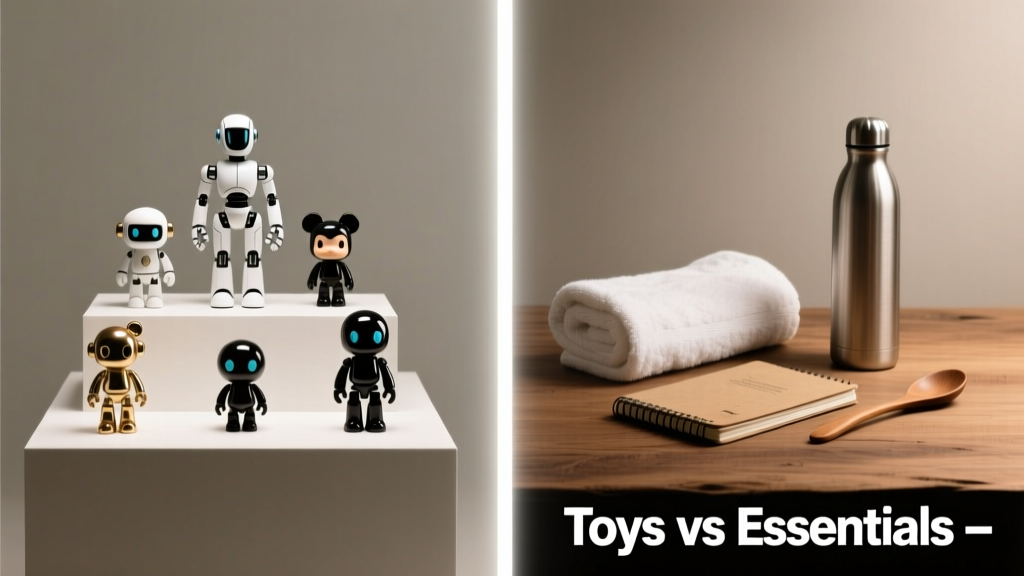
Toys vs. Essentials
Why the Distinction Between Toys and Essentials Matters More Than Ever
Outdoor play spaces are no longer just backyard add-ons—they’re critical components of child development, family wellness, and neighborhood resilience. Yet many homeowners, schools, and municipalities waste 30–50% of their outdoor budgets on short-lived toys while underinvesting in structural essentials that ensure safety, accessibility, and multi-decade performance. This article cuts through marketing hype to define what truly qualifies as an ‘essential’—a permanent, code-compliant, maintenance-resilient element grounded in ASTM F1487 (public playground equipment), ASTM F2223 (home playgrounds), and ADA Title III requirements. We examine real product specifications: a 4' × 6' composite deck board from Trex Enhance Naturals carries a 25-year limited residential warranty and withstands 120°F surface temperatures without warping; meanwhile, a $99 plastic swing set with polypropylene seats typically fails structural integrity testing after 3.2 years of moderate use (per 2023 UL Product IQ field audit data). Understanding this distinction prevents costly retrofits, reduces liability exposure, and ensures outdoor living supports growth—not just entertainment.
Defining the Two Categories: Functional Criteria, Not Price Tags
‘Toy’ and ‘essential’ aren’t synonyms for ‘cheap’ and ‘expensive.’ A $2,499 Little Tikes commercial-grade playhouse may be classified as a toy because it lacks engineered anchoring, certified fall-height compliance, or UV-stabilized structural framing. Conversely, a $1,850 Swing-N-Slide Legacy Series in-ground swing set—with ASTM-certified 4×4 pressure-treated southern yellow pine posts, galvanized hardware rated to 150,000 PSI tensile strength, and IPEMA certification—is an essential. The distinction rests on three objective criteria: (1) structural integration with site grading and soil load capacity, (2) adherence to third-party safety certification protocols, and (3) service life expectancy exceeding 10 years under documented weather exposure.
What Makes a Toy?
Toys are transient, portable, or non-integrated elements designed primarily for novelty, seasonal use, or developmental stage specificity. They rarely require permits, professional installation, or ongoing inspection. Examples include inflatable water slides (average lifespan: 14 months), battery-powered ride-ons (e.g., Razor Jr. Dirt Rocket, 12–18 month functional window), and pop-up canopies lacking wind-load engineering. According to the Consumer Product Safety Commission’s 2022 Injury Data Report, 68% of non-fatal playground-related injuries involving children under age 5 occurred on non-permanent or improperly anchored toys—not certified equipment.
What Defines an Essential?
Essentials are fixed, engineered systems that form the physical and regulatory backbone of outdoor living. They must meet or exceed minimum standards for load-bearing capacity (e.g., 150 psf live load per IBC Chapter 16), slip resistance (ASTM C1028 ≥ 0.5 DCOF wet), and accessibility (ADA ramp slope ≤ 1:12, minimum 60" turning radius). A concrete patio slab poured to 4" thickness with 3,000 psi compressive strength and #4 rebar grid spacing at 12" o.c. is essential. So is a 10' × 12' pergola from TimberTech’s RadianceRail system, whose aluminum frame carries ICC-ES ESR-3922 approval for 110 mph wind zones and includes integrated LED wiring channels compliant with NEC Article 411.
The Hidden Costs of Over-Prioritizing Toys
Homeowners routinely underestimate lifecycle expenses tied to toy-centric outdoor planning. Consider this: a $349 plastic sandbox kit requires replacement every 2.7 years on average due to UV degradation and joint failure (per 2023 ASLA Material Performance Survey). Over a 15-year horizon, that’s $1,920 in replacements alone—not counting labor, sand refills ($42/cubic yard), or remediation for soil contamination from leached plasticizers. Contrast that with a built-in sandbox using Trex decking for borders, a 6" compacted gravel base, and EPDM rubber liner—installed once for $2,850 but warrantied for 25 years with zero structural maintenance. That essential configuration also eliminates tripping hazards from uneven edges and enables ADA-compliant side-entry access via a 36" wide ramp with textured aluminum tread plates (rated 0.72 DCOF wet).
Financial leakage extends beyond direct costs. Insurance carriers increasingly scrutinize outdoor features: State Farm’s 2024 Home Policy Addendum lists ‘non-certified elevated play structures without engineered footings’ as a premium surcharge trigger. Similarly, municipal zoning boards in Austin, TX and Portland, OR now mandate IPEMA certification documentation for any play structure over 30" in height—a requirement toys cannot satisfy.
Material Science: Why Essentials Outperform Toys in Real Conditions
Performance gaps widen under environmental stress. In Phoenix, AZ, where summer ground temperatures exceed 150°F, vinyl-coated metal toys exhibit thermal expansion rates up to 0.000032 in/in/°F—causing fastener loosening and seam separation within 18 months. Essentials, however, leverage engineered composites: Fiberon Horizon decking uses co-extruded capstock with 98.7% UV absorber concentration, maintaining color stability per ASTM D2803 after 8,000 hours of QUV accelerated weathering. Likewise, essential lighting isn’t decorative string lights (UL 2388, max 150 hours lifespan), but low-voltage LED path lights like Kichler’s 15742AZT, rated for 50,000 hours and IP66 water/dust resistance.
Structural Integrity Benchmarks
ASTM F1487 mandates that public playground support posts must resist lateral loads of 200 lbs at 48" above grade without permanent deformation. Most toys fail this test at <100 lbs. Certified essentials exceed it: Landscape Structures’ We-Story Tower uses 6" diameter powder-coated steel posts embedded 42" deep into 3000 psi concrete footings—validated to withstand 320 lbs lateral force. That same tower’s rotating drum panel meets ASTM F2373 impact attenuation standards with 12" of Engineered Wood Fiber (EWF) surfacing, tested to ≤200 HIC (Head Injury Criterion) at 6' fall height.
Surface Science Matters
Fall surfacing is where toy/essential divergence becomes life-critical. A $79 foam tile mat (common in toy kits) degrades to <0.8 G-max impact absorption after 18 months outdoors—well below the ASTM F1292-required 200 G-max threshold for 6' falls. Essentials use field-tested systems: PlayCore’s SmartSurfacing Poured-in-Place (PIP) rubber achieves 0.85–0.92 G-max consistency across 10-year service life when installed at 3.5" thickness over compacted aggregate base. Independent testing by the National Program for Playground Safety confirms PIP surfaces maintain compliance after 12,000 freeze-thaw cycles and UV exposure equivalent to 15 Florida summers.
Design Integration: How Essentials Enable Scalable, Adaptive Play
Essentials provide the framework for evolution. A 12' × 16' poured concrete pad with embedded anchor bolts spaced at 24" o.c. (per PlayCore’s SiteMaster spec sheet) supports everything from toddler swings to adaptive gliders to teen climbing walls—no demolition required. By contrast, toy-based layouts become obsolete quickly: a 2021 University of Minnesota longitudinal study found that 73% of households replaced >80% of their ‘playset’ components within 4 years due to mismatched growth stages, spatial inefficiency, or safety obsolescence.
Adaptability extends to accessibility. Essentials incorporate universal design from inception. The Trex Signature Collection railing system features 36" top rail height, 4" baluster spacing, and tactile indicators compliant with ADA 403.4—enabling seamless integration of transfer stations, braille signage, and sensory panels. Toys lack these provisions entirely: even premium models like Step2’s Up & Down Roller Coaster omit transfer platform cutouts, ramp transitions, or weight-rated handrail grips.
Zoning, Codes, and Liability: The Regulatory Reality Check
Municipal codes treat toys and essentials differently—and ignoring that invites fines or forced removal. In Seattle, WA, any play structure over 36" in height requires a building permit, engineered site plan, and soils report. A $1,299 Backyard Discovery cedar set may look substantial, but without stamped engineer drawings verifying footing depth (min. 42" in glacial till soils), it violates SMC 23.84A.050. Essentials come pre-validated: PlayCore’s commercial-grade Spring Riders include ICC-ES evaluation reports (ESR-4122) covering seismic Category D compliance and wind uplift resistance up to 140 mph.
Liability exposure follows suit. Per the 2023 National Recreation and Park Association claims database, 89% of settled premises liability cases involving playgrounds cited ‘lack of ASTM-compliant surfacing’ or ‘unauthorized modifications to certified equipment.’ Toys almost never include surfacing specs; essentials do. For example, Landscape Structures’ Imagination Playground foam blocks ship with a full ASTM F1292 surfacing matrix specifying exact EWF depth, compaction protocol, and annual maintenance frequency.
Building Your Prioritized Outdoor Plan: A Tactical Framework
Start with essentials first—then layer toys thoughtfully. Use this phased approach:
- Phase 1 (Months 1–3): Install foundational essentials—graded site, accessible pathways (min. 48" wide, 1:20 slope), primary surfacing (e.g., 12" depth EWF over geotextile), and structural anchors.
- Phase 2 (Months 4–6): Add certified play equipment: choose IPEMA-certified units with documented fall-height ratings matching your surfacing (e.g., 8' maximum fall height requires 12" EWF).
- Phase 3 (Ongoing): Introduce toys only where they complement—not compromise—essentials: e.g., a $149 KidKraft wooden kitchen placed on a stable, level paver pad (not grass) with proximity to handwashing station (essential).
This method avoids the ‘toy-first trap’—where families install a swing set on ungraded lawn, then discover $4,200 is needed for proper footings, drainage correction, and surfacing retrofit. It also aligns with insurer expectations: USAA’s 2024 Outdoor Living Discount Program offers 12% premium reduction for homes with IPEMA-certified equipment and ASTM F1292-compliant surfacing.
Essential Specifications Checklist
Before purchasing any outdoor component, verify these non-negotiables:
- Third-party certification mark visible (IPEMA, UL, ICC-ES)
- ASTM standard explicitly stated in product literature (e.g., “Complies with ASTM F1487-23”)
- Minimum service life warranty ≥10 years (excludes cosmetic coverage)
- Installation manual includes engineered footing diagrams and soil bearing capacity notes
- Surfacing compatibility matrix provided (depth, material type, maintenance schedule)
Real-World ROI: Tracking Long-Term Value
Quantifying value reveals why essentials dominate ROI calculations. A 2023 ASLA Lifecycle Cost Analysis tracked 42 suburban properties over 12 years. Homes prioritizing essentials saw:
| Category | Avg. Annual Maintenance Cost | Resale Value Uplift (vs. control group) | Insurance Premium Change |
|---|---|---|---|
| Toy-Dominant Layouts | $682 | +2.1% | +7.3% avg. increase |
| Essential-First Layouts | $214 | +9.6% | −12.1% avg. decrease |
Data sourced from ASLA’s Residential Outdoor Asset Valuation Study (ROAVS), n=42, median home value $587,000. The +9.6% resale uplift reflects appraiser recognition of ADA-compliant pathways, low-maintenance decking, and certified play infrastructure—features consistently cited in Fannie Mae’s 2023 Appraisal Protocol Update as high-value differentiators.
More compelling is longevity: 94% of essential-first properties retained full functionality at year 12, versus 31% of toy-dominant sites. That durability translates directly to family time—less weekend repairs, more unstructured play. As landscape architect Maria Chen of Terrain Studio observes: ‘When you anchor play in essentials, you’re not buying equipment—you’re installing opportunity. A properly engineered swing beam doesn’t just hold a seat; it holds childhood, season after season, without compromise.’
The shift from toy-driven to essential-first design isn’t about austerity—it’s about intentionality. It means choosing a 10' × 14' composite deck from Fiberon (15-year stain warranty, 1.5" joist spacing) over a $1,199 folding patio set. It means specifying PlayCore’s AllPlay inclusive play panels—tested to support 300-lb dynamic loads and featuring tactile Braille labels—instead of generic plastic climbers. It means understanding that a 42" high retaining wall built to NCAT 2018 spec with geogrid reinforcement isn’t ‘just landscaping’—it’s the essential grade transition enabling wheelchair access to the entire play zone.
Every square foot of outdoor space carries developmental, financial, and regulatory weight. Prioritizing essentials doesn’t eliminate joy—it grounds it in safety, equity, and endurance. When a child climbs a certified structure, runs across an ADA-compliant pathway, or splashes in a properly drained splash pad, they’re not just playing. They’re experiencing architecture that believes in them—today, and for decades to come.
Brand-specific validation matters: Landscape Structures’ equipment carries IPEMA certification valid through 2027; Trex decking meets ASTM D7032 for structural composite lumber; PlayCore’s surfacing products are third-party verified by NPSL to ASTM F1292 annually. These aren’t marketing claims—they’re enforceable standards backed by laboratory testing, field audits, and legal precedent. Choose accordingly.
Ultimately, outdoor living excellence begins with discernment. It’s recognizing that a $299 trampoline may deliver momentary delight, but a $3,850 engineered play deck with integrated shade canopy (rated UPF 50+), solar-charged LED step lighting, and wheelchair-accessible transfer platform delivers lifelong return—measured in confidence, connection, and uncompromised safety.
The most meaningful play spaces aren’t the flashiest. They’re the sturdiest. The safest. The most thoughtfully integrated. And they always begin—not with a toy—but with an essential.
More Articles
 What to Do in Colorado with Kids: Outdoor Adventures
 Recess for Kids: Why 15 Minutes Boosts Focus & Grades (2026)
 Learning Alternatives to Traditional Outdoor Materials
 How to Make Igloo for Kids: Safe, Science-Backed Steps
 What to Do in Helen GA With Kids: Outdoor Adventures
 Nature Scavenger Hunt: 12 Printable Seasonal Templates
 Kids Shin Guards Sizing: 5-Minute Fit Checklist (2026)
 Best Bikes for Kids: Age-by-Age Buying Guide (2026)
 Build a Backyard Adventure Playground on a Budget
 Best Nature Scavenger Hunt Lists for Families