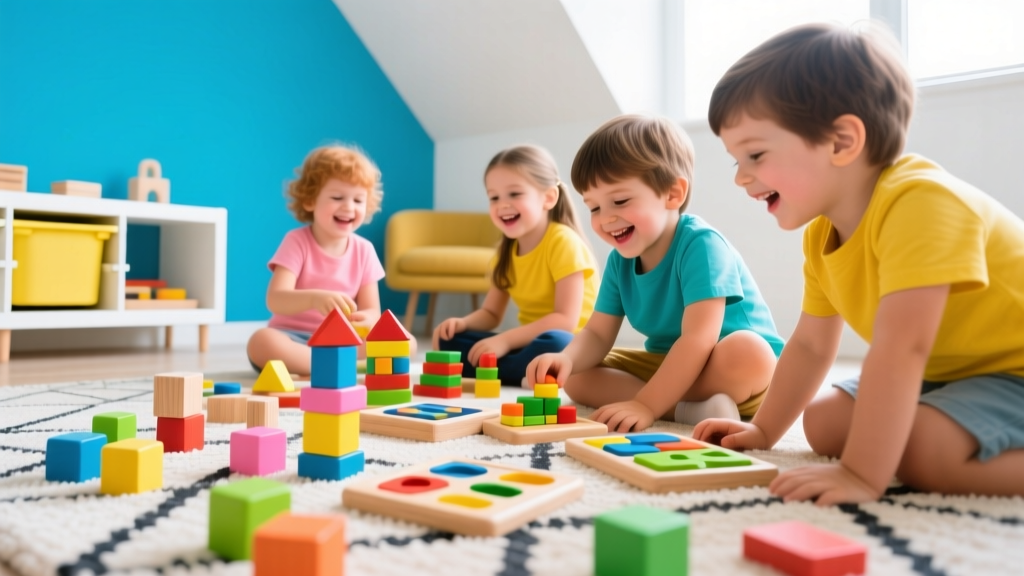
Backyard Obstacle Course Ideas for Kids
Why Backyard Obstacle Courses Are a Win for Kids (and Parents)
There’s magic in watching a child sprint, crawl, balance, and leap—fully immersed, breathless, and beaming—with zero screens in sight. Backyard obstacle courses aren’t just fun; they’re powerful developmental tools. They build gross motor skills, spatial awareness, problem-solving, perseverance, and even emotional regulation. Best of all? You don’t need fancy equipment or a huge yard. With everyday household items and a little creativity, you can set up a dynamic, ever-changing course in under 30 minutes—and adapt it as your child grows. This guide gives you actionable, safety-conscious ideas you can build today.
Simple & Safe Setup Tips for Every Parent
Start with Safety First
Before laying down the first cone, prioritize safety: clear the area of rocks, sticks, and uneven terrain; use soft landing zones (grass, mulch, or old blankets) under jumping or climbing elements; and always supervise based on your child’s age and ability. For toddlers (2–4), keep obstacles low, slow, and close to the ground. For ages 5–8, add more challenge—but avoid heights over 3 feet without proper support. Ages 9+ can handle timed challenges and multi-step sequences.
Use What You Already Have
No need to order expensive kits. Repurpose common items:
- Pool noodles (cut in half lengthwise for balance beams or bent into arches)
- Cardboard boxes (for crawling tunnels or stepping platforms)
- Hula hoops (for jumping targets, stepping stones, or slalom markers)
- Old tires (buried slightly or laid flat for stepping or hopping)
- Bungee cords or rope (tied between trees at knee-to-waist height for limbo or weaving)
- Plastic cones, traffic cones, or even water bottles filled with sand for markers
Label stations with chalk drawings or laminated picture cards (great for pre-readers!) so kids know the sequence—and can reset it themselves.
Keep It Flexible & Fun
Rotate 2–3 elements weekly to maintain interest. Let kids help design one station each week—they’ll engage deeper and take ownership. Time challenges only when appropriate (e.g., not for anxious or easily frustrated kids); focus instead on ‘Try It Twice’ or ‘Add One More Step’ goals. Celebrate effort—not just speed or completion—with high-fives, silly sound effects, or a ‘Course Master’ badge drawn on paper.
Age-Adapted Obstacle Course Ideas You Can Build Today
Toddler-Approved (Ages 2–4)
Focus on sensory input, balance, and simple sequencing. Keep stations within arm’s reach and avoid transitions that require lifting legs high.
- Crawl Tunnel: Drape a lightweight sheet over two chairs or low picnic tables; secure with clips. Add crinkly paper or soft scarves inside for tactile play.
- Stepping Stones: Arrange 5–6 hula hoops or painted cardboard circles on grass. Say animal names as they step (“Hop like a frog!” “Stomp like an elephant!”).
- Balance Beam: Use a 2x4 board (sanded smooth) laid flat on grass—or tape a 2-inch wide line with bright painter’s tape. Place a stuffed animal on their head to carry for added focus.
- Throw & Toss: Set up a laundry basket and give them 3 soft balls or balled-up socks to toss from a marked line (use tape or chalk).
Elementary Explorers (Ages 5–8)
Introduce coordination combos, directional cues, and mild risk-taking—always with built-in success points.
- Limbo Weave: String a pool noodle or broomstick between two chairs at waist height. Add rhythm (“Duck under on ‘three’!”) and lower gradually.
- Jump & Land: Create a zigzag path of 6–8 hula hoops. Challenge them to jump sideways, forward, or on one foot—and land with knees bent and quiet feet (no stomping!).
- Command Crawl: Lay out a path of taped arrows and signs (‘Crawl’, ‘Spin’, ‘Crab Walk’, ‘Bear Walk’). Roll a die to determine the next move—or draw cards from a bucket.
- Target Balance: Place a 6-foot-long plank (secured on grass with bricks at each end) and ask them to walk across while balancing a beanbag on their head—or passing a ball hand-to-hand behind their back.
Big Kid Challenges (Ages 9–12)
Encourage leadership, timing, and self-reflection. Invite them to design a full course—including a name, theme (‘Jungle Escape’, ‘Space Mission’), and scoring system.
- Timed Relay: Divide into 3–4 stations (e.g., jump rope 10x → crawl under string → solve a 3-digit math flashcard → sprint 20 feet). Use a phone timer and track personal bests on a whiteboard.
- Obstacle Swap: Set up 5 stations—but rotate one element every round (e.g., replace ‘balance beam’ with ‘ladder rung walk’ using a flat ladder on grass).
- Team Build: Give kids rope, pool noodles, and tarps—and 10 minutes to construct *one* new station together. Then test it as a group.
- Reflection Station: End each session with a quick ‘What was tricky? What felt strong?’ conversation. Jot notes on a clipboard—it builds metacognition and motivation.
Pro Tips to Extend the Fun & Learning
Turn your backyard course into more than just physical play. Here’s how to layer in learning and life skills:
- Math Integration: Count jumps, measure distances with a tape measure, calculate average times, or create graphs of weekly progress.
- Literacy Boost: Write clue cards with rhyming directions (“Hop where the red hoop lies—then wiggle like a jellyfish!”) or embed sight words in station names (“Leap to the LEMON hoop!”).
- Science Snack: After play, discuss friction (why socks slide on the plank), force (how far a ball rolls down a ramp), or biomechanics (how knees absorb landing impact).
- Weather-Ready Swaps: On rainy days, move key stations indoors: tape a winding path on the floor, use couch cushions for stepping stones, and swap crawling for ‘floor skating’ on socks.
- Involve Siblings: Assign older kids as ‘Course Captains’ to explain rules, time rounds, or modify stations for younger siblings—building empathy and responsibility.
Remember: the goal isn’t perfection—it’s joyful movement, repeated practice, and shared laughter. Start small (just 2 stations this afternoon), snap a photo to celebrate, and watch confidence grow with every hop, climb, and cheer.
With a little space, some household items, and your enthusiastic presence, your backyard becomes more than grass and sky—it becomes a launchpad for resilience, creativity, and whole-child development. So grab those hula hoops, draw a starting line in chalk, and let the course begin.
More Articles
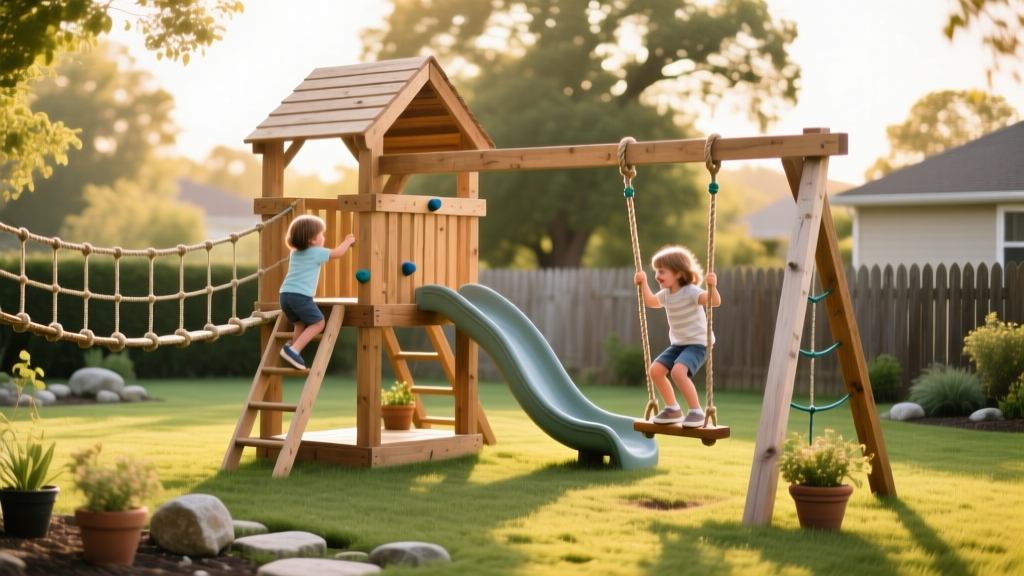 Build a Backyard Adventure Playground on a Budget
 Family Bike Trail Tips With Kids
 Where Was Karate Kid 2 Filmed? Okinawa Locations (2026)
 Nature Scavenger Hunt for Kids: Local Ecosystems
 Backyard Camping Guide for Families (2026)
 What Kids Learn at the Park: Hidden Developmental Milestones
 Outdoor Privacy Solutions: Design & Materials
 Hiking Trails for Families with Toddlers (2026)
 Campfire Games for Kids
 Huffy Kids Bikes: Best & Worst Picks (2026)