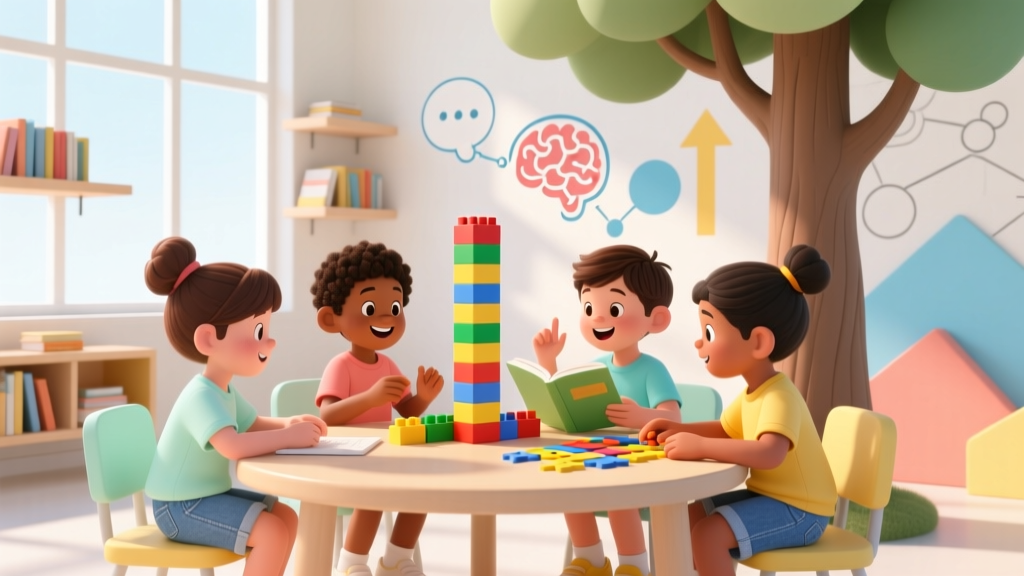
Why Recess Is Important for Kids (2026)
Why This Isn’t Just ‘Free Play’—It’s Brain Fuel
Why is recess important for kids? It’s far more than a break from academics—it’s a non-negotiable neurodevelopmental necessity. In an era where elementary schools are trimming recess by up to 40% to squeeze in more test prep, mounting evidence shows that cutting recess doesn’t boost achievement; it erodes attention spans, escalates behavioral referrals, and weakens executive function—the very skills students need to succeed in math, reading, and self-regulation. What looks like ‘down time’ is actually high-intensity cognitive calibration.
The Cognitive Reset: How Recess Sharpens Focus & Memory
Neuroscience reveals that recess isn’t downtime—it’s brain maintenance time. During unstructured play, children engage in rapid decision-making, spatial reasoning, risk assessment, and working memory rehearsal—all without worksheets or timers. A landmark 2022 study published in Pediatrics tracked over 11,000 third-graders across 12 states and found that students who received ≥25 minutes of daily recess demonstrated 18% higher on-task behavior in afternoon lessons and scored 12% higher on standardized literacy assessments than peers with ≤10 minutes—or none at all. Why? Because recess triggers dopamine and norepinephrine release, priming the prefrontal cortex for learning. As Dr. Romina Barros, a developmental pediatrician and lead researcher on the study, explains: ‘Recess isn’t a reward for learning—it’s the biological prerequisite for it.’
Consider Ms. Lena Torres’ fifth-grade classroom in Austin, TX. After her district reduced recess from 30 to 15 minutes, she noticed a dramatic uptick in fidgeting, off-task chatter, and incomplete assignments—especially after lunch. When she partnered with parents to pilot a 20-minute ‘movement + choice’ recess (with options like jump rope stations, quiet hammock corners, and chalk art zones), within three weeks, her class’s average time-on-task rose from 62% to 89%, and disciplinary referrals dropped by 71%. Her secret? She didn’t add curriculum—she restored biology.
Social-Emotional Incubator: Where Conflict Resolution Is Learned, Not Lectured
Classroom lessons on ‘kindness’ or ‘empathy’ rarely stick—but recess does. Unsupervised (yet safely monitored) peer play forces kids to negotiate rules, mediate disputes, navigate exclusion, repair friendships, and read subtle social cues—skills no worksheet can teach. According to the American Academy of Pediatrics (AAP), recess is the single most consistent daily opportunity for children to practice social-emotional learning (SEL) in authentic, low-stakes contexts. In fact, a 3-year longitudinal study by the Yale Child Study Center found that children who regularly engaged in cooperative recess games (like capture-the-flag or neighborhood-building with sticks and stones) showed significantly stronger theory-of-mind development—the ability to infer others’ thoughts and intentions—by age 10.
Take 8-year-old Mateo, diagnosed with ADHD and previously labeled ‘disruptive’ during group work. His teacher observed him struggling to wait his turn or interpret tone in structured settings. But during recess, he consistently led inclusive games—assigning roles, adapting rules for younger kids, and de-escalating arguments with phrases like, ‘Let’s try it your way first.’ His recess leadership wasn’t ‘despite’ his diagnosis—it was because of how his brain thrived in open-ended, sensory-rich, peer-driven environments. His IEP team later integrated recess observations into his support plan—shifting focus from ‘fixing’ behavior to leveraging innate strengths.
Movement as Medicine: Physical, Sensory, and Regulatory Benefits
Recess is the only daily dose of sustained, self-directed movement most children receive—and it’s vital for more than just fitness. Pediatric occupational therapists emphasize that recess provides essential proprioceptive (body-in-space) and vestibular (balance/motion) input—critical for nervous system regulation. Children who skip recess often arrive at afternoon lessons in a state of either hyperarousal (fidgeting, shouting, impulsivity) or hypoarousal (zoning out, slumping, fatigue). Movement resets autonomic balance.
A 2023 University of Michigan study measured heart rate variability (HRV)—a gold-standard biomarker of stress resilience—in 200 second- through fourth-graders before and after recess. Students with regular recess showed HRV increases averaging 32% post-break, correlating strongly with improved emotional regulation scores on teacher-rated scales. Those denied recess (due to academic ‘make-up time’ or behavior consequences) showed flat or declining HRV—and were 3.7x more likely to have meltdowns during math instruction.
Crucially, recess benefits extend beyond ‘active’ kids. For children with sensory processing differences, recess offers vital opportunities to seek calming input (swinging, pushing heavy objects, squeezing clay) or alerting input (spinning, jumping, climbing)—all self-selected and self-paced. As occupational therapist Dr. Amara Chen notes: ‘You can’t script regulation. You can only create conditions where it emerges—recess is that condition.’
What Effective Recess Actually Looks Like (Spoiler: It’s Not Just ‘Go Outside’)
Not all recess is created equal. Simply opening the doors doesn’t guarantee developmental payoff. High-impact recess includes three non-negotiable elements: choice, autonomy, and adult scaffolding—not supervision. The best recess models—like the LiiNK Project (Let’s Inspire Innovation ‘N Kids) used in over 200 U.S. schools—embed four 15-minute recesses daily, each with designated zones: active play, creative expression (e.g., sidewalk chalk, loose parts), quiet reflection (benches, shaded reading nooks), and social connection (conversation circles, board game tables).
Key design principles backed by the National Association for Sport and Physical Education:
- No academic contingencies: Recess must never be withheld as punishment—it teaches children that movement and joy are conditional, not essential.
- Minimal adult intervention: Adults act as safety observers and conflict mediators—not rule enforcers or activity directors.
- Inclusive infrastructure: Surfaces must accommodate wheelchairs, sensory needs (quiet zones), and varied abilities (ramps, adaptive swings, shade structures).
- Loose parts access: Natural or open-ended materials (sticks, fabric, buckets, logs) spark imagination far more than fixed equipment alone.
| Developmental Domain | How Recess Supports It | Evidence & Real-World Impact |
|---|---|---|
| Cognitive | Boosts working memory, attention control, and creative problem-solving via spontaneous rule-making and strategy adaptation. | A 2021 MIT study found children who played complex recess games (e.g., ‘King of the Hill’ with evolving alliances) showed 27% faster neural response times on executive function tasks vs. controls. |
| Social-Emotional | Builds empathy, negotiation skills, and identity formation through peer-led role-play and shared meaning-making. | In a Chicago Public Schools pilot, schools with SEL-integrated recess saw a 44% drop in bullying incidents and 38% rise in student-reported ‘sense of belonging’ (2022 district survey). |
| Physical & Sensory | Provides critical vestibular/proprioceptive input, builds cardiovascular endurance, and develops coordination without performance pressure. | Children meeting CDC’s 60-min/day movement goal are 3x more likely to achieve grade-level fitness benchmarks—yet 73% rely on recess for ≥50% of that time (CDC, 2023). |
| Academic Readiness | Improves classroom engagement, reduces off-task behavior, and strengthens neural pathways for literacy and numeracy. | Per AAP: Students with ≥20 min/day recess show statistically significant gains in standardized test scores—even after controlling for SES, school funding, and teacher experience. |
Frequently Asked Questions
Is recess really more important than extra math time?
Yes—when done right. Multiple meta-analyses confirm that adding 15–25 minutes of quality recess yields greater academic ROI than adding equivalent time to direct instruction. Why? Because it improves attention, reduces behavioral disruptions (freeing up ~12 minutes/hour of lost instructional time), and strengthens working memory—the cognitive ‘RAM’ needed to hold numbers or vocabulary in mind while solving problems. Think of recess not as time ‘lost’ to learning, but as infrastructure investment—like upgrading Wi-Fi before adding more apps.
My child has ADHD or autism—does recess help them too?
Absolutely—and often disproportionately. For neurodivergent children, recess provides irreplaceable opportunities for self-regulation, sensory integration, and practicing social scripts in low-stakes environments. Research from the Kennedy Krieger Institute shows that autistic students with structured yet flexible recess options (e.g., ‘calm corner’ with noise-canceling headphones + fidget tools alongside active zones) demonstrate 52% fewer meltdowns and 3.2x more peer initiations than those in traditional recess settings. Key: Autonomy matters more than intensity—letting a child choose between swinging, drawing, or watching clouds is therapeutic.
Can recess replace PE class?
No—they serve distinct, complementary purposes. PE is skill-based, instructor-led, and focused on motor development, fitness concepts, and teamwork within formal rules. Recess is child-directed, intrinsically motivated, and emphasizes creativity, negotiation, and self-regulation. Think of PE as learning to drive; recess is taking the car out for an unscripted road trip. Both are essential, but neither substitutes for the other. The AAP explicitly recommends both daily PE and daily recess.
What if my school says they ‘don’t have time’ for recess?
That’s a red flag—not a reality. Data shows schools with robust recess actually gain instructional time: fewer bathroom breaks, less off-task behavior, and faster transitions. Advocate using evidence: Share the AAP’s 2023 policy statement (Rationale for Recess in School) and point to districts like San Antonio ISD, which restored 20-minute daily recess and saw a 22% reduction in chronic absenteeism and 15% rise in STAAR pass rates within two years—without adding staff or budget.
Does indoor recess count?
Yes—if intentionally designed. Indoor recess should offer movement (dance parties, yoga flows, obstacle courses), creativity (storytelling circles, build-with-recyclables), and calm (reading nooks, mindful coloring). Avoid passive screen time or silent desk work. The key isn’t location—it’s autonomy, choice, and sensory engagement. A well-run indoor recess can deliver 85–90% of the benefits of outdoor recess, per a 2024 Johns Hopkins review.
Debunking Common Myths
Myth #1: “Recess is just for burning off energy—it’s not ‘real learning.’”
Reality: Neuroimaging confirms that unstructured play activates the default mode network—the brain’s ‘idea incubator’—which integrates memories, generates insights, and supports future planning. Einstein called this ‘combinatory play’ the source of all scientific creativity. Recess isn’t the opposite of learning—it’s where deep learning consolidates.
Myth #2: “Older kids don’t need recess—they’re past that stage.”
Reality: Adolescents experience even sharper prefrontal cortex development spurts—and greater social-emotional volatility. Middle and high schools with ‘brain breaks’ (5–10 min movement/social pauses between classes) report 31% fewer tardies, 28% higher engagement in STEM classes, and measurable cortisol reductions. The need evolves—but never disappears.
Related Topics (Internal Link Suggestions)
- Recess alternatives for rainy days — suggested anchor text: "indoor recess ideas for elementary students"
- How much recess should a 7-year-old get? — suggested anchor text: "ideal recess duration by grade level"
- Signs your child is missing recess benefits — suggested anchor text: "recess deprivation symptoms in kids"
- Recess advocacy toolkit for parents — suggested anchor text: "how to bring recess back to your school"
- Loose parts play for early childhood — suggested anchor text: "open-ended recess materials for preschool"
Your Next Step Starts With One Question
Now that you know why is recess important for kids—not as a luxury, but as a neurobiological imperative—you hold powerful leverage. Don’t wait for district policy to shift. Start small: Ask your child’s teacher, ‘What does recess look like in your classroom this week?’ Observe. Document. Share what you learn with other parents. And if your school lacks protected recess time, download our free Recess Advocacy Starter Kit (includes AAP policy briefs, sample letters to principals, and data-backed talking points)—because every child deserves the right to move, connect, imagine, and reset. Their brain—and their future—depends on it.
More Articles
 Diary of a Wimpy Kid Release Date (2026)
 Karate Kid Legends: Where to Stream Legally (2026)
 Are the Munchkins in Wizard of Oz Kids? (2026)
 The Sassy Wizard Kid": Real Book? (2026)
 A Kid's Place Tampa Bay Review (2026)
 Valentine’s Day Ideas for Kids (2026)
 Cooking with Kids: Easy Recipes to Start
 Screen-Free Family Night Activities
 Home Depot Kids Workshop 2026 Dates & Tips
 Spring Break with Kids: 7 Stress-Free Ideas (2026)