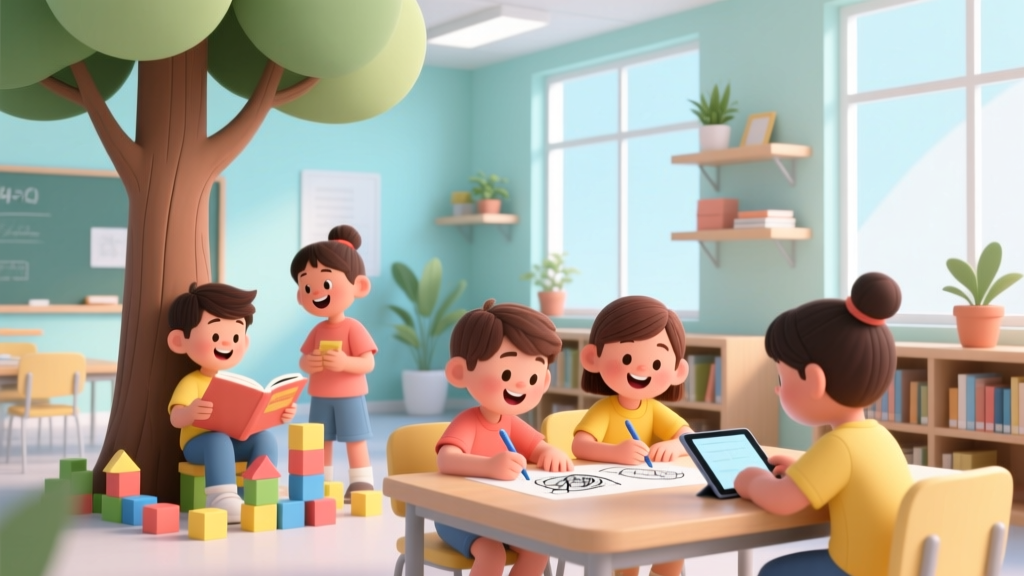
What Is Theme for Kids? A Brain-Boosting Guide
Why Understanding 'What Is Theme for Kids' Changes Everything
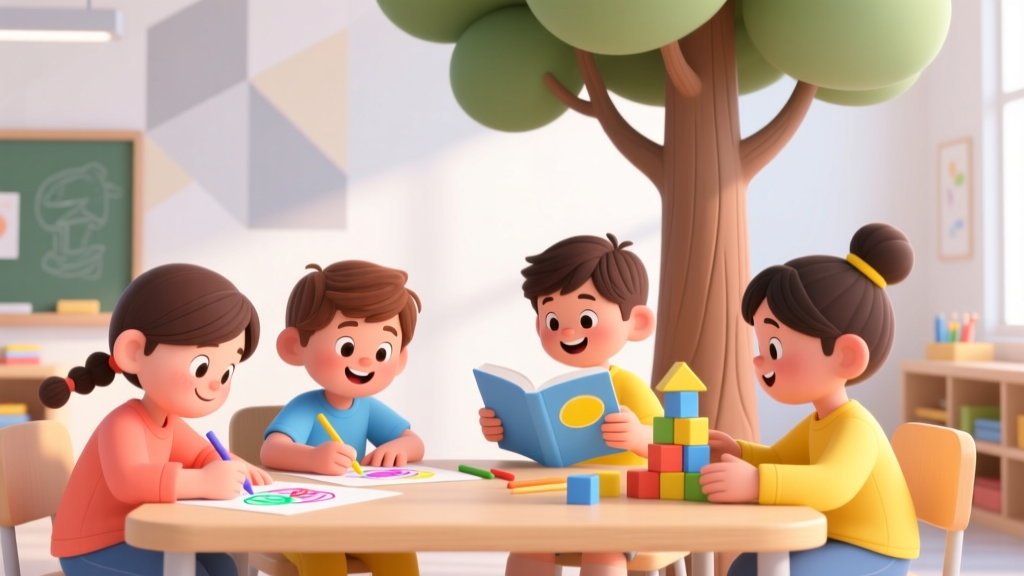
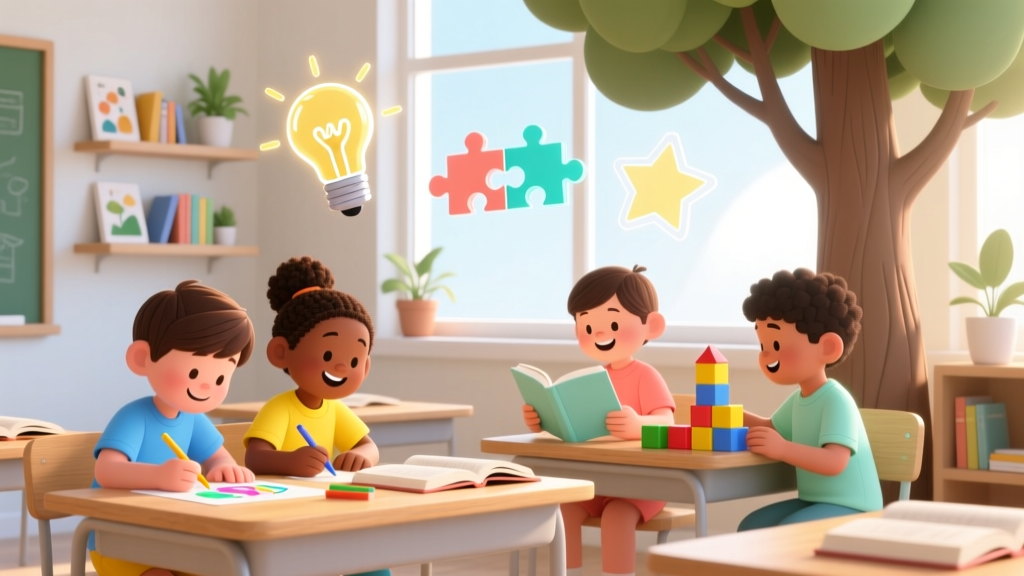
If you’ve ever stared at a blank lesson plan, scrolled through endless preschool Pinterest boards, or watched your child lose interest mid-activity—then you’ve felt the quiet frustration behind the question: what is theme for kids? It’s not just about decorating a bulletin board with jungle animals or baking ‘space cupcakes.’ A true theme for kids is a deliberate, developmentally grounded lens—a unifying idea that connects stories, movement, sensory play, vocabulary, and real-world experiences into one cohesive, meaningful learning journey. In today’s world of fragmented screen time and rushed routines, intentional thematic learning is more vital than ever—not as an extra task, but as a powerful, low-effort strategy to deepen attention, build neural pathways, and turn everyday moments into moments of wonder.
What a Theme Really Is (and What It’s Not)
A theme for kids is a central, age-appropriate concept—like seasons, community helpers, growing things, or sound and vibration—that serves as an anchor for integrated learning across domains. According to Dr. Laura J. Colker, early childhood education expert and co-author of The Creative Curriculum for Preschool, “Themes work because they mirror how young children naturally make sense of the world—not in isolated facts, but through patterns, repetition, and relational thinking.”
Crucially, a strong theme is not a decorative overlay. It’s not about matching colors or forcing every activity into a narrow box. A common misconception is that themes must be elaborate or long-term. In reality, research from the National Association for the Education of Young Children (NAEYC) shows that even 3–5 day micro-themes—like 'Wheels and Movement' or 'Bubbles and Air'—yield measurable gains in vocabulary retention and observational skills when implemented with intentionality.
Here’s what makes a theme effective:
- Child-centered: Emerges from children’s questions (“Why do leaves fall?”), interests (“I love tractors!”), or lived experiences (“We saw a fire truck!”).
- Multi-sensory: Engages sight, sound, touch, movement, and sometimes taste/smell—activating multiple brain regions simultaneously.
- Language-rich: Introduces 8–12 high-frequency, concept-linked vocabulary words (e.g., rotate, roll, steer, axle during a wheels theme).
- Open-ended: Allows for varied responses—drawing, building, storytelling, sorting—so children express understanding in their preferred way.
How Themes Supercharge Development (With Real Evidence)
Thematic learning isn’t just pedagogical flair—it’s neurologically strategic. When children explore a single concept across modalities, they strengthen synaptic connections in ways rote worksheets simply cannot replicate. A landmark 2022 longitudinal study published in Early Childhood Research Quarterly tracked 412 preschoolers across 18 months and found that those in classrooms using well-structured, inquiry-based themes showed:
- 27% greater gains in expressive vocabulary (measured via standardized Peabody Picture Vocabulary Test scores);
- 34% higher sustained attention during group activities (observed over 10-minute intervals);
- 2.3x more spontaneous use of domain-specific language during free play (e.g., “The caterpillar is metamorphosing!” vs. “It’s changing”).
But it’s not just about academics. Themes are social-emotional accelerators. Consider Maya, a shy 4-year-old in a Brooklyn preschool who barely spoke during circle time—until her class launched a ‘Neighborhood Maps’ theme. As children traced sidewalks, labeled local stores, and interviewed parents about favorite spots, Maya began pointing, naming streets, and eventually narrating her own “My Walk to School” story with full sentences. Her teacher noted, “The theme gave her a shared reference point—and a safe, concrete way to contribute.”
This mirrors AAP (American Academy of Pediatrics) guidance: “Play-based, theme-anchored learning supports self-regulation, perspective-taking, and cooperative problem-solving—the very foundations of lifelong resilience.”
Your No-Stress Theme Selection Framework
Forget rigid curriculum calendars. Here’s how to choose and adapt themes intuitively—even with zero planning time:
- Scan & Listen: For 48 hours, jot down 5–7 recurring words, questions, or fascinations your child says or does (e.g., “Why is the sky blue?” “Can I put this in the water?” “Let’s dig deeper!”). These are your theme seeds.
- Filter for Depth: Ask: Does this idea connect to real-world phenomena? Can it be explored through movement, art, story, and simple science? If yes, it’s viable. (Avoid overly abstract themes like “justice” for under-5s; opt instead for “fair sharing” or “taking turns.”)
- Anchor to Seasons or Routines: Tie themes to predictable rhythms—‘Rain & Puddles’ in spring, ‘Harvest & Sorting’ in fall, ‘Warmth & Layers’ in winter. This builds predictability, a key regulator for anxious or neurodivergent learners.
- Start Small—Then Expand: Launch with one anchor activity (e.g., “Let’s build a bird nest with twigs and yarn”) and let curiosity guide next steps. Did your child ask, “Where do birds sleep?” → add a book basket on animal homes. Did they try to glue feathers? → introduce texture sorting. Themes grow organically—not top-down.
Remember: You don’t need themed snacks, matching t-shirts, or laminated posters. One rich book, one open-ended material (like clay, fabric scraps, or loose parts), and your curious presence are all that’s required.
Theme Ideas That Actually Work—Backed by Age-Appropriateness & Safety
Not all themes translate equally across developmental stages. What delights a 2-year-old may frustrate a 5-year-old—or worse, pose safety risks. The table below maps 6 high-impact themes to specific age bands, core developmental goals, and critical safety considerations—based on CPSC guidelines, AAP recommendations, and Montessori practical life principles.
| Theme | Best Age Range | Key Developmental Benefits | Safety & Practical Notes |
|---|---|---|---|
| Water Play & Flow | 18 months–4 years | Fine motor control (pouring, scooping); cause-effect reasoning; vocabulary for volume/temperature/movement | Use shallow bins only (<3″ depth); avoid small floating toys for under-3s (choking hazard); supervise constantly—even 1 inch of water poses drowning risk (AAP). |
| Building & Structures | 2–6 years | Spatial reasoning; engineering basics (balance, stability); collaborative negotiation; math language (tall, wide, sturdy) | Ensure blocks are ASTM F963-certified; avoid magnetic tiles for under-3s (swallowing/intestinal injury risk per FDA reports); store pieces in low, open shelves for independence. |
| Shadows & Light | 3–7 years | Scientific observation; prediction skills; understanding of opacity/translucency; symbolic representation (shadow puppets = storytelling) | Use only LED flashlights (no heat/burn risk); avoid laser pointers entirely (retinal damage); pair with fabric screens—not glass or mirrors near faces. |
| Seeds & Sprouts | 3–8 years | Life cycle comprehension; patience & responsibility; sensory exploration (crunchy/damp/smooth); connection to food systems | Choose non-toxic, organic seeds only (avoid treated seeds); wash hands after handling soil; skip bean sprouts for under-4s (bacterial risk per CDC). |
| Sound & Vibration | 2–6 years | Auditory discrimination; rhythm & timing; physics concepts (vibration = sound); emotional regulation (calming drumming vs. energizing shakers) | Limit decibel exposure: DIY instruments should stay under 85 dB (test with free Sound Meter app); avoid small beads/marbles in shakers for under-3s. |
| Community Helpers | 3–7 years | Role-play empathy; understanding interdependence; vocabulary for jobs/emotions; reducing fear of unfamiliar adults (e.g., dentists, firefighters) | Invite real helpers (with background checks) for brief, interactive visits—not costumed actors; avoid themes around emergencies (fire, police) without explicit emotional scaffolding. |
Frequently Asked Questions
What’s the difference between a theme and a unit?
A unit is typically longer (2–6 weeks), standards-aligned, and assessment-driven—common in elementary grades. A theme for kids is shorter (3 days–2 weeks), play-infused, and process-focused. Units ask, “What will they learn?” Themes ask, “How will they experience this idea?” You can embed a theme within a unit—but never force a theme to fit rigid benchmarks. As NAEYC advises: “When themes become checklists, they stop serving children.”
Can I use themes with babies and toddlers?
Absolutely—but differently. For infants (0–12 months), themes are sensory anchors: ‘Soft & Smooth,’ ‘High & Low Sounds,’ or ‘Round Things.’ For toddlers (12–36 months), themes become action-oriented: ‘Carrying & Lifting,’ ‘Filling & Emptying,’ or ‘Fast & Slow.’ The key is repetition, consistency, and physical interaction—not discussion or worksheets. A 2023 University of Washington study confirmed that toddlers exposed to consistent sensory themes showed earlier gesture-to-word transitions and stronger joint attention.
Do themes have to be ‘educational’? What about fun-only themes like ‘Dinosaurs’ or ‘Superheroes’?
Yes—and no. Dinosaurs and superheroes are fantastic entry points if you lean into their inherent learning potential: dinosaur teeth → sorting by shape/function → early math; superhero powers → discussing real-world helpers → community awareness. But if the theme stays at the surface (“Let’s draw Spider-Man”), it misses the developmental leverage. The magic happens when you ask, “What does this idea help us notice, wonder about, or do together?” Fun is the vehicle—not the destination.
How do I handle a theme my child hates—or gets bored of quickly?
Boredom is data—not failure. It signals the theme has outlived its relevance or wasn’t rooted in authentic interest. Pause and co-investigate: “What part feels boring? What would make this more fun?” Often, shifting the modality helps (swap drawing for building, or storytelling for acting). Or pivot gracefully: “You’re right—this isn’t exciting anymore. Let’s follow that bug we saw instead.” Themes should breathe, evolve, and sometimes end. Forced continuity undermines trust in learning itself.
Can themes support neurodivergent kids?
Powerfully. Predictable themes provide structure for children with autism or ADHD; multi-sensory access accommodates sensory processing differences; open-ended outcomes honor diverse communication styles. Occupational therapists emphasize that themes with clear beginnings/middles/ends (e.g., ‘Planting → Waiting → Harvesting’) build executive function. Just ensure flexibility: offer choices (“Do you want to dig or water?”), use visual schedules, and honor regulation needs (e.g., “Shadows time is quiet—no talking needed” for verbal-processing fatigue).
Common Myths About Themes for Kids
Myth #1: “Themes must be planned weeks in advance.”
Reality: The most responsive themes emerge daily—from a child’s question, a weather shift, or a found object. Early childhood specialist Elena Aguilar notes, “Your best theme this week might be ‘That Broken Toy We Fixed Together.’ Rigidity kills wonder.”
Myth #2: “More themes = more learning.”
Reality: Depth trumps breadth. One well-explored theme yields richer connections than five superficial ones. A 2021 study in Child Development found children who revisited core themes (e.g., ‘Growth’ explored via plants, pets, and themselves) demonstrated stronger conceptual transfer than peers cycling through unrelated topics.
Related Topics (Internal Link Suggestions)
- Preschool theme ideas for summer — suggested anchor text: "12 low-prep summer themes that beat screen time"
- How to make a theme board for kids — suggested anchor text: "simple, non-Pinteresty theme boards that actually get used"
- Theme-based learning vs Montessori — suggested anchor text: "how themes align (or don’t) with Montessori principles"
- Free printable theme activities — suggested anchor text: "zero-cost, ink-light theme extensions you can start today"
- Theme for kids with ADHD — suggested anchor text: "neurodivergent-friendly themes that build focus, not frustration"
Wrap-Up: Your First Step Starts Now
So—what is theme for kids? It’s not a product to buy or a standard to meet. It’s a mindset: Look closely. Follow the spark. Connect the dots. You already hold everything you need—the curiosity, the presence, the willingness to wonder alongside them. Your first step? Tonight, before bed, ask your child one open question: “What made you smile today?” or “What are you wondering about right now?” Write down their answer. That phrase—their real, unfiltered fascination—is your next theme. No prep. No pressure. Just possibility, waiting to unfold.
More Articles
 Kid Publish Book Free: 7 Steps (2026) | Amazon & Libraries
 How to Write a Poem for Kids: Simple & Joyful Guide
 When Do Kids Put Shoes Out for St. Nick?
 Tallahassee Kids Activities: 17 Local Favorites (2026)
 What to Do in NYC Today with Kids (2026)
 How to Play Jacks for Kids: Pediatrician-Approved Guide
 Charlotte NC With Kids: 17 Vetted Family Activities
 Age-Appropriate Toys & Tools for Child Development
 What to Do in Oregon with Kids (2026)
 $20 Fast for Kids: 7 Safe, Parent-Approved Ways (2026)