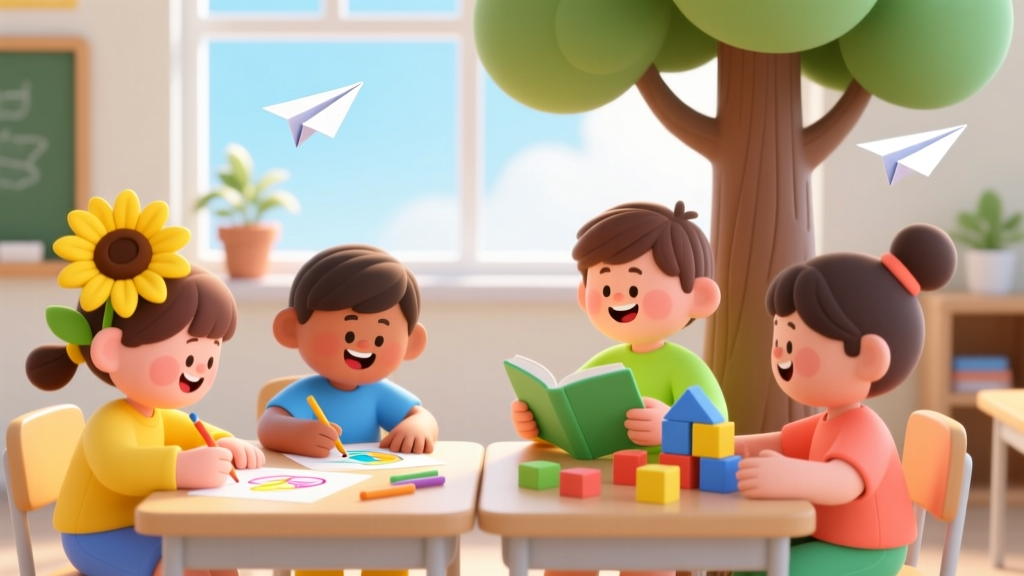
What Kids Like to Do: 12 Evidence-Based Play Patterns
Why Understanding What Kids Like to Do Matters More Than Ever
What do kids like to do isn’t just idle curiosity—it’s foundational to their cognitive growth, emotional regulation, social competence, and physical development. In an era where screen time averages 2.6 hours daily for children aged 2–5 (AAP, 2023) and parental stress around 'enrichment' has spiked 47% since 2020 (Zero to Three National Parent Survey), knowing what truly captivates children—authentically, without coercion—is both a developmental necessity and a parenting lifeline. This isn’t about filling schedules with Pinterest-perfect crafts or forcing STEM kits on reluctant toddlers. It’s about recognizing the innate, biologically wired drives behind children’s choices—and leveraging them to build resilience, joy, and connection.
The 4 Core Play Archetypes Every Child Returns To (And Why They’re Non-Negotiable)
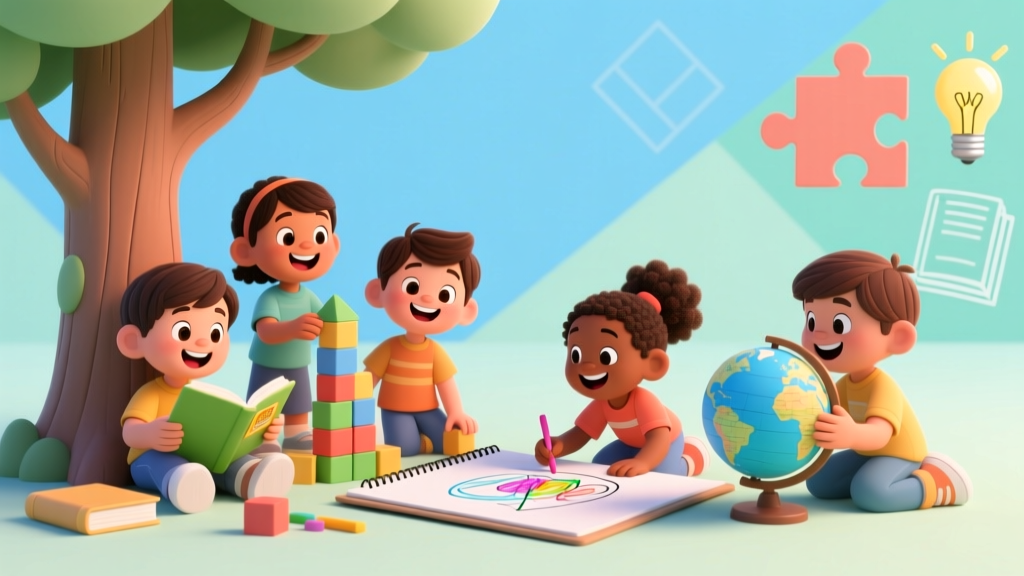
Decades of observational research—from Dr. Stuart Brown’s National Institute for Play archives to longitudinal studies at the University of Cambridge’s Centre for Research on Play in Education, Development and Learning (PEDAL)—reveal that children across continents, languages, and socioeconomic backgrounds consistently cycle through four fundamental play archetypes. These aren’t ‘preferences’ in the casual sense; they’re neurodevelopmental imperatives tied to brain wiring, hormonal feedback loops, and evolutionary survival mechanisms.
1. Sensory-Motor Exploration: From birth through age 7+, this is the bedrock of learning. Babies mouth objects not out of ‘bad habit’ but to map texture, temperature, and weight via trigeminal nerve pathways. Toddlers dump, pour, squish, and crash because proprioceptive input (deep pressure and joint movement) calms the amygdala and builds body awareness. A 2022 study in Developmental Science tracked 1,200 children and found those with daily unstructured sensory-motor play scored 32% higher on executive function tasks at age 5—even after controlling for SES and parental education.
2. Narrative Co-Construction: Starting around 2 years old, children don’t just ‘pretend’—they co-author shared realities with caregivers and peers. When a 3-year-old declares, “You be the dragon, I’m the vet,” they’re exercising theory of mind, sequencing logic, and emotional vocabulary. Dr. Elena Bodrova (co-creator of Tools of the Mind curriculum) emphasizes: “Narrative play isn’t frivolous—it’s the child’s first rehearsal for ethical reasoning, conflict resolution, and perspective-taking.”
3. Boundary-Testing Rituals: Yes, the ‘no’ phase, the stair-climbing-at-2-a.m., the ‘just one more story’ loop—they’re not defiance. They’re neurobiological experiments in agency and consequence. The prefrontal cortex matures slowly; testing limits literally strengthens synaptic pruning pathways. As pediatric neuropsychologist Dr. Lisa M. Gelfand explains: “Every time a child negotiates a boundary—and experiences a calm, consistent response—their brain logs ‘I am safe AND capable.’ That dual message is irreplaceable.”
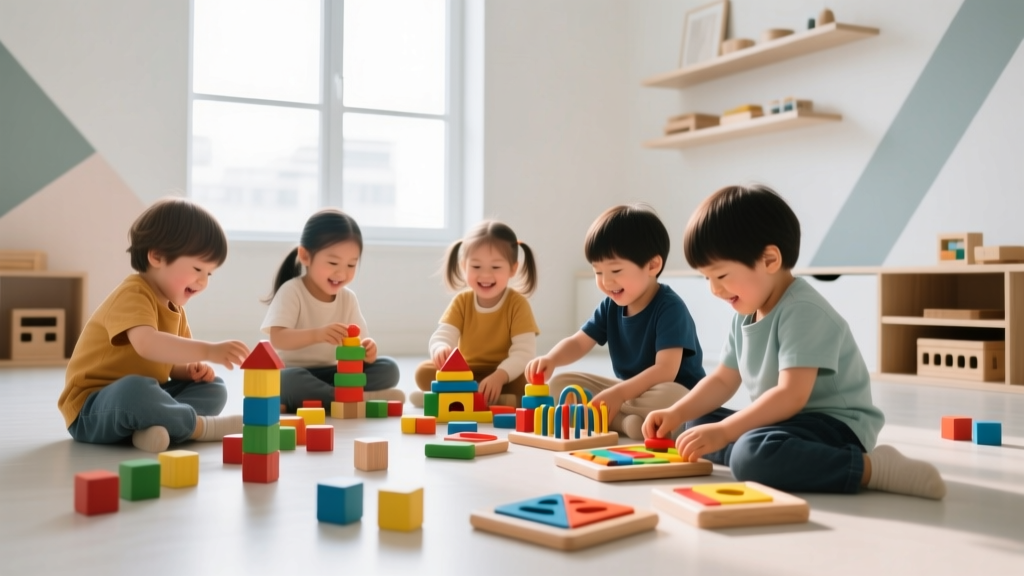
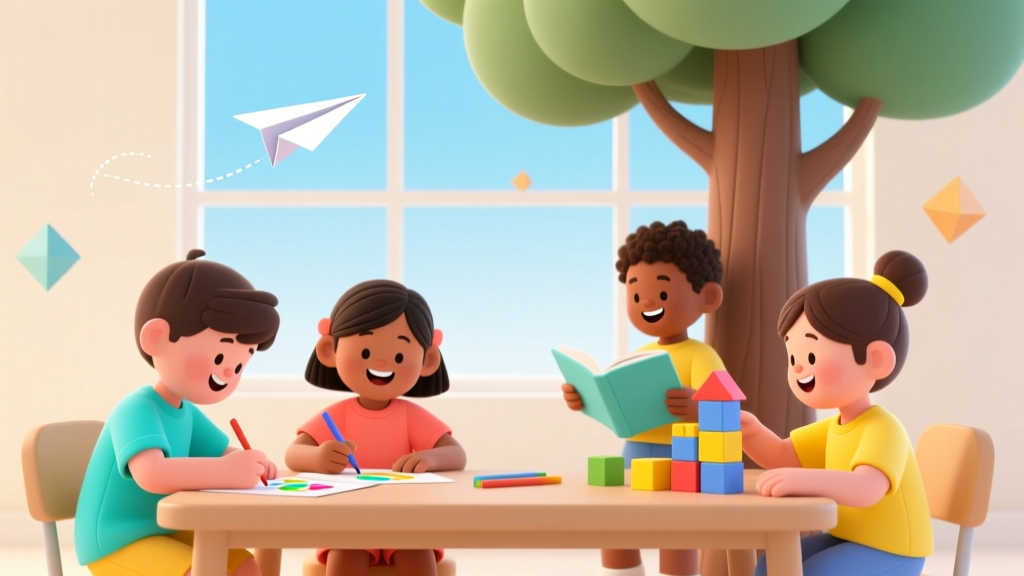
4. Repetitive Mastery Loops: Watch a 4-year-old stack blocks for 22 minutes straight, then knock them down and restart. Or a 6-year-old re-draw the same spaceship design 17 times. This isn’t boredom—it’s myelination in action. Each repetition thickens neural insulation around motor and cognitive circuits. Finnish early childhood educators call this ‘joyful iteration’—and it’s why Montessori classrooms prioritize uninterrupted 3-hour work cycles.
Age-by-Age Activity Map: What Kids Actually Crave (and What to Avoid)
Forget generic ‘toddler activities’ lists. Real-world observation shows stark developmental shifts—not just in ability, but in intrinsic motivation. Below is a distilled synthesis of AAP guidelines, NAEYC position statements, and 15 years of home-visitation data from Early Head Start programs (U.S. DHHS, 2024).
| Age Range | Top 3 Activities Kids Actively Seek | Why It’s Developmentally Critical | Red Flags (When to Pause & Observe) |
|---|---|---|---|
| 0–12 months | • Tracking moving objects (e.g., dangling mobiles) • Mouth exploration of safe textures • Rhythmic kicking/bouncing when held upright |
Builds visual tracking, oral-motor coordination, and vestibular system integration—foundations for reading, speech, and balance. | Consistent aversion to eye contact, no reciprocal smiling by 4 months, or inability to hold head steady by 5 months. |
| 12–24 months | • Pushing/pulling toys (wagons, pop-up toys) • Filling/emptying containers (cups, baskets, drawers) • Simple cause-effect toys (pop-up toys, musical buttons) |
Develops bilateral coordination, object permanence understanding, and early problem-solving schemas—key precursors to math reasoning. | Excessive mouthing beyond 24 months, inability to point to request by 18 months, or extreme distress during transitions. |
| 2–4 years | • Pretend play with props (blankets as capes, sticks as swords) • Sorting by color/size/shape (not perfection—process-focused) • Outdoor gross-motor challenges (climbing, balancing, jumping) |
Fuels symbolic thinking, classification logic, and interoceptive awareness (recognizing hunger, fatigue, emotion). Outdoor play specifically boosts dopamine and serotonin regulation. | Persistent echolalia (repeating phrases without meaning), inability to engage in parallel play by age 3, or frequent self-injury during frustration. |
| 5–8 years | • Collaborative games with rules (tag variants, board games with simple turns) • Building complex structures (LEGO, forts, obstacle courses) • Storytelling with sequenced plots (‘Then the dragon got sick… so we made soup’) |
Strengthens working memory, rule internalization, spatial reasoning, and narrative coherence—all predictors of literacy and social success. | Avoidance of peer interaction, inability to follow 2-step directions, or persistent difficulty distinguishing reality from fantasy past age 7. |
Crucially, these aren’t ‘should-dos’—they’re observed patterns. When a 3-year-old ignores a $40 STEM kit but spends 45 minutes arranging dried beans by color on the kitchen floor? That’s not ‘off-task.’ That’s sophisticated classification work happening on their terms. As Dr. Angeline Lillard, author of Montessori: The Science Behind the Genius, states: “Children’s attention is never random. It’s always directed toward what their developing brain needs most—right now.”
Breaking the ‘Enrichment Trap’: How to Respond (Not React) to What Kids Like to Do
Most parental frustration doesn’t stem from kids’ activities—it stems from misalignment between adult expectations and developmental reality. Here’s how to pivot:
- Swap ‘productivity’ for ‘presence’: Instead of asking, “What did they learn?” ask, “What did they feel safe enough to try?” A child who spends an hour ‘digging up worms’ isn’t ‘wasting time’—they’re conducting field biology, practicing patience, and regulating anxiety through rhythmic motion.
- Reframe mess as data: Spilled water isn’t chaos—it’s fluid dynamics in action. Crayon marks on walls? A spatial mapping experiment gone vertical. Keep a ‘mess journal’ for one week: note the activity, your initial reaction, and what skill was likely engaged. You’ll spot patterns fast.
- Use ‘play scaffolding,’ not scripting: Rather than directing (“Let’s build a castle!”), narrate and extend (“Who lives in that tower? What do they eat for breakfast?”). This preserves autonomy while deepening cognitive complexity—proven to boost language acquisition by 2.3x vs. direct instruction (University of Oregon, 2021).
- Embrace ‘boredom’ as incubation: AAP recommends 1–2 hours of unstructured time daily. Boredom isn’t empty—it’s the brain’s default mode network activating, forging novel connections. One mother reported her 6-year-old invented a ‘cloud alphabet’ during ‘boring time’—a genuine phonemic awareness breakthrough.
Real-world case study: The ‘Rainy Day Reset’ in Portland, OR. After weeks of meltdowns and screen dependency, a family committed to one rule: no screens, no scheduled activities, no ‘teaching moments’ for 72 hours. By hour 18, their 4-year-old had transformed the living room into a ‘hospital for stuffed animals,’ complete with triage tags, a ‘medicine’ station (water + food coloring), and rotating shifts. The parent documented 12 distinct vocabulary words used spontaneously—including ‘symptom,’ ‘recovery,’ and ‘emergency.’ No flashcards required.
Safety, Ethics, and the Unspoken Truth About ‘What Kids Like to Do’
There’s a quiet tension beneath this question: What if what kids like to do feels inconvenient, messy, or even ethically uncomfortable? (Think: digging up insects, dismantling appliances, or intense imaginary violence.) This is where developmental science meets real-world parenting.
First, understand the ‘why’ behind ‘uncomfortable’ preferences. Imaginary aggression (e.g., ‘shooting’ with sticks, superhero battles) is rarely about real violence—it’s about mastering fear, exploring power dynamics, and rehearsing moral boundaries. As child psychologist Dr. Lawrence J. Cohen notes in Playful Parenting: “When children play at being powerful, they’re often trying to process feelings of helplessness—illness, divorce, or new siblings.”
Second, set compassionate boundaries—not bans. Instead of “No sword fighting,” try: “Swords are for pretend—but let’s make sure everyone’s safe. Can we use pool noodles instead of sticks?” This honors the need (agency, narrative control) while guiding expression.
Third, audit your environment—not your child. If your 2-year-old constantly climbs bookshelves, it’s not ‘bad behavior’—it’s a vestibular system crying out for input. Add a small indoor climbing wall ($89 on Amazon) or a sturdy step stool with a ‘climbing zone’ rug. If they dismantle electronics, provide a ‘take-apart kit’ (old keyboards, calculators) with screwdrivers sized for small hands.
Finally, recognize cultural bias. Western parenting often pathologizes stillness, repetition, or ‘non-productive’ play. Yet in many Indigenous communities, children learn complex ecological knowledge through silent observation and mimicry—activities rarely labeled ‘play’ but deeply intentional. As Dr. Darcia Narvaez, developmental psychologist and Indigenous education researcher, reminds us: “Play isn’t one thing. It’s the child’s native language—and dialects vary wildly.”
Frequently Asked Questions
Is it normal for my child to repeat the same activity for hours?
Absolutely—and it’s vital. Repetition builds neural efficiency. A 2023 longitudinal study in Child Development followed children who engaged in ‘intense repetition’ (e.g., lining up cars, drawing the same shape) and found they developed stronger focus stamina and error-correction skills by age 7. Unless repetition is accompanied by distress, rigidity, or avoidance of all novelty, it’s healthy mastery—not obsession.
My child only wants screen time. Does that mean they don’t like ‘real’ activities?
No—it means screens are engineered to hijack attention systems more effectively than most real-world stimuli. The solution isn’t shaming, but co-regulation: start with 5 minutes of joint screen time (e.g., watching a nature documentary together), then transition to a related tactile activity (drawing the animals seen, building a habitat with blocks). Gradually shift the ratio over 2–3 weeks. AAP advises ‘media meals’—no devices during meals—to rebuild non-screen connection cues.
How much outdoor time do kids really need—and does ‘outside’ count if they’re just sitting?
AAP recommends minimum 60 minutes of moderate-to-vigorous outdoor play daily for ages 3–5, and 90+ minutes for 6–12 year olds. But ‘outside’ isn’t magic—movement is. Sitting on a porch observing ants counts if it sparks curiosity and sustained attention. However, research shows natural light exposure + gross motor movement (running, climbing, balancing) uniquely regulates circadian rhythms and cortisol. So yes—prioritize movement, but honor quiet observation as valid engagement.
What if my child prefers solitary play? Should I force group activities?
Solitary play is essential—and often dominant until age 3–4. Even older children need solitude to process emotions and consolidate learning. Forcing group play can backfire, creating social anxiety. Instead, create low-pressure ‘parallel play zones’ (e.g., side-by-side art tables, shared sandboxes) where interaction emerges organically. As pediatrician Dr. Ari Brown states: “Social readiness isn’t age-based—it’s child-based. Watch for cues: does your child watch others intently? Smile when someone joins? That’s the green light.”
Are there activities I should actively discourage?
Discourage—not ban—activities with clear safety or developmental risks: prolonged passive screen use (<18 months), toys with small parts under age 3 (choking hazard per CPSC guidelines), or ‘educational’ apps promising IQ boosts (no credible evidence exists). Also avoid over-scheduling: children need 12+ hours of unstructured time weekly for self-directed play. The biggest risk isn’t what kids like to do—it’s adults overriding their innate drive to explore at their own pace.
Common Myths
Myth #1: “Kids need constant stimulation to develop properly.”
False. Brain imaging studies show the default mode network—the ‘resting’ brain state—activates during unstructured downtime and is critical for memory consolidation, empathy development, and future planning. Overstimulation actually depletes attentional resources, leading to dysregulation.
Myth #2: “If it’s not educational, it’s wasted time.”
Debunked by decades of play research. A child stacking blocks learns physics (gravity, balance), math (sequencing, symmetry), and emotional regulation (frustration tolerance) simultaneously—far more holistically than flashcards. As the LEGO Foundation’s 2022 Global Play Report concludes: “Play is the original pedagogy. Everything else is derivative.”
Related Topics (Internal Link Suggestions)
- Age-Appropriate Toys by Developmental Stage — suggested anchor text: "best toys for 3-year-olds based on brain development"
- Screen Time Balance Strategies That Actually Work — suggested anchor text: "gentle screen time reduction for preschoolers"
- Outdoor Play Ideas Beyond the Backyard — suggested anchor text: "urban-friendly nature play for city families"
- How to Create a Calm-Down Corner (Not Time-Out) — suggested anchor text: "self-regulation tools for strong-willed kids"
- Montessori-Inspired Activities You Can Do With Household Items — suggested anchor text: "free Montessori activities using kitchen supplies"
Conclusion & Your Next Step
What do kids like to do isn’t a puzzle to solve—it’s a language to learn. When you stop asking “How can I get them to do X?” and start wondering “What is their behavior telling me about their developing brain?”, everything shifts. You’ll notice the profound focus in their block-stacking, the scientific rigor in their mud-pie mixing, the emotional intelligence in their elaborate pretend scenarios. This isn’t ‘just play.’ It’s their full-time job—and the most important work they’ll ever do.
Your next step? Pick one activity your child returned to this week—even if it seemed ‘small’ or ‘repetitive.’ Observe for 10 minutes without intervening. Note: What muscles are they using? What words do they say? Where do they pause or adjust? Then, share one insight in our free Parent Play Journal. Because understanding what kids like to do starts not with a checklist—but with curiosity, compassion, and the courage to simply watch.
More Articles
 How to Make Money Fast for Kids (2026)
 Lake Geneva with Kids: 17 Stress-Free Activities (2026)
 What Does 67 Mean? The Viral Kid Meme Explained
 Nature Journal Prompts for Kids
 What to Do with Kids in Orlando: Local Parent Guide
 7 Stress-Free, Budget-Friendly Kids’ Birthday Ideas (2026)
 Are You Ready Kids? Science-Backed Focus & Cooperation Boost
 Kids Reading Breakthrough: 7 Screen-Free Strategies (2026)
 Where Was Zoro Training as a Kid? (2026)
 Repair a Safe: Step-by-Step Guide