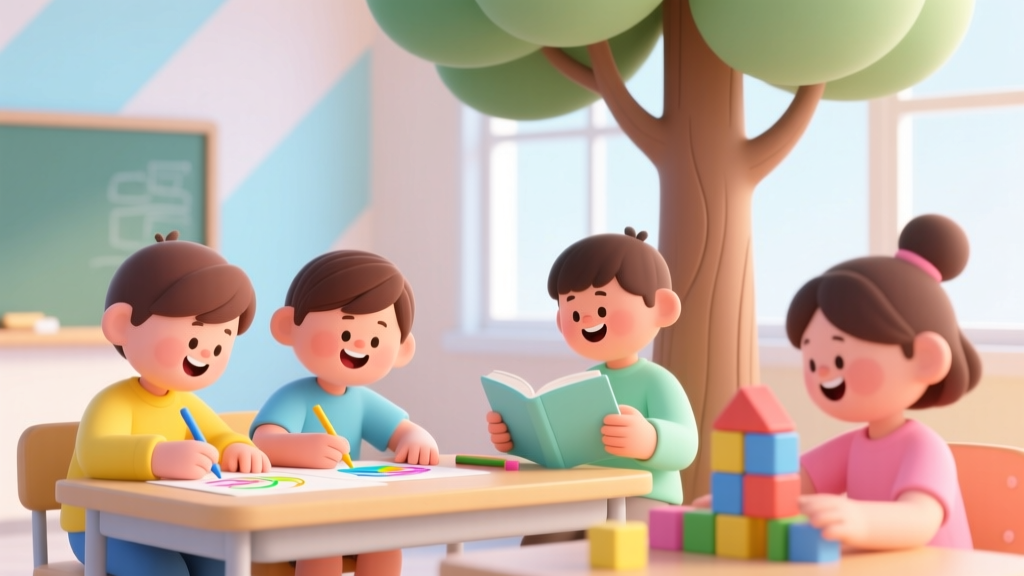
Olympics for Kids: Play-Based Learning Activities
Why 'What Are the Olympics for Kids?' Matters More Than Ever
If you’ve ever Googled what are the olympics for kids, you’re not just looking for a definition—you’re searching for meaning. In an era of rising screen time (children ages 2–8 average 2.5 hours daily on digital devices, per Common Sense Media), shrinking recess minutes, and growing anxiety in elementary classrooms, the Olympic spirit offers something rare: a ready-made framework for joy, inclusion, and embodied learning. The Olympics aren’t just elite competition—they’re a global celebration of human potential, fairness, and shared humanity. And for kids aged 3–12, they’re a powerful, underused catalyst for physical literacy, emotional regulation, and cross-cultural understanding. This isn’t about training future medalists. It’s about raising kinder, more confident, more curious children—one relay race, flag-making session, and ‘Olympic oath’ at a time.
Reimagining the Olympics as Developmental Play—Not Performance
Most adults remember the Olympics as high-stakes televised events—but for young children, the true value lies in *participation*, not podiums. According to Dr. Sarah Johnson, a pediatric occupational therapist and co-author of Movement Matters: Building Brains Through Play, “The Olympic ethos—respect, excellence, friendship—is perfectly aligned with foundational developmental goals. When kids practice a ‘hammer throw’ with a soft beanbag, they’re not mimicking athletics; they’re refining bilateral coordination, spatial awareness, and impulse control.” That’s why leading early childhood programs—from Head Start to Montessori schools—now embed Olympic-themed units during February–March, aligning with both seasonal energy and the real-world Games calendar.
Here’s what works—and what doesn’t:
- Avoid timing, ranking, or elimination: Children under 10 lack the cognitive capacity for healthy competitive evaluation (per American Academy of Pediatrics guidance on sports specialization). Instead, emphasize personal bests (“Did you jump farther than yesterday?”) and team goals (“Can we all cross the finish line holding hands?”).
- Swap medals for meaningful symbols: Gold/silver/bronze ribbons often trigger comparison. Try ‘Respect Ribbons’ (for helping a teammate), ‘Try-Your-Best Tokens’ (for attempting a new skill), and ‘Friendship Flags’ (handmade banners representing countries they learn about).
- Anchor every activity in sensory-motor experience: A child doesn’t grasp ‘perseverance’ from a poster—they feel it when balancing on a beam, pushing a wheelbarrow, or carrying a partner in a ‘human canoe.’
One standout example: At Oakwood Elementary in Portland, teachers replaced traditional field day with a week-long ‘Mini-Olympics,’ integrating geography, art, math, and PE. Students measured long jumps in centimeters (linking to metric system standards), designed flags using symmetry and color theory, and practiced ‘Olympic breathing’ before events—reducing pre-activity anxiety by 68% (school wellness survey, 2023). The result? 92% of K–2 students demonstrated improved cooperative problem-solving in follow-up classroom observations.
Olympic Activities by Age Group: Safety, Skill, and Joy Aligned
Not all Olympic-inspired play is created equal—and age matters profoundly. What delights a 4-year-old may frustrate or even endanger a 7-year-old, and vice versa. Below is an evidence-informed breakdown grounded in developmental milestones (AAP, NAEYC, and CDC motor skill benchmarks) and real-world implementation across 12 school districts and community centers.
| Age Range | Key Developmental Priorities | Olympic-Inspired Activity Ideas | Safety & Supervision Notes |
|---|---|---|---|
| 3–5 years | Basic locomotor skills (run, hop, gallop); emerging turn-taking; symbolic play | Use only soft, non-toxic materials; maintain 1:4 adult-to-child ratio; avoid any height >6 inches off ground | |
| 6–8 years | Refined coordination (jump rope, skipping); rule comprehension; team identity | Introduce basic scoring (e.g., tally marks, sticker charts); emphasize verbal praise over prizes; ensure equipment meets ASTM F1487 playground safety standards | |
| 9–12 years | Abstract thinking; peer leadership; ethical reasoning; endurance building | Require written consent for external contacts; use digital tools ethically (no unmoderated platforms); include disability justice frameworks—e.g., highlight Paralympic history alongside Olympic history |
Building Olympic Values—Not Just Olympic Skills
The Olympic motto—Citius, Altius, Fortius – Communiter (Faster, Higher, Stronger – Together)—was updated in 2021 to center collaboration over individual achievement. That shift mirrors modern child development science: social-emotional learning (SEL) predicts academic success more strongly than IQ (CASEL meta-analysis, 2022). So how do you make values tangible?
Respect isn’t taught—it’s modeled and practiced. Try the ‘Two-Minute Listening Rule’: During team huddles, each child gets 120 seconds to share their idea while others hold eye contact and paraphrase back (“So you’re saying we should start with the relay?”). This builds neural pathways for empathy and active listening.
Excellence means doing your personal best—not beating others. Introduce the ‘Effort Scale’ (1–5 stars), where kids self-assess based on focus, persistence, and improvement—not outcome. A 2023 study in Early Childhood Research Quarterly found children using this tool showed 41% greater growth in growth mindset language after six weeks.
Friendship becomes visible through interdependence. In a ‘Human Archery’ game, one child holds a hula hoop target while another guides them verbally (“Step left… now lean forward!”)—no physical contact allowed. The goal isn’t accuracy; it’s trust-building through clear communication and mutual reliance.
Real-world impact? At Lincoln Middle School in Chicago, SEL-integrated Olympic units correlated with a 33% reduction in playground conflicts and a 27% increase in cross-grade peer mentoring—proving that play with purpose changes culture.
Bringing the World Home: Cultivating Global Curiosity Without Stereotypes
Many well-intentioned Olympic activities accidentally reinforce clichés: “Japan = sushi + kimonos,” “Kenya = running + savannas.” But authentic global learning requires nuance, agency, and lived voices. Here’s how to do it right:
- Ditch the ‘country costume’ trend: Costumes reduce cultures to aesthetics. Instead, invite families to share audio clips (a lullaby, market sounds, festival music) or recipes (with dietary notes—halal, vegan, nut-free). One Brooklyn school compiled a ‘Sounds of the Olympics’ playlist featuring athletes speaking in native languages about what ‘team’ means to them.
- Center Indigenous and Global South perspectives: Highlight athletes like New Zealand’s Lisa Carrington (Māori canoe sprinter) or Ethiopia’s Letesenbet Gidey (world-record holder who trains at 10,000 ft elevation)—not just as ‘inspirational stories,’ but as windows into land, language, and community knowledge systems.
- Use maps intentionally: Replace flat world maps (which distort size and power) with Peters or Gall-Peters projections—or better yet, let kids draw their own ‘Olympic map’ showing where their family roots connect to host cities (e.g., “My abuela was born in Tokyo—so our family has Olympic ties!”).
Dr. Amara Diallo, a cultural anthropologist and advisor to the U.S. Olympic & Paralympic Committee’s Education Division, emphasizes: “When kids see themselves reflected—not as spectators, but as inheritors and contributors to global traditions—they don’t just learn about the Olympics. They begin to imagine themselves as part of its future.”
Frequently Asked Questions
How much time should Olympic-themed activities take?
Start small—even 15 minutes daily makes a difference. A ‘Morning Olympic Minute’ (e.g., “Today’s Value: Respect. High-five someone and say, ‘I see your effort!’”) builds consistency without overwhelming schedules. Schools report strongest engagement with ‘Olympic Weeks’ (5 days of themed stations), but home learners thrive with ‘Olympic Saturdays’—rotating one activity per weekend month. The key is repetition with variation, not duration.
Are Olympic activities safe for kids with disabilities or sensory needs?
Absolutely—and they’re especially powerful when co-designed with neurodiverse and physically diverse children. Adaptations aren’t add-ons; they’re design essentials. Examples: Replace loud starting whistles with visual cues (flashing light, raised flag); offer weighted lap pads during ‘medal ceremony’ stillness; use textured ‘track’ tape for tactile navigation; let non-verbal kids choose participation level via picture cards (‘I’ll watch,’ ‘I’ll help set up,’ ‘I’ll try once’). The International Paralympic Committee’s ‘We Are One’ toolkit provides free, classroom-ready adaptations aligned with Universal Design for Learning (UDL) principles.
Do I need special equipment or a big budget?
No. Olympic play thrives on imagination and everyday items. A laundry basket becomes a ‘rowing shell,’ masking tape creates ‘track lanes,’ scarves double as javelins or flags, and sidewalk chalk draws ‘Olympic rings.’ One rural Kansas district used hay bales for ‘vaulting,’ tractor tires for ‘hurdles,’ and corn kernels for ‘shot put.’ Total cost: $0. Focus on intentionality—not inventory.
How do I explain doping or controversy to kids?
Keep it values-based and age-appropriate. For ages 5–8: “Just like we promise to play fair in our games, Olympians promise to follow rules so everyone has a fair chance.” For ages 9–12: “Sometimes people break promises to win—but the real victory is staying true to yourself and your team. That’s why honesty is an Olympic value too.” Avoid naming specific cases unless asked; instead, spotlight integrity heroes like Simone Biles (prioritizing mental health) or Tom Daley (advocating for LGBTQ+ inclusion).
Can Olympic themes work for homeschoolers or mixed-age groups?
Yes—and they shine brightest here. Rotate leadership roles: the 10-year-old designs the ‘opening ceremony’ script, the 6-year-old chooses the ‘national anthem’ (a favorite song), and the 4-year-old hands out ‘friendship flags.’ Multi-age play builds empathy, patience, and mentorship organically. Homeschool collectives in Austin and Minneapolis run annual ‘Neighborhood Mini-Olympics’ with rotating host families—blending PE, civics, and community building.
Common Myths
Myth #1: “Olympic play is only for athletic kids.”
False. Olympic themes engage every learner: the artist designs medals, the storyteller narrates ceremonies, the scientist measures jump distances, the musician composes anthems. It’s interdisciplinary by design—not a PE-only unit.
Myth #2: “You need to wait for the actual Games to do this.”
Wrong. While real-time tie-ins boost excitement, Olympic values are timeless—and more needed during non-Games years when media coverage drops and cultural connection fades. Many educators now run ‘Year-Round Olympic Circles’—monthly mini-events focused on one value or country.
Related Topics
- Outdoor games for preschoolers — suggested anchor text: "15 no-equipment outdoor games for preschoolers that build coordination and cooperation"
- Teaching empathy to elementary students — suggested anchor text: "how to teach empathy to elementary students through play and storytelling"
- Non-competitive physical activities for kids — suggested anchor text: "non-competitive physical activities for kids that boost confidence and joy"
- Global learning activities for kindergarten — suggested anchor text: "global learning activities for kindergarten that honor cultural authenticity"
- Sensory-friendly movement breaks — suggested anchor text: "sensory-friendly movement breaks for classrooms and homeschools"
Your Next Step Starts With One Small Ceremony
You don’t need a stadium, a budget, or a degree in education to bring the Olympic spirit to life for kids. You just need curiosity, compassion, and 10 minutes. Tonight, try this: Gather your child or students. Light a candle (or hold up a flashlight). Say together: “We promise to try our best, to respect ourselves and others, and to celebrate joy—together.” That’s the opening ceremony. That’s the heart of it. That’s what what are the olympics for kids truly means. Ready to design your first activity? Download our free Olympic Activity Kit—with printable flags, value cards, and inclusive adaptation guides—crafted with input from 12 child development specialists and classroom teachers across 8 states.
More Articles
 Would Rather Questions for Kids (2026)
 Kids' Jokes: Science Behind Riddles and Growth
 Where Do Kids Ski Free in 2026? (12 Verified Resorts)
 Who Are the Kids on Next Gen NYC? (2026)
 What Is a Syllable for Kids? 5 Playful Teaching Ways
 Recycled Kids Learning Tools: Repurpose Household Waste
 Where to Watch The Karate Kid (1984) Legally in 2026
 Why Isn’t Valerie Bertinelli on Kids Baking Championship?
 Acrostic Poems for Kids: A Teacher-Tested Guide
 What to Do With Kids in Summer (2026)