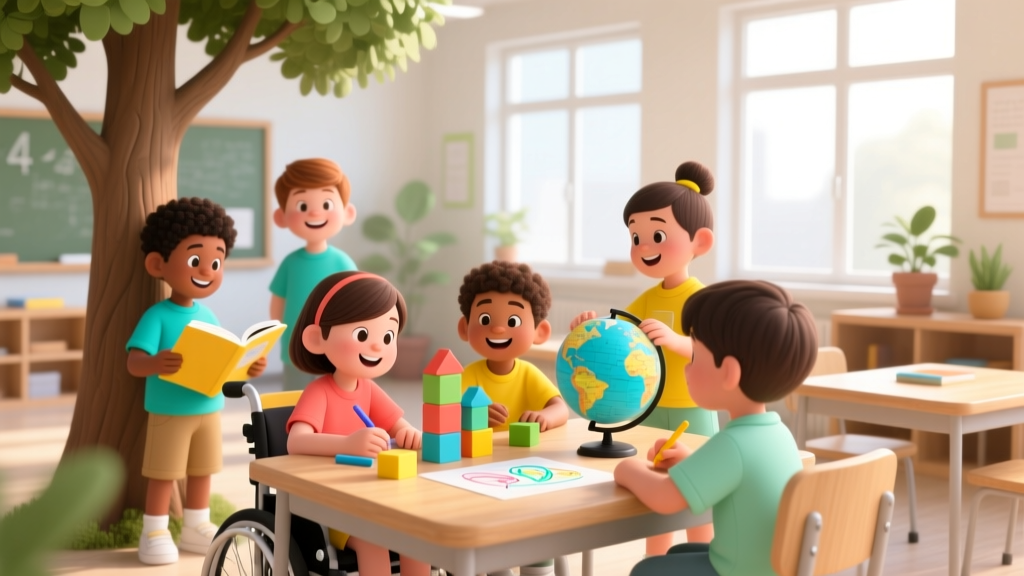
Sensory Tables for Kids: Brain-Boosting Learning Engines
Why Every Parent and Early Educator Needs to Understand What Sensory Tables for Kids Really Are
What are sensory tables for kids? At their core, sensory tables for kids are purpose-built, waist-height learning stations designed to engage multiple senses simultaneously — touch, sight, sound, smell, and sometimes even taste — through carefully curated, open-ended materials that invite exploration, repetition, and self-directed discovery. But they’re far more than colorful plastic bins filled with rice or water: they’re evidence-based developmental tools endorsed by occupational therapists, early childhood specialists, and the American Academy of Pediatrics (AAP) as essential for building foundational neural architecture during the brain’s most malleable years (0–5). In a world where screen time now averages 2.6 hours daily for preschoolers (Common Sense Media, 2023), sensory tables offer something irreplaceable: embodied, multisensory cognition — the kind that wires attention regulation, emotional resilience, and pre-literacy skills before formal instruction begins.
How Sensory Tables Actually Work — The Neuroscience Behind the Play
Sensory tables aren’t just ‘play’ — they’re neurobiological scaffolding. When a 3-year-old scoops kinetic sand, pours water through a funnel, or sorts pom-poms by color and texture, their brain isn’t just having fun; it’s strengthening synaptic connections across four critical domains: sensorimotor integration, executive function, language processing, and social-emotional regulation. Dr. Sarah Lin, pediatric occupational therapist and co-author of Playful Pathways: Building Brains Through Sensory Experience, explains: “Each scoop, pour, sift, or squeeze activates the cerebellum, basal ganglia, and prefrontal cortex simultaneously — reinforcing neural loops that later support handwriting, impulse control, and complex problem-solving.”
This isn’t theoretical. A 2022 longitudinal study published in Early Childhood Research Quarterly tracked 142 preschoolers across six Head Start programs over 18 months. Children who engaged with structured sensory table rotations (3x/week, 15-minute sessions) showed statistically significant gains: 32% faster fine motor skill acquisition (measured via Beery-Buktenica Developmental Test), 27% higher vocabulary growth (PPVT-5 scores), and 41% fewer observed self-regulation incidents (e.g., tantrums, withdrawal) compared to matched peers without consistent access.
Crucially, the benefits scale with intentionality — not just availability. A sensory table filled haphazardly with glitter and glue offers minimal developmental ROI. But one anchored to a weekly theme (e.g., “Desert Dunes” with kinetic sand, fossil replicas, magnifying glasses, and sand timers) paired with intentional adult scaffolding (“What do you notice about how the sand moves when you tilt the tray?”) transforms passive play into guided inquiry.
Your No-Stress Setup Guide: From Garage Bin to Montessori-Approved Station
Forget expensive, bulky units that collect dust. You don’t need a $299 branded table to reap the benefits — and you definitely shouldn’t wait until your child shows signs of sensory processing challenges to begin. Here’s how to build high-impact sensory experiences at home or in a classroom — starting today, with under $35:
- Base First, Fill Later: Use a sturdy, low-to-the-ground storage bin (18" x 24" x 12"), a repurposed shallow kitchen sink, or even a large plastic dishpan on a stable stool. Height matters: ideal table height is 18–22" for ages 2–4 (per NAEYC ergonomic guidelines). Avoid wobbly furniture — stability reduces anxiety and increases engagement.
- Rotate Materials Strategically (Not Just Seasonally): Change contents every 5–7 days based on developmental goals — not holidays. For example: Week 1 = “Texture Tactile Tray” (dry lentils, smooth river stones, bumpy pinecones, soft fleece scraps); Week 2 = “Liquid Logic Lab” (colored water, droppers, clear tubes, floating/sinking objects); Week 3 = “Scent & Sound Sensory” (vanilla-scented rice, cinnamon sticks, jingle bells buried in oats).
- Always Include Three Types of Tools: (1) Manipulatives (tongs, scoops, tweezers — builds pincer grasp), (2) Exploratory Tools (magnifiers, mirrors, funnels — invites observation and cause-effect reasoning), and (3) Documentation Tools (small whiteboard + dry-erase marker, sticky notes, or a voice recorder — empowers children to narrate discoveries).
Real-world example: At Little Sprouts Montessori in Portland, teachers replaced their static “rainbow rice” station with a rotating “Science Sensory Cycle.” Over 10 weeks, students progressed from simple pouring to designing their own “sink-or-float prediction charts,” then to testing variables (e.g., “Does temperature affect how fast ice melts in salt vs. sugar water?”). Their end-of-year assessment showed 94% met or exceeded Oregon’s Early Learning Standards for Scientific Inquiry — up from 68% the prior year.
Age-by-Age: What Sensory Tables Should Look Like (and What to Absolutely Avoid)
One-size-fits-all sensory play is a myth — and potentially unsafe. Developmental readiness dictates material safety, complexity, and adult involvement. Below is a research-backed progression aligned with AAP milestones and Zero to Three’s sensory integration framework:
| Age Range | Key Developmental Focus | Safe, High-Impact Materials | Materials to Avoid | Adult Role |
|---|---|---|---|---|
| 6–12 months | Sensory discrimination (texture, temperature, sound) | Washable fabric swatches (velvet, burlap, silk), warm/cold silicone balls, crinkle paper, soft chime balls | Small objects (<1.25" diameter), loose beads, beans, or anything ingestible | Hands-on co-exploration: Narrate sensations (“Soft! Cool!”), model gentle touching, supervise 100% of time |
| 12–24 months | Object permanence, early cause-effect, bilateral coordination | Large dried pasta, water beads (fully hydrated & supervised), chunky wooden spoons, textured rolling pins, shallow water with boats | Rice, sand, small sequins, or anything requiring fine motor precision beyond current grasp | Facilitator: Introduce simple verbs (“Pour! Scoop! Splash!”), pause to let child initiate action, follow their lead |
| 2–3 years | Symbolic play, early classification, tool use | Dry corn kernels, rainbow dyed oats, magnetic letters in shaving cream, scented playdough, nature items (acorns, smooth stones, feathers) | Unsupervised water play, glitter (inhalation risk), synthetic fragrances, or choking-hazard tools like toothpicks | Co-investigator: Ask open questions (“What happens if we mix red and blue water?”), introduce vocabulary (“viscous,” “porous”), document findings together |
| 3–5 years | Hypothesis testing, collaborative problem-solving, narrative development | Slime (borax-free recipes only), layered density jars (oil/water/honey), DIY fossils in plaster, magnet wands with iron filings, themed kits (e.g., “Archaeology Dig” with buried toy bones) | Any material lacking CPSC/ASTM F963 certification, untested homemade slime with borax or liquid starch, or unsealed electronics | Research partner: Encourage predictions, record results, compare outcomes, support peer-led explanations |
Note: According to the Consumer Product Safety Commission (CPSC), 72% of non-fatal toy-related injuries in children under 3 involve ingestion or aspiration — making age-appropriate material selection non-negotiable. Always verify ASTM F963 compliance on commercial sensory kits and avoid DIY recipes containing borax, boric acid, or liquid starch unless verified non-toxic by a certified toxicologist (as recommended by the AAP’s 2023 Toy Safety Guidelines).
The Hidden Power of Sensory Tables for Neurodiverse Learners
For children with sensory processing disorder (SPD), autism spectrum disorder (ASD), or ADHD, sensory tables aren’t optional enrichment — they’re therapeutic infrastructure. Occupational therapists routinely prescribe sensory diet interventions, and tabletop stations are among the most accessible, scalable tools. But effectiveness hinges on customization.
Take Leo, a 4-year-old with ASD and tactile defensiveness. His initial reaction to sand was distress — covering ears, fleeing the table. His OT introduced a “gradual exposure ladder”: Week 1 = watching others play from 6 feet away; Week 2 = wearing cotton gloves while touching dry beans; Week 3 = bare-hand contact with warm, smooth river stones; Week 4 = brief (30-second) immersion in kinetic sand. Within 8 weeks, Leo initiated sensory table play independently — and his classroom communication attempts increased by 200% (per teacher ABC data logs).
Key adaptations backed by clinical practice:
- For tactile seekers: Add deep pressure elements — vibrating massagers embedded in trays, weighted scoops, or textured rollers.
- For auditory sensitivities: Replace noisy materials (rice, beads) with silent alternatives (shredded paper, foam cubes, cloud dough) and provide noise-dampening headphones nearby.
- For visual processing challenges: Use high-contrast materials (black tray + white pom-poms), reduce background clutter, and add visual timers to scaffold transitions.
- For oral sensory needs: Offer chewable, food-grade silicone tools (e.g., textured teething rings mounted on handles) — never edible fillers like cereal or candy, which pose aspiration and dental risks.
Dr. Maya Chen, board-certified pediatric neuropsychologist and director of the Sensory Integration Clinic at Boston Children’s Hospital, emphasizes: “Sensory tables succeed when they honor neurodiversity — not ‘fix’ it. The goal isn’t normalization; it’s providing safe, predictable, modifiable input that helps the nervous system learn self-regulation.”
Frequently Asked Questions
Are sensory tables only for toddlers and preschoolers?
No — they’re powerfully adaptable across ages. Elementary teachers use them for science labs (e.g., erosion simulation with soil/water/wind fans), literacy (letter tracing in shaving cream), and math (measuring volume with graduated cylinders). Even teens benefit: high school special education classrooms use sensory tables for vocational skill-building (sorting components by texture/weight for assembly line prep) and stress reduction during exam season. The key is aligning materials and complexity with cognitive, physical, and emotional needs — not chronological age.
Can I use a regular table or countertop instead of a dedicated sensory table?
You can — but with critical caveats. Countertops are too high for young children, forcing awkward postures that hinder fine motor control and increase fatigue. Standard tables often lack containment, leading to spills and safety hazards. If adapting existing furniture, lower it securely (e.g., remove legs, mount on stable blocks), add a 2-inch raised lip around the perimeter (use non-toxic caulk or removable silicone edging), and always use a waterproof, wipeable surface liner. Better yet: repurpose a plastic utility sink ($29 at hardware stores) — it’s the ideal height, built-in drainage, and inherently spill-resistant.
Is messy play really necessary — or just chaotic?
Messy play isn’t about chaos — it’s about controlled, meaningful mess that serves specific developmental goals. Research from the University of North Carolina’s Frank Porter Graham Child Development Institute shows that children who regularly engage in regulated messy play demonstrate stronger executive functioning, particularly in task initiation and cognitive flexibility. The ‘mess’ is the medium — not the objective. To minimize chaos: use drop cloths with non-slip backing, assign clear cleanup roles (“You carry the scoop, I’ll hold the bin”), and incorporate cleanup as part of the sensory experience (e.g., “Let’s feel how wet the sponge gets when we wring it out!”). Predictability + participation = less overwhelm, more mastery.
Do sensory tables help with picky eating?
Yes — indirectly but significantly. Sensory play builds tolerance for novel textures, temperatures, and smells in low-stakes contexts. A 2021 study in Journal of Nutrition Education and Behavior found that preschoolers who engaged in weekly ‘Food Exploration Tables’ (featuring raw veggies, herbs, grains, and spices — no pressure to taste) were 3.2x more likely to try new foods at mealtime after 12 weeks. Why? Because touching, squishing, and smelling carrots alongside playdough reduces neophobia — the fear of new foods — by desensitizing the brain’s threat response. Never force tasting — but do narrate: “This basil leaf feels fuzzy and smells green — just like the grass outside!”
How often should kids use a sensory table?
Consistency trumps duration. Aim for short, frequent exposures: 10–15 minutes, 3–4 times per week is optimal for neuroplasticity. Daily 5-minute ‘sensory resets’ (e.g., a calming water tray before transitions) also improve emotional regulation. Avoid marathon sessions — prolonged exposure can lead to sensory overload, especially for sensitive children. Watch for cues: leaning in, focused gaze, and vocalizations signal engagement; turning away, covering ears, or rapid disengagement signal saturation.
Common Myths
Myth #1: “Sensory tables are just for kids with special needs.”
False. While profoundly beneficial for neurodiverse learners, sensory tables accelerate development for all children. As Dr. Laura Jana, pediatrician and co-author of The Toddler Brain, states: “Every child’s brain is wired to learn through sensation. Denying typical kids rich sensory input is like withholding sunlight from a plant — it stunts natural growth.”
Myth #2: “More materials = better learning.”
Also false. Cognitive load theory confirms that overwhelming choices impair focus and memory encoding. A study in Child Development found that trays with >5 distinct materials reduced sustained attention by 63% versus those with 2–3 intentionally paired elements (e.g., water + cups + floating toys). Less is more — when it’s thoughtfully curated.
Related Topics (Internal Link Suggestions)
- Sensory-friendly toys for toddlers — suggested anchor text: "best sensory toys for 2-year-olds"
- Homemade sensory bin ideas — suggested anchor text: "non-toxic sensory bin recipes"
- Montessori sensory activities — suggested anchor text: "Montessori-inspired sensory play"
- Occupational therapy at home — suggested anchor text: "OT-approved sensory activities for preschoolers"
- Early signs of sensory processing disorder — suggested anchor text: "when to consult an occupational therapist"
Ready to Build Your First Purpose-Driven Sensory Table?
You now know what sensory tables for kids truly are — not decorative classroom props, but dynamic, neuroscientifically grounded tools that shape attention, language, motor control, and emotional intelligence from the inside out. You don’t need perfection. Start small: grab a dishpan, fill it with warm water and three clean cups, add one floating toy, and sit beside your child for five minutes — observing, describing, and following their lead. That first intentional interaction is where lifelong neural pathways begin. Your next step? Download our free, printable Sensory Table Rotation Calendar (with 12 developmentally staged themes, material checklists, and conversation prompts) — available instantly with email signup below.
More Articles
 What to Do in Kentucky with Kids (2026)
 Take Your Kid to Work Day 2026: Dates & Tips
 Winter Olympics for Kids: 7 Play-Based Learning Ideas
 Best Kids’ Birthday Party Venues Near You (2026)
 How Many Kids Play Sports? Equity & Retention Data
 Amsterdam with Kids: 4 Days Is the Sweet Spot (2026)
 Branson Kids Activities: 12 Fun, Low-Cost Picks (2026)
 St. Louis Kids Activities: 27 Local Favorites (2026)
 Squid Kid Stardew Valley: What It Is & Real Activities
 What Is a Scene Kid? Identity, Culture & 2026