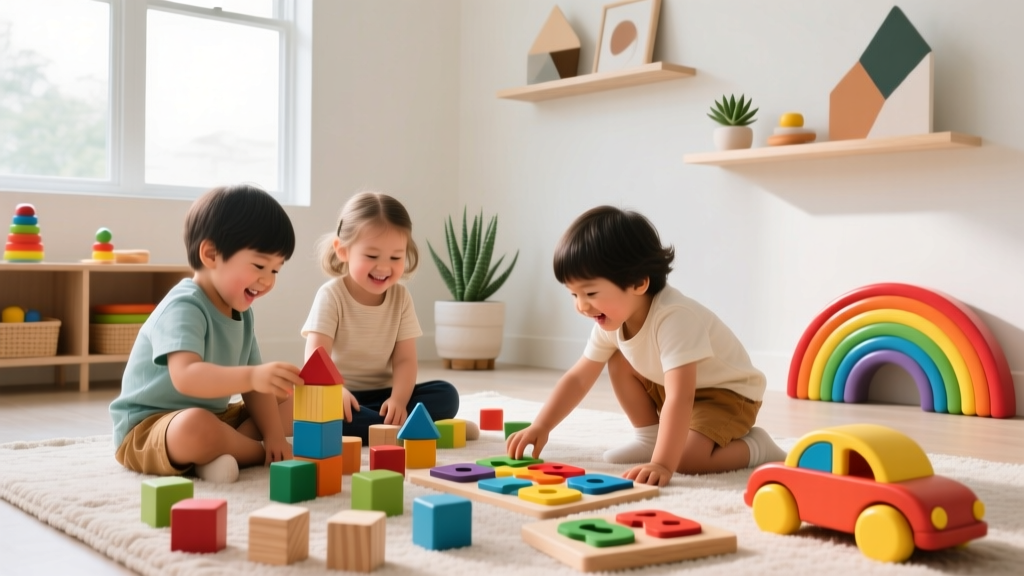
Rainy Day Learning Games for Home (2026)
Learning Through Play on Rainy Days
Rainy days are perfect opportunities for focused, fun learning activities. These games disguise education as entertainment — kids think they're playing while building real academic skills.
20 Learning Games for Rainy Days
Language Arts Games
1. Story Chain: Each person adds one sentence to a growing story. Builds narrative skills, sequencing, and creative thinking. Record the final story to read back together.
2. Word Scavenger Hunt: Give kids a list of words to find around the house (on labels, in books, on signs). Builds reading fluency and attention to environmental print.
3. Rhyme Time: Say a word and take turns coming up with rhyming words until someone can't think of one. Builds phonemic awareness essential for reading.
4. Letter Soup: Write letters on small paper pieces, put them in a bowl. Kids draw letters and form words. Award points for longer words.
Math Games
5. Kitchen Math: Use measuring cups for hands-on fraction lessons. "How many quarter cups make a whole cup?" Real-world math that produces edible results.
6. Dice Multiplication: Roll two dice and multiply the numbers. Keep a running total. First to reach 100 wins. Adjust difficulty by adding a third die.
7. Shape Hunt: Find geometric shapes around the house. Rectangles (doors), circles (clocks), triangles (roof peaks). Tally findings on a chart.
8. Grocery Store Game: Set up a pretend store with price tags. Use play money to buy items and calculate change. Teaches addition, subtraction, and money concepts.
Science Games
9. Sink or Float: Gather 10-15 household items. Predict whether each will sink or float, then test in a basin of water. Introduces density concepts.
10. Color Mixing Lab: Use food coloring and water to explore color mixing. Record results on a chart. What happens when you mix all three primary colors?
11. Plant Observation: Place a celery stalk in colored water. Check every hour as the color travels up the stem. Demonstrates capillary action visually.
12. Shadow Science: Use a flashlight and objects to explore shadows. How does distance affect shadow size? What creates the longest shadow? Teaches light properties.
Social Studies Games
13. Map Your House: Draw a floor plan of your home. Add furniture, doors, and windows. Introduces spatial reasoning and map-reading skills.
14. Family Timeline: Create a timeline of family events using photos and drawings. Teaches chronological thinking and personal history.
15. Culture Box: Fill a box with items representing different cultures. Discuss where each item comes from and what it tells us about that culture.
Creative Thinking Games
16. Invention Convention: Give kids random materials and challenge them to invent something useful. Present their invention to the family with a sales pitch.
17. Puzzle Race: Time how fast family members can complete puzzles. Increase difficulty gradually. Builds spatial reasoning and persistence.
18. Memory Tray: Place 10 items on a tray. Study for 30 seconds, then cover. List as many as you remember. Increases working memory capacity.
19. Pattern Blocks: Create patterns with colored objects (buttons, blocks, coins). Others predict the next items. Builds algebraic thinking.
20. Category Challenge: Name a category (fruits, animals, countries). Take turns naming items until someone can't think of one. Builds vocabulary and categorization skills.
Tips for Success
Let kids choose which games to play. Keep sessions short (15-20 minutes for younger kids). Celebrate effort over accuracy. Make it a family activity, not a solo assignment.
More Articles
 What to Do with Kids in Buffalo: 27 Local Favorites
 Best Spring Break Destinations for Kids (2026)
 Hotels Through Time: 7 Mind-Blowing Changes (2026)
 Who Played the Kid Grinch? (2026)
 Laser Tag Safety for Kids: 7 Evidence-Based Truths (2026)
 Would You Rather Christmas: 12 Fun Games
 Royal Caribbean Kids Club: Ages, Cost & Safety (2026)
 Reno with Kids: 17 Stress-Free Adventures (2026)
 A Diary of a Wimpy Kid Literacy Strategies (2026)
 Big City Greens for Kids: Age Suitability & Hidden Benefits