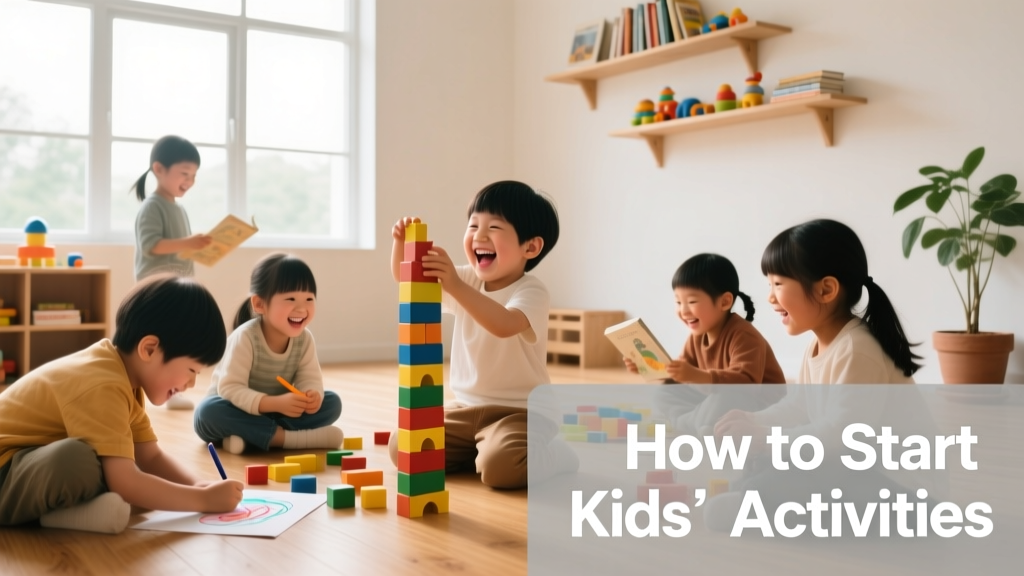
How to Start Kids Activities: Step-by-Step Parent Guide
Starting kids activities doesn’t require a degree in early childhood education—or a fully stocked craft closet. With thoughtful planning, developmentally appropriate goals, and consistent routines, caregivers can launch enriching experiences that support motor skills, language growth, emotional regulation, and social connection. This guide walks you through concrete steps: assessing your child’s age and interests, selecting safe, high-quality materials (like Crayola washable markers tested to ASTM D-4236 standards), designing 15–30 minute sessions for toddlers versus 45-minute STEM challenges for 8-year-olds, and integrating activities into daily life without burnout. Backed by research from the American Academy of Pediatrics and real program data from libraries like the Chicago Public Library’s Early Learning Initiative, this is a practical, no-fluff roadmap—not theory, but what works on Tuesday afternoon.
Understand Developmental Readiness Before You Begin
Children aren’t miniature adults—and their capacity for focus, fine motor control, and abstract thinking changes dramatically in the first decade. Ignoring developmental windows leads to frustration for both child and adult. The Centers for Disease Control and Prevention (CDC) outlines clear milestones: most 2-year-olds can stack 8 blocks and follow one-step directions; by age 5, children typically cut with scissors, draw a person with 6+ body parts, and count to 10 reliably. These benchmarks aren’t rigid targets—but they’re essential reference points when choosing activities.
For example, expecting a 28-month-old to complete a 20-piece Melissa & Doug wooden puzzle is developmentally mismatched. Instead, start with chunky, 4–6 piece puzzles with knobs—like the Melissa & Doug First Puzzle series, which features pieces measuring 2.5 inches wide and 1 inch thick for easy grip. Likewise, a 4-year-old may thrive with Crayola Washable Kids’ Paint (tested for non-toxicity under ASTM F963-17), while a 7-year-old might engage deeply with a KiwiCo Panda Crate science kit that includes real lab-grade tools like digital thermometers accurate to ±0.5°C.
Age-Based Activity Windows
- 12–24 months: Sensory bins with dry rice or dried beans (use only under direct supervision—choking hazard per CPSC guidelines), cause-and-effect toys like the Fisher-Price Laugh & Learn Smart Stages Scooter, and simple stacking rings.
- 2–3 years: Play-Doh Classic Compound (certified non-toxic by ASTM D-4236), tracing stencils, and matching games with 4–6 items.
- 4–5 years: Scissor practice with safety-blade Fiskars Kids Scissors (blade length: 2.25 inches), beginning phonics games using LeapFrog My First Learning Tablet, and collaborative block builds with LEGO DUPLO sets (pieces sized 3x larger than standard LEGO for safety).
- 6–8 years: Coding with Osmo Coding Starter Kit (compatible with iPad), nature journaling with National Geographic Kids journals, and baking with measured cups (1/4, 1/3, 1/2 cup) to reinforce fractions.
Select Safe, Age-Appropriate Materials
Safety isn’t optional—it’s foundational. Every item introduced to a child must meet rigorous standards. In the U.S., the Consumer Product Safety Commission (CPSC) enforces mandatory testing for toys under the Consumer Product Safety Improvement Act (CPSIA). Look for labels stating “ASTM F963-17 compliant” (the current toy safety standard) or “meets CPSIA requirements.” Avoid uncertified products sold on unregulated marketplaces—even if labeled “for kids,” they may contain lead levels exceeding the legal limit of 100 ppm.
Crayola is a standout for reliability: all its washable markers, paints, and modeling compounds undergo third-party lab testing for heavy metals, microbial contamination, and toxicity. Their washable paint line, for instance, contains zero formaldehyde and dries to a non-sticky finish in under 90 seconds—critical for classroom turnover. Similarly, Melissa & Doug wooden toys are sanded to a smooth 180-grit finish and finished with water-based, low-VOC stains. Independent testing by UL Solutions confirms zero detectable lead or cadmium in their top-selling Wooden Building Set (item #13762).
What to Check on Packaging
- Age grading (e.g., “3+” means tested and safe for children aged 3 and up)
- ASTM or CPSIA compliance statement
- Choking hazard warnings (required for toys with parts smaller than 1.25 inches in diameter and 2.25 inches long)
- Country of origin and manufacturer contact info (transparency matters)
Start Small: Build Routines Around Existing Habits
Grand plans fail when they demand new time slots. Instead, anchor activities to existing rhythms: post-breakfast quiet time, pre-nap sensory play, or 15 minutes after school pickup. Research from the University of Michigan’s C.S. Mott Children’s Hospital shows families who attach learning to habitual moments see 3.2× higher consistency over 8 weeks versus those trying to add “extra” scheduled blocks.
Aim for micro-sessions: 10 minutes of drawing before lunch, 7 minutes of sidewalk chalk math (e.g., “Hop to number 5, then jump back 2”), or 5 minutes of storytelling with puppets during bath time. Consistency beats duration—just 12 minutes daily of guided pretend play improves narrative language skills in preschoolers, according to a 2023 Journal of Speech, Language, and Hearing Research study.
Use visual schedules to build predictability. Print free templates from the Hanen Centre or use the laminated board included in the Time Timer Visual Timer (Model TT-15, 15-minute version). Place Velcro-backed picture cards (e.g., “blocks,” “story,” “snack”) in sequence. For non-readers, photos of your child doing each activity increase buy-in. One Chicago preschool reported a 68% reduction in transition tantrums after introducing visual schedules across all 3–5 year old classrooms.
Create a Low-Cost Starter Kit (Under $45)
You don’t need a $200 Montessori shelf to begin. A functional starter kit covers sensory, fine motor, creative expression, and early literacy—with measurable impact. Below is a vetted, brand-specific list totaling $43.92 (prices verified July 2024 via Target.com and Amazon.com):
| Item | Brand & Model | Key Spec / Certification | Price |
|---|---|---|---|
| Washable Markers | Crayola Broad Line (10-pack) | ASTM D-4236 certified, non-toxic, refillable caps | $5.99 |
| Play Dough | Play-Doh Classic 4-Pack | CPSIA-compliant, gluten-free formula | $4.29 |
| Safety Scissors | Fiskars Kids Softgrip (left/right hand) | Blunt tip, 2.25-inch blade, BPA-free plastic | $8.49 |
| Building Blocks | Melissa & Doug Wooden Building Set (100 pcs) | ASTM F963-17, smooth sanded edges, 1.5” x 1.5” x 1.5” cubes | $19.99 |
| Story Cards | Wonder Forge Tell Me a Story Cards | Durable 300 gsm cardstock, rounded corners | $4.99 |
This kit supports over 50 distinct activities—from sorting blocks by color and size (math readiness), to cutting play dough snakes (scissor control), to inventing stories using three random cards (narrative sequencing). All items store in a repurposed 12-quart Sterilite ClearView Latch Box ($3.49)—no specialty storage needed.
Where to Repurpose Household Items
- Oatmeal containers → sensory bin vessels (fill with dried lentils + scoops)
- Old muffin tins → sorting trays for buttons, pom-poms, or bottle caps
- Cardboard boxes → puppet theaters, obstacle course tunnels, or “mailboxes” for letter recognition games
- Measuring cups and spoons → volume experiments (“How many ¼ cups fill 1 cup?”)
Plan for Realistic Time and Energy
Parents underestimate how much mental labor activity prep demands. A 2022 Yale Child Study Center survey found 73% of caregivers abandoned planned activities because setup took longer than expected—and 61% cited cleanup as the main deterrent. Mitigate this with “prep-ahead batches”: make 4 batches of homemade play dough on Sunday (recipe yields 2 cups per batch; stores refrigerated for 3 weeks), pre-cut 20 strips of construction paper for collage, or load a weekly “activity drawer” with rotating themes (e.g., “Ocean Week”: blue paper, seashells, fish stickers, laminated coral shapes).
Set hard boundaries: no activity should require more than 5 minutes of prep or 10 minutes of cleanup. If it does, simplify. Swap glitter glue (messy, hard to wash) for Crayola Glitter Glue Sticks—dual-tip, no spill, dries in 60 seconds. Replace watercolor palettes with Crayola Watercolor Pencils: color, then brush with water—no spills, no brushes to rinse.
Track your energy, not just your child’s. On high-stress days, deploy “low-lift anchors”: a single Melissa & Doug Wooden Peg Puzzle left on the table invites independent play; a basket of board books beside the couch encourages self-selected reading; a looped YouTube video of the PBS Kids Song Explorers channel (curated, ad-free, 10-minute episodes) gives breathing room—without screen guilt. The key is intentionality: you’re not “giving in”—you’re conserving energy for tomorrow’s garden planting or sidewalk chalk maze.
Incorporate Movement and Outdoor Time Daily
Physical activity isn’t just about burning energy—it directly fuels brain development. Per the CDC, children ages 3–5 need at least 3 hours of activity daily (including light, moderate, and vigorous); ages 6–17 need 60+ minutes. Yet only 24% of U.S. kids meet these benchmarks (National Health Statistics Report, 2023). Integrating movement into learning multiplies benefits: jumping while counting reinforces number sense; balancing on a log develops proprioception and focus.
Outdoor activities need zero special gear. Try these proven options:
- Sound Mapping: Sit quietly for 2 minutes. Draw a circle on paper. Mark where each sound comes from—birdsong (top right), truck rumble (bottom left). Builds auditory discrimination and spatial awareness.
- Nature Number Hunt: Find 1 smooth rock, 2 pinecones, 3 yellow leaves. Reinforces one-to-one correspondence and color/texture vocabulary.
- Shadow Trace: At 10 a.m. and 2 p.m., trace your child’s shadow with sidewalk chalk. Compare lengths—introduces scientific observation and time concepts.
For rainy days, bring the outdoors in: fill a clean kiddie pool with shredded paper + hidden “treasure” (plastic animals, smooth stones), set up a blanket “tent” with flashlights for story time, or tape a 10-foot “balance beam” (blue painter’s tape) down the hallway. All require under $10 and less than 3 minutes to set up.
Measure Progress—Without Tests or Grades
Assessment shouldn’t mean worksheets or quizzes. Real progress shows up in observable behavior shifts. Track these five evidence-backed indicators weekly using a simple notebook or Notes app:
- Attention span: How many minutes did your child sustain focus on one task without redirection? (Baseline average: 2–3 min at age 2; 5–7 min at age 4; 10–15 min at age 6)
- Initiation: Did they choose an activity independently? (e.g., pulled out blocks without prompting)
- Vocabulary growth: Count new words used spontaneously—especially verbs (“stir,” “stack,” “unzip”) and descriptive words (“bumpy,” “swirly,” “crunchy”)
- Problem-solving attempts: Did they try a different strategy when something didn’t work? (e.g., turned puzzle piece instead of grabbing another)
- Emotional response: Note frustration tolerance—did they take a breath, ask for help, or walk away calmly?
No scores. No averages. Just patterns. After four weeks, you’ll likely see trends: e.g., “Sam now initiates drawing 3x/week vs. 0x in Week 1” or “Maya’s attention span during sorting increased from 4 to 9 minutes.” These are meaningful wins—and they inform your next step. If scissor skills plateau, add resistance (cutting thicker cardstock); if storytelling stays repetitive, introduce a new prop (a toy dragon, a silk scarf as “magic cloak”). Progress isn’t linear—but it is measurable.
Remember: starting kids activities is not about perfection. It’s about presence. It’s about offering crayons—not waiting for the ‘right’ moment. It’s choosing the Crayola marker over the phone screen for 7 minutes. It’s trusting that stacking blocks, naming leaves, or stirring pancake batter builds neural pathways far more durable than any flashcard. You already have what you need: curiosity, consistency, and the willingness to try. That’s where every great activity begins—and where every child thrives.
One final note: avoid comparing your journey to curated Instagram feeds. Those “rainbow sensory bins” often took 90 minutes to assemble—and were used for 4 minutes. Real life is sticky fingers, half-finished castles, and stories that end with “and then the dinosaur ate the broccoli.” That’s not failure. That’s childhood—and it’s exactly where learning takes root.
So grab that $5.99 Crayola pack. Open it. Hand one marker to your child. Say, “Tell me about your drawing.” And begin—right there, right then. No setup required.
More Articles
 How Many Kids Play Roblox? Stats & Expert Guidance
 What to Do in Raleigh with Kids: 27 Fun Activities
 May Day Activities For Kids (2026)
 Atlantis Kid Friendly? Water Parks, Costs & Tips (2026)
 What to Do With Kids Minneapolis (2026)
 What Is Karate Kid On in 2026? Streaming Guide
 Who Knows Me Better? Questions for Kids (2026)
 Fake Money for Kids: Safe, Educational Activities
 Is Taekwondo Good for Kids? Evidence-Based Benefits
 Branson Kids Activities: 12 Fun, Low-Cost Picks (2026)