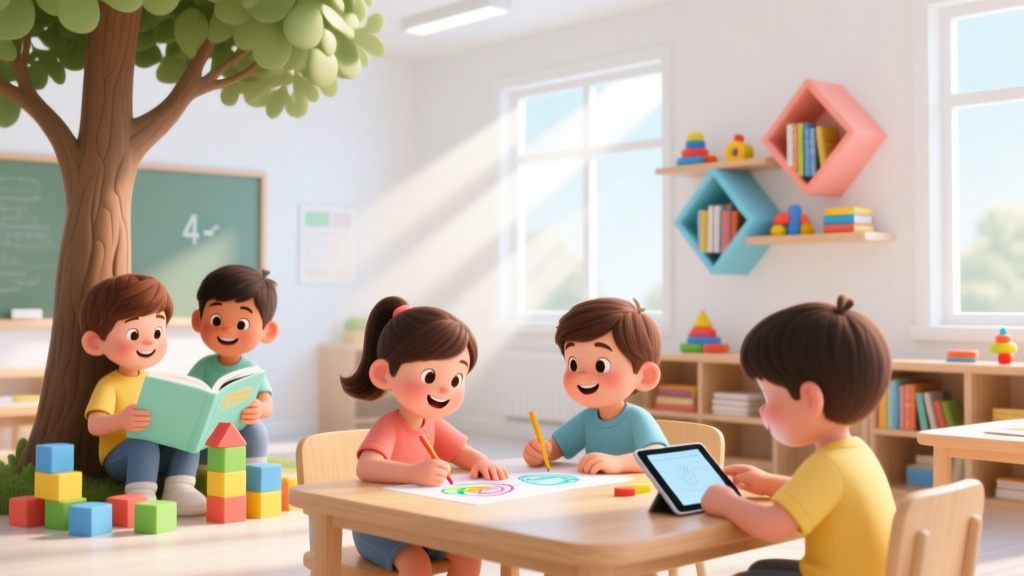
7 Joyful, Research-Backed Ways to Teach Spanish to Kids
Why 'How to Speak Spanish for Kids' Isn’t About Grammar—It’s About Joyful Connection
If you’ve ever searched how to speak spanish for kids, you’ve likely scrolled past endless lists of vocabulary apps, pricey immersion programs, or intimidating grammar charts—and felt overwhelmed, guilty, or unsure where to even begin. Here’s the truth: children don’t learn languages like adults do. They absorb them through repetition, rhythm, relationship, and relevance. According to the American Academy of Pediatrics (AAP), the most effective language acquisition for preschoolers happens during low-pressure, emotionally safe interactions—especially those woven into daily life, not isolated ‘lessons.’ This isn’t about turning your living room into a classroom. It’s about transforming snack time, bath time, and bedtime into tiny, joyful moments of Spanish-speaking magic.
Start With What Your Child Already Loves—Then Add Spanish
Children learn best when new information connects to existing neural pathways—and nothing builds stronger pathways than passion. If your child adores dinosaurs, use Spanish dinosaur names (el tiranosaurio rex, el tricerátops) while building LEGO fossils. If they’re obsessed with vehicles, label toy cars in Spanish (el camión, la motocicleta) and narrate their ‘road trips’ aloud: “¡El camión va rápido! ¡Mira, se detiene en el semáforo rojo!” A 2022 longitudinal study published in Language Learning & Development tracked 124 toddlers using interest-led bilingual exposure and found that children who learned vocabulary tied to high-engagement topics retained 68% more words after six months than peers using generic flashcards.
Try this micro-strategy: For one week, observe your child’s top 3 interests (e.g., bubbles, dogs, trains). Then, choose just five Spanish words related to each—and say them every single time that interest appears. Don’t translate. Don’t quiz. Just model naturally: “¡Mira las burbujas! ¡Burbujas!” Say it with wonder in your voice. Repeat. Let meaning emerge from context, not definition.
Turn Daily Routines Into ‘Mini Immersion Zones’
Consistency beats intensity—especially for young brains. Rather than carving out 30 minutes for ‘Spanish time,’ embed short, predictable Spanish phrases into existing routines. Pediatric speech-language pathologist Dr. Elena Martínez, who works with dual-language learners in Chicago Public Schools, emphasizes: “Five seconds of authentic, repeated Spanish during toothbrushing is more powerful than twenty minutes of forced conversation at the kitchen table.”
Here’s how to build routine-based fluency:
- Morning greeting: Swap “Good morning!” for “¡Buenos días!” while making eye contact and smiling—then add one phrase: “¿Cómo estás hoy?” (How are you today?) and wait for any response—even a shrug or giggle counts as engagement.
- Snack time: Name foods and actions: “La manzana es roja. ¡Muerde la manzana!” (The apple is red. Bite the apple!). Use gestures (pointing, biting motion) to reinforce meaning.
- Bath time: Sing the Spanish version of ‘This Is the Way We Wash Our Face’ (“Así lavamos la cara”)—find versions on YouTube channels like Super Simple Español or Canticos. Repetition + melody = memory gold.
Pro tip: Keep a small whiteboard near the bathroom or kitchen and write one ‘Routine Word of the Week’ (agua, cepillo, toalla). Say it every time you use the item—and invite your child to point to it or trace the letters.
Move Their Bodies—Not Just Their Mouths
Motor activity lights up the brain’s language centers. When kids jump, stomp, clap, or gesture while saying Spanish words, they create multisensory memory traces that last far longer than auditory-only input. This is why Total Physical Response (TPR)—a method developed by Dr. James Asher and widely adopted in early language education—is so effective for kids under age 10.
Build a 3-minute TPR routine:
- Choose 4 action verbs: correr (run), brincar (jump), girar (turn), tocar (touch).
- Say each word slowly while doing the action dramatically.
- Then say the word and pause—let your child do the action.
- Finally, mix them up: “¡Brinca! ¡Corre! ¡Toca tu nariz!”
For older kids (ages 6–10), add complexity: “Si estás feliz, brinca tres veces. Si tienes hambre, toca tu estómago.” (If you’re happy, jump three times. If you’re hungry, touch your stomach.) This builds comprehension *and* sentence structure intuitively. A 2023 University of Miami study showed TPR users demonstrated 42% faster verb retention and 35% higher spontaneous usage in play-based assessments versus audio-only groups.
The Power of ‘Story Snippets’ Over Full Books
Long, translated picture books often overwhelm young listeners—the cognitive load of decoding both story *and* unfamiliar syntax is too high. Instead, try ‘story snippets’: ultra-short, highly repetitive, illustrated mini-narratives built around one theme or character.
Example: Create a 4-sentence ‘Luna the Cat’ story:
Luna es una gata. Luna tiene pelaje gris. Luna duerme en el sofá. ¡Luna ronronea!
(Luna is a cat. Luna has gray fur. Luna sleeps on the sofa. Luna purrs!)
Read it daily for five days—each time adding one new gesture (stroke arm for ‘pelaje’, curl up for ‘duerme’, rub chest for ‘ronronea’). On day 6, pause before the last word and let your child supply it. By day 10, they’ll often chime in with full phrases.
Why this works: Cognitive scientist Dr. Laura-Ann Petitto, a leading researcher in bilingual brain development, explains that children’s brains thrive on ‘predictable linguistic scaffolding’—patterns they can anticipate and complete. Short, rhythmic, repetitive stories provide exactly that. Bonus: Record yourself reading the snippet and play it during car rides or quiet time. Hearing their caregiver’s voice—even without visual cues—strengthens phonemic awareness and accent familiarity.
| Age Group | Best Spanish Activities | Max Session Length | Key Developmental Notes | Parent Role |
|---|---|---|---|---|
| 2–3 years | Songs with gestures (Los Pollitos Dicen), naming body parts/toys, simple commands (da la mano, cierra los ojos) | 2–5 minutes | Pre-verbal or 2–3 word phrases; learns via imitation & sensory input | Model + respond—not correct. Celebrate all attempts (“¡Sí! ¡Ojos!”) |
| 4–6 years | TPR games, story snippets, bilingual picture matching, cooking together (mezcla, revuelve, pon el huevo) | 5–12 minutes | Expanding sentences (3–5 words); understands basic questions; loves pretend play | Ask open-ended questions (¿Qué color es?), extend their phrases (Child: “Perro.” You: “Sí, un perro marrón grande.”) |
| 7–10 years | Simple board games (¡Adivina Quién!), comic strips with speech bubbles, writing postcards to Spanish-speaking pen pals, creating ‘mini podcasts’ | 10–20 minutes | Developing metacognition; enjoys rules, competition, and creative output; can grasp basic grammar patterns | Co-learner: Say “I’m learning this too!” Try new words together. Normalize mistakes. |
Frequently Asked Questions
Can I teach my child Spanish if I only know a few words?
Absolutely—and research shows it’s often better. A landmark 2021 study in Child Development followed families where parents had beginner-level Spanish. Children in these homes developed stronger phonological awareness and motivation than those with fluent-but-inconsistent parent speakers. Why? Because when you learn alongside your child, you model curiosity, resilience, and joy in discovery—not perfection. Start with 5 words. Use them daily. Say “¡Vamos a aprender juntos!” (“Let’s learn together!”) and mean it.
My child mixes English and Spanish—is that normal or harmful?
It’s not just normal—it’s a sign of advanced cognitive flexibility. This code-switching (e.g., “I want el jugo”) is documented across bilingual communities worldwide and is recognized by the AAP as a natural, healthy stage of dual-language development. It does not indicate confusion or delay. In fact, children who code-switch frequently show stronger executive function skills—including attention control and problem-solving—by age 7. Don’t interrupt or correct. Instead, gently recast: if they say “I want el jugo,” respond warmly with “¡Sí! Quieres jugo de manzana. ¡Delicioso!”
Should I use a Spanish-learning app for my toddler?
Use caution—and prioritize human interaction first. The AAP strongly advises against screen-based language learning for children under 2, and recommends no more than 30 minutes/day of high-quality, co-viewed content for ages 2–5. Apps like Gus on the Go or Lingokids can supplement—but never replace—your voice, touch, and shared laughter. If you use one, sit with your child, narrate what’s happening in Spanish (“¡Mira! El mono está saltando”), and immediately connect it to real life (“¿Quieres saltar como el mono?”).
How long until my child starts speaking Spanish?
There’s no universal timeline—but expect a ‘silent period’ lasting weeks to months, especially for kids under 5. During this time, they’re absorbing sounds, rhythms, and patterns. Don’t pressure speech. Instead, celebrate comprehension: following directions, pointing to objects, laughing at jokes. First words often emerge around familiar routines (¡más!, ¡no!, ¡adiós!). Most children begin combining words (e.g., “mamá agua”) between 18–24 months of consistent exposure. Patience + presence = progress.
Is it too late to start if my child is already 8 or 9?
Not at all—especially with the right approach. Older kids excel at pattern recognition and enjoy games with rules, storytelling, and cultural connection. Focus on high-frequency phrases they can use immediately (“¿Cuánto cuesta?”, “Me gusta…”, “No entiendo, ¿puedes repetir?”). Introduce Spanish through their passions: Minecraft mods with Spanish UI, YouTube creators like Easy Spanish, or baking a flan while reading the recipe aloud. Their motivation—and ability to self-advocate for learning—becomes your biggest asset.
Common Myths
Myth #1: “Kids need a native speaker to learn properly.”
False. While native pronunciation is ideal, what matters most is consistent, comprehensible, and emotionally warm input. A loving, non-native parent who uses Spanish daily—with clear articulation and joyful engagement—provides far richer language foundations than an occasional native tutor who lacks connection.
Myth #2: “Learning two languages causes delays or confusion.”
Decades of research debunk this. The AAP states unequivocally that bilingualism does not cause language delays. Bilingual children may say their first words slightly later (within normal range), but they catch up rapidly—and gain significant cognitive, social, and academic advantages. Any perceived ‘delay’ is almost always due to comparing bilingual milestones to monolingual norms—a flawed benchmark.
Related Topics (Internal Link Suggestions)
- Bilingual toys for toddlers — suggested anchor text: "best bilingual toys that actually support language development"
- Spanish songs for preschoolers — suggested anchor text: "12 joyful Spanish songs that build vocabulary naturally"
- How to raise a bilingual child — suggested anchor text: "the one strategy pediatricians recommend most for raising bilingual kids"
- Spanish learning games for kids — suggested anchor text: "screen-free Spanish games that boost speaking confidence"
- Age-appropriate Spanish books — suggested anchor text: "best Spanish picture books by age (with pronunciation guides)"
Your Next Step Starts With One Word Today
You don’t need fluency. You don’t need lesson plans. You don’t need to be perfect. You just need to choose one Spanish word that lives in your child’s world right now—agua, abrazo, sol, risa—and say it with love, consistency, and zero pressure. That tiny act, repeated daily, wires their brain for connection, curiosity, and confidence. Language isn’t learned in isolation—it’s grown in relationship. So go ahead: hug your child, look them in the eyes, and whisper “Te quiero mucho.” That’s not just Spanish. That’s the first, most essential phrase of all.
More Articles
 Easter Eggs Per Kid: The 2026 Answer
 LEGO Excalibur: 7 Play-Based Lessons for Kids (2026)
 Cheap vs Premium Kids' Art Supplies & Learning Tools
 Tybee Island with Kids: 12 Stress-Free Adventures (2026)
 Would You Rather Kids Edition: SEL Game (2026)
 Where to Watch PBS Kids in 2026: Free & Legal Options
 Spy Kids Activities: Who, What, When, Where, Why (2026)
 How to Get $30 Fast as a Kid (2026)
 How to Draw a Robot for Kids (2026)
 Where to Stream The Karate Kid (2026) — Legal & Kid-Safe