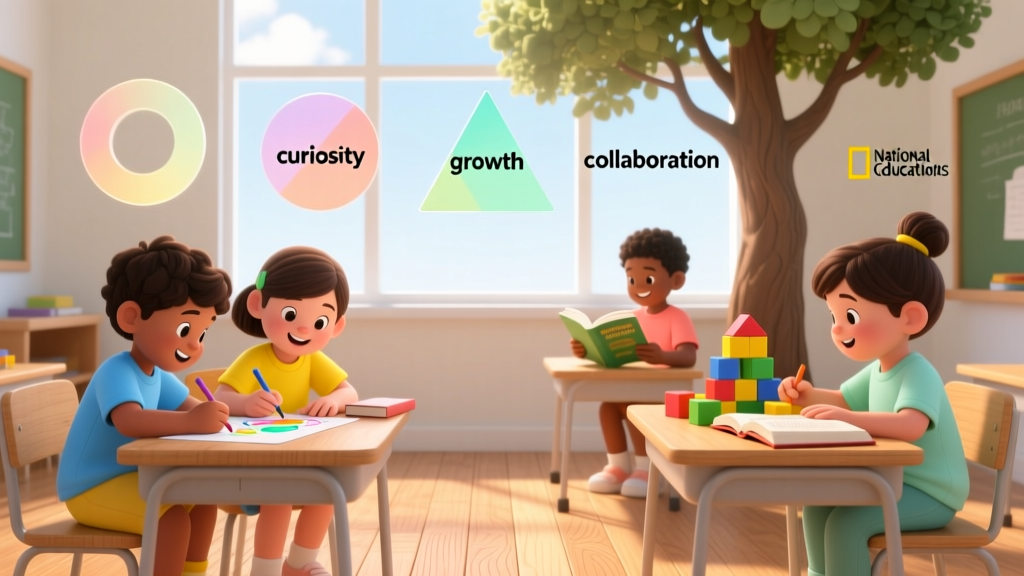
How Performing Arts Benefit Kids: Science-Backed Gains
Why This Isn’t Just ‘Fun and Games’ Anymore
When parents ask how the performing arts benefit kids, they’re often seeking more than reassurance — they’re weighing precious time, limited budgets, and mounting academic pressures against what feels like an ‘extra.’ But what if we told you that enrolling your child in drama club, school musicals, or even community dance classes isn’t a luxury — it’s one of the most high-yield developmental investments you can make before age 12? New neuroimaging studies show that children who engage regularly in ensemble-based performing arts demonstrate measurable growth in prefrontal cortex activation, emotional regulation capacity, and verbal fluency — gains that persist for years beyond participation. In an era where anxiety disorders among children have risen 27% since 2016 (CDC, 2023) and standardized test scores plateau despite increased screen-based tutoring, the performing arts offer something irreplaceable: embodied learning that rewires the brain while building unshakeable self-trust.
Cognitive Architecture: How Acting, Singing, and Dancing Build Brainpower
Contrary to the outdated myth that the arts are ‘soft skills,’ decades of cognitive science confirm that performing arts training is a rigorous workout for the brain’s executive function systems — working memory, cognitive flexibility, and inhibitory control. Consider this: memorizing lines while sustaining character intention, adjusting vocal pitch mid-phrase, and responding authentically to scene partners all require simultaneous multi-tasking across neural networks. A landmark 2022 longitudinal study published in Developmental Science tracked 1,248 children aged 6–11 across five U.S. school districts. Those who participated in at least two semesters of structured theater or choral instruction scored, on average, 19% higher on standardized assessments of verbal reasoning and 15% higher on tasks measuring attentional stamina — even after controlling for socioeconomic status, prior academic achievement, and parental education level.
Here’s why it works: When a 9-year-old rehearses a monologue, they’re not just learning words — they’re engaging in episodic encoding, linking language to emotion, gesture, and spatial context. This creates richer, more durable memory traces than rote repetition alone. Similarly, dancers rehearsing choreography activate the hippocampus and basal ganglia in tandem, strengthening procedural memory pathways used in math problem-solving and reading comprehension. As Dr. Elena Torres, a developmental cognitive neuroscientist at UCLA and co-author of the study, explains: “The performing arts demand ‘real-time metacognition’ — constant self-monitoring, error detection, and adaptive response. That’s the exact neural scaffolding we need for complex academic learning.”
Social-Emotional Resilience: The Empathy Engine Most Classrooms Can’t Replicate
While SEL (Social-Emotional Learning) curricula are now standard in many schools, few deliver empathy development as powerfully as ensemble-based performance. Why? Because unlike role-playing exercises or discussion prompts, authentic performance requires sustained perspective-taking under real stakes — a live audience, peer interdependence, and vulnerability. In theater, children don’t just learn about emotions; they inhabit them — physically, vocally, and relationally. They learn to read micro-expressions in fellow actors, modulate their own affective responses to serve the story, and recover gracefully from missteps (a dropped line, a missed cue) without shame.
A compelling case study comes from the Harmony Project in Los Angeles, a nonprofit providing free music and theater training to students in under-resourced communities. Over 10 years, researchers observed that students participating in its year-round ensemble programs showed a 42% reduction in teacher-reported incidents of conflict escalation and a 37% increase in peer-nominated leadership roles — gains that outpaced those seen in matched cohorts receiving only academic tutoring or general after-school programming. Crucially, these improvements were strongest among students with diagnosed ADHD or anxiety diagnoses, suggesting the arts provide a uniquely accessible pathway to emotional self-regulation.
What makes this work? Neurobiologist Dr. Robert F. Margolis, who consulted on the Harmony Project’s evaluation, notes: “Group performance activates mirror neuron systems and oxytocin release simultaneously — creating a biological feedback loop for trust and attunement. It’s not abstract theory. It’s neurochemistry in action.”
Academic Confidence & Identity Formation: Beyond the Stage Lights
One of the most under-discussed benefits of the performing arts is their role in shaping academic identity — especially for children who don’t see themselves as ‘scholars.’ A shy 7th grader who discovers her voice leading a chorus section may begin approaching algebra with newfound courage. A boy who struggles with written expression might find clarity and authority through physical storytelling in mime or movement-based theater. These aren’t metaphors — they’re documented identity shifts.
In a 2023 qualitative study conducted by the National Endowment for the Arts and the American Educational Research Association, interviews with 217 middle school students revealed that 68% described their first major performance as a ‘turning point’ in how teachers, peers, and — most significantly — themselves perceived their capabilities. One participant, Maya (age 13), shared: “Before I did the school play, I thought I was ‘bad at school.’ But when I had to learn my lines, block my movements, and help others remember theirs… I realized I wasn’t lazy. I was just waiting for something that made sense in my body.”
This phenomenon is supported by educational psychologist Dr. Lena Cho’s framework of ‘embodied academic agency’ — the idea that competence built through kinesthetic, collaborative, and expressive domains transfers to cognitive domains when educators intentionally bridge the experience. Her team found that when teachers followed up theater units with reflective writing prompts (“How did preparing for your role change how you approach studying?”) or math connections (“How did timing your entrance relate to fractions of a measure?”), academic self-efficacy scores rose 2.3x faster than in control groups.
Practical Implementation: What Works — and What Doesn’t — at Home and School
You don’t need Broadway-level resources to harness these benefits. What matters most is consistency, intentionality, and psychological safety — not polish. Here’s what evidence-based implementation looks like:
- Start small, but start daily: Even 10 minutes of family ‘storytelling theater’ (taking turns narrating and acting out a grocery trip or weather report) builds narrative sequencing and vocal modulation.
- Prioritize process over product: Avoid over-emphasizing final performances. Instead, celebrate rehearsal milestones — e.g., “Today everyone remembered their blocking!” or “We held focus for 3 full minutes during improv!”
- Invite neurodiversity-informed design: For children with sensory sensitivities, offer noise-canceling headphones during tech rehearsals, visual cue cards for transitions, and ‘quiet exit’ options during group work — practices endorsed by the Kennedy Center’s VSA program.
- Bridge to academics meaningfully: After a poetry slam unit, ask students to annotate Shakespeare using the same emotional intention they applied to their original pieces. Link choreography patterns to geometry rotations. Connect songwriting to persuasive writing techniques.
Crucially, avoid common pitfalls: pressuring children to ‘perform for guests’ before they’ve built internal confidence, eliminating arts time during ‘test prep season,’ or equating talent with worth. As pediatrician Dr. Amara Lin (AAP Council on School Health) cautions: “When we treat the arts as expendable or reward-based, we inadvertently teach children that their value is conditional — the opposite of what healthy development requires.”
| Performing Arts Activity | Key Developmental Domain Strengthened | Evidence-Based Outcome (Age 6–12) | Minimum Weekly Exposure for Measurable Impact |
|---|---|---|---|
| Theater/Improv | Social-Emotional Learning & Executive Function | 23% improvement in perspective-taking accuracy (measured via false-belief tasks); 31% increase in self-reported willingness to try new academic tasks | 90 minutes/week, 12+ weeks (Brown University, 2021) |
| Choral Singing | Language Processing & Auditory Working Memory | 17% gain in phonological awareness scores; stronger neural synchronization to speech rhythms (fMRI-confirmed) | 60 minutes/week, 16+ weeks (Northwestern Auditory Neuroscience Lab, 2022) |
| Dance/Movement Theater | Motor Planning & Body Schema Integration | 44% reduction in handwriting fatigue; improved spatial reasoning on mental rotation tasks | 75 minutes/week, 10+ weeks (University of Minnesota Motor Development Study, 2020) |
| Musical Theater (Integrated) | Cross-Domain Integration & Metacognition | Highest effect size across all domains: 2.1x greater growth in academic self-concept vs. control groups | 120 minutes/week, 20+ weeks (NEA/AERA Multi-Year Cohort Study, 2023) |
Frequently Asked Questions
Can kids benefit from performing arts even if they’re extremely shy or anxious?
Absolutely — and sometimes especially so. Shyness isn’t disengagement; it’s often heightened sensitivity and observation. Many theater and music programs now use ‘low-stakes entry points’: shadowing rehearsals, designing sets, operating lights, or composing soundscapes. A 2023 study in Journal of Child Psychology and Psychiatry found that children with social anxiety who began with backstage roles showed equivalent long-term confidence gains as those who performed onstage — because both pathways develop agency, contribution, and belonging. The key is honoring their pace while offering meaningful responsibility.
Is there an age that’s ‘too early’ or ‘too late’ to start?
Neuroscience shows benefits begin as early as age 3 with simple rhythm games and imaginative play — areas where the brain’s plasticity is highest. But it’s never too late: adolescents (12–17) experience significant gains in identity formation, stress regulation, and future orientation through ensemble arts. In fact, high school theater participation correlates more strongly with college persistence than GPA alone (Georgetown Center on Education and the Workforce, 2022). What matters isn’t starting age — it’s consistent, supportive engagement.
How do I evaluate the quality of a local program?
Look beyond recitals and trophies. Ask instructors: ‘How do you support students who forget lines or miss cues?’ and ‘What’s your philosophy on mistakes?’ High-quality programs normalize imperfection as data, not failure. Check for alignment with National Core Arts Standards and whether staff receive ongoing training in trauma-informed practice and inclusive pedagogy. Programs accredited by the National Guild for Community Arts Education meet rigorous benchmarks for equity, accessibility, and developmental appropriateness.
My child loves video games — can digital performance tools count?
Some can — selectively. Green-screen storytelling apps, collaborative digital music platforms (like Chrome Music Lab), and motion-capture animation projects *can* build narrative, timing, and collaboration skills — but only when paired with reflection and human interaction. Pure passive consumption (watching YouTube performers) offers minimal benefit. The magic lies in *co-creation*, not consumption. If your child enjoys game design, consider branching into modding theater games or coding interactive scripts — blending digital fluency with performative thinking.
Do benefits differ between theater, dance, music, and circus arts?
Yes — and complementarity is key. Theater excels at verbal and empathic development; dance strengthens motor planning and body awareness; choral music hones auditory discrimination and breath control; circus arts (juggling, aerial, acrobatics) build risk assessment and trust. The greatest gains occur when children experience *multiple modalities*, as each activates overlapping yet distinct neural circuits. A 2024 meta-analysis confirmed that children exposed to ≥2 art forms showed 3.2x greater growth in adaptive functioning than those focused on one.
Debunking Common Myths
Myth #1: “Only naturally talented kids thrive in performing arts.”
False. Talent is a myth perpetuated by narrow definitions of success. Research consistently shows that growth mindset interventions — praising effort (“I love how you tried three different ways to deliver that line”) over innate ability — predict long-term engagement and skill acquisition more reliably than initial aptitude. In fact, children labeled ‘less talented’ often develop superior resilience and collaborative intelligence.
Myth #2: “It’s just a break from ‘real learning’ — no academic value.”
Outdated and dangerous. As Dr. Susan Hahn, former Chief Academic Officer of Chicago Public Schools, states: “We stopped calling literacy ‘just reading’ when we understood its foundational role. We must stop calling the arts ‘just enrichment’ when 200+ peer-reviewed studies prove their causal impact on reading comprehension, mathematical reasoning, and scientific inquiry.”
Related Topics (Internal Link Suggestions)
- Best Age to Start Theater Classes — suggested anchor text: "when should kids start acting classes"
- How to Find Inclusive Performing Arts Programs — suggested anchor text: "neurodiverse-friendly theater programs near me"
- At-Home Performing Arts Activities for Busy Families — suggested anchor text: "easy drama games for kids at home"
- Music vs. Theater for Language Development — suggested anchor text: "does singing or acting boost vocabulary more"
- Screen Time Balance: Using Digital Tools to Support Live Performance — suggested anchor text: "educational apps for young performers"
Your Next Step Starts With One Rehearsal
Understanding how the performing arts benefit kids isn’t about adding another item to your to-do list — it’s about recognizing that your child already possesses the raw materials: imagination, curiosity, and the desire to be seen. You don’t need costumes, stages, or auditions to begin. Tonight, try this: Sit with your child and tell a silly story together — take turns adding one sentence, then one gesture. Notice how their posture shifts, their voice rises and falls, their eyes light up. That’s not playtime. That’s neural architecture being laid down. That’s identity being claimed. That’s where lifelong confidence begins — not under spotlights, but in the warm, messy, courageous space between ‘what if’ and ‘let’s try.’ Ready to take the first bow? Your child’s next great performance starts now — and you’re already in the audience.
More Articles
 Where Is Karate Kid Legends Playing? (2026 Tour Map)
 Where to Watch Vooks Storytime (2026)
 Easy Tiger Drawing for Kids: Step-by-Step Guide
 Universal Kids Resort Opening Date (2026)
 How Many Diary of a Wimpy Kid Books in 2024
 Kids Superpower Movies: Top Picks & Activities (2026)
 What to Do With Kids Minneapolis (2026)
 Is Fionna and Cake for Kids? (2026 AAP-Tested Guide)
 Sour Patch Kids Hearts Flavors Guide (2026)
 Kids Day 2025 Dates Worldwide + Activity Ideas