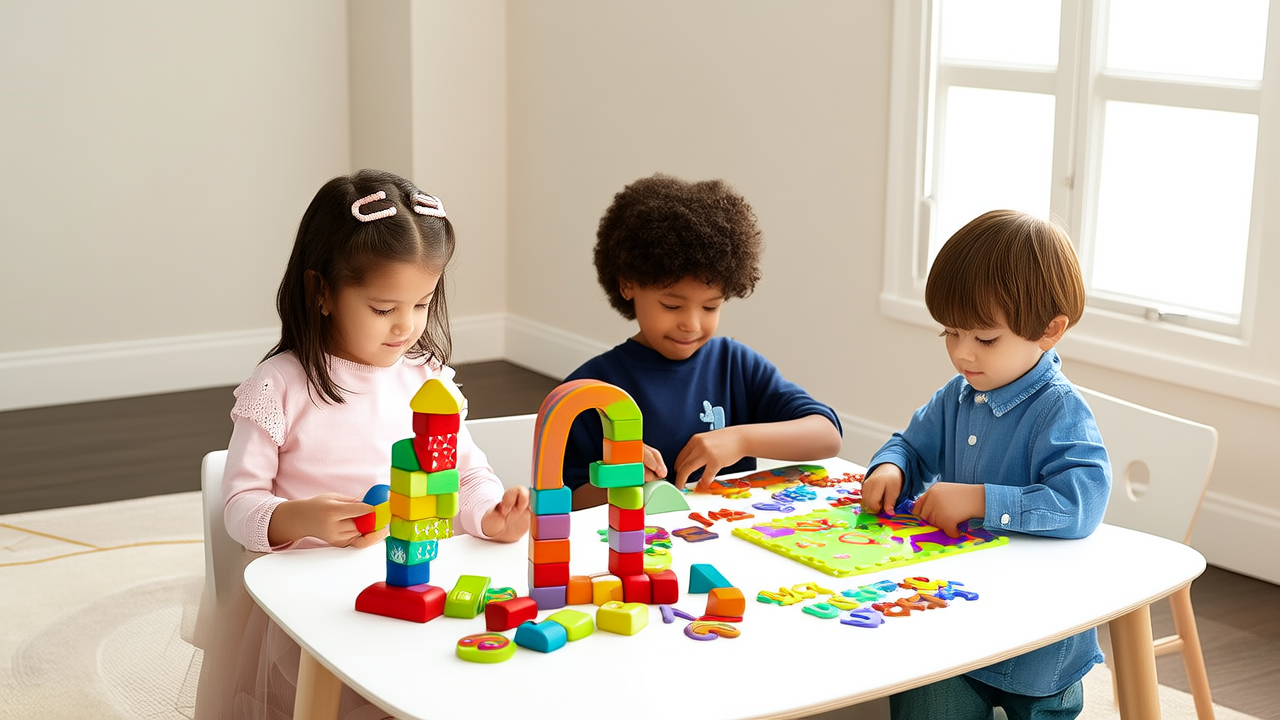
Best Kids Activities for Skill-Building Play
Best Kids Activities For Play at a Glance
The best kids activities for play combine movement, creativity, problem solving, and social connection in ways children remember. At a glance, choose active outdoor play, building challenges, sensory bins, art projects, cooperative games, and simple STEM experiments. These play formats support gross motor skills, fine motor control, language growth, emotional regulation, and early math thinking. Parents can rotate five core activity types through the week instead of hunting for one novel idea each day. A strong plan uses safe spaces, realistic cleanup expectations, and age-appropriate materials such as Crayola markers, Melissa and Doug puzzles, LEGO bricks, Little Tikes ride-ons, and Step2 activity tables. The goal is not constant adult entertainment. The goal is structured freedom: children know the tools, boundaries, and time blocks, then they create the play. This article breaks down practical options, setup notes, timing, and common mistakes.
What Makes Play Count as Activity
Play counts as activity when it gives children a clear choice, a safe boundary, and a reason to use their body, hands, or thinking. Passive screen watching may entertain, but it does not usually produce the same motor, language, or social benefits as play that involves building, pretending, moving, sorting, painting, negotiating roles, or solving a puzzle. A good activity has a simple invitation, such as a basket of wooden blocks, a bin of shredded paper and toy animals, or a taped rectangle on the floor for balance practice. It also has a realistic ending time. For children ages 2 to 4, ten to twenty minutes of focused play is a strong goal. For ages 5 to 7, twenty to forty minutes works well. For ages 8 and older, longer creative projects can hold attention if the child has a role, a material set, and a chance to show the result.
How to Choose Based on Age
Age matters because play value changes with motor control, attention span, and social confidence. Toddlers need large safe objects, simple cause and effect, and sensory input without choking hazards. Preschoolers benefit from pretend play, basic rules, and open-ended materials that can become a store, a spaceship, a kitchen, or a construction site. Early readers often enjoy games that connect letters, numbers, and story problems without making them feel tested. Older children need challenge, autonomy, and room to fail safely. A LEGO Classic set for a 6-year-old may become a design brief for a 9-year-old: build a bridge that holds a 12-inch toy car without collapsing. The same material can grow with the child, which makes it worth the shelf space.
Indoor Play Ideas For Toddlers and Preschoolers
Indoor play should reduce stress for caregivers, not create another chore. Choose activities that can be reset in under five minutes and that do not require a large floor area. A hallway, living room corner, or kitchen table can support many play formats. The best indoor activities for young children often use containers, sorting, pouring, building, and pretend roles. They also give adults a way to join for a short time and then step back.
Sensory Stations and Fine Motor Bins
Sensory bins are reliable because they combine touch, visual focus, and small-hand practice. A bin measuring 12 inches by 18 inches works well for two children. Fill it with safe dry materials such as large pasta, wooden beads, or shredded paper. Add scoops, tweezers, cups, and animal figures. For a toddler, keep pieces larger than 1.5 inches and supervise closely. For a 4-year-old, add a task card: find three red items, count six blue items, or build a nest for the toy birds. Brands such as Melissa and Doug offer wooden puzzles, lacing cards, and peg boards that fit this purpose. Crayola chunky crayons and washable markers make the same station more creative without a large cleanup problem.
- Water play table: a 24-inch square Little Tikes Sensory Water Table can hold cups, funnel parts, and plastic sea animals for 20 to 30 minutes.
- Play-Doh kitchen: start with four colors and four tools, then add cookie cutters, a rolling pin, and a 12-inch mat.
- Sorting tray: use six muffin tin cups and 30 buttons, shells, or wooden cubes to build color and size matching.
- Pretend shop: place a basket, five food items, a paper bag, and play money on a low table for 15 to 25 minutes.
Cleanup is part of the activity. Use a labeled bin for each theme, such as blocks, animals, cars, and art. A timer set to two minutes helps children transition without a battle. For younger children, turn cleanup into a game: who can find three blue blocks first, or who can fit the soft toy into the basket without throwing it.
Outdoor Play Ideas That Burn Energy Fast
Outdoor play gives children space to run, jump, climb, and test balance. Even a small yard or driveway can support movement play if you plan routes instead of free chaos. The safest outdoor setups use soft surfaces, clear sightlines, and age-appropriate height limits. A 30-minute outdoor block can replace a long indoor activity because physical play often improves mood and sleep. For children under 5, stay within sight and avoid equipment that is designed for older kids. For children 6 and older, you can add simple challenges, teamwork rules, and basic first aid reminders.
Obstacle Courses With Everyday Materials
Obstacle courses are excellent because they can be changed in minutes and require few special purchases. Use chalk, cones, pool noodles, hula hoops, and a jump rope. Make a course with eight stations. Each station should last 20 to 40 seconds. The full course can take 10 to 15 minutes. Children can repeat it three times and still have energy left. Younger children enjoy animal movements: bear walk, frog jump, crab reach. Older children enjoy timed runs and scoring.
- Balance line: tape a 10-foot strip to the floor or draw a chalk line, then walk heel to toe.
- Crawl under a chair: use a blanket over two chairs to make a tunnel 24 inches high.
- Jump in hoops: place four hula hoops in a path and jump with two feet or one foot.
- Throw bean bags: set a laundry basket 6 feet away and toss three bean bags.
- Run zigzag: line up six pool noodles or cones and weave through them.
- Carry a cup: balance a plastic cup with a small toy and walk a 15-foot path.
- Spin and stop: turn around once, then walk straight to the finish.
- Stretch finish: touch your toes, wave, and shout a silly word.
If you have a larger outdoor space, add a Step2 activity table for chalk play, a sidewalk chalk set, or a simple ball game. Soccer balls and playground balls work well for ages 3 and up. A 3-foot-diameter parachute or a large sheet can turn a small group into cooperative movers. For children who dislike fast games, offer a nature hunt instead: find one smooth rock, one leaf with a hole, one seed, and one object that is yellow.
Building and STEM Play For Ages 4 to 8
Building play teaches engineering habits without using the word engineering. Children test stability, measure distance, compare weight, and solve problems when a structure fails. LEGO bricks, Magna Tiles, wooden unit blocks, marble runs, and cardboard boxes all support this kind of thinking. The key is to give a small challenge, not a full instruction manual every time. A challenge can be simple: make a tower taller than your hand, build a bridge wide enough for a toy car, or create a house with a roof that will not blow off when a fan runs for five seconds.
For ages 4 to 5, start with 20 to 40 large blocks and one theme. For ages 6 to 8, add measurement tools, paper for designs, and a time limit. A LEGO Classic creative box is useful because it has mixed pieces that can become cars, animals, buildings, or impossible machines. Magna Tiles are good for flat designs, patterns, and light table play. A cardboard box the size of a refrigerator can become a playhouse, a rocket, or a shop. Use packing tape and a marker, not glue, so the structure can be changed.
STEM play does not need expensive kits. A ramp made from a 24-inch board and a stack of books can test how far a marble rolls. Add sandpaper, wax paper, and aluminum foil to compare surfaces. Measure each roll with tape. If a child asks why one surface is slower, that is science. If the child decides to change the ramp height, that is math. If the child builds a bridge for a toy car, that is design.
Arts, Crafts, and Imaginative Play With Low Cleanup
Art and imaginative play support storytelling, emotional expression, and hand strength. Parents often worry about mess, so choose materials that stay in a zone. Put a washable mat that is at least 24 inches by 36 inches under the project. Use a tray to hold supplies, and keep one cup of water for brushes. Crayola washable markers, tempera paint, glue sticks, and safety scissors are standard because they are familiar and easy to clean. For younger children, large paper and chunky crayons reduce frustration. For older children, sketchbooks, collage sheets, and colored pencils invite longer projects.
Imaginative play can be even simpler than art. A box of dress-up clothes, a play food set, a toy doctor kit, or a puppet theater gives children a place to act out feelings and ideas. Melissa and Doug make sturdy wooden play food, doctor sets, and puzzles that can survive repeated use. For a 5-year-old, a puppet show may last 20 minutes. For a 7-year-old, making a comic strip from three panels can become a writing and drawing project.
| Activity | Best For | Time | Materials | Skill |
|---|---|---|---|---|
| Play-Doh bakery | Ages 2 to 5 | 15 to 30 min | Play-Doh, rolling pin, cookie cutters | Fine motor, pretend play |
| LEGO bridge challenge | Ages 5 to 8 | 25 to 45 min | LEGO bricks, toy car, tape | Problem solving, measurement |
| Outdoor obstacle course | Ages 3 to 8 | 10 to 20 min | Cones, chalk, hoops, bean bags | Gross motor, balance |
| Paper bag puppet | Ages 4 to 7 | 20 to 35 min | Crayola markers, glue, paper bags | Language, creativity |
| Sorting sensory bin | Ages 1 to 4 | 10 to 25 min | Bin, cups, large buttons, tweezers | Classification, hand control |
The table above gives a quick rotation plan. If you want less setup, choose one activity from each column for the week. If you have a rainy day, swap the outdoor course for the sorting bin. If you need quiet time after dinner, choose the paper bag puppet or LEGO bridge challenge instead of a loud game.
Cooperative Games and Social Play For Siblings or Groups
Cooperative play teaches children to take turns, read facial expressions, and solve problems without making every game a win-lose contest. This matters for siblings, cousins, classrooms, and birthday groups. A good cooperative game gives everyone a shared goal, such as helping all players finish before a timer ends, building one tower together, or completing a puzzle as a team. For groups of three to six children, choose games with short rounds, simple rules, and a visible progress track.
Board games and card games can be play activities with real learning value. HABA, Gamewright, and Peaceable Kingdom make family games that often last 15 to 30 minutes. Classics such as Memory, Candy Land, Chutes and Ladders, and Uno can be adapted for younger children by removing penalties or letting them choose cards. For ages 5 to 8, games like Spot It, Perudo, and cooperative versions of family favorites support observation, counting, and verbal reasoning. If a child gets upset when losing, start with cooperative games for two weeks, then introduce low-stakes competitive games later.
Group play works best when roles are clear. In a pretend restaurant, one child is the chef, one is the server, and one is the customer. In a building game, one child chooses pieces, one child builds the base, and one child tests the structure. Rotate roles every 10 minutes so no one feels stuck. If a game becomes too loud, offer a quiet version: build a small tower, draw a map, or make a story with three toy animals.
A Weekly Play Rotation Parents Can Use
A weekly rotation reduces decision fatigue. You do not need a new activity every day. You need a few reliable categories that can be repeated with small changes. Keep five categories in a play basket or on a shelf: building, art, pretend, movement, and quiet focus. Rotate them by day, then let the child pick within the category. This gives structure without micromanaging the play.
Monday can be building day. Tuesday can be outdoor movement. Wednesday can be art. Thursday can be pretend or sensory play. Friday can be cooperative games. Saturday can be a longer project, such as a cardboard fort, a nature walk, or a bake-with-help activity. Sunday can be quiet play: puzzles, reading, or a calm sorting bin. If a day goes off schedule, use the backup list rather than starting over. A backup list is often what saves a tired evening.
Here is a practical backup list: a 10-minute hallway obstacle course, a LEGO challenge, a coloring page, a puzzle, a water play bin, a puppet show, a ball toss, a sorting game, a story made from three random objects, and a cleanup race. Each one can be started in under two minutes. Each one can end in under five minutes. That is the kind of flexibility parents need when the day changes fast.
The best kids activities for play are not the fanciest ones. They are the ones a child can start with confidence, enjoy for a real amount of time, and help tidy afterward. Choose open materials, keep cleanup simple, match the challenge to age, and rotate ideas weekly. Then play becomes a steady part of family life instead of a daily emergency.
More Articles
 What to Do with Kids in Buffalo: 27 Local Favorites
 Vecna & Kids: Dark Fantasy Parenting Strategy (2026)
 How to Make Money as a Kid (2026): 7 Safe, Instant Ideas
 Turks and Caicos with Kids: 12 Family Adventures (2026)
 Is Mohegan Sun Kid Friendly? (2026)
 Family FAQ: Evidence-Based Answers for Parents
 STEM Learning Essentials for Young Minds (Ages 2–10)
 What to Do in Asheville with Kids (2026)
 Safe Slime for Kids: Non-Toxic, Age-Appropriate Recipes
 FNAF 1’s Kid: Who Is He? (2026)