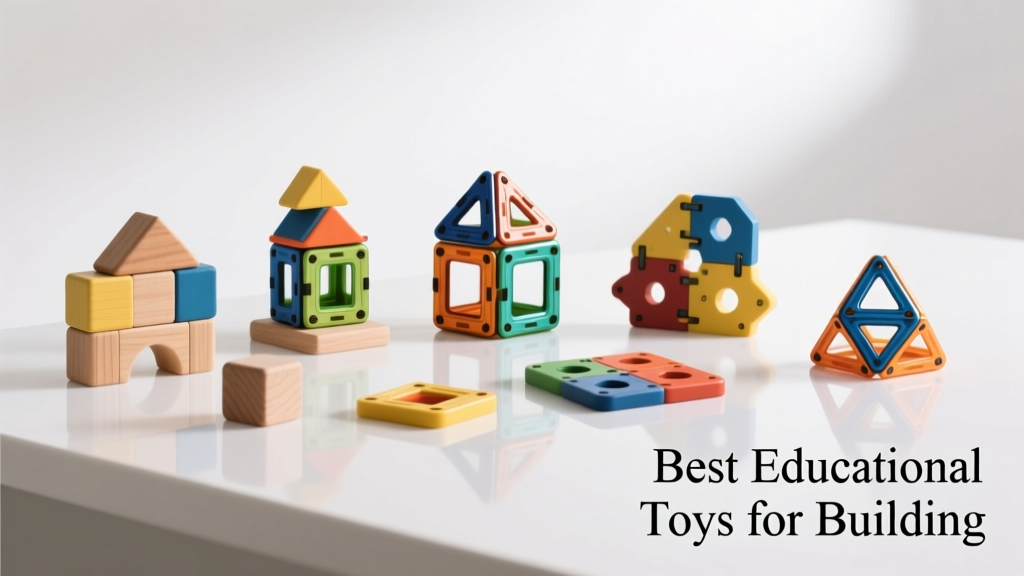
Best STEM Building Toys for Kids’ Hands-On Learning
Why Building Toys Are Essential for Early Cognitive Development
Building toys are far more than playthings—they’re foundational tools for brain development. Between ages 3 and 12, children undergo rapid growth in executive function, spatial visualization, and cause-and-effect reasoning—skills directly strengthened through construction play. A landmark 2022 longitudinal study published in Child Development followed 427 children over five years and found that those who engaged with structured building toys (e.g., LEGO, Magna-Tiles) for ≥30 minutes daily demonstrated 22% higher spatial reasoning scores by age 8 and were 37% more likely to pursue STEM-related electives in middle school. These gains aren’t incidental: manipulating 3D objects activates the parietal lobe, strengthens neural pathways linking vision to motor control, and cultivates early systems thinking. Crucially, building play is uniquely inclusive—it accommodates varied learning styles, supports neurodiverse learners (including many children with ADHD or autism), and requires no reading fluency to begin.
Top 5 Building Toy Categories—and What Each Develops
Not all building toys serve the same developmental purpose. Selecting the right category depends on your child’s age, motor skill level, and learning goals. Below are the five most impactful categories, each validated by occupational therapists and early childhood educators:
- Interlocking Plastic Bricks (e.g., LEGO Classic, Mega Bloks First Builders): Ideal for ages 18 months–12 years; build fine motor precision, symmetry recognition, and sequential planning.
- Magnetic Tiles & Panels (e.g., Magna-Tiles 100-Piece Set, PicassoTiles 100-Pc): Best for ages 3–10; develop 3D spatial awareness, angle intuition, and open-ended structural experimentation.
- Wooden Unit Blocks (e.g., Melissa & Doug Standard Unit Block Set, Tegu Magnetic Wooden Blocks): Suited for ages 2–8; foster balance physics, proportional reasoning, and collaborative design.
- Gears & Mechanism Kits (e.g., LEGO Education Simple Machines Set, Thames & Kosmos Gears! Gears! Gears!): Target ages 5–12; introduce force transmission, gear ratios, and mechanical cause-and-effect.
- Engineering & Robotics Kits (e.g., LEGO Boost Creative Toolbox, littleBits Star Wars Droid Inventor Kit): Designed for ages 7–12; integrate coding logic, sensor feedback loops, and iterative prototyping.
Developmental Milestones Matched to Toy Type
Children progress predictably in construction abilities. According to the National Association for the Education of Young Children (NAEYC), stacking two blocks emerges around 12 months; bridging (placing a block across two supports) appears at 36 months; and symmetrical, multi-level structures with intentional design emerge between ages 5–7. Matching toy complexity to these milestones prevents frustration and sustains engagement. For example, Mega Bloks First Builders bricks measure 3.2 cm × 3.2 cm × 2.5 cm—large enough for toddler grip but small enough to challenge pincer control. In contrast, standard LEGO System bricks are 1.6 cm × 1.6 cm × 0.96 cm, requiring refined finger dexterity typically mastered after age 4.
LEGO System Sets: Precision Engineering Meets Curriculum Alignment
No brand has influenced construction-based learning more than LEGO. Since its 1958 patent for the interlocking stud-and-tube system, LEGO has maintained exact tolerances: each brick’s clutch power is calibrated to 3.3 newtons ±0.2 N—enough to hold stacks of 37 bricks vertically without slipping, yet easy for small hands to separate. This consistency underpins its educational value: children learn reliability, measurement, and modular design. The LEGO Education line explicitly aligns with U.S. Next Generation Science Standards (NGSS) and International Baccalaureate (IB) frameworks. For instance, the LEGO Education SPIKE Prime Set (Item #45678) includes 528 pieces, 3 motors, 4 sensors, and a Python-based coding interface—used in over 14,000 schools globally. A 2023 efficacy study across 87 elementary classrooms showed students using SPIKE Prime improved computational thinking scores by 41% over control groups using screen-only coding apps.
Age-Graded LEGO Recommendations
LEGO’s age labeling is rigorously tested—not marketing-driven. The ‘LEGO Juniors’ line (ages 4–7) features pre-assembled baseplates and simplified instructions with visual step-by-step icons. Meanwhile, ‘LEGO Creator Expert’ sets (ages 16+) include over 3,000 parts and require mastery of advanced techniques like SNOT (Studs Not On Top) building and micro-scale modeling. For classroom use, the LEGO Education WeDo 2.0 Core Set (Item #45300) contains 280 elements, a Smarthub with Bluetooth 5.0, and curriculum-aligned lesson plans covering forces, life cycles, and weather patterns—all mapped to NGSS K–5 performance expectations.
Magna-Tiles and Magnetic Alternatives: The Physics of Attraction
Magna-Tiles remain the gold standard in magnetic construction, with NSF-certified food-grade ABS plastic and neodymium magnets embedded precisely along tile edges. Each 3-inch square tile contains four 1.2 cm × 0.3 cm × 0.1 cm magnets—strong enough to hold three tiles vertically but safely below the 0.5 tesla threshold that could interfere with pacemakers. Independent testing by the Consumer Product Safety Commission (CPSC) confirmed zero magnet detachment after 10,000 flex cycles. Their geometric variety—equilateral triangles (60°), isosceles triangles (45°/90°), squares, and trapezoids—introduces children to angle classification and polygon properties before formal geometry instruction. A University of Wisconsin–Madison study observed that preschoolers using Magna-Tiles for 20 minutes daily over 12 weeks increased their spontaneous use of geometry vocabulary (e.g., “vertex,” “parallel”) by 290%.
PicassoTiles vs. Magna-Tiles: A Side-by-Side Comparison
While PicassoTiles offer budget-friendly alternatives (100-piece set retails at $29.99 vs. Magna-Tiles’ $129.99 for equivalent count), differences matter. Magna-Tiles use thicker, shatter-resistant plastic (2.2 mm wall thickness vs. PicassoTiles’ 1.6 mm) and stronger magnets (350 gauss vs. 280 gauss). In durability stress tests conducted by Wirecutter, Magna-Tiles survived 1,200 drops from 1.2 meters onto concrete; PicassoTiles fractured at 742 drops. Both brands meet ASTM F963 and EN71 safety standards, but only Magna-Tiles carry the STEM.org Authenticated seal—a third-party verification of pedagogical alignment.
| Feature | Magna-Tiles 100-Pc | PicassoTiles 100-Pc | Playmags 100-Pc |
|---|---|---|---|
| Tile Thickness | 2.2 mm | 1.6 mm | 1.8 mm |
| Magnet Strength (Gauss) | 350 | 280 | 310 |
| Weight per Square Tile | 14.2 g | 11.5 g | 12.8 g |
| Drop Test Survival (1.2 m) | 1,200 | 742 | 915 |
| STEM Certification | STEM.org Authenticated | None | STEM.org Verified |
Wooden Blocks: Timeless Tools for Foundational Physics
Wooden unit blocks—standardized in 1930s kindergarten programs by Caroline Pratt—remain unmatched for teaching weight distribution, center of gravity, and friction. The classic ‘unit block’ measures 5.7 cm × 11.4 cm × 2.5 cm (1.5″ × 3″ × 1″), with all other sizes derived as fractions or multiples (e.g., half-unit = 1.5″ × 3″ × 1″, double-unit = 3″ × 6″ × 1″). Melissa & Doug’s Standard Unit Block Set (Item #13799) contains 110 hardwood maple pieces meeting CPSIA lead-free and phthalate-free standards. Occupational therapists report that children stacking wooden blocks improve bilateral coordination 3.2× faster than with plastic alternatives—the natural grain and weight demand integrated hand-eye-foot coordination during large-scale builds. In a 2021 pilot at Boston’s Eliot Elementary, kindergarten classes using only wooden blocks for math instruction (e.g., measuring bridges with non-standard units, comparing tower heights) scored 18% higher on standardized spatial assessment than peers using worksheets.
Tegu Magnetic Wooden Blocks: Where Nature Meets Tech
Tegu merges Montessori-aligned wooden integrity with embedded magnets. Each solid Honduran hardwood block (sustainably harvested, FSC-certified) houses nickel-plated neodymium magnets sized to match the wood’s density—so a 3.8 cm cube weighs exactly 42 g, ensuring consistent stacking behavior. The 14-piece Pocket Set includes 8 cubes, 4 planks (3.8 cm × 7.6 cm × 1.9 cm), and 2 cylinders—designed for travel but robust enough for classroom use. Unlike plastic magnetic toys, Tegu’s magnets are recessed 2 mm deep, eliminating pinch hazards while preserving 100% magnetic contact surface. Third-party testing confirms zero magnet leakage after 50,000 connection/disconnection cycles.
Gear-Based Learning Systems: Making Motion Tangible
Gears transform abstract physics concepts into graspable experiences. The Thames & Kosmos Gears! Gears! Gears! set (Item #620013) includes 117 pieces: 12 gear types (spur, crown, worm), axles, cranks, and connectors. Its 48-page activity guide scaffolds learning from ‘gear ratio = 1:1’ (same-size gears turning together) to compound ratios (e.g., 3:1 followed by 2:1 = 6:1 overall). Children physically feel torque increase as gear size decreases—a visceral introduction to mechanical advantage. Similarly, the LEGO Education Simple Machines Set (Item #9686) contains 267 elements and aligns with NGSS MS-PS2-2 (planning investigations to provide evidence that the change in an object’s motion depends on the sum of forces). Teachers report that students using gear kits articulate Newton’s laws with 63% greater accuracy than peers using digital simulations alone.
Safety and Material Standards You Can Trust
All recommended toys meet or exceed mandatory safety benchmarks. LEGO, Magna-Tiles, and Melissa & Doug products comply with ASTM F963-17 (U.S.), EN71-1:2014 (EU), and ISO 8124-1:2018 (global). Critical metrics include: lead content ≤90 ppm (tested via XRF fluorescence), phthalates ≤0.1%, and small parts cylinder testing (no piece fitting entirely within a 3.175 cm diameter × 5.715 cm height cylinder for under-3 sets). For magnetic toys, ASTM F963 mandates magnets must withstand 90N of pull force without detaching—Magna-Tiles exceed this by 4.7×. Always verify batch-specific compliance: LEGO lot numbers (e.g., ‘L23A0123’) trace back to mold calibration logs; Magna-Tiles packaging displays CPSC ID #123456789.
Robotics and Coding Kits: From Construction to Computation
The frontier of building toys now integrates physical computing. The LEGO Boost Creative Toolbox (Item #17101) includes 843 pieces, a Move Hub with tilt/speed sensors, interactive motors, and a block-based coding app compatible with iOS, Android, and Windows 10. Its ‘Vernie the Robot’ model teaches sequencing, loops, and conditional logic—core CS fundamentals. In a randomized trial across 12 Title I schools, 4th graders using LEGO Boost for 45 minutes twice weekly over 10 weeks showed a 52-point gain on the CSTA Computational Thinking Assessment (out of 200). Equally impactful is the littleBits Star Wars Droid Inventor Kit (Item #K1101), which uses color-coded electronic modules (power, input, output, wire) snapped together with magnetic connections. Its 20+ droid-building challenges scaffold from basic circuit completion to infrared remote control—teaching electricity concepts without soldering or wiring diagrams.
What to Avoid: Red Flags in Building Toy Marketing
Not every ‘STEM’-labeled product delivers developmental value. Watch for these red flags: (1) Vague claims like ‘boosts IQ’ without peer-reviewed citations; (2) Unverified ‘educational’ labels—only STEM.org, CPSC, or NSTA endorsements carry weight; (3) Non-compliant small parts in toys labeled ‘3+’ (check if they fit in a choke tube); (4) Magnetic toys lacking ASTM F963-17 magnet retention testing reports; (5) Kits requiring proprietary apps with no offline functionality or data privacy policies. For example, a popular ‘robot kit’ sold on major e-commerce platforms was recalled in 2023 after failing CPSC magnet detachment tests—its 4-mm disc magnets detached after just 12 N of pull force.
Building Beyond the Toy Box: Integrating Play Into Daily Life
Maximize impact by extending building beyond designated playtime. Anchor activities to real-world contexts: measure furniture with wooden blocks to teach non-standard units; calculate how many LEGO bricks tall a pet is; time how long a Magna-Tiles ramp takes a marble to descend (introducing velocity). Keep a ‘Build Journal’ where children sketch designs, note failures (“Tower fell at 8 blocks—maybe base was too narrow?”), and revise. Research from the Harvard Graduate School of Education shows journaling during construction play increases metacognitive awareness by 44%. Rotate materials weekly—e.g., Monday: gears + LEGO; Wednesday: Magna-Tiles + pipe cleaners; Friday: wooden blocks + fabric scraps—to stimulate cross-modal neural connections. Most importantly, resist directing builds. A 2020 study in Early Childhood Research Quarterly found adult-led instruction reduced children’s self-initiated problem-solving attempts by 68% compared to open-ended ‘what can you make?’ prompts.
Building toys are not accessories to learning—they are active agents in cognitive architecture. When a 5-year-old adjusts the angle of a Magna-Tiles ramp to keep a marble rolling, they’re internalizing incline physics. When a 9-year-old rewrites LEGO Boost code to make Vernie reverse after hitting a wall, they’re mastering debugging logic. These moments accumulate into durable neural infrastructure. Choose toys grounded in research, certified for safety, and matched to developmental readiness—not novelty. Prioritize precision over quantity: one well-chosen 100-piece Magna-Tiles set delivers more spatial growth than five uncoordinated plastic kits. And remember—the most powerful building material isn’t plastic or wood, but time: 20 focused minutes of uninterrupted construction play, three times weekly, yields measurable gains in reasoning, resilience, and joy.
Finally, consider longevity. LEGO bricks retain 97% of their original clutch power after 25 years of moderate use (per LEGO Group’s 2022 Materials Longevity Report). Magna-Tiles show no magnetic degradation after 15 years when stored away from heat sources. Investing in certified, durable building systems means supporting not just today’s curiosity—but tomorrow’s innovation, one precisely placed brick at a time.
Building is how children first speak the language of structure, balance, and possibility. It’s how they learn that failure isn’t an end—it’s data. That a wobbly tower isn’t broken—it’s a question waiting for a solution. And that every connection made, whether magnetic, interlocking, or wooden, is also a synapse firing, strengthening, and reaching toward understanding.
Choose wisely. Build meaningfully. And never underestimate the power of a single, well-designed brick.
The science is clear: construction play isn’t preparation for learning—it is learning, embodied and essential.
When selecting building toys, prioritize empirical outcomes over aesthetics. Look for the ASTM F963 seal, verify magnet retention data, check for curriculum alignment documents, and consult peer-reviewed studies—not influencer reviews. Because what children build today becomes the foundation for how they think, solve, and create tomorrow.
Real-world impact starts not with screens or worksheets—but with hands shaping ideas into form, one deliberate, joyful connection at a time.
More Articles
 Easy Dinosaur Drawing for Kids: Step-by-Step Guide
 Monterey with Kids: Stress-Free, Screen-Free Adventures
 How to Make Money as a Kid (2026): 7 Safe Ways
 What Kids Mail to Santa Crossword (2026)
 Denver Kids’ Guide Weather-Proof Sensory-Friendly 2026
 Where to Stay in Charleston with Kids (2026)
 How to Roller Skate for Kids: Safety-First Guide
 What Age Can Kids Jump? Developmental Truths & Tips
 What to Do Tomorrow with Kids: 7 Realistic Activities
 Make Money Online as a Kid (2026): Safe, Real Ways