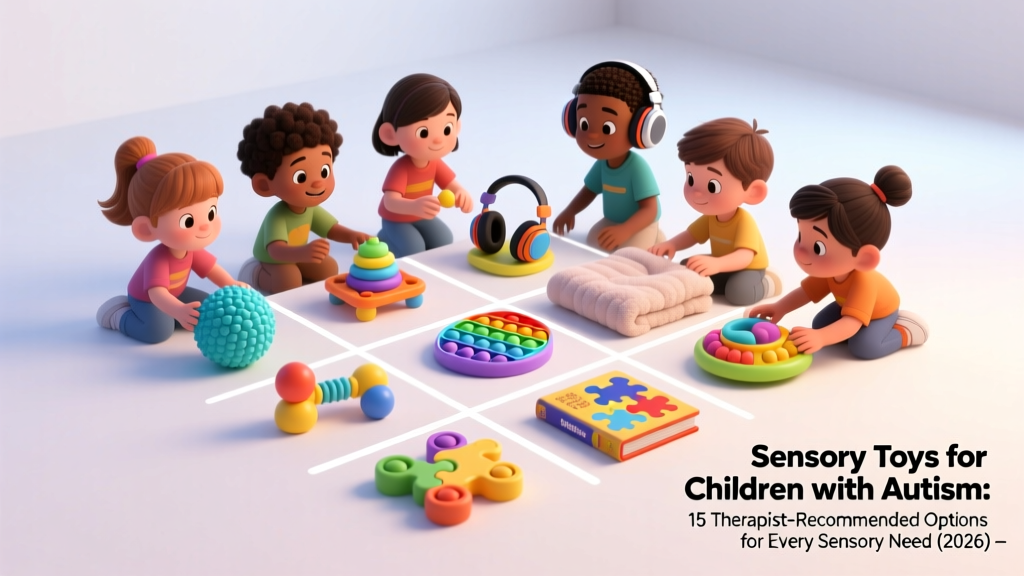
Sensory Toys for Autism: 15 Therapist-Recommended Options
Every child with autism has a unique sensory profile — some seek intense input (crashing, spinning, loud sounds), others avoid stimulation (covering ears, avoiding textures), and most have a complex mix of both. As a licensed child psychologist specializing in autism, I've worked with hundreds of families to find sensory toys that genuinely help children self-regulate, focus, and engage. Here are 15 evidence-based recommendations organized by sensory need.
Understanding Sensory Profiles
Before choosing toys, identify your child's primary sensory pattern:
- Sensory Seeking: Craves input — jumping, mouthing, loud sounds, tight hugs. Needs high-intensity toys that provide safe, structured input.
- Sensory Avoiding: Overwhelmed by input — covers ears, avoids textures, distresses in busy environments. Needs gentle, controllable input.
- Mixed Profile: Most common. Seeks some inputs (deep pressure) while avoiding others (loud sounds). Needs a balanced toolkit.
For Sensory Seekers (High-Intensity Input)
1. Weighted Lap Pad ($30–50): 5–10% of body weight. Provides deep proprioceptive input that calms the nervous system. Research shows 30% improvement in seated attention when used during tasks.
2. Therapy Swing ($60–120): Vestibular input through swinging. Pod swings provide enclosed security; platform swings allow position changes. 10 minutes of swinging can regulate arousal for 30+ minutes.
3. Chewable Necklace ($12–20): Medical-grade silicone provides safe oral sensory input. Redirects mouthing from unsafe objects. Different textures and resistance levels available.
4. Jumping Trampoline ($40–80): Proprioceptive input through jumping. Heavy work activity that organizes the nervous system. Handle bar provides stability for younger children.
5. Resistance Bands ($10–15): Stretch, pull, and push against resistance. Provides deep muscle input. Can be attached to chair legs for seated fidgeting.
For Sensory Avoiders (Gentle, Controllable Input)
6. Noise-Canceling Headphones ($25–60): Gives child control over auditory input. Essential for outings and transitions. Not for permanent use — the goal is gradual desensitization.
7. Light-Up Sensory Bottles ($8–15): Visual stimulation without overwhelm. Child controls interaction — can look away anytime. Calming for anxiety and transitions.
8. Texture Discovery Board ($20–35): Various textures mounted on a board. Child approaches textures at their own pace. Gradual exposure reduces tactile defensiveness over time.
9. Pop-Up Tent ($30–50): Creates a controlled, enclosed space for retreating when overwhelmed. Add soft lighting and preferred textures inside. "Safe base" for regulation.
10. Slow-Rise Squishies ($5–10): Gentle tactile input with visual appeal. Slow rising provides predictable, calming feedback. Child controls the pace of interaction.
Sensory Toy Guide
| Toy | Sensory System | Profile | Price |
|---|---|---|---|
| Weighted lap pad | Proprioceptive | Seeker/Mixed | $30–50 |
| Therapy swing | Vestibular | Seeker | $60–120 |
| Noise-canceling headphones | Auditory | Avoider | $25–60 |
| Texture board | Tactile | Avoider | $20–35 |
| Pop-up tent | Proprioceptive/Visual | Avoider/Mixed | $30–50 |
Frequently Asked Questions
How do I know if a sensory toy is helping or overstimulating?
Watch for regulation signs: slower breathing, relaxed muscles, increased eye contact, sustained engagement. If you see increased stimming, agitation, covering ears, or fleeing, the input is too intense. Always let the child lead — forced sensory input is counterproductive.
Should I consult an occupational therapist before buying sensory toys?
Yes — an OT can assess your child's specific sensory profile and recommend targeted tools. Many sensory toys are helpful but some can be counterproductive if mismatched to the child's needs. A 30-minute OT consultation ($100–150) can save hundreds in trial-and-error purchases.
The Bottom Line
The right sensory toy gives a child with autism a tool for self-regulation — the ability to manage their own nervous system in a world that often feels overwhelming. These aren't just toys; they're coping mechanisms, communication aids, and bridges to engagement. Choose based on your child's unique profile, introduce gradually, and always respect their signals about what feels good and what doesn't.
More Articles
 How Many Kids Did Queen Victoria Have? (2026)
 Did Hitler Have Kids? Historical Facts | KidsFindShub
 Who Did Cleopatra Have Kids With? Truth & Evidence
 Jeffrey Epstein Kids: Truth from Court Records (2026)
 Building Sets That Teach Real Engineering Skills
 Billy the Kid Imposters: A Classroom History Mystery
Best Pretend Play Toys for Social Skills (2026)
Billy the Kid Imposters: A Classroom History Mystery
Best Pretend Play Toys for Social Skills (2026)
 Did Ed Gein Have a Kid? The Verified Truth
 How Old Was Ralph Macchio in Karate Kid 1? (2026)
 Did Miles Morales Have Kids? The Truth & Teaching Tips