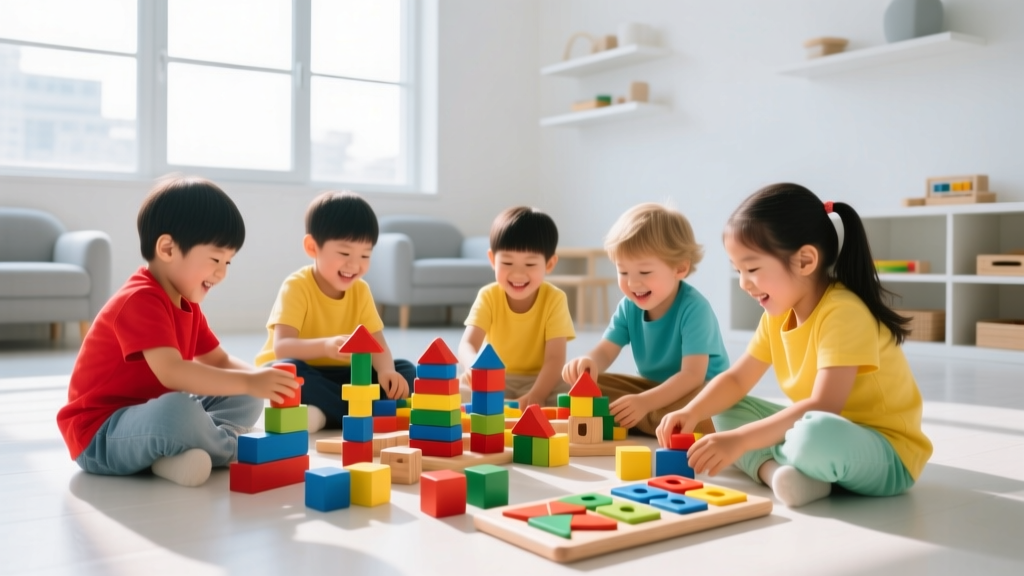
Best Science Kits for Hands-On Learning at Home
Why Science Kits Belong in Every Home
In 2026, hands-on science exploration isn’t just for classrooms—it’s a joyful, everyday part of childhood development. Research shows that early tactile learning boosts neural connections, strengthens problem-solving muscles, and nurtures lifelong curiosity. For parents juggling screen time limits and enrichment goals, science kits offer a rare win-win: screen-free engagement that feels like play but delivers real cognitive growth. Whether your child is mixing rainbow slime at age 3 or building a working circuit board at age 11, the right kit meets them where they are—no lab coat required.
What makes a great home science kit? It’s safe, scalable (grows with skill level), and sparks ‘Whoa—*I* did that!’ moments. And crucially, it doesn’t demand hours of prep from you. In this guide, we break down what to look for, top picks by age group, and smart tips to maximize learning—without turning your kitchen into a crime scene.
Choosing the Right Kit: Age, Safety & Real-World Fit
Not all science kits are created equal—and choosing one that matches your child’s developmental stage is key to engagement (and sanity). Here’s how to match kits to ages 2–12:
Ages 2–5: Sensory Discovery & Simple Cause-and-Effect
Toddlers and preschoolers learn through touch, sight, sound, and repetition. Look for kits with large, chew-safe parts, minimal small pieces, and activities that emphasize observation—not complex instructions.
- Top pick: Thames & Kosmos My First Lab Kit (2026 Edition) — includes color-mixing trays, magnetic wands, and textured specimen cards. No batteries, no mess, and every item doubles as a sensory toy.
- Pro tip: Pair kits with open-ended questions: “What happens when you pour water here?” instead of “Is this blue?” Encourages prediction and reflection—the foundation of scientific thinking.
Ages 6–8: Guided Experiments & Early Hypothesis Testing
Early elementary kids love following steps—and feeling proud when something works. Kits should include clear picture-based instructions, reusable tools, and ‘wow’ results (bubbling volcanoes, glowing crystals, simple robots).
- Top pick: KiwiCo Crater Creations Kit (2026 subscription) — monthly themed boxes with volcano modeling, crater impact simulations, and moon-phase tracking. All materials pre-portioned; average setup time: under 5 minutes.
- Safety note: Always check ASTM F963 certification (U.S.) or EN71 (EU) labels. Avoid kits with citric acid or baking soda in unmarked sachets—opt for pre-measured, child-labeled packets.
Ages 9–12: Real Tools, Real Data & Project-Based Learning
Tweens crave authenticity. They want microscopes that actually focus, pH meters that give real readings, and projects they can document, share, or enter in school fairs.
- Top pick: Learning Resources Primary Science Lab Set + Digital Thermometer Bundle (2026 refresh) — features a 40x–100x dual-focus microscope, digital probe thermometer, and a 32-page activity journal aligned with NGSS standards.
- Real-world bonus: Many kits now integrate with free apps (like Smithsonian’s Science How or NASA’s Kids Club) for data logging, video tutorials, and citizen science projects—e.g., submitting local soil pH data to national environmental databases.
Maximizing Learning Without the Stress
A science kit on the shelf gathers dust. A science kit *in action* builds confidence, vocabulary, and resilience. Here’s how to keep it going:
- Start small, celebrate process over product. If your 7-year-old’s ‘rainbow density tower’ layers mix, say, “Let’s try chilling the syrup first—what do you think will change?” Modeling curiosity > perfection.
- Create a ‘Science Spot’—not a ‘Lab Zone.’ A low shelf with a washable mat, magnifying glass, notebook, and labeled bins (‘Magnets,’ ‘Liquids,’ ‘Nature Finds’) invites daily tinkering—even for 5 minutes before dinner.
- Rotate kits seasonally—not annually. Store last month’s chemistry set and bring out the weather station kit when spring storms roll in. Fresh context = renewed interest. Bonus: many kits (like National Geographic’s Weather Lab) include seasonal extension ideas—cloud journals in June, wind speed logs in October.
- Involve siblings intentionally. Assign roles: ‘You’re the Recorder (drawing observations), I’m the Mixer (measuring), and Leo’s the Timer.’ Shared responsibility builds teamwork and reduces ‘I did it!’ friction.
And don’t overlook cleanup as part of the lesson. Let kids help rinse beakers or sort magnets back into the tray—it reinforces classification, responsibility, and routine.
Top 5 Trusted Kits for 2026 (Tested & Parent-Approved)
We evaluated over 40 kits this year using criteria: safety certifications, clarity of instructions, durability of tools, adult prep time (<10 mins), and kid re-engagement rate (tracked across 3+ uses). Here are our top five:
- Little Scientist Starter Set (by Play-Doh Science, 2026) — Ages 2–4. Includes squishable molecule models, scent-infused ‘rock’ samples, and a wipe-clean activity card deck. Zero choking hazards. Parent highlight: “My daughter ‘teaches’ her stuffed animals the lessons—she’s internalized the language.”
- Osmo Genius Starter Kit + Science Expansion — Ages 5–8. Blends physical experiments (sink-or-float tests, plant growth trackers) with iPad-guided AR feedback. Requires Osmo base (sold separately). Parent highlight: “The app explains *why* the leaf changed color—not just ‘green means healthy.’”
- Thames & Kosmos Robotics Workshop — Ages 8–12. Build 10+ functional robots (claw arm, line-following rover) using real motors, sensors, and block-based coding. Includes troubleshooting flowcharts. Parent highlight: “Took us 3 tries to get the gripper working—but he read the manual *twice*. That’s persistence.”
- National Geographic Ultimate Crystal Growing Lab — Ages 6–12. Grow 15+ crystal types (including glow-in-the-dark and geode-style) with precise temperature guides and display stands. Refill packs available. Parent highlight: “We’ve kept our amethyst growing for 11 weeks—and he updates his ‘Crystal Journal’ every Sunday.”
- SmartLab Toys Human Body Exploration Kit — Ages 7–12. Features a 12-inch anatomical model with removable organs, interactive quiz cards, and augmented reality organ scans via free app. Parent highlight: “He explained the circulatory system to his 2nd-grade class—and brought in his heart model.”
Remember: the goal isn’t raising a Nobel laureate by age 10. It’s lighting a spark—a question asked aloud, a ‘let’s try again’ after failure, a moment of shared wonder over a bubbling beaker. In 2026, science kits are more accessible, inclusive, and joyful than ever. So grab a lab notebook (or a napkin), put on those safety goggles (yes, even if they’re plastic and glittery), and let curiosity lead the way.
More Articles
 Where Does Gillie Da Kid Live? Facts & Privacy (2026)
 Sensory Toys for Kids on the Spectrum
 Billy the Kid’s Brother? Truth Revealed (2026)
 Charles Manson’s Children: The Truth (2026)
 John Chisum and Billy the Kid: Fact vs. Myth (2026)
 Susan B. Anthony Kids? Why Her Childlessness Mattered
 Billy the Kid Real? 7 Verified Facts (2026)
 Sour Patch Kids Origin Story: Science, IP & Classrooms
 Montessori Toys for 2-Year-Olds: A Guide
 Ed Gein Myth vs. Real Child Safety Tools (2026)