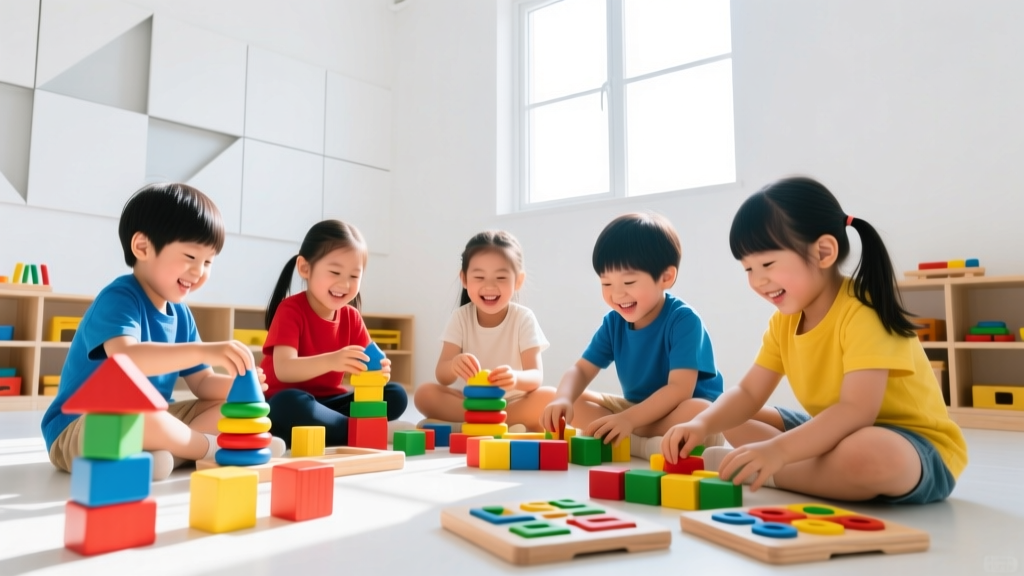
Puzzle Toys That Build Critical Thinking (2026)
How Puzzles Build Brains
Puzzle play activates multiple cognitive skills simultaneously: spatial reasoning, pattern recognition, working memory, and executive function. Studies show regular puzzle play correlates with stronger math skills and better problem-solving in school.
Top Puzzle Toys by Type
Logic Puzzles
Rush Hour (Ages 8+): Slide cars to free the red car from a traffic jam. 40 challenge cards from beginner to expert. Teaches sequential thinking and planning ahead.
Gravity Maze (Ages 8+): Build a marble run that matches the challenge card. Combines spatial reasoning with engineering. Multiple solutions possible for each challenge.
Color Sudoku (Ages 6+): Like number Sudoku but with colored pegs. No reading required, making it accessible to younger children while teaching the same logical principles.
Spatial Puzzles
Tangrams (Ages 5+): Seven geometric pieces that form thousands of shapes. Challenge cards show silhouettes to recreate. Develops geometric intuition and creative thinking.
Blokus (Ages 7+): Place tetris-like pieces on a board, touching only at corners. Strategic gameplay that teaches spatial planning and blocking. 2-4 players.
Pentago (Ages 8+): Tic-tac-toe on a rotating board. After each move, rotate one quadrant 90 degrees. Completely transforms strategy. Fast games, deep thinking.
3D Puzzles
Lego 3D Puzzles: Follow instructions to build complex models. The sequential building process teaches patience, attention to detail, and spatial visualization.
Wooden Puzzle Boxes: Solve mechanical puzzles to open hidden compartments. Each box uses a different mechanism. Builds persistence and systematic testing.
3D Crystal Puzzles: Interlocking plastic pieces form 3D objects. No glue needed. Develops spatial reasoning and fine motor control simultaneously.
Pattern Puzzles
Set Card Game (Ages 6+): Find sets of three cards where each feature is all the same or all different. Lightning-fast pattern recognition. Great for groups.
Pattern Play Blocks (Ages 4+): Recreate designs shown on cards using colored wooden blocks. Difficulty progresses from simple to complex. Builds visual discrimination.
Choosing the Right Difficulty
The puzzle should be challenging but solvable. If a child gets frustrated quickly, step down a level. If they solve it instantly, step up. The sweet spot is "hard enough to require effort, easy enough to eventually succeed."
Tips for Puzzle Time
Don't solve it for them — ask guiding questions instead. "What have you tried?" "What would happen if...?" Celebrate the process, not just completion. Keep a rotation of puzzles available to prevent boredom.
More Articles
 Kid Cudi in Court: What He Actually Said
 Choosing Educational Toys: A Research-Based Guide
 Ed Gein Kids? Forensic Truth Revealed
 Billy the Kid's First Crime Age: Shocking Truth (2026)
 How Did Billy the Kid Die? Fact vs. Myth (2026)
 How Many Kids Did Osama Bin Laden Have? (2026)
 June’s Kids in The Handmaid’s Tale: How Many?
 Who Do You Think You Are Kidding Mister Hitler (2026)
 Holocaust Children Deaths: Age-Appropriate Facts (2026)
 Butch Cassidy Death: Facts vs. Myth for Kids (2026)