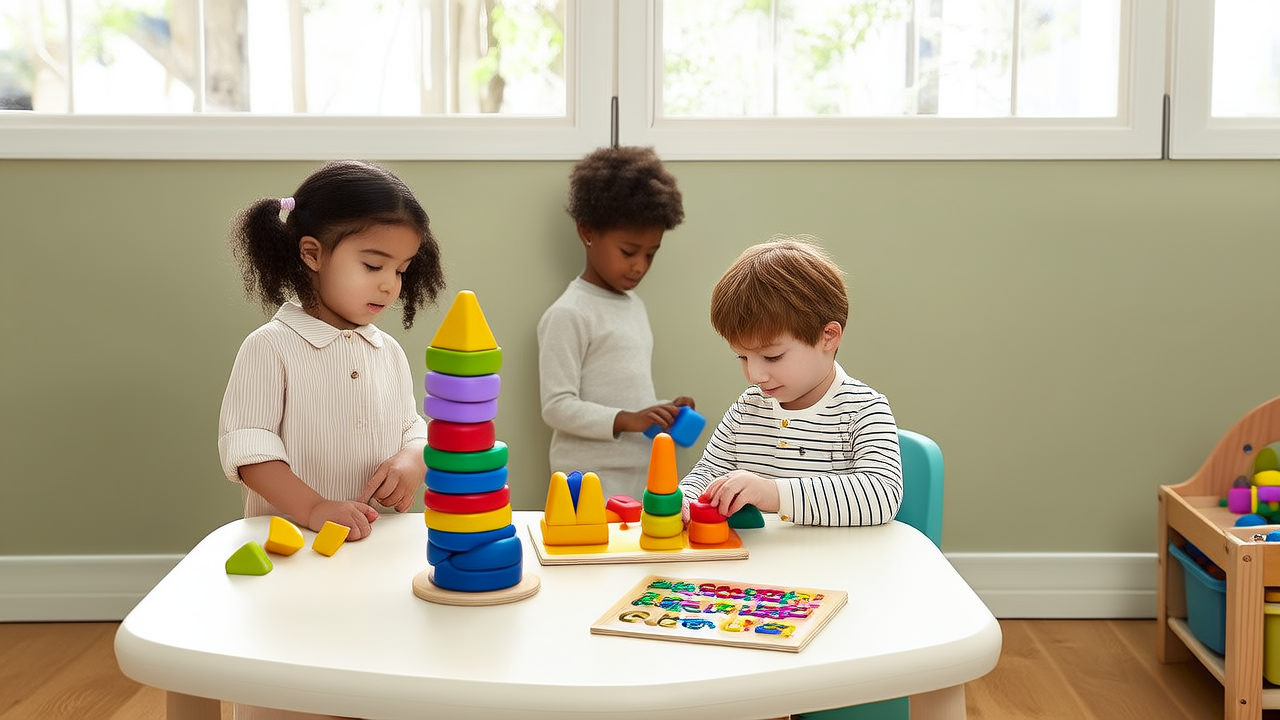
Puzzle Benefits for Child Development: A Guide
More Than Just a Quiet Activity
Puzzles are one of the most developmentally rich toys available. They simultaneously exercise spatial reasoning, fine motor skills, problem-solving strategies, and emotional regulation (persistence through frustration). Yet they're often undervalued as "just a rainy day activity."
Developmental Benefits
Cognitive Skills
- Spatial reasoning: Understanding how pieces fit and rotate in space
- Pattern recognition: Identifying colors, shapes, and edge patterns
- Problem-solving: Developing strategies (edges first, color sorting)
- Memory: Remembering piece shapes and where they might fit
Fine Motor Skills
Picking up, rotating, and placing puzzle pieces develops the pincer grip and hand-eye coordination essential for writing. Knobbed puzzles for toddlers are often recommended by occupational therapists.
Emotional Development
Puzzles teach delayed gratification (the picture isn't complete until the end), frustration tolerance (that piece doesn't fit — try another), and the satisfaction of completion.
Age-Appropriate Puzzle Guide
- 12-18 months: 3-5 piece knob puzzles with simple shapes
- 18-24 months: 5-10 piece peg puzzles with pictures underneath
- 2-3 years: 12-24 piece jigsaw puzzles with large pieces
- 3-4 years: 24-48 piece jigsaw puzzles
- 4-6 years: 48-100 piece puzzles
- 6-8 years: 100-300 piece puzzles, 3D puzzles
- 8+ years: 300-1000 piece puzzles, puzzle boxes, logic puzzles
Tips for Building Puzzle Skills
Start with puzzles slightly below the child's ability to build confidence. Sort pieces by edge/corner and color. Model your thinking aloud: "I'm looking for a blue piece with a flat edge." Celebrate effort, not just completion.
More Articles
 Shanks vs Kid Episode: Why It Doesn’t Exist
 Billy the Kid Survive? 5 Toy Myths
 Did Mary Have More Kids After Jesus? (2026)
 Best Evidence-Based Educational Toys for Early Learning
 Best Outdoor Play for Crafts
 Ed Gein Babysitting Myth: Truth & Critical Thinking Tools
 Sensory Bins: Montessori-Inspired Guide
 Outdoor vs Kirk: Toy Brand Comparison
 Kars for Kids: Educational Toys & Grants Explained
 Who Are Jeffrey Epstein’s Kids? The Truth (2026)