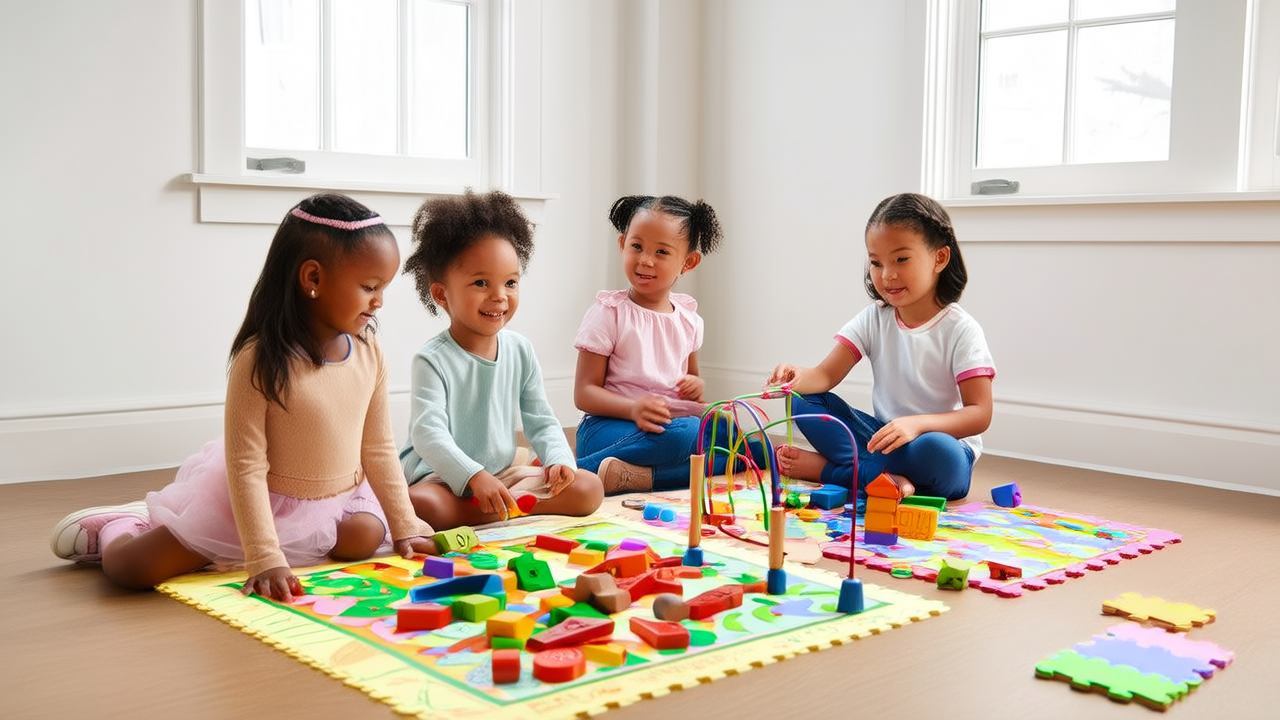
Open-Ended Toys: The Best Investment for Kids
What Are Open-Ended Toys?
Open-ended toys can be used in multiple ways with no single "correct" outcome. A block can be a car, a phone, a wall, or food. A silk scarf can be a cape, a river, a tent, or a baby blanket. These toys grow with the child and never become boring.
Best Open-Ended Toys
1. Wooden Blocks
The original open-ended toy. A set of 50-100 plain wooden blocks in various shapes provides years of play — from simple stacking at age 1 to elaborate architectural constructions at age 8+.
2. Play Silks
Large squares of lightweight fabric in various colors. Children use them as costumes, landscapes, building covers, doll blankets, and more. A set of 6-12 silks costs less than most electronic toys and outlasts all of them.
3. Loose Parts
Collections of natural or found objects: wooden rings, glass gems, shells, pinecones, pebbles, buttons. Children sort, arrange, count, build, and create stories with loose parts. No instructions needed.
4. Art Supplies
Blank paper, crayons, paint, clay, and scissors. Art materials are inherently open-ended — there's no "right way" to use them. Avoid coloring books (which provide the structure); blank paper lets children create their own.
5. Animal Figures
Realistic animal figures (Schleich, Safari Ltd) can populate farms, zoos, jungles, and stories. Unlike themed playsets, animals aren't tied to one narrative — children create their own worlds.
The "Fewer Toys" Principle
Research shows that children with fewer toys play more creatively and for longer periods. Too many options create decision fatigue and shallow engagement. Rotate toys — keep 8-10 accessible, store the rest, and swap every few weeks.
More Articles
 Tiananmen Square Lyrics for Kids: Global Learning Tips
 STEM Learning Essentials: Tools, Strategies, Foundations
 How Many Kids Did Marie Antoinette Have?
 How To Repair Start
 Where to Watch Billy the Kid: Better History Toys (2026)
 How Many Kids Does Zeus Have? Mythology Learning Kit
 Was Billy the Kid's Body Ever Found? (2026)
 Kid Cudi Wedding Dress Meaning: Mental Health & Art (2026)
 How Many Kids Did Benjamin Franklin Have?
 JoyBright for Kids: Safe & Effective? (2026)