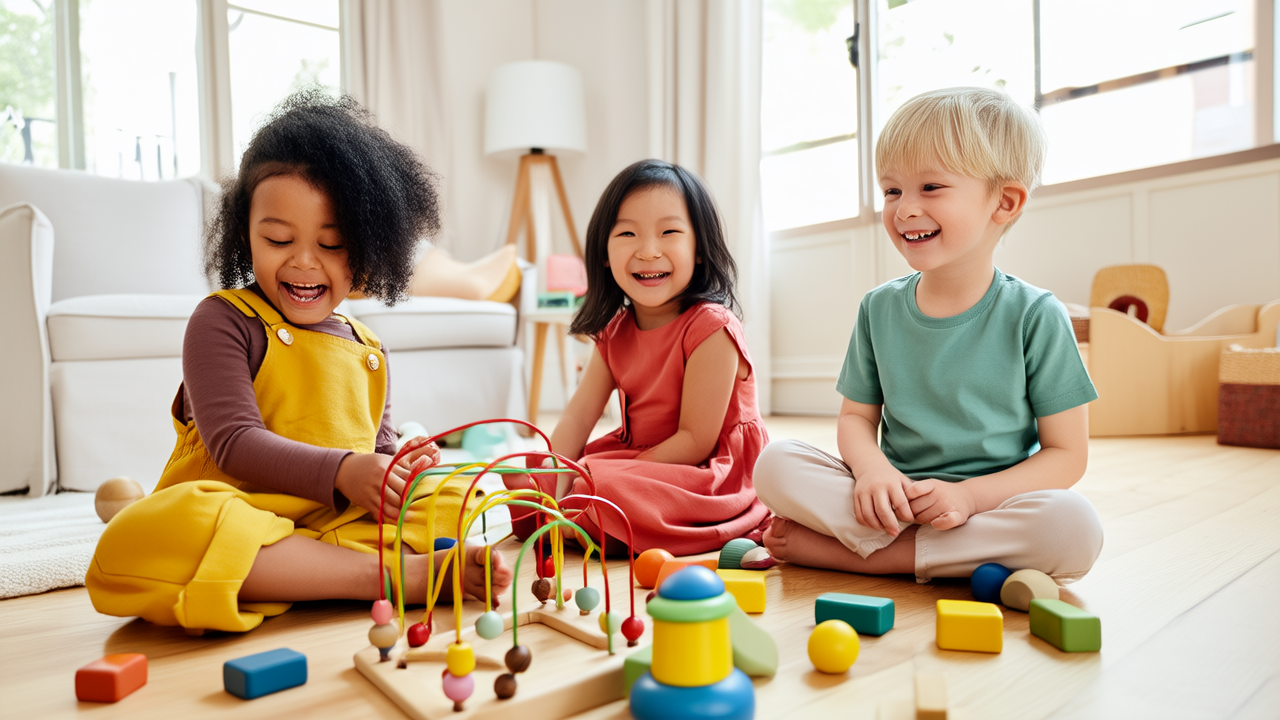
Montessori Toys: Practical Home Guide 2026
What Makes a Toy "Montessori"?
Montessori toys share key characteristics: they're made from natural materials, focus on one skill at a time, are self-correcting (the child can see their own mistake), and encourage independent play without adult direction.
Core Principles
- Real materials: Wood, metal, glass, fabric — not plastic
- Purposeful: Each toy teaches a specific concept or skill
- Self-correcting: The child discovers errors without adult help
- Beautiful: Aesthetically pleasing designs attract and hold attention
- Open-ended: Can be used in multiple ways
Essential Montessori Toys by Age
Infants (0-12 months)
Object permanence box, grasping toys (rattles, O-ball), mirror play, soft fabric books, and hanging mobiles with high-contrast patterns.
Toddlers (1-3 years)
Shape sorters, stacking toys, nesting cups, simple puzzles with knobs, posting activities, and practical life tools (small broom, watering can).
Preschool (3-6 years)
Number rods, sandpaper letters, movable alphabet, puzzle maps, botanical puzzles, and practical life materials like pouring sets and dressing frames.
Setting Up the Environment
Display toys on low, open shelves — not in toy boxes. Limit to 8-10 toys at a time and rotate weekly. Each toy should have its own designated space.
More Articles
 Billy the Kid Shot Pat Garrett? Truth Behind the Gunfight
 Solo Mio for Kids: Safety, Screen-Time & Red Flags (2026)
 Where Was Butch Cassidy And Sundance Kid Filmed
 Butch Cassidy Streaming Guide (2026)
 Queen Victoria’s Children: How Many & Why It Mattered
 Best Educational Toys for Kids (2026) | Brain-Boosting Picks
 Play-Based Learning vs Crafts for Early Development
 Where Did Billy the Kid Die? Truth & Teaching Tools
Best Montessori Toys for Toddlers in 2026
 Brushy Bill Roberts: Was He Billy the Kid? (2026)