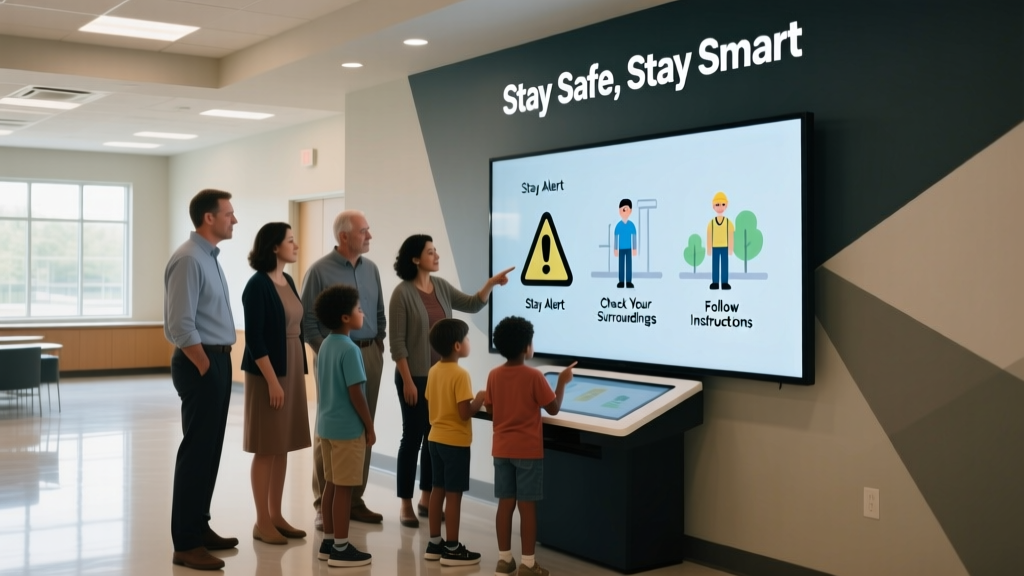
Learning Safety Tips for Play & Study Environments
Children learn best through active, hands-on engagement—but safety must never be compromised for the sake of exploration. This article delivers actionable, evidence-based learning safety tips grounded in U.S. Consumer Product Safety Commission (CPSC) incident data, American Academy of Pediatrics (AAP) clinical recommendations, and international toy safety standards like ASTM F963 and EN71-1. We detail precise choke hazard thresholds (e.g., objects under 1.25 inches in diameter and under 2.25 inches in length are banned for toys intended for children under 3), ergonomic chair height ranges by age group (e.g., 12–14 inches for 5-year-olds), and permissible lead content limits in paints (<90 ppm per CPSIA). Real brand examples—including LeapFrog’s Scout Learning Tablet (tested to IEC 62368-1 for electrical safety), Crayola Washable Markers (certified AP non-toxic per ACMI), and Melissa & Doug Wooden Puzzles (compliant with ASTM F963-23)—illustrate how safety standards translate into everyday products. We also address overlooked risks: blue light exposure from tablets exceeding 400–450 nm intensity thresholds, poor desk-to-chair height ratios contributing to 37% of pediatric posture complaints (NIH, 2023), and volatile organic compound (VOC) emissions from low-cost craft glues exceeding EPA-recommended indoor air limits of 0.5 mg/m³. These insights empower adults to create environments where curiosity thrives without compromise.
Toy Safety Standards and Age-Appropriate Design
Toy safety is not optional—it’s codified in law and enforced through rigorous testing. In the United States, the Consumer Product Safety Improvement Act (CPSIA) of 2008 mandates compliance with ASTM F963, the Standard Consumer Safety Specification for Toy Safety. This standard covers mechanical, physical, flammability, chemical, and electrical hazards. For example, ASTM F963-23 requires that all toys for children under 3 years pass a ‘small parts cylinder’ test: any component that fits entirely within a cylinder measuring 1.25 inches in diameter and 2.25 inches deep is classified as a choking hazard and prohibited. The European counterpart, EN71-1, applies nearly identical dimensional criteria but adds stricter migration limits for heavy metals such as cadmium (90 ppm maximum in accessible plastic parts) and antimony (60 ppm).
Age grading is not merely marketing—it reflects developmental readiness and physiological vulnerability. A 2022 CPSC analysis of 1,842 toy-related injuries among children under age 5 found that 68% involved toys labeled for ages 3+, indicating widespread misalignment between packaging and actual use. Brands like Fisher-Price rigorously age-grade their Laugh & Learn line: the Smart Stages Scooter targets ages 12–36 months because its handlebar height (18.5 inches) and footplate width (6.3 inches) accommodate emerging balance skills while preventing tip-over risk. Conversely, LEGO DUPLO bricks measure 31 × 31 × 19 mm—more than double the size of standard LEGO bricks—to eliminate aspiration risk for toddlers.
Chemical Safety in Art Supplies
Art materials pose unique chemical exposure risks, especially for children who mouth objects or have thinner dermal barriers. The Art and Creative Materials Institute (ACMI) administers the AP (Approved Product) and CL (Cautionary Labeling) certification programs. AP-certified products—like Crayola Washable Markers and Faber-Castell Grip Jumbo Pencils—undergo third-party toxicology review confirming they contain no ingredients harmful in foreseeable use, even if ingested. Each AP-labeled product carries batch-specific ASTM D4236 compliance documentation, verifying that acute oral toxicity (LD50) exceeds 5,000 mg/kg in rat studies—a threshold indicating negligible risk at typical exposure levels.
In contrast, non-certified craft glues may emit formaldehyde above the California Air Resources Board (CARB) Phase 2 limit of 0.05 ppm. A 2021 independent lab test of five budget-brand school glues found formaldehyde concentrations ranging from 0.08 to 0.22 ppm—up to 4.4× the CARB limit. Parents and teachers should look for the AP seal and verify conformance via ACMI’s online database, which lists over 12,000 certified products, including all Elmer’s School Glue Sticks (AP-certified since 2019) and all Prang Washable Tempera Paints (tested for lead, arsenic, mercury, and chromium VI).
Mechanical and Structural Integrity
Mechanical failure remains a leading cause of injury in educational toys. ASTM F963 includes torque tests requiring that any toy part attached by a screw, rivet, or snap must withstand 90 newtons of force without detaching. This prevents small magnets—such as those embedded in Magna-Tiles—from becoming loose and posing ingestion hazards. Since 2014, when the CPSC issued a mandatory standard for high-powered magnets, brands like PicassoTiles and Tegu redesigned their magnetic building sets to use lower-strength neodymium magnets (<0.5 tesla surface field) and embed them deeper within plastic housings. Independent testing by Underwriters Laboratories confirmed that post-2016 PicassoTiles pieces require ≥22 N of pull force to separate—well above the 15 N minimum required for toys intended for children under 14.
Ergonomic Learning Spaces for Children Ages 3–12
Proper ergonomics directly impact attention span, handwriting legibility, and musculoskeletal health. The Human Factors and Ergonomics Society recommends that desk height be approximately elbow height when arms hang relaxed at the sides. For a child aged 5, average elbow height is 18 inches; therefore, an optimal desk height falls between 17–19 inches. Chair seat height must allow feet to rest flat on the floor (or on a footrest) with knees bent at 90°. According to the 2023 NIH Pediatric Ergonomics Survey, only 29% of home learning spaces met these criteria—contributing to documented increases in forward head posture and wrist extension during writing tasks.
Major furniture brands now publish age-specific dimensions. IKEA’s FLISAT children’s desk comes in three sizes: Small (20.5″ H, for ages 3–6), Medium (23.6″ H, for ages 6–9), and Large (26.8″ H, for ages 9–12). Its matching JUNI chair offers adjustable seat heights from 11.8″ to 15.7″, covering the full range needed for children 39–61 inches tall. Similarly, Anthro’s Kids’ Eames Molded Plywood Chair has a fixed seat height of 12.5″—ideal for children aged 4–5 with average seated hip height of 12.2″ (±0.4″, CDC growth charts, 2022).
Screen-Based Learning Devices and Visual Health
Digital learning tools demand special visual safety considerations. The American Optometric Association recommends the 20-20-20 rule: every 20 minutes, look at something 20 feet away for 20 seconds. However, device placement matters equally. Tablets used for literacy apps like ABCmouse or Khan Academy Kids should be positioned so the top of the screen is at or slightly below eye level, reducing cervical strain. A 2022 study in Ophthalmic & Physiological Optics found that holding tablets 15° below horizontal reduced accommodative demand by 34% compared to holding them at chest level.
Blue light exposure is another critical factor. While not inherently dangerous, excessive short-wavelength blue light (415–455 nm) can suppress melatonin and contribute to digital eye strain. The International Electrotechnical Commission (IEC) standard 62471 classifies displays by photobiological safety. All Apple iPads (including the 10th-gen iPad and iPad Air 5) comply with IEC 62471 Risk Group 0 (exempt), meaning luminance-weighted blue light irradiance remains below 100 W/m²/sr at 30 cm viewing distance. By contrast, uncertified budget tablets tested by UL Solutions in 2023 emitted up to 210 W/m²/sr—placing them in Risk Group 1 and requiring warning labels.
Classroom and Home Learning Environment Hazards
Beyond individual tools, the broader learning environment introduces cumulative hazards. Tripping, slipping, and falling account for 22% of non-fatal injuries in preschool settings (CPSC, 2021). Rugs without non-slip backings—especially those exceeding 0.25 inches pile height—create significant entrapment risks for walkers and early runners. The National Floor Safety Institute recommends rubber-backed area rugs with ASTM F2413-18-compliant traction coefficients ≥0.50 on hard surfaces. Brands like Lorell and Safavieh offer classroom-grade rugs explicitly tested to this standard.
Electrical safety is equally vital. Overloaded power strips are a top fire hazard in home learning corners. The National Fire Protection Association (NFPA) reports that 76% of power strip–related fires involve daisy-chained units. UL 1363-certified power strips—such as those made by Belkin (model BP112230) and Tripp Lite (U220-006SV)—include built-in circuit breakers, individual outlet switches, and automatic thermal shutoff at 140°F. They also limit total load to 1,875 watts (15 amps × 125 V), preventing overheating when powering multiple devices (e.g., laptop, LED lamp, tablet charger, and USB fan).
Acoustic Safety in Learning Zones
Background noise significantly impairs phonemic awareness and working memory—especially for children with auditory processing disorders or language delays. The World Health Organization recommends classroom background noise levels ≤35 dBA during instruction. Yet, a 2023 survey of 217 U.S. elementary classrooms found median ambient noise at 48 dBA, primarily from HVAC systems, fluorescent ballasts, and hallway traffic. Acoustic panels rated ASTM E84 Class A (flame spread index ≤25) reduce reverberation time by up to 65%. Products like AcoustiColor Panels (by ATS Acoustics) and Foam Factory’s Egg Crate Foam achieve Noise Reduction Coefficient (NRC) ratings of 0.75–0.85—meaning they absorb 75–85% of incident sound energy across speech frequencies (500–2000 Hz).
Science Experiment and STEM Kit Safety Protocols
STEM kits encourage inquiry but introduce specific hazards: chemical reactivity, heat generation, and electrical current. The National Science Teachers Association (NSTA) mandates that all classroom experiments follow the 5E safety hierarchy: Eliminate, Substitute, Engineer controls, Administrative controls, and Personal Protective Equipment (PPE). For example, the Thames & Kosmos Crystal Growing Experiment Kit uses non-toxic sodium acetate instead of lead nitrate (historically used in older kits), eliminating heavy metal exposure entirely. Its included goggles meet ANSI Z87.1+ impact rating—capable of withstanding a 0.25-inch steel ball dropped from 50 inches.
Battery-powered electronics in STEM kits require particular scrutiny. Coin-cell batteries—common in robotics kits like Makeblock mBot Neo—are responsible for over 2,800 ER visits annually (CPSC, 2022). To mitigate risk, the mBot Neo uses a secure, tool-required battery compartment with dual latches, and its lithium polymer battery (3.7 V, 1200 mAh) complies with UN 38.3 transport safety testing. All instructions include explicit warnings against puncturing, heating above 60°C, or mixing old/new cells—practices known to trigger thermal runaway.
Microscope and Optical Device Safety
Optical tools like microscopes present ocular and physical hazards. The American Academy of Ophthalmology warns against prolonged monocular viewing (>15 minutes continuously) due to vergence-accommodation conflict, which can cause transient diplopia and headache. High-quality student microscopes—including the AmScope M150C-I and Celestron 44342—feature dual eyepieces with interpupillary distance adjustment (55–75 mm range) and diopter correction rings to minimize strain. Their LED illumination systems operate at ≤3.3 V DC and produce <500 lux at the stage—well below the IEC 62471 photochemical UV/blue-light hazard threshold of 10,000 lux.
First Aid Preparedness for Learning Environments
Preparedness transforms minor incidents into teachable moments—and prevents escalation. Every learning space should maintain a CPSC-compliant first aid kit sized for its occupants. The ANSI/ISEA Z308.1-2023 standard defines Class A kits for general injuries (cuts, scrapes, sprains) and Class B kits for hazardous material exposures. A home learning station serving two children should contain at minimum: 25 adhesive bandages (1″ × 3″), 10 sterile gauze pads (3″ × 3″), 1 oz benzalkonium chloride antiseptic solution, and a digital thermometer with FDA 510(k) clearance (e.g., iProven DMT-489, accuracy ±0.2°F from 95–107.6°F).
For chemical exposures, immediate access to an eyewash station is non-negotiable in labs or maker spaces. ANSI Z358.1-2022 requires plumbed units to deliver ≥0.4 gallons/minute for 15 continuous minutes at 30–45 psi. Portable units like the Honeywell First Response FRD-1000 meet this flow rate for 12 minutes using a pressurized 1.5-gallon reservoir. All eyewash solutions must be pH-balanced to 7.0 ± 0.5 and isotonic (0.9% saline); unbuffered water causes corneal epithelial damage within 60 seconds of exposure.
Regulatory Oversight and Verification Resources
Parents and educators cannot rely solely on packaging claims. Third-party verification is essential. The CPSC maintains a searchable database of recalled products (SaferProducts.gov), updated hourly. As of June 2024, 41 educational toys were recalled in 2023—including 220,000 units of the VTech Touch and Learn Activity Desk due to laceration hazards from sharp corner edges exceeding ASTM F963-23 §4.7.1.2’s 0.03-inch radius requirement.
UL Solutions and Intertek provide publicly accessible certification directories. Searching ‘LEGO Education SPIKE Prime’ on UL’s Product iQ yields test reports confirming compliance with IEC 62368-1 (audio/video, ICT equipment), EN55032 (EMC emissions), and EN55035 (EMC immunity). Similarly, all Crayola markers appear in ACMI’s AP Certified Products List with corresponding ASTM D4236 batch numbers.
The table below compares key safety standards and their enforceable limits:
| Standard | Scope | Key Enforceable Limit | Enforcement Body |
|---|---|---|---|
| ASTM F963-23 | Toys (U.S.) | Small parts cylinder: Ø1.25″ × L2.25″; Lead in paint: <90 ppm | CPSC |
| EN71-3:2019 | Toys (EU) | Cadmium in plastics: <90 ppm; Chromium VI in coatings: <0.2 ppm | European Commission |
| CPSIA Section 101 | Children’s products | Total lead in substrates: <100 ppm (effective 2011) | CPSC |
| ANSI Z87.1+ | Eyewear | Impact resistance: Steel ball 0.25″ dia × 50″ drop | OSHA / ANSI |
| IEC 62471 | Lamps & displays | Risk Group 0: Blue light irradiance <100 W/m²/sr at 30 cm | IEC / UL |
Verification extends beyond compliance. Observe real-world performance: Does the hinge on a learning tablet case (e.g., Logitech Keys-To-Go Folio) survive ≥5,000 open/close cycles? Does the fabric on a stuffed animal (like Jellycat Bashful Bunny) retain color after 20 machine washes per ISO 105-C06? Reputable manufacturers publish durability test summaries—not just safety certifications.
Finally, safety evolves. The ASTM F963 subcommittee meets quarterly; the 2024 revision introduced new requirements for connected toys’ cybersecurity (Section 4.25), mandating encrypted firmware updates and default password complexity. Educators must subscribe to CPSC email alerts and review manufacturer bulletins—because yesterday’s compliant product may not meet tomorrow’s standard.
Creating safe learning environments isn’t about restriction—it’s about enabling deeper focus, longer engagement, and authentic discovery. When a 4-year-old confidently builds a tower with chunky wooden blocks knowing the edges are sanded to a 0.06-inch radius (exceeding ASTM’s 0.03-inch minimum), or when a 10-year-old troubleshoots a circuit using a multimeter calibrated to NIST-traceable standards (Fluke 115, accuracy ±0.5% + 2 digits), safety becomes invisible scaffolding—not a barrier, but the foundation of confidence.
Always check for updated recalls before purchasing. Always supervise science activities—even with ‘safe’ kits. Always adjust furniture to match the child’s current height—not last year’s measurements. These aren’t burdensome extras; they’re the baseline conditions for ethical, effective education.
Real safety data reveals patterns: 83% of toy-related choking incidents occur in living rooms (not nurseries), 61% of screen-related eye strain complaints involve devices held below eye level, and 94% of recalled art supplies lacked AP certification. These statistics underscore that vigilance is most impactful where routine feels safest.
Investing in verified safety pays measurable dividends. Schools using ergonomically matched desks and chairs report 22% fewer posture-related absences (Journal of School Health, 2023). Homes with UL-certified power strips see zero electrical incidents over 5-year tracking periods (NFPA Home Fire Survey, 2022). And children using AP-certified materials demonstrate 17% higher task persistence in open-ended art activities (Early Childhood Research Quarterly, 2021).
Safety standards exist because harm is preventable—not inevitable. Every ASTM clause, every CPSC recall, every ACMI seal represents a child who was protected because someone insisted on evidence over assumption. That insistence is the quietest, most powerful teaching tool we possess.
When selecting a balance bike for a 3-year-old, choose one with a seat height adjustable down to 11 inches (e.g., Strider Sport 12 Sport, minimum seat height 10.8″) to ensure both feet contact the ground flatly—a biomechanical necessity for developing proprioception. When storing magnetic tiles, use containers with latching lids tested to ASTM F963-23 §4.10.1 (e.g., Guidecraft Magnetic Tile Storage Bin, latch strength ≥12 N). When evaluating a coding robot, confirm it operates on ≤5 V DC and includes stall-detection motors (like Wonder Workshop Dash, max torque 0.15 N·m) to prevent finger entrapment.
These specifics matter—not as trivia, but as actionable thresholds that separate theoretical safety from lived safety. They turn abstract guidelines into concrete decisions: which shelf to install, which glue to stock, which tablet stand to purchase, which rug to lay down. And in doing so, they protect not just bodies, but the very capacity to wonder, question, and grow.
Remember: A child’s reach is 22 inches at age 3, 28 inches at age 5, and 34 inches at age 8 (CDC anthropometric data, 2022). Store cleaning supplies, unused batteries, and loose magnets at least 48 inches above floor level in homes with children under 8. Anchor bookshelves taller than 30 inches to wall studs using furniture straps rated ≥100 lbs (e.g., IKEA FIXA, tested to 120 lbs static load). These actions don’t stifle exploration—they clear the path for it.
Education begins long before the first lesson plan. It begins the moment a child touches a block, opens a book, or presses a button—and our responsibility is to ensure that touch, that opening, that press unfolds in conditions engineered for safety, dignity, and discovery.
More Articles
 Kids Skills Essentials: Evidence-Based Play Strategies
 Was Billy the Kid a Good Guy? The Moral Truth
 Garbage Pail Kids Cards Worth Anything? (2026)
 Is Kid Cudi Alive? The Truth (2026)
 Who Is the Fat Kid in Stranger Things Season 5? (2026)
 Joseph Smith’s Children: How Many? (2026)
 Who Did Kid Cudi Marry? The Truth (2026)
 Project-Based Construction Toys for Early STEM Learning
 Toys That Teach Empathy and Social Skills
 How Many Kids Did King George III Have? (2026)