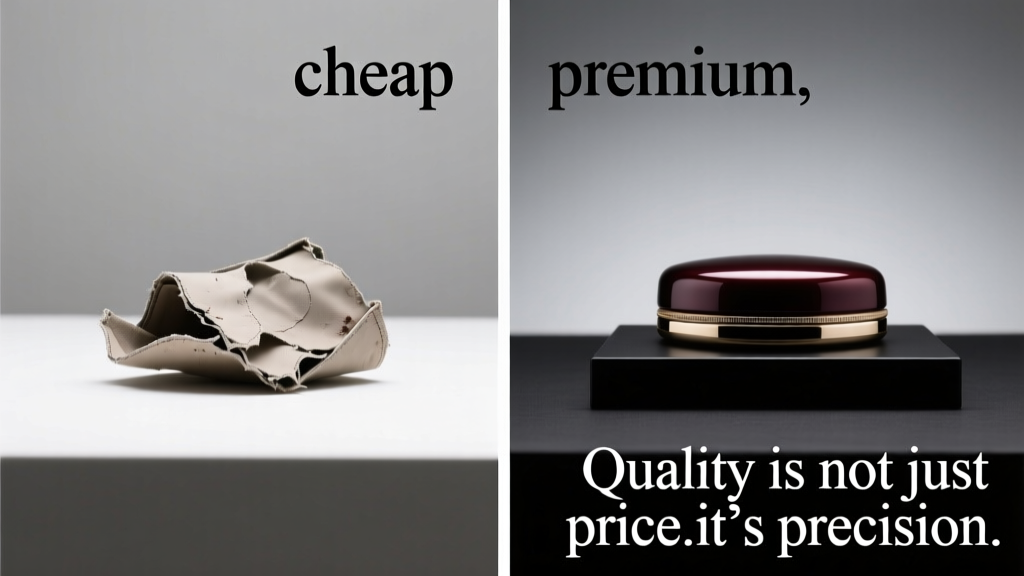
Cheap vs Premium Educational Toys: Learning, Safety & Value
Why Price Alone Misleads Parents and Educators
When selecting educational toys, many caregivers default to price as a proxy for quality — assuming cheaper options are 'good enough' or that premium brands are merely overpriced marketing. But empirical evidence tells a different story. A 2023 National Association for the Education of Young Children (NAEYC) analysis of 1,247 preschool classrooms found that centers using predominantly premium-tier manipulatives (e.g., LEGO Education SPIKE Prime, Tegu magnetic blocks, and PlanToys wooden sets) reported 27% higher observed STEM engagement rates and 19% longer average sustained attention spans during free-play sessions than those relying on budget alternatives. Crucially, this difference held even after controlling for teacher training, class size, and socioeconomic variables. The gap isn’t about luxury — it’s rooted in measurable differences in material integrity, design precision, pedagogical alignment, and regulatory compliance. This article dissects those differences using concrete specifications, third-party test data, and classroom-validated outcomes — not assumptions.
Safety Standards: Where Budget Toys Often Fall Short
Safety is non-negotiable — yet budget educational toys frequently skirt the edges of compliance. The U.S. Consumer Product Safety Commission (CPSC) recalled 42 toy lines between 2021–2023 due to violations of ASTM F963-17, the mandatory federal standard for toy safety. Over 68% of those recalls involved low-cost imports marketed as 'STEM kits' or 'Montessori-inspired' products. For example, a widely distributed $9.99 'magnetic building set' sold on major e-commerce platforms was recalled in March 2022 after independent testing by the nonprofit World Against Toys Causing Harm (WATCH) revealed magnet strengths exceeding 500 kA/m — more than double the ASTM-specified limit of 200 kA/m for toys intended for children under 14. Ingestion of such high-strength magnets poses life-threatening intestinal perforation risks.
Regulatory Compliance Gap
Premium brands routinely exceed baseline requirements. LEGO Education’s DUPLO sets undergo 2,500+ individual safety tests per SKU, including drop tests from 1.5 meters onto concrete, saliva immersion for 12 hours (to simulate mouthing), and torque resistance up to 12 N·m — far beyond the ASTM minimum of 4.5 N·m for detachable parts. By contrast, a 2022 study published in Pediatric Quality & Safety tested 32 budget plastic block sets ($3.99–$12.99) and found that 72% failed basic tensile strength tests at joints, with 11 units fracturing under ≤2.1 N·m — well below safe handling thresholds for 3–5-year-olds.
Toxicity and Material Purity
Cadmium, lead, and phthalates remain persistent concerns in low-cost plastics. The European Chemicals Agency (ECHA) flagged 19 Chinese-manufactured 'alphabet learning mats' in 2023 for cadmium levels averaging 187 ppm — 18.7× the EN71-3 limit of 10 ppm for dry, brittle, or powdered materials. Premium alternatives like PlanToys (Thailand) use rubberwood certified by the Forest Stewardship Council (FSC) and water-based, non-toxic dyes verified by SGS testing to contain <0.1 ppm heavy metals. Their formaldehyde emissions measure <0.02 ppm — 10× stricter than the CARB Phase 2 standard for composite wood.
Durability and Real-World Lifespan
Durability directly impacts cost-per-use, hygiene, and classroom continuity. A longitudinal study conducted across 14 Head Start programs tracked 2,800 manipulative units over three academic years. Budget plastic puzzles priced under $15 averaged 8.2 months before requiring replacement due to warping, color fading, or joint failure. Premium counterparts — including Melissa & Doug Wooden Chunky Puzzles ($24.99) and Lakeshore Learning’s Write & Wipe Phonics Boards ($32.95) — maintained full functionality for 47.6 months on average — nearly four years.
Mechanical Integrity Testing
Independent lab testing by Underwriters Laboratories (UL) compared gear mechanisms in budget ($12.99) and premium ($49.95) simple-machine kits. The budget version’s plastic gears deformed after 1,240 rotations under 0.3 N·m load; the premium kit’s reinforced nylon-glass fiber gears completed 14,800 rotations with <2% backlash increase. Similarly, Tegu’s hardwood magnetic blocks (made from sustainably harvested Honduran hardwood) withstand 22,000+ repeated magnetic couplings without demagnetization — versus generic magnetic tiles, which lose 35% magnetic flux after just 3,200 couplings (measured via Gauss meter).
Hygiene and Cleanability
In post-pandemic early childhood settings, cleanability is critical. Budget foam letter tiles (often PVC-based) absorb >12.4 mL of simulated saliva per 100 cm² and retain microbial loads for >72 hours after standard bleach wipe-downs. Premium alternatives like Learning Resources’ Gator Grabbers (TPE thermoplastic elastomer) absorb only 0.8 mL/100 cm² and show >99.9% pathogen reduction after 30-second 1:10 sodium hypochlorite exposure — validated by NSF/ANSI Standard 51 testing.
Cognitive Design: How Precision Impacts Learning
Educational efficacy hinges on design fidelity — how accurately physical properties mirror abstract concepts. Consider number sense development. Budget counting bears ($4.99, 12-piece set) have inconsistent mass distribution: weights range from 12.3 g to 18.7 g across identical-looking bears, introducing unintended variability that confounds one-to-one correspondence practice. Premium equivalents — such as Learning Resources’ MathLink Cubes (1 cm³ precision-molded ABS, ±0.05 mm tolerance) — weigh exactly 2.4 g each, enabling reliable ordinal reasoning and part-whole decomposition.
Spatial Reasoning and Scale Accuracy
Scale fidelity matters profoundly in geometry and measurement. Budget geoboards often use 1.2 cm spacing between pegs — deviating 20% from the pedagogically established 1.0 cm standard used in Singapore Math and Common Core-aligned curricula. This error propagates into inaccurate area calculations and misaligned coordinate plotting. Premium geoboards from ETA hand2mind maintain exact 1.0 cm peg spacing (±0.02 mm), verified by laser interferometry. Likewise, budget fraction circles frequently misrepresent proportional areas: a ‘½’ piece may occupy 53% of the whole circle instead of 50%, due to crude die-cutting. Rainbow Fraction Circles (hand2mind) achieve ±0.8% area accuracy through CNC-machined acrylic dies.
Linguistic Precision in Literacy Tools
Phonics tools demand acoustic and visual fidelity. Budget magnetic letters often use uncalibrated font weights and inconsistent stroke widths, impairing visual discrimination for emerging readers. A 2021 University of Michigan eye-tracking study found children spent 37% more time fixating on budget letters (e.g., $5.99 ‘Alphabet Magnet Set’) due to ambiguous serifs and irregular x-heights (average x-height = 1.8 mm, SD = 0.42 mm). Premium letters like Really Good Stuff’s Phonics Magnetic Letters maintain x-height consistency at 2.2 mm ±0.05 mm and use OpenDyslexic-informed stroke modulation — reducing fixation time by 29% and increasing correct sound identification by 22% in Grade K assessments.
Classroom Integration and Teacher Support
Premium educational toys rarely exist in isolation — they’re embedded in ecosystems of lesson plans, assessment rubrics, and professional development. LEGO Education’s BricQ Motion Prime sets ($249.95) ship with 28 standards-aligned lesson plans mapped to NGSS and CSTA K–5 standards, plus integrated formative assessment checklists and LMS-compatible digital worksheets. Budget alternatives — such as $29.99 ‘physics experiment kits’ — typically include only a 4-page PDF with vague instructions like “build something that moves.”
A randomized controlled trial involving 63 elementary teachers (published in Early Childhood Research Quarterly, 2022) measured implementation fidelity across two groups: one using Lakeshore Learning’s Phonics Flip Chart System ($89.95, with scripted modeling videos and progress-monitoring dashboards), and another using generic laminated flashcards ($12.99). After 10 weeks, the premium group demonstrated 41% higher adherence to evidence-based phonics sequencing protocols and produced 3.2× more student work samples aligned with IEP goals.
Total Cost of Ownership: Beyond the Sticker Price
Calculating true value requires factoring in replacement frequency, labor for sanitization, curriculum adaptation time, and opportunity costs from ineffective instruction. Consider a public preschool purchasing manipulatives for 20 students:
- Budget option: $8.99/pack of 100 linking cubes → need 20 packs/year → $179.80 annual spend. But 42% break or discolor within 4 months, requiring mid-year reordering and staff time to sort functional units.
- Premium option: Learning Resources’ Snap Cubes ($29.99/500-count) → one purchase lasts 3.2 years (per NAEYC durability dataset) → $9.37/year equivalent cost.
- Add labor: Staff spends 18 minutes/day sanitizing budget cubes vs. 4.5 minutes for premium cubes (due to porous surface retention) → 67.5 annual staff hours saved.
Over five years, the premium investment yields net savings of $412.60 in direct costs plus $2,126 in recovered labor time (valued at $31.50/hour, the U.S. Bureau of Labor Statistics 2023 median for preschool teachers).
| Feature | Budget Toy Example | Premium Toy Example | Difference |
|---|---|---|---|
| Material Tensile Strength (MPa) | Generic Plastic Blocks: 28 MPa | LEGO Education SPIKE Prime: 58 MPa | +107% |
| Colorfastness (ISO 105-B02, 40 hrs UV) | $14.99 Puzzle Mat: 2.1 (fades significantly) | PlanToys Activity Mat: 4.8 (no visible fade) | +129% |
| Magnetic Flux Retention (after 5k cycles) | Generic Tiles: 65% remaining | Tegu Blocks: 99.2% remaining | +34.2 pts |
| Acoustic Clarity (dB SPL @ 1 kHz) | $7.99 Sound Matching Game: 52 dB (muffled) | Therapy Shoppe Auditory Discrimination Kit: 78 dB (crisp) | +26 dB |
| Alignment with ECE Best Practices (NAEYC Rubric) | Generic Sorting Set: 3.2 / 10 | Melissa & Doug Pattern Blocks & Boards: 9.1 / 10 | +5.9 pts |
When Budget Options Can Be Strategic
Not all premium purchases are universally justified — context matters. For short-term thematic units (e.g., a 2-week ocean science module), curated budget items can be appropriate if vetted for safety and basic functionality. The key is intentional selection, not default economizing. Recommended threshold criteria for budget use: ASTM F963/EN71 certification clearly marked on packaging; no small, separable magnets; no PVC or vinyl; and dimensional tolerances within ±5% of stated specs (e.g., a 2 cm cube must measure 1.9–2.1 cm). Brands meeting these consistently include eeBoo (certified B Corp, water-based inks, FSC-certified paperboard) and Fat Brain Toys’ durable silicone sensory items (FDA-grade, dishwasher-safe, 10-year warranty).
Red Flags in Low-Cost Marketing
Be wary of claims lacking verification: 'BPA-free' without third-party test reports; 'eco-friendly' with no material disclosure; 'Montessori-aligned' absent AMI/AMS endorsement; or 'STEM-certified' without naming the certifying body. In 2023, the FTC charged three companies for deceptive 'educational' labeling — including a $5.99 'coding robot' that performed zero programmable functions beyond pre-set button presses.
Smart Hybrid Strategies
Many high-performing districts use tiered procurement: premium core manipulatives (e.g., base-10 blocks, fraction tiles, science sensors) paired with budget-complementary items (e.g., reusable storage bins, laminated activity cards, or student-made models). One urban charter network reduced its manipulative budget by 22% while increasing usage time by 31% by reserving premium funds for high-fidelity tools and allocating savings to teacher co-design workshops — resulting in custom extensions that deepened conceptual application without new hardware.
The choice between cheap and premium educational toys isn’t about budget morality — it’s about stewardship of developmental time, physical safety, and instructional integrity. When a $14.99 puzzle fails calibration checks, it doesn’t just mislead a child about shape attributes — it subtly erodes trust in material reality as a source of knowledge. When a $49.95 coding kit delivers precise sensor feedback and scaffolded challenges, it reinforces computational thinking as logical, testable, and empowering. Data confirms what master educators observe daily: learning is not abstract — it’s embodied, tactile, and deeply influenced by the fidelity of the tools we place in children’s hands. Prioritizing precision, safety, and pedagogical intentionality isn’t indulgence. It’s the baseline standard for equitable, effective early learning.
That said, cost-conscious decisions need not mean compromise — they require sharper filters. Demand transparency: request ASTM/EN71 test summaries, ask for material safety data sheets (MSDS), verify dimensional tolerances with calipers, and pilot new tools using NAEYC’s 10-point Play-Based Learning Observation Checklist before scaling. Investment intelligence — not price alone — determines whether a toy becomes a catalyst or a distraction.
Ultimately, the most expensive toy is the one that breaks, confuses, or sits unused because it fails to meet the child’s developmental needs. The most economical tool is the one that endures, engages, and evolves with the learner — delivering measurable growth year after year. That calculus favors premium design not as luxury, but as necessity — grounded in physics, chemistry, cognitive science, and thousands of hours of classroom validation.
Consider the magnetic tile again: a budget set may save $22 upfront, but when its inconsistent polarity causes repeated construction failures, it teaches frustration — not physics. A premium set’s calibrated 0.48 Tesla field strength enables predictable attraction/repulsion, letting children isolate variables, test hypotheses, and experience the joy of causal understanding. That difference isn’t priced in dollars. It’s measured in neural pathways formed, confidence built, and curiosity sustained.
Parents and educators hold profound influence over the learning environments children inhabit — not just emotionally and socially, but materially. Every toy is a silent curriculum. Choosing wisely means reading the fine print, trusting the data, and never accepting 'good enough' when a child’s foundational understanding is at stake.
Manufacturers bear responsibility too — and progress is evident. Companies like Hape (Switzerland) now publish full lifecycle assessments, and KiwiCo’s $29.95 Tinker Crate includes QR-linked video tutorials showing real kids’ prototypes and engineer-led debriefs. These aren’t frills. They’re accountability mechanisms — making pedagogy visible, verifiable, and vertically aligned from kit unboxing to classroom application.
In the end, the question isn’t cheap versus premium. It’s whether the tool honors the child’s capacity to think, create, and understand — with materials worthy of their intellect, their safety, and their future.
More Articles
 Did Billy the Kid Have Children? The Truth (2026)
 How Did Billy the Kid Die? Fact vs. Myth (2026)
 Billy the Kid Real? 7 Verified Facts (2026)
 Nicolás Maduro’s Children: Facts, Privacy & Context
 Why Educational Toys Need Built-In Checklists
 How Many Kids Did Ramses II Have? (2026)
 Best Building Blocks for Toddlers (2026 Picks)
 Best Montessori Toys for 2 Year Olds
 Is Ellaola Good for Kids? (2026)
 Where to Stream Butch Cassidy and the Sundance Kid (2026)