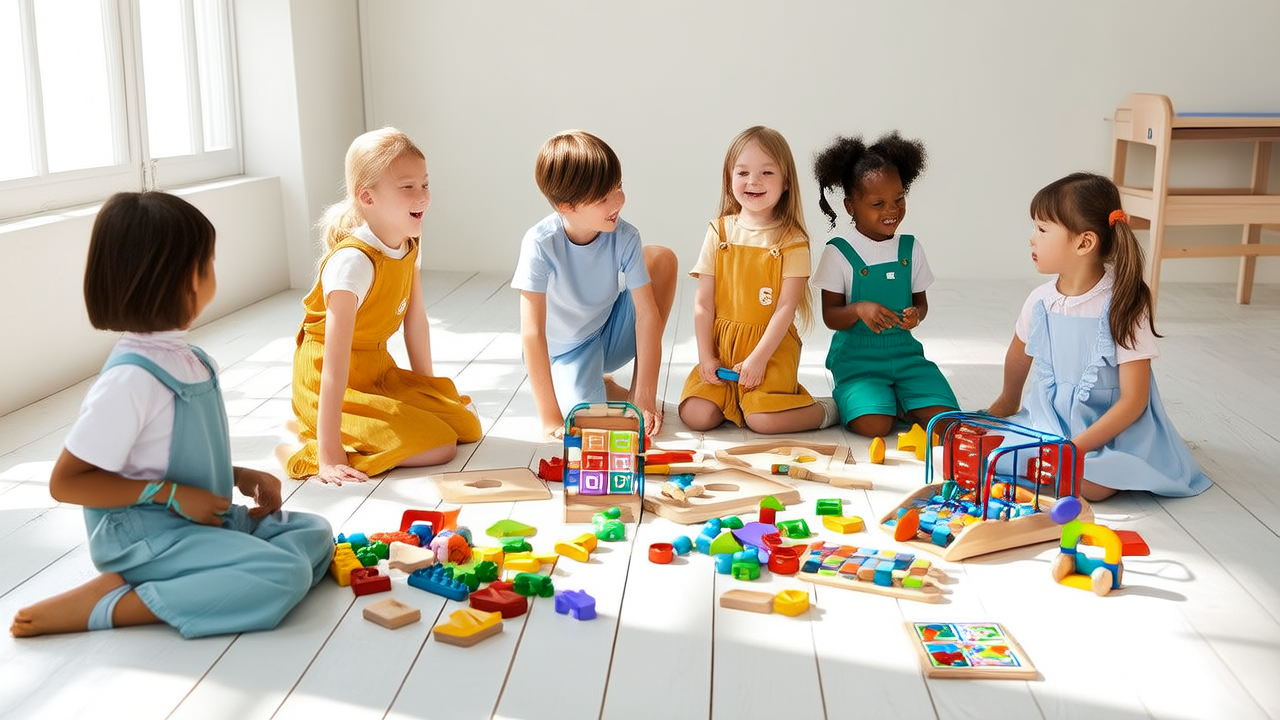
Best Puzzle Toys for Toddler Problem Solving
Why Puzzles Matter for Toddler Development
Puzzle toys are among the most effective tools for nurturing early problem-solving skills. Between 12 and 36 months, toddlers rapidly develop spatial awareness, hand-eye coordination, cause-and-effect understanding, and perseverance—all strengthened through hands-on puzzle play. Unlike passive screen time, physical puzzles require trial, error, adjustment, and eventual success, laying neural groundwork for later math, reading, and critical thinking.
Age-Appropriate Puzzle Types & When to Introduce Them
12–18 Months: Chunky Shape Sorters & Simple Peg Puzzles
Toddlers at this stage need large, easy-to-grasp pieces with clear visual cues. The Melissa & Doug First Shapes Jumbo Knob Puzzle (ages 12+ months) features six thick wooden shapes—circle, square, triangle—with oversized, easy-grip knobs. Each piece fits only in its matching cutout, teaching shape recognition and one-to-one correspondence. Similarly, the Fisher-Price Laugh & Learn Shape Sorter Cube (ages 12–24 months) combines sorting with light-up feedback and simple songs—reinforcing success without overstimulation.
18–24 Months: 2–4 Piece Layered Puzzles & Object Matching Boards
As fine motor control improves, introduce puzzles requiring sequencing or matching. The Beginner’s Animal Matching Puzzle by Hape (ages 18+ months) uses four double-sided boards with animal illustrations and corresponding textured wooden pieces (e.g., a fuzzy sheep piece fits on the woolly side). This builds vocabulary and tactile discrimination alongside problem solving. Also recommended: the Learning Resources All About Me Feelings Puzzle (ages 2+ years), which includes six emotion faces with matching body-language poses—great for social-emotional reasoning.
24–36 Months: 6–12 Piece Jigsaw Puzzles & Interlocking Logic Sets
By age two, many toddlers handle interlocking cardboard or wooden jigsaws confidently. The EEBOO My First Puzzles: Farm Animals (ages 2–4 years) offers six 6-piece puzzles in sturdy cardboard with thick, rounded edges—no choking hazards. For more advanced challenge, the SmartMax My First Safari (ages 1–5 years) introduces magnetic construction: toddlers connect animals to bases using color-coded rods, learning symmetry and balance while solving “how do I make the giraffe stand upright?” problems.
Safety First: Non-Negotiable Guidelines
Always verify third-party safety certifications: look for ASTM F963 (U.S.) or EN71 (EU) marks. Avoid puzzles with small parts not labeled “for ages 3+” if your child is under 3—choking risk remains high until age 4. Inspect wooden puzzles for smooth, splinter-free finishes; check painted surfaces for lead-free certification (e.g., CPSIA-compliant). Skip puzzles with string, detachable magnets, or thin plastic film—these pose strangulation or ingestion hazards. Store puzzles in low, open bins—not high shelves—to encourage independent access and reduce摔落 injuries.
How to Support, Not Solve: Practical Tips for Caregivers
• Wait before helping. Give your toddler 30–60 seconds of uninterrupted focus when they pause mid-puzzle. Often, they’re mentally rotating a piece or testing fit—intervening too soon undermines confidence.
• Use descriptive language—not directives. Say “The red triangle has straight edges and a point” instead of “Put it here.” This builds vocabulary and observation skills.
• Rotate puzzles weekly. Keep only 2–3 puzzles accessible at once. Too many options overwhelm; rotation maintains novelty and mastery motivation.
• Model frustration tolerance. If you’re doing a puzzle nearby, verbalize your process: “This blue piece doesn’t fit yet—I’ll try turning it.” Toddlers absorb emotional regulation strategies through observation.
• Cap sessions at 10–15 minutes. Attention spans vary, but most 2-year-olds disengage after sustained focus. End on success—even if it’s just placing one piece correctly.
What to Avoid: Common Pitfalls
Electronic puzzles with automatic music or flashing lights often distract from cognitive work—the toddler waits for the beep instead of analyzing fit. Skip battery-powered “smart” puzzles marketed for under-2s; research shows no developmental advantage over classic wood or cardboard. Also avoid puzzles with realistic miniature parts (e.g., tiny furniture for dollhouses) before age 3—fine motor skills aren’t ready, and small pieces increase choking risk. Steer clear of puzzles with glossy, peeling coatings or strong chemical smells—signs of volatile organic compounds (VOCs) unsafe for developing lungs.
Real Progress: What Problem-Solving Milestones Look Like
At 15 months: Your toddler matches a knobbed shape to its slot 70% of the time, sometimes rotating the piece before insertion.
At 22 months: They complete a 4-piece animal puzzle independently, naming each animal aloud afterward.
At 30 months: They flip puzzle pieces to test both sides, compare edge textures (“bumpy” vs. “smooth”), and persist through 3–4 failed attempts before succeeding.
These aren’t rigid benchmarks—but consistent patterns indicate healthy cognitive growth. Celebrate effort, not speed or perfection.
Final Recommendations by Age Band
- 12–18 months: Melissa & Doug First Shapes Jumbo Knob Puzzle, Fisher-Price Shape Sorter Cube
- 18–24 months: Hape Beginner’s Animal Matching Puzzle, Learning Resources Feelings Puzzle
- 24–36 months: EEBOO My First Puzzles: Farm Animals, SmartMax My First Safari
All listed products are widely available through pediatric occupational therapists, educational suppliers like Lakeshore Learning, and major retailers (with verified safety labels). Always inspect new puzzles upon arrival for loose parts, sharp corners, or damaged paint—and discard immediately if compromised. With thoughtful selection and responsive support, puzzle play becomes more than entertainment: it’s daily brain-building work your toddler does with joy and growing competence.
More Articles
 Are Tonies Good for Kids? Pediatrician-Backed Answers
 Common Mistakes With Educational Toys
 James Madison’s Kids: The Surprising Truth (2026)
 Genghis Khan’s Y-Chromosome: 1 in 200 Men Share It
 How Many Kids Does Zeus Have? Over 100 Named Offspring
 Outdoor Play for Building Dexterity & Strength
 PBS Kids Shows 2026: Age-Targeted Learning Guide
 Reading Toys for Reluctant Readers
 How Many Kids Did Pocahontas Have? (2026)
 Best Montessori Toys for 1-Year-Olds in 2026