Home › Educational toys › Best Montessori Toys for Toddlers: Complete Guide (2026)
Best Montessori Toys for Toddlers: Complete Guide (2026)
🧸 The Big Idea: Montessori toys aren't about fancy brands — they're about simplicity. The best Montessori toys are made from natural materials, focus on one skill at a time, and allow the child to self-correct. You can build many of them at home for under $10.
What Makes a Toy "Montessori"?
Montessori-aligned toys share these characteristics:
Real-world based: No fantasy characters. Toys reflect real objects (real dishes, real tools scaled for small hands)Self-correcting: The child can see when they've done it right without an adult telling themSingle-purpose: Each toy focuses on one skill (not 10-in-1 activity centers)Natural materials: Wood, metal, fabric, glass (for older children) — not plasticBeautiful: Aesthetically pleasing, displayed on open shelves at child height Toys by Developmental Skill
Fine Motor (Ages 12-24 months)
Toy Skill DIY Alternative Object permanence box Understanding things exist when hidden Cut a hole in a shoebox lid + ball Posting coins in a slot Pincer grasp, hand-eye coordination Cut slot in container lid + poker chips Stacking rings Size discrimination, wrist rotation Cut pool noodle sections + dowel Shape sorter (3 shapes) Visual discrimination, problem-solving Cut shapes in container lid Imbucare box (various shapes) Rotation to fit, spatial reasoning Use different containers and objects
Practical Life (Ages 18-36 months)
Toy/Activity Skill Setup Pouring station Wrist control, concentration Two small pitchers + dried beans Spoon transfer Hand-eye, bilateral coordination Two bowls + spoon + pom-poms Button frame Finger isolation, dressing skills Sew buttons on fabric strips Water pouring Precision, cause-effect Small pitcher + cups + sponge for spills Peeling and cutting Hand strength, independence Banana + child-safe knife (nylon)
Sensory and Cognitive (Ages 18-36 months)
Toy Skill Notes Color tablets (grading) Visual discrimination, vocabulary Sort from light to dark Sound cylinders Auditory discrimination Match pairs by shaking sound Fabric matching Tactile discrimination Pair fabrics by touch alone Puzzle maps Geography, spatial awareness Start with continent puzzles Counting rods Number sense, quantity 1-10 rods of increasing length
Setting Up a Montessori Play Space
Open shelving: Low shelves (child height) with 6-8 toys displayedRotation: Swap toys every 2 weeks to maintain interestOrder: Each toy has a specific spot. Children learn to return items.Accessibility: Everything within reach. No locked cabinets or high shelves for play items.Minimalism: Fewer, better toys. 8 displayed > 50 in a toybox. What to Avoid
Battery-operated toys: The toy does the work, not the childCharacter-branded toys: Fantasy over reality at this ageMulti-function activity centers: Overstimulating, no deep focus on one skillLoud, flashing toys: Overstimulate rather than engage 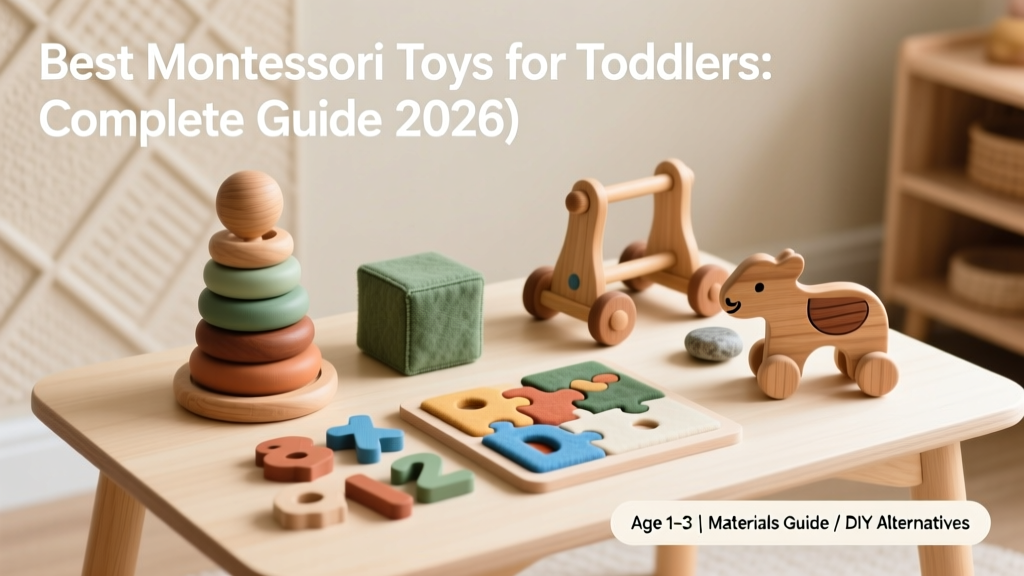
 Best Puzzle Toys for Problem Solving
 Best Montessori Toys for 1-Year-Olds in 2026
 Reading Toys for Reluctant Readers
 Did Billy the Kid Have Children? Teaching History Truth
 How Many Kids Did King George III Have? (2026)
 Puzzle Toys for Critical Thinking: 15 Expert Picks
12 DIY Learning Activities for Home & Classroom
Puzzle Toys for Critical Thinking: 15 Expert Picks
12 DIY Learning Activities for Home & Classroom
 Hitler and Kids: Debunking the Myth (2026)
 Did Hernando de Soto Have Kids? Truth & Teaching Tools
 Did Billy the Kid Have a Wife? The Truth