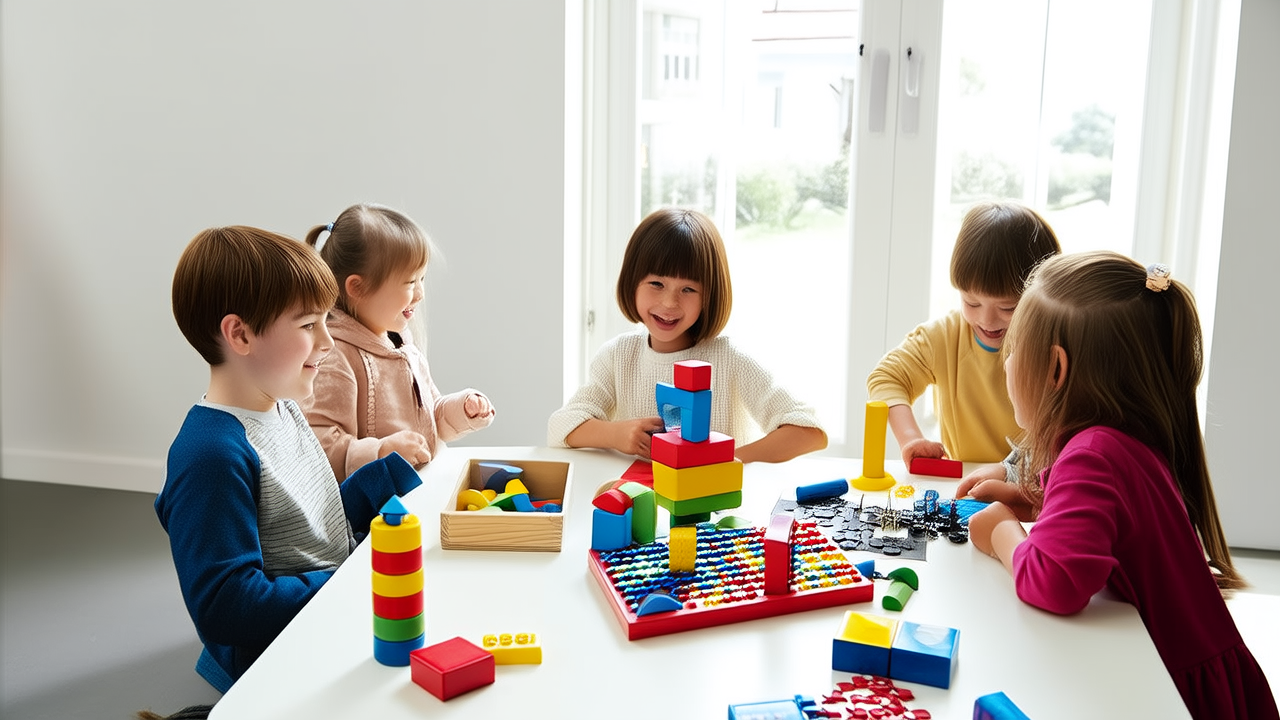
Age-Based Play Ideas That Build Skills
How Activities For Skills Turn Play Into Practice
Activities for skills are simple play routines that help children develop fine motor, language, problem solving, emotional regulation, and social abilities through repetition, choice, and feedback. A 20-minute LEGO Duplo sorting session can build color naming, pincer grasp, and turn-taking. A 10-minute Hape shape sorter can improve spatial reasoning and patience. The best activities are short, safe, and matched to age. Use real brands like Melissa & Doug puzzles, ThinkFun circuits, Magna-Tiles, and Play-Doh, then adjust difficulty with timers, steps, and questions. This article gives age-based activities, measurements, data points, and practical setups for parents and educators.
Many toy aisles sell entertainment, not development. A battery-powered toy that does everything for a child can be fun, but it often leaves little room for practice. Activities for skills reverse that pattern. The child becomes the active builder, speaker, tester, and decision maker. The toy or material is just a tool. This approach aligns with developmental science: children learn through guided play, where an adult sets the stage and the child makes choices.
Skill Areas Worth Tracking Before Choosing an Activity
Before buying or setting up a toy, decide what skill you want to strengthen. Fine motor skills include grasping, pinching, cutting, stacking, and controlling a marker. Gross motor skills involve balance, climbing, throwing, catching, and moving safely around furniture. Language skills include listening, vocabulary, sentence length, narration, and turn-taking in conversation. Cognitive skills include cause and effect, memory, classification, sequencing, and planning. Social emotional skills include waiting, sharing, tolerating frustration, and repairing a mistake.
A useful rule is to match the activity to the child’s zone of proximal development, a term from psychologist Lev Vygotsky that describes the gap between independent performance and supported performance. If a toddler can stack three blocks alone but cannot stack five without help, a five-block activity with adult modeling is appropriate. If a five-year-old can complete a 24-piece puzzle alone, move to a 40-piece Melissa & Doug puzzle or ask them to build a story about the picture.
Activities for Babies and Toddlers: Sensory and Motor Foundations
Babies and toddlers need movement, touch, rhythm, and language more than screens. The American Academy of Pediatrics recommends avoiding digital media for children under 18 to 24 months, except video chat, and limiting fast-paced media for older toddlers. For infants, play should be close to the body and caregiver. A 10-minute rattle game can teach object permanence: hide a small Hape wooden rattle under a scarf, then ask the baby to find it. Repeat five times. The baby practices attention, hand-eye coordination, and memory.
For 12 to 24 month-olds, use safe, large, washable items. A Play-Doh starter set with three 3-ounce cans is ideal for older toddlers who are not putting clay in their mouths. For younger toddlers, swap clay for frozen fruit cubes in a muffin tin. Ask them to push a 2-inch wooden peg into a 4-inch base. K’NEX toddler-style large connectors, if age labeled, can also support pulling and connecting, but always check the package for small parts warnings.
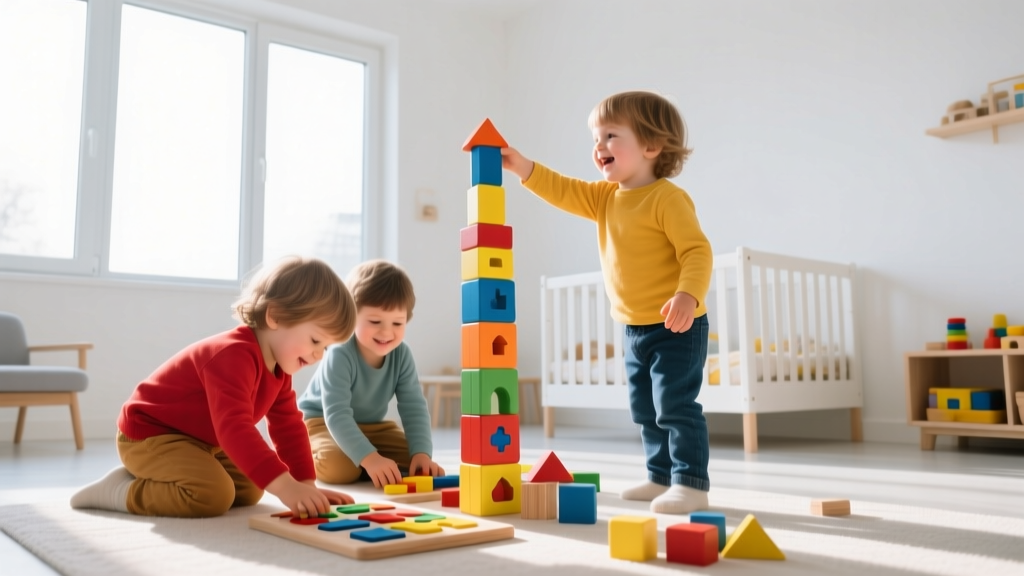
- Stack and knock: Build a tower with six 2-inch wooden blocks, let the child knock it down, then count to three and rebuild. This teaches cause, sequence, and emotional regulation.
- Scavenger tray: Place five objects in a shallow tray: a 3-inch ball, a 4-inch spoon, a sock, a ring, and a cup. Name each item, ask the child to hand it to you, and reward the attempt with a clap.
- Squeeze and pour: Use two 8-ounce cups and a small ladle. Pour water over a sink, practice squeezing a sponge, and say wet, dry, full, and empty. Supervise all water play.
For 2 to 3 year-olds, introduce simple sorting. A Hape or Melissa & Doug shape sorter with six shapes builds classification and patience. Time the child for 90 seconds, then model slowly. Do not make it a race. The goal is to practice matching, not speed. Ask, which shape goes in the circle hole? If the child inserts a square, pause and let them try again. This builds working memory and frustration tolerance.
Activities for Preschoolers: Language, Logic, and Self-Control
Preschoolers are prime candidates for activities for skills because they can follow two or three steps, pretend play, and ask why. A good daily routine includes one 10-minute language activity, one 15-minute logic activity, and one 5-minute emotional check-in. Use open-ended toys such as Magna-Tiles, LEGO Duplo, wooden blocks, and art supplies. A set of 50 Magna-Tiles in four colors can support shape recognition, symmetry, and engineering vocabulary. Each standard equilateral triangle is about 4.5 inches on a side, while squares are about 4.5 inches wide.
15-Minute Language Station With Everyday Toys
Set up a small table with a stuffed animal, three props, and a timer. Ask the child to make a short play. Use sentence starters: The bear feels ___. The bear wants ___. The bear tries ___. This teaches emotion vocabulary and narrative structure. If the child says one word, model a longer sentence: The big bear wants a red ball. Repeat. For children who stutter or have language delays, slow the pace, leave pauses, and avoid finishing their sentences.
Another language activity uses a 12-piece puzzle. Choose a Melissa & Doug puzzle with animals or vehicles. Ask the child to complete it, then name three colors, three animals, and one action. This connects visual processing to spoken language. If the child finishes quickly, ask them to turn the puzzle upside down and rebuild from memory. That small change increases executive function demand.
20-Minute Logic Station With Sorting and Sequencing
Logic activities should have clear success criteria. Use a 30-piece pattern cards deck or create cards with red and blue squares. Ask the child to continue a pattern: red, blue, red, blue. Then ask them to create a pattern and hide it from you. You guess the next piece. This builds prediction and rule-following. For older preschoolers, use a 5-step story card set: seed, sprout, flower, fruit, seed again. Have the child arrange the cards and explain the sequence.
Use physical sorting for early math. A 12-hole muffin tin and 60 dry beans can become a counting, color, and size sorting game. Ask the child to place 10 red beans in one cup, 5 blue beans in another, and compare. Do not pressure correct counting; model one-to-one correspondence by touching each bean while saying numbers. By age 4, many children can count to 10, but counting accuracy varies widely.
Self-control can be practiced with a 30-second wait game. Give the child a small object, ask them to hold it without squeezing too hard, and count slowly. Use a visual timer so waiting is concrete. This is useful for children who rush, grab, or cry when told to wait. Pair the skill with praise: You kept your hands steady while waiting.
Activities for School-Age Children: Engineering, Coding, and Collaboration
From ages 5 to 12, children can handle longer projects, rules, and debugging. Activities for skills should include planning, testing, revising, and explaining. LEGO Classic sets, K’NEX rods, Snap Circuits kits, ThinkFun logic games, and programmable robots such as Wonder Workshop Dash or Sphero BOLT all provide practice. The key is to add a measurable challenge. For example, build a bridge that holds 500 grams, make a robot follow a 1-meter path, or design a game with three rules and one score.
Engineering activities teach resilience. Start with a 10-minute design phase: list three parts, sketch one idea, and pick one goal. Then build for 15 minutes. Test for 5 minutes. Revise for 10 minutes. If a LEGO Duplo or standard brick structure fails, ask what changed. A standard 2x4 LEGO brick is about 32 mm wide and 16 mm tall, with studs spaced 8 mm apart. That measurement gives children concrete data for balancing and stacking.
Coding can be unplugged and screen-free. Use a 4x4 floor grid made from masking tape, with each square about 2 feet wide. One child is the robot, the other is the programmer. The programmer gives three commands: step forward, turn left, pick up. The robot follows exactly. This teaches sequencing, debugging, and precise language. For screen time, a 20-minute block with a kid-friendly app can follow the activity, not replace it.
30-Minute Robot Challenge With Dash or Sphero
Set a start line and finish line 3 feet apart. Place a 12-inch cardboard arch halfway. Challenge the child to drive the robot through the arch without touching it. If using Dash, use simple block programming to move forward, turn, and repeat. If using Sphero, draw a path on the floor and match the speed. Add a second challenge: the robot must stop at a color card. This combines motor planning, measurement, and cause-effect reasoning.
Science activities need safe materials and adult supervision. A Snap Circuits kit can teach electricity basics with snap-on components. Start with a simple circuit that lights a bulb, then add a switch. Ask the child to predict what happens when the circuit opens. For chemistry-like play, use baking soda and vinegar in a clear 8-ounce cup, placed in a tray. Measure one teaspoon of baking soda and two tablespoons of vinegar. This gives sensory data, but it is not a substitute for formal lab safety.
Social skills grow through team tasks. Use a 24-piece wooden block set and two children. Give each child 12 blocks. The goal is to build one shared tower at least 18 inches tall without a rule against talking. If it falls, ask both children to name one thing they could change. This teaches repair, perspective taking, and shared goals. Adult mediation helps younger children, while older children can take turns leading.
Using Toys and Materials Safely: Measurements, Standards, and Time Limits
Safety is part of skill building. Always check age labels, small parts warnings, and battery compartment screws. In the United States, toys should meet ASTM F963 safety standards, and children under 3 should not play with small parts that fit inside a 1.25-inch by 2.25-inch cylinder. A simple test is the small-parts cylinder, sometimes called a toy choke tube. If an object fits, it is a choking hazard for toddlers. Also inspect cords, magnets, and batteries. Button batteries are especially dangerous; keep them locked away and supervise play.
Screen use should have clear boundaries. The World Health Organization recommends no screen time for infants under 1, and for children aged 2 to 4, no more than one hour of passive viewing. For school-age children, set a 20 to 30 minute limit for digital activities and pair it with a physical or hands-on task. A good ratio is one hour of active play for every 20 minutes of screen use. This does not mean every app is harmful, but it means the day needs variety.
| Age | Skill focus | Activity | Materials | Time | Success sign |
|---|---|---|---|---|---|
| 6 to 12 months | Object permanence | Hide a rattle under a scarf | Hape rattle, cotton scarf | 5 to 10 minutes | Child searches after it disappears |
| 12 to 24 months | Pincer grasp | Place beans in holes | 12-hole muffin tin, 40 dry beans | 8 to 12 minutes | Child uses thumb and finger |
| 2 to 3 years | Sorting | Match shapes to holes | Melissa & Doug shape sorter | 10 to 15 minutes | Child tries mismatched shapes |
| 3 to 4 years | Language | Stuffed animal story | One plush toy, three props | 10 to 15 minutes | Child uses 4 to 6 word sentences |
| 4 to 5 years | Pattern | Continue color pattern | Red and blue blocks | 12 to 18 minutes | Child predicts next color |
| 5 to 7 years | Engineering | Build a 12-inch bridge | LEGO Classic, cardboard | 20 to 30 minutes | Bridge holds a small toy car |
| 8 to 12 years | Coding | Robot path challenge | Dash, tape, color cards | 25 to 40 minutes | Child explains program steps |
The table is not a prescription. A child may be advanced in language and need more support in motor planning, or vice versa. Use observations over weeks, not one performance. If a child avoids a task for three days, simplify it. If they master it quickly, add a constraint such as time, one hand only, or a story requirement.
A Weekly Activities For Skills Plan That Fits Real Homes
A realistic weekly plan does not require an hour every day. Try 15 minutes on weekdays and one 30-minute project on the weekend. Keep materials in a bin that is easy to open. A 12-inch by 18-inch plastic bin can hold 20 blocks, 10 animal figures, 5 puzzle pieces, 3 markers, and one timer. Label the bin with the child’s name and a photo of the activity. This supports independence and reduces cleanup friction.
- Monday: 10-minute language play with a stuffed animal.
- Tuesday: 15-minute sorting or puzzle task.
- Wednesday: 10-minute sensory or motor play with safe household items.
- Thursday: 15-minute building challenge with LEGO, Magna-Tiles, or blocks.
- Friday: 10-minute self-control game such as waiting or taking turns.
- Saturday: 25 to 35-minute project such as robot path, bridge, or nature walk.
- Sunday: Free choice, but keep materials available and observe what the child repeats.
Observation matters more than worksheets. Write three notes after each week: what the child chose, what caused frustration, and one small change. For example, a child may prefer pouring but avoid stacking. Try a pouring station with colored water and ice cubes. If frustration spikes at 5 minutes, shorten the task to 3 minutes and increase support. If the child asks to repeat, add one harder element, such as a two-step instruction.
Activities for skills are not about producing a perfect product. They are about practice with purpose. A wobbly tower, a messy Play-Doh animal, or a robot that bumps into a wall can all be successful if the child is thinking, communicating, trying, and adjusting. When play becomes a little laboratory, a toy becomes a tool, and a child becomes a confident learner.
More Articles
 i-Ready for Kids: 7 Evidence-Based Truths (2026)
 Billy the Kid and Jesse James: The Truth (2026)
 Kid Cudi’s Maui Wowie Meaning: Escape, Not Just High
 How Many Kids Did Zeus Have? The Real Count
 Butch Cassidy Death: Facts vs. Myth for Kids (2026)
 How Many Kids Did Noah Have? Truth Behind Bible Sets
 When Did Cassie Date Kid Cudi? The Real Timeline (2026)
 Ed Gein Babysitting Myth: Truth & Critical Thinking Tools
 Best Science Kits for Ages 8-12
 Billy the Kid’s Lifespan: Facts for Kids’ History Kits