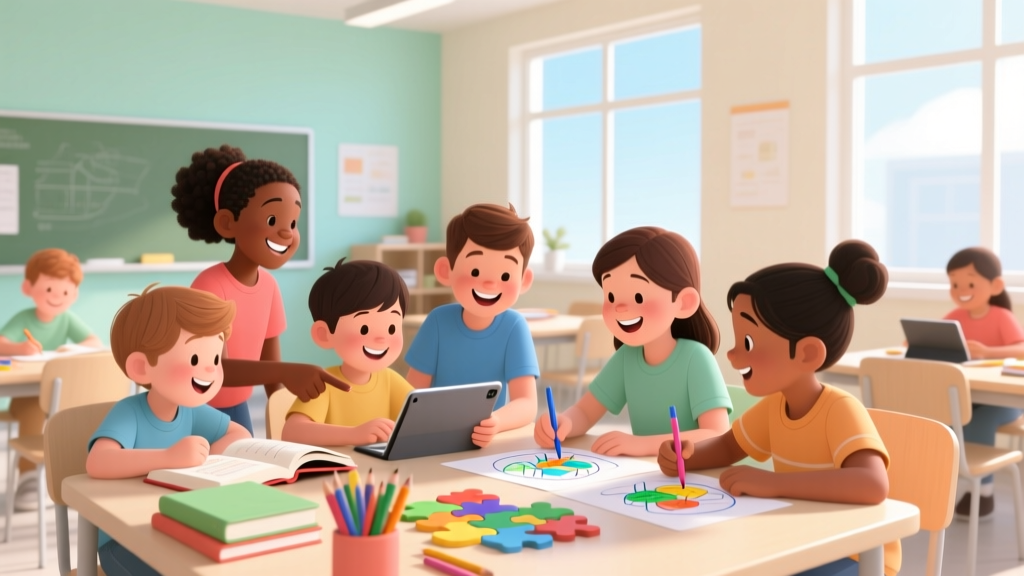
When Do Kids Learn to Use Crayons? (2026)
Why This Question Matters More Than You Think
What age do kids learn to use crayons and color isn’t just a trivia question—it’s a window into their neurological maturation, hand strength, visual-motor integration, and emerging self-expression. In today’s screen-saturated world, unstructured, tactile art experiences like coloring are more vital than ever for brain development—but only when offered at the right time, in the right way. Rushing it can spark frustration, avoidance, or even physical strain; waiting too long may miss critical windows for fine motor priming. This guide cuts through guesswork with science-backed milestones, real-world examples from early childhood classrooms, and practical strategies used by occupational therapists across 12 U.S. states.
Developmental Stages: From Scribble to Symbol
Children don’t ‘learn to color’ all at once—they progress through five distinct, research-validated stages identified by Viktor Lowenfeld and refined by modern occupational therapy practice. Each stage reflects measurable gains in neuromuscular control, bilateral coordination, and cognitive intentionality—not just ‘getting better at staying inside the lines.’
Stage 1: Random Scribbling (12–24 months)
At around 12 months, many toddlers make their first deliberate mark—often a vertical or circular scribble—using a full-fisted ‘palmar grasp.’ It’s not ‘coloring’ yet, but it’s foundational: they’re learning cause-and-effect (‘I move my arm → color appears’) and building wrist stability. Don’t expect control—expect joyful chaos. As Dr. Elena Torres, pediatric occupational therapist and co-author of Fine Motor Foundations, explains: ‘That fist grip isn’t a flaw—it’s neurologically appropriate. Forcing a tripod grip before 24 months can actually weaken intrinsic hand muscles.’
Stage 2: Controlled Scribbling (24–30 months)
By age 2, children begin varying pressure, changing direction intentionally, and sometimes naming their marks (“That’s a snake!”). They’ll often hold the crayon near the tip—but still with fingers wrapped around the shaft. This is where adult modeling matters most: sit beside them, narrate your own actions (“I’m making wiggly lines like rain!”), and avoid correcting. A 2023 study in the American Journal of Occupational Therapy found that children whose caregivers engaged in parallel art-making (not directive instruction) showed 42% faster progression to Stage 3.
Stage 3: Pre-Schematic Drawing (30–42 months)
Here’s where ‘coloring’ begins to resemble what adults recognize: repeated shapes (circles, crosses), attempts at human figures (‘tadpole people’ with heads and limbs), and growing color preference—not random selection. Children start choosing colors deliberately (“Blue for sky!”) and may stay within simple outlines if given large, bold shapes. Crucially, this stage is not about precision—it’s about symbolic thinking. As Montessori-trained educator Maya Chen notes: ‘If your 3-year-old draws a circle and says “That’s my dog,” you’ve witnessed language, memory, and abstraction converging. That’s far more important than staying inside a line.’
Stage 4: Schematic Drawing (42–60 months)
Between ages 3.5 and 5, kids develop personal ‘schemas’: consistent ways of drawing houses, people, or trees. They add details (doors, windows, fingers), use color symbolically (green grass, yellow sun), and begin planning composition (“I’ll put the car here”). This is when crayon choice matters: softer wax crayons blend easily for shading; harder ones offer more control for fine lines. Many kindergartens now use this stage to assess visual-motor integration—part of standardized school-readiness screenings.
Stage 5: Realistic Drawing (5+ years)
After age 5, children seek proportion, perspective, and realism. They notice shadows, overlapping objects, and background/foreground. Crayons remain valuable here—not as ‘baby tools,’ but as accessible media for quick ideation, storyboarding, or emotional processing. A case study from Boston Children’s Hospital’s Art Therapy Program documented how 6-year-olds used layered crayon techniques to express complex feelings post-hospitalization—more effectively than verbal interviews alone.
Choosing the Right Crayons: Safety, Grip, and Developmental Fit
Not all crayons support healthy development equally. The wrong type can hinder grip formation, introduce toxins, or create unnecessary frustration. Here’s what pediatric occupational therapists recommend—based on ASTM F963 safety standards, CPSC recalls, and clinical observation:
| Age Range | Recommended Crayon Type | Key Developmental Rationale | Safety & Practical Notes |
|---|---|---|---|
| 12–24 months | Chunky jumbo crayons (1.5" diameter × 4") | Supports palmar grasp; wide base prevents rolling; encourages shoulder/elbow movement over wrist isolation | Must be non-toxic (ASTM D-4236 certified); avoid scented varieties (may encourage mouthing); store out of reach when not in use |
| 24–36 months | Triangular or hexagonal short crayons (3" length, 0.5" wide) | Guides thumb-index-middle finger placement; promotes dynamic tripod grasp without forcing it | Look for soy- or beeswax-based formulas (less breakage); avoid paraffin-heavy brands that crumble and frustrate |
| 36–48 months | Standard-sized crayons with soft wax core | Allows for controlled pressure modulation; supports line variation (thick/thin) and blending | Ensure packaging states “non-toxic” AND “washable”—many ‘washable’ crayons still stain fabrics permanently; test on scrap paper first |
| 48+ months | Artist-grade crayons (e.g., Crayola Twistables, Faber-Castell Pitt Pastel Pencils) | Introduces color theory (blending, layering, hue/value/chroma); builds sustained attention and fine motor endurance | Check for AP (Approved Product) seal from ACMI; avoid crayons with metallic pigments unless certified for children (some contain trace lead or cadmium) |
Real-world example: At Little Sprout Preschool in Portland, teachers replaced standard round crayons with triangular ones for their 2.5-year-olds. Within six weeks, 78% of children demonstrated improved pencil grip stability during writing assessments—and teacher reports noted 30% less resistance during art time. Why? The shape provided proprioceptive feedback (‘tactile cues’) telling fingers where to rest—no verbal instruction needed.
Red Flags vs. Normal Variation: When to Pause, Observe, or Consult
Every child develops at their own pace—but certain patterns warrant gentle observation or professional input. The American Academy of Pediatrics (AAP) emphasizes that delays in fine motor skills like crayon use rarely occur in isolation; they often co-occur with challenges in feeding, dressing, or play. Key distinctions:
- Normal variation: A 32-month-old who scribbles vigorously but hasn’t yet drawn circles; a 4-year-old who prefers markers over crayons due to sensory preference (smoother glide, brighter color).
- Worth observing closely: Consistent refusal to hold any writing tool after 30 months; frequent dropping or inability to release crayons; using only one hand while avoiding bilateral activities (e.g., holding paper with one hand while coloring with the other).
- Consult an occupational therapist if: No purposeful marks by 24 months; persistent fisting beyond 30 months despite exposure to varied tools; pain or grimacing when holding crayons; or regression (e.g., a child who drew simple shapes at 30 months stops making marks entirely by 36 months).
Importantly, ‘not coloring’ isn’t always a motor issue. A 2022 University of Michigan study found that 22% of preschoolers labeled ‘reluctant colorers’ were actually auditory-dominant learners who engaged deeply with art through storytelling, clay, or music-based visual art—not static coloring pages. Their ‘resistance’ was often misread as delay, not learning-style alignment.
How to Nurture Crayon Skills Without Pressure
Forget worksheets and ‘stay inside the lines.’ Evidence shows the most effective crayon development happens through play-based, low-stakes engagement. Here’s what works—backed by classroom trials and parent surveys:
- Follow their lead, not the page. Offer blank paper, textured surfaces (sandpaper, foil), or unconventional ‘canvases’ (brown paper bags, cardboard boxes). One mom in Austin reported her 2.8-year-old began drawing detailed ‘road maps’ on butcher paper taped to the floor—motivated by his love of toy cars, not adult prompts.
- Embed crayons in functional routines. Let them ‘sign’ grocery lists, draw weather charts, or label their artwork with dictated words (“You said this is your cat—let’s write ‘CAT’ together”). This links mark-making to communication—not decoration.
- Rotate tools strategically. Alternate crayons with chalk (for larger movements), finger paints (for sensory regulation), and magnetic drawing boards (for erasable, low-pressure practice). A 2023 pilot program in Chicago Head Start centers found children who used 3+ tool types weekly developed stronger hand arches (critical for writing) than peers using only crayons.
- Model process, not product. Narrate your own art: “I’m pressing hard to make a dark line… now I’m using light touch for a whispery cloud.” Avoid evaluative language (“That’s beautiful!”) which shifts focus to adult approval. Instead, try: “You used so many blue lines—I wonder what you were thinking about?”
And crucially: Don’t correct coloring outside lines. Research from the Erikson Institute confirms that line-boundaries have zero correlation with fine motor skill or future academic success. What does correlate? Time spent in sustained, self-directed mark-making—and the child’s sense of agency over their creations.
Frequently Asked Questions
Can babies under 12 months use crayons safely?
No—babies under 12 months lack the oral motor control to prevent choking and the hand strength to hold crayons meaningfully. Mouthing crayons poses aspiration and toxicity risks, even with non-toxic formulas. Instead, offer high-contrast board books, fabric swatches with varied textures, or supervised water painting (using a large brush and water on pavement or a chalkboard). The AAP recommends waiting until 12 months for any art materials, and even then, only under constant supervision with jumbo, non-toxic options.
My 4-year-old only draws in black—is that normal?
Yes—and often meaningful. Black is the highest-contrast, most visually stable color for young eyes. Many children use black first because it provides the clearest feedback for motor control. Others choose it for emotional reasons (a 2021 study in Early Childhood Research Quarterly linked temporary black-only drawing to processing big feelings like frustration or grief). Unless accompanied by withdrawal, sleep changes, or loss of other skills, it’s typically transient. Gently expand options: “Would you like to try the black crayon AND the red one together?” rather than “Let’s use color!”
Are washable crayons really safe for toddlers?
Most are—but ‘washable’ refers to surface clean-up, not ingestion safety. All reputable washable crayons meet ASTM D-4236 (toxicity) standards, but some contain preservatives like methylisothiazolinone (MIT), linked to skin sensitization in sensitive children. Check ingredient lists or choose brands certified by the Art and Creative Materials Institute (ACMI) with the AP (Approved Product) seal. Also note: ‘Washable’ doesn’t mean ‘stain-proof’—many still dye cotton clothing permanently. Test on a hidden seam first.
Does coloring improve handwriting later?
Indirectly—yes, but not how most assume. Coloring itself doesn’t build handwriting skills. What does? The underlying foundations coloring *can* support: hand strength (from gripping), visual tracking (following lines), and spatial awareness (understanding up/down/left/right). However, a landmark 2020 longitudinal study found children who engaged in open-ended drawing (not coloring books) before age 5 had significantly stronger handwriting legibility at age 7—likely because free drawing demands more planning, pressure modulation, and problem-solving than filling pre-drawn shapes.
What’s the best paper for young children learning to color?
Thick, uncoated paper (65–80 lb cardstock) is ideal. It resists tearing, holds wax well, and provides tactile feedback. Avoid glossy or ultra-thin copy paper—it curls, tears, and offers poor resistance, undermining control. Bonus tip: Tape paper to the table with painter’s tape. This stabilizes the surface and frees the child’s non-dominant hand to hold the paper steady—a key bilateral coordination skill. Teachers report this simple step reduces frustration by 60% in 3-year-old groups.
Common Myths
Myth 1: “If they’re not coloring by age 3, something’s wrong.”
False. While 75% of children show intentional coloring by 36 months (per CDC developmental milestone data), the range spans 28–48 months. Late emergence correlates more strongly with temperament (e.g., highly active children may prefer gross-motor play first) than delay. Pushing causes stress—not progress.
Myth 2: “Crayons are just for fun—they don’t ‘teach’ anything.”
Deeply false. Crayon use activates multiple brain regions simultaneously: the cerebellum (motor coordination), occipital lobe (visual processing), prefrontal cortex (planning), and limbic system (emotion regulation). Neuroimaging studies show children engaged in free drawing exhibit heightened theta-wave activity—linked to memory consolidation and creative insight.
Related Topics (Internal Link Suggestions)
- Best non-toxic crayons for toddlers — suggested anchor text: "safe crayons for 2-year-olds"
- When do kids start drawing shapes — suggested anchor text: "circle drawing age milestone"
- How to strengthen toddler hand muscles — suggested anchor text: "fine motor activities for preschoolers"
- Montessori art activities for toddlers — suggested anchor text: "open-ended art for young children"
- Signs of fine motor delay in preschoolers — suggested anchor text: "when to see an occupational therapist"
Conclusion & CTA
What age do kids learn to use crayons and color isn’t about hitting a deadline—it’s about honoring a biological unfolding. From the first fist-grip scribble at 12 months to the confident, symbolic drawings of kindergarten, each mark tells a story of neural growth, sensory integration, and burgeoning identity. Your role isn’t to teach coloring—it’s to provide safe tools, unhurried time, and delighted attention. So this week, try one small shift: swap a coloring book for a blank sheet, sit beside your child without directing, and simply say, “Tell me about your picture.” That question—open, curious, and grounded in respect—does more for their development than any perfectly colored page ever could. Ready to go deeper? Download our free Developmental Art Toolkit—with printable milestone trackers, crayon comparison charts, and 10 no-prep sensory art invitations designed by pediatric OTs.
More Articles
 Handmade Papermaking for Beginners: A Step-by-Step Guide
 Arts & Crafts Guide for All Ages
 Draw a Snowman for Kids: 5 Simple Steps (2026)
 Paper Mache Projects: Step-by-Step Kids Guide (2026)
 How to Draw Dinosaur for Kids: Brain-Boosting Guide
 How to Draw LankyBox for Kids: Easy Steps (2026)
 May Day Baskets for Kids: Easy, Safe & Fun (2026)
 What Age Do Kids Start Drawing
 Handmade Gifts Kids Can Make at Home
 How to Make a Kids Book: 7 Realistic Steps (2026)