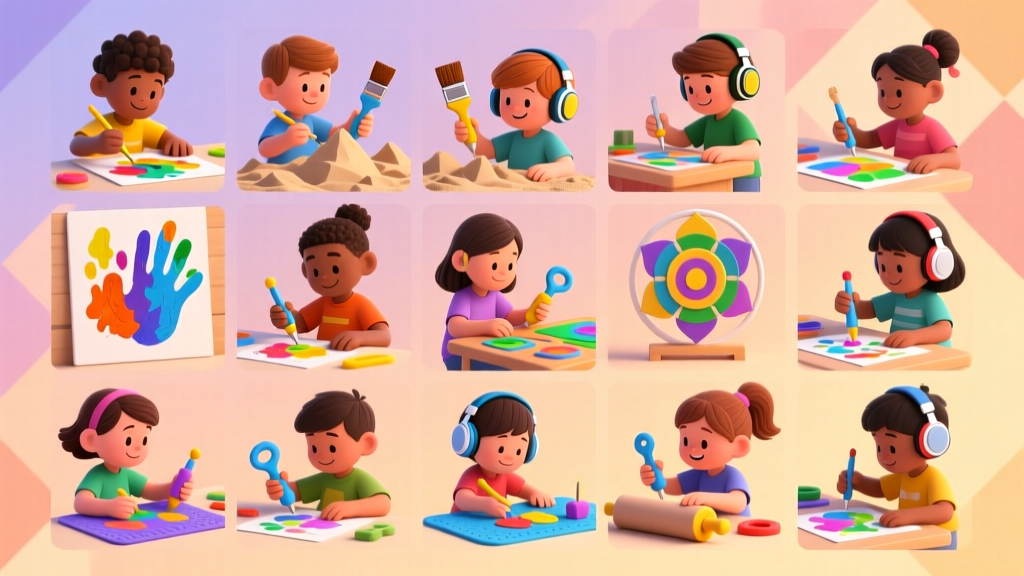
Sensory Art Activities for Kids with Special Needs
Understanding Sensory Needs in Art
Children process sensory input differently. Some seek intense input (sensory seekers), while others are overwhelmed by it (sensory avoiders). The key is offering choices and allowing the child to control their level of engagement.
| Sensory Profile | Art Preferences | Adaptations |
|---|---|---|
| Seeker | Loves messy, textured, bright | Offer finger painting, clay, glitter |
| Avoider | Prefers clean, controlled, soft | Use tools not hands, muted colors |
| Mixed | Varies by day and context | Always offer 2-3 options to choose from |
18 Adaptive Art Activities
Tactile Activities (Touch)
1. Shaving Cream Writing
Spray shaving cream on a tray. Draw letters, shapes, or free designs with fingers. Adaptation: For touch-avoiders, use a stick or craft stick instead of fingers.
2. Textured Collage Board
Glue fabrics, sandpaper, foil, cotton, and corrugated cardboard onto a board. Adaptation: Pre-cut all pieces. Offer glue sticks (less messy) instead of liquid glue.
3. Playdough Stamp Art
Roll playdough flat. Press stamps, shells, buttons, and textured objects into it. Adaptation: Use adaptive grips on stamps for children with fine motor challenges.
Visual Activities (Sight)
4. Light Table Tracing
Place a clear plastic bin over a lamp or use a tablet as a light source. Trace shapes and drawings on paper placed on top. Adaptation: Use bold, high-contrast outlines for children with visual processing differences.
5. Color Sorting Mosaic
Sort colored paper squares, buttons, or beads into a pattern on sticky contact paper. Adaptation: Use larger pieces for motor challenges. Offer a template for structure-seekers.
6. Gelatin Window Clings
Mix gelatin with food coloring. Spread thin, cut shapes, stick to windows. Adaptation: Pre-make the gelatin sheets. Children focus on cutting and placing.
Auditory Activities (Sound)
7. Musical Painting
Play different music styles. Paint how the music makes you feel — fast strokes for upbeat, slow swirls for calm. Adaptation: Use noise-reducing headphones with music piped in for volume control.
8. Sound Shakers Art
Fill containers with different materials (rice, beans, beads). Decorate the outside. Use as instruments. Adaptation: Seal containers with hot glue for safety. Offer quiet options (cotton balls) for sound-sensitive children.
Proprioceptive Activities (Body Awareness)
9. Large-Scale Floor Painting
Tape butcher paper to the floor. Use large brushes, rollers, or hands. Adaptation: Full-body movement builds proprioceptive input. Great for ADHD and sensory seekers.
10. Clay Pounding and Rolling
Provide clay and rolling pins, mallets, and stamps. The resistance provides heavy work input. Adaptation: Use softer clay for weaker hand strength. Offer adaptive handles.
Multisensory Activities
11. Scented Paint
Mix paint with spices (cinnamon, turmeric) or extracts (vanilla, peppermint). Paint with smell. Adaptation: Offer unscented options. Check for allergies first.
12. Edible Finger Paint
Mix yogurt with food coloring. Safe for children who put hands in mouths. Adaptation: Use on a high chair tray for contained mess.
13. Sand Art Bottles
Layer colored sand in clear bottles. Calming, visual, and tactile. Adaptation: Use funnels with wide openings. Pre-color sand for children who can't handle fine pouring.
14. Bubble Wrap Printing
Paint bubble wrap, press paper on top. Satisfying popping + visual result. Adaptation: For children who startle at popping, use flat textured surfaces instead.
15. Nature Paintbrushes
Attach pine needles, leaves, or flowers to sticks. Use as paintbrushes. Adaptation: Use adaptive grips or wrap handles with foam for easier holding.
16. Water Bead Art
Place water beads in a shallow tray. Roll paper over them for patterns. Adaptation: Supervise closely — water beads are a choking hazard. Use larger beads for younger children.
17. Ziplock Bag Painting
Squirt paint inside a ziplock bag. Seal. Children push paint around from outside. Adaptation: Perfect for touch-avoiders — they create art without touching paint.
18. Collaborative Mural
Large paper on wall. Each child contributes a section. Adaptation: Define clear sections for children who need boundaries. Offer individual paper for those who prefer working alone.
Setting Up a Sensory-Friendly Art Space
- Lighting: Natural light preferred. Avoid fluorescent flicker.
- Noise: Quiet space or background white noise. Offer headphones.
- Seating: Options — chair, floor, standing, wobble cushion.
- Materials: Organized and visible. Children can choose what appeals.
- Cleanup: Have wipes, towels, and a change of clothes ready. Reduce cleanup anxiety.
More Articles
 Safe Printmaking Techniques for Kids
 How to Draw Turtle for Kids: Easy 5-Step Guide
 How to Draw a Sea Otter for Kids (2026)
 Handmade Gifts Kids Can Make at Home
 Art Therapy for Anxious Children
 How to Draw Castles for Kids: Stress-Free Guide
 Easy Grinch Face Drawing for Kids (2026)
 How to Draw a Portrait for Kids: Brain-Building Guide
 What Is Art for Kids? Science-Backed Benefits (2026)
 Safety Protocols for Arts & Crafts Projects