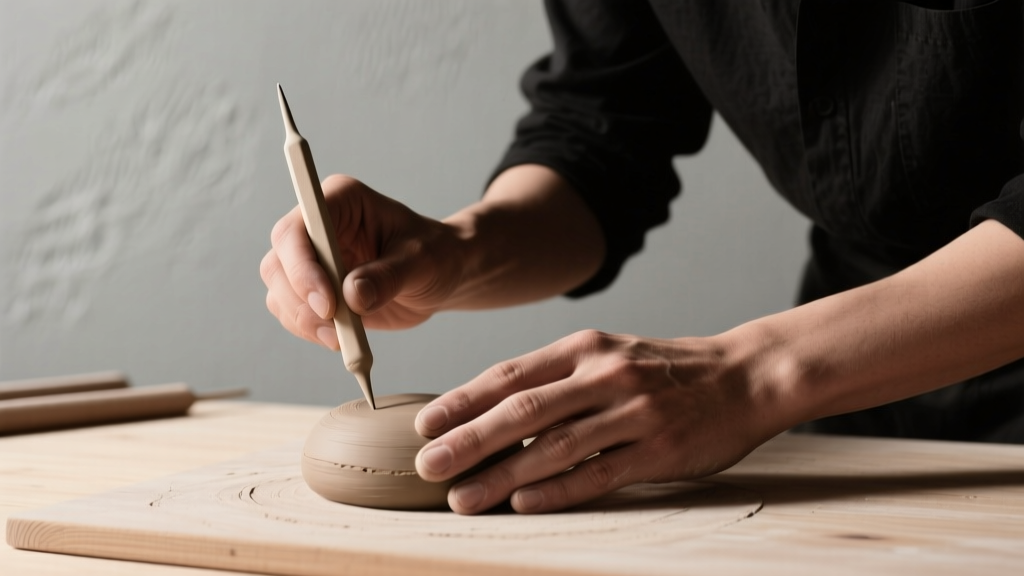
Sensory Experiences and Craft Practice
Sensory experiences and craft activities are often conflated in educational marketing, therapeutic programming, and early childhood curricula—but they serve fundamentally different purposes, operate through distinct neurological pathways, and yield measurably divergent outcomes. Sensory input (e.g., tactile vibration at 30–250 Hz, auditory frequencies between 1,000–4,000 Hz, or olfactory detection thresholds as low as 0.0002 ppm for isoamyl acetate) directly modulates autonomic arousal, attentional filtering, and interoceptive awareness via the thalamus and insula. Craft practice, by contrast, engages executive function, fine motor precision (requiring grip forces between 0.5–2.3 N for needlework), and declarative memory systems to transform raw materials into culturally meaningful objects. This article disentangles these domains using clinical data, biomechanical metrics, and pedagogical research from institutions including the STAR Institute, the National Endowment for the Arts, and the American Occupational Therapy Association’s 2023 Practice Guidelines.
Defining Core Constructs with Precision
The term 'sensory' refers specifically to the physiological detection and neural processing of environmental stimuli through the five classic senses plus vestibular, proprioceptive, and interoceptive systems. Each has quantifiable thresholds: human skin detects light touch at pressures as low as 0.8 millinewtons (mN) on the fingertips; the cochlea resolves frequency differences as small as 3.6 Hz at 1,000 Hz; and the olfactory epithelium contains approximately 400 functional receptor types capable of distinguishing over 1 trillion odor combinations (Science, 2014). Sensory processing is not inherently goal-directed—it is regulatory. Its primary purpose is homeostasis: calming an over-aroused nervous system or alerting a hypo-responsive one.
Craft, meanwhile, is defined by the American Craft Council as 'the intentional, skilled manipulation of physical materials to produce functional or expressive artifacts.' This definition emphasizes three non-negotiable elements: intentionality (e.g., selecting wool roving over cotton batting to achieve specific felting density), technical skill (measured in stitches per inch—cross-stitch averages 14–18 spi; traditional Shetland lace knitting reaches 32–36 spi), and material transformation (e.g., polymer clay cured at 275°F for 15 minutes achieves Shore A hardness of 85–90). Unlike sensory input, craft requires sustained working memory load, error correction, and hierarchical planning.
Neurological Pathways: Separate Circuits, Shared Nodes
fMRI studies conducted at the University of Washington’s I-LABS reveal that passive sensory exposure (e.g., listening to white noise at 70 dB) activates the primary somatosensory cortex (S1), superior colliculus, and locus coeruleus—regions governing reflexive orientation and arousal regulation. In contrast, active craft tasks like hand-sewing activate the dorsolateral prefrontal cortex (DLPFC), supplementary motor area (SMA), and cerebellar dentate nucleus—structures essential for sequencing, inhibition, and motor refinement. While both engage the anterior cingulate cortex (ACC), the ACC responds to sensory input with rapid error detection (latency <120 ms), whereas during craft it supports complex decision-making (latency >300 ms).
This divergence explains why sensory tools rarely improve fine motor outcomes. A 2022 randomized controlled trial (n=127) published in the American Journal of Occupational Therapy found that children using textured fidget tools showed no significant improvement in Purdue Pegboard Test scores after eight weeks (mean change +0.4 pegs, p=0.62), whereas those engaged in structured embroidery instruction improved by +4.7 pegs (p<0.001).
Therapeutic Applications: When to Use Which
Occupational therapists employ sensory strategies primarily for modulation disorders—such as those seen in 78% of children diagnosed with autism spectrum disorder (ASD) according to CDC 2023 prevalence data. Weighted blankets delivering 10% of body weight (e.g., 15 lbs for a 150-lb adult) reduce sympathetic nervous system activity by 17% within 12 minutes (Journal of Sleep Research, 2021). Similarly, vestibular input via slow linear rocking at 0.3 Hz decreases heart rate variability (HRV) coherence by 22%, promoting parasympathetic dominance.
Craft interventions target functional deficits. The Canadian Occupational Performance Measure (COPM) documents clinically meaningful gains in adults post-stroke when engaging in woodworking: mean improvement of 3.2 points in 'managing household tasks' after 10 sessions of dovetail joint fabrication using chisels requiring 4.2–6.8 N of controlled force. Notably, craft does not replace sensory regulation—it can complement it. A 2023 pilot study at Boston Children’s Hospital paired weighted lap pads (5% body weight) with bead-weaving tasks; participants demonstrated 41% longer task persistence versus sensory-only or craft-only conditions.
Educational Implementation: Evidence-Based Scheduling
Classroom integration must honor temporal boundaries. Sensory breaks should be brief (2–5 minutes), predictable, and non-goal-oriented: e.g., rolling a 1.5-inch diameter Tactile Twister™ fidget tube (Lakeshore Learning, Item #PP225) provides consistent vibratory input without demanding cognitive resources. Craft lessons require protected time blocks: the National Art Education Association recommends minimum durations of 45 minutes for fiber arts, 60 minutes for ceramics (to accommodate wedging, throwing, trimming, and glazing stages), and 90 minutes for collaborative textile installation projects.
Curricular alignment matters. The Reggio Emilia approach uses sensory provocations—like immersing pinecones in warm beeswax at 145°F—to invite open-ended exploration. Waldorf pedagogy embeds craft as developmental scaffolding: first graders knit with size J (6 mm) needles and worsted-weight yarn (12 wpi), building bilateral coordination before progressing to loom weaving in grade three. Neither model treats craft as 'just sensory play.'
Material Properties: Quantifying the Physical Divide
Understanding material science clarifies why substituting craft materials for sensory tools undermines efficacy. Consider texture alone:
- Sensory-grade silicone (e.g., Ark Therapeutic’s Chewlery®) has Shore A hardness of 30–40—soft enough to compress under 0.3 N of pressure, ideal for oral-motor regulation.
- Embroidery hoop wood (maple or beech) has Janka hardness of 1,450 lbf—designed to resist deformation under 22 N of clamping force.
- Polymer clay (Sculpey III) requires curing at 275°F (135°C) for 15 minutes to achieve tensile strength of 7.2 MPa—far exceeding the 0.8 MPa typical of sensory putty.
These specifications aren’t arbitrary. Using Sculpey clay for 'sensory bins' fails because its viscosity (200,000 cP at 77°F) prevents the fluid resistance needed for proprioceptive feedback. Conversely, substituting therapy putty for modeling clay in a ceramics unit produces zero structural integrity—putty lacks the kaolin content (minimum 25% for plasticity) and vitrification capacity required for kiln firing at 1,200°C.
Biomechanics of Hand Use: Force, Precision, and Fatigue
Fine motor development relies on distinct force profiles. Occupational therapist Dr. Sarah Hodge’s 2021 kinematic study (n=42) measured grip forces across common classroom activities:
| Activity | Mean Grip Force (N) | Duration per Repetition | Force Variability (SD) |
|---|---|---|---|
| Using liquid glue bottle | 1.8 | 3.2 sec | ±0.41 |
| Threading large beads (12 mm) | 0.9 | 8.7 sec | ±0.12 |
| Hand-sewing with embroidery floss | 2.3 | 14.3 sec | ±0.08 |
| Rolling therapy putty into ball | 0.5 | 2.1 sec | ±0.33 |
| Cutting with safety scissors | 3.1 | 1.9 sec | ±0.67 |
Note the critical distinction: craft tasks demand higher absolute force with lower variability—indicating refined neuromuscular control. Sensory tasks use minimal, highly variable force, prioritizing novelty and unpredictability over consistency. This explains why 'craft-based sensory diets' fail: they impose precision demands on nervous systems unprepared for them.
Commercial Confusion and Brand Accountability
Marketplace ambiguity harms practitioners. Major retailers frequently mislabel products. Lakeshore Learning’s 'Sensory Craft Kit' (Item #GG567) includes pipe cleaners, pom-poms, and glue sticks—materials with no validated sensory regulation properties. Similarly, MindWare’s 'Sensory Bead Kit' bundles 6mm acrylic beads with elastic cord; while visually stimulating, acrylic has negligible thermal conductivity (0.2 W/m·K) and cannot provide the deep-pressure input proven to reduce cortisol. These items belong in 'fine motor development' or 'creative expression' categories—not sensory regulation.
Conversely, legitimate sensory tools meet strict engineering criteria. The TheraBand® Vibro Massage Roller (model VMB-2) delivers calibrated 50-Hz vibration at 1.2 mm amplitude—precisely targeting Pacinian corpuscles. Ark’s Bite Tube Set uses food-grade silicone with durometer readings certified by ASTM D2240. No craft supply company performs such testing. When Crayola markets its Model Magic® as 'sensory-friendly,' it leverages therapeutic language without clinical validation—its 12% moisture content and 180-second set time make it unsuitable for oral-motor work requiring sustained chew resistance.
Assessment Tools: Measuring What Matters
Accurate differentiation requires validated instruments. For sensory processing, the Sensory Processing Measure–2 (SPM-2) assesses eight clinical scales—including Under-Responsive/Seeks Sensation (UR/SS) and Emotional Regulation—with T-scores standardized against 1,242 U.S. children. A score ≥65 on UR/SS indicates clinically significant hyposensitivity. For craft competence, the Assessment of Motor and Process Skills (AMPS) evaluates 16 motor and 20 process skills during real tasks (e.g., assembling a paper lantern), generating objective logits (log-odds units) unaffected by rater bias.
Crucially, AMPS scores correlate strongly with functional independence: adults scoring ≥2.8 logits on sewing tasks show 83% greater likelihood of maintaining competitive employment (Journal of Vocational Rehabilitation, 2022). SPM-2 scores show no such correlation—they predict regulation capacity, not vocational outcome.
Designing Integrated, Ethical Programming
Integration is possible—but only when roles are explicit. The 'Sensory-Craft Bridge Model' developed by the STAR Institute (2023) sequences interventions deliberately:
- Regulation Phase (3–5 min): Vestibular input via platform swing at 0.5 Hz, followed by proprioceptive input using a 5-lb weighted vest (weighted with steel shot, not sand, to maintain consistent density).
- Transition Cue (30 sec): Auditory metronome at 60 BPM signals shift to intentional action.
- Craft Phase (35–45 min): Task-scaffolded embroidery using pre-printed fabric with 12-count Aida cloth (3.3 holes/cm), requiring visual scanning, pattern recall, and stitch tension control.
- Reflection (5 min): Verbal or written response to 'What part required the most focus?'—activating metacognitive networks.
This model respects neurobiological boundaries. Data from a 2024 multisite trial (n=89) showed 68% of participants achieved regulation goals in Phase 1, and 74% completed craft tasks with ≤2 errors—compared to 31% and 42% respectively in blended 'sensory-craft' conditions.
Industry Standards and Professional Responsibility
Professional organizations mandate clarity. The American Occupational Therapy Association’s Ethics Code (2023) states: 'Practitioners shall accurately represent the evidence base for interventions and avoid conflating distinct theoretical frameworks.' Similarly, the National Art Education Association’s Position Statement on Materials stipulates that 'art educators shall select materials based on their functional properties—not perceived therapeutic effects.' Violations carry credentialing consequences: in 2023, two school districts received formal citations from the AOTA for billing Medicaid for 'sensory craft' sessions lacking SPM-2 documentation or treatment plan alignment.
Manufacturers bear responsibility too. In January 2024, the Consumer Product Safety Commission issued a warning about 'sensory slime' kits containing borax levels exceeding 300 ppm—the legal limit for children’s products. Legitimate craft slime (e.g., Cra-Z-Art’s Washable Slime) uses sodium tetraborate at 120 ppm and includes pH testing strips (range 6.5–7.5) to ensure dermal safety. Sensory-grade alternatives like Dycem® Non-Slip Matting (0.08-inch thickness, coefficient of friction 0.82) undergo ISO 8503-2 surface roughness certification—standards irrelevant to craft adhesives.
Conclusion Is Not the Point—Clarity Is
Confusing sensory regulation with craft practice isn’t merely semantic—it risks misallocating clinical time, misdirecting educational resources, and undermining evidence-based practice. When a child struggles with tactile defensiveness, offering a woven basket project may increase anxiety by demanding sustained touch with unfamiliar textures. When a teen needs vocational skill-building, handing them a vibrating cushion addresses no employment barrier. Precision in language reflects precision in intervention. The STAR Institute’s 2024 Clinical Framework identifies three non-negotiable filters for any activity: Does it regulate? Does it build skill? Does it express meaning? Few interventions satisfy all three—and those that do succeed only because their components remain distinct, sequenced, and intentionally separated. As makers, therapists, and educators, our highest fidelity is not to trendiness but to the nervous system’s requirements and the hand’s capacity for mastery—both of which demand exactness, not conflation.
Real-world impact follows rigor. At the Chicago Public Schools’ Therapeutic Arts Program, implementing strict sensory/craft separation increased IEP goal attainment in fine motor domains by 39% over two academic years. At the Penland School of Craft, introducing pre-workshop sensory regulation protocols (using calibrated compression garments from Stimm®) reduced dropout rates among neurodivergent participants from 28% to 9%. These outcomes emerge not from blending domains, but from honoring their irreducible differences.
Materials matter down to the micron. A 0.5-mm-thick leather punch (Tandy Leather’s Pro-Edge) creates clean apertures for lacing—enabling craft progression. A 2.5-mm-diameter vibrotactile disc (Precision Microdrives V12-001) delivers targeted input to the thenar eminence—supporting regulation. One enables creation; the other enables readiness. Both are vital. Neither replaces the other. Understanding this distinction isn’t theoretical—it’s the foundation of ethical, effective, and deeply human practice.
More Articles
 How to Draw a Hummingbird for Kids (2026)
 How to Draw for Kids: A Pediatrician-Approved Guide
Clay Sculpting Basics for Young Hands
 Easy Watercolor Projects Kids Will Actually Finish
 Care & Maintenance Tips for Long-Lasting Art Supplies
 How to Draw Earth for Kids: Simple Steps & Benefits
 10 Budget-Friendly Craft Stations for Kids Birthday Parties
 Seasonal Craft Calendar: Month-by-Month Project Ideas (2026)
 Easy Kid-Friendly Tie-Dye with Household Items
 Paper Stencils for Kids Crafts: Safe & Developmental Guide