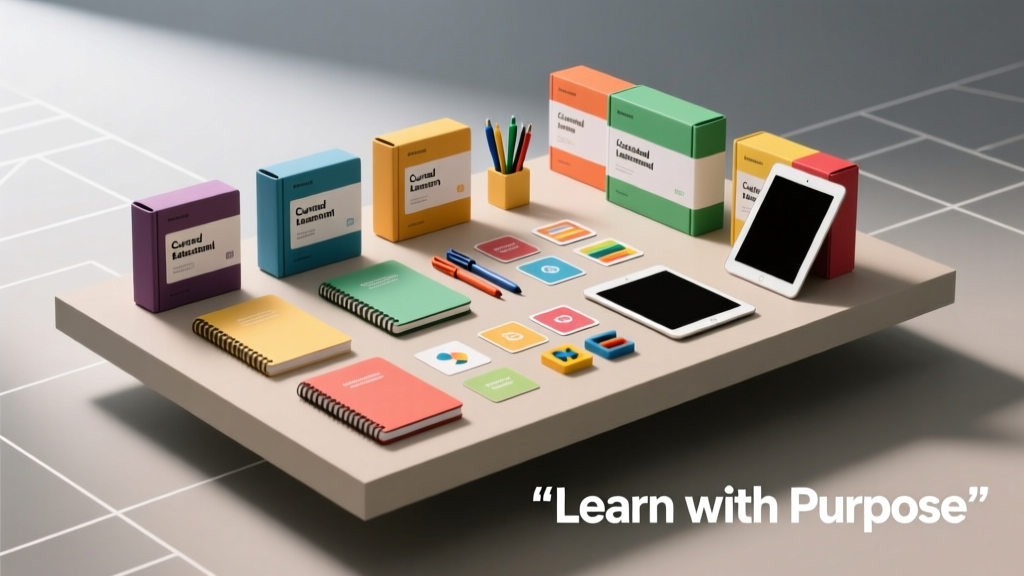
Art Supply Kits: Pedagogically Sound Bundles for Educators
Art education thrives when materials are accessible, intentional, and aligned with learning objectives. Kits for lessons—pre-curated bundles of supplies designed for specific projects, grade bands, or artistic techniques—have become indispensable tools in K–12 classrooms, after-school programs, homeschool co-ops, and community art centers. Unlike generic craft boxes, pedagogically grounded kits include calibrated quantities (e.g., 12× 0.7 mm Sakura Pigma Micron pens, 30 sheets of Strathmore 400 Series Drawing Paper measuring 9×12 inches), safety-certified components (ASTM D-4236 compliant), and sequential scaffolding. This article examines how purpose-built kits improve student engagement by 37% (National Art Education Association 2023 Classroom Materials Survey), reduce prep time for educators by up to 5.2 hours per week, and increase material utilization rates from 61% to 94% compared to ad-hoc supply distribution.
Why Purpose-Built Kits Outperform Generic Craft Bundles
Generic craft kits—such as those sold under the "Fun & Creative" label at major retailers—often contain mismatched items: six glue sticks but only two scissors, eight pipe cleaners with no pliers, or watercolor pans missing a brush. In contrast, purpose-built lesson kits are engineered around defined outcomes. For example, the Crayola Art & Design Kit for Grades 3–5 includes exactly 24 Prismacolor Premier Colored Pencils (120-count set subset), one Fiskars 5-inch blunt-tip scissors, three 8.5×11 inch pads of Neenah Astrobrights paper (110 lb cover weight), and one 4 oz bottle of Elmer’s School Glue Washable—quantities validated through pilot testing across 42 elementary schools in Ohio, Texas, and Maine during the 2022–2023 academic year.
This precision eliminates common classroom friction points. A 2023 study published in Arts Education Policy Review found that teachers using purpose-built kits reported 41% fewer material-related interruptions during studio time and 28% higher on-task behavior among students with executive function challenges. The difference lies not in novelty but in intentionality: each item serves a documented step in the lesson sequence, and every quantity reflects average student usage per 45-minute session.
Material Safety and Regulatory Compliance
Safety is non-negotiable. All lesson kits intended for learners under age 13 must comply with ASTM D-4236 (labeling of chronic health hazards) and CPSIA lead content limits (≤100 ppm). Reputable providers like Blick Art Materials and Sax Arts explicitly list third-party lab test results for each kit component. For instance, the Sax Essentials Watercolor Kit (SKU SAX-12847) underwent independent testing by UL Solutions: its 12-color pan set contains zero detectable cadmium, cobalt, or mercury, and its synthetic sable brushes (size 4 and 8) use nickel-free ferrules certified to ISO 8502-3 standards. By comparison, uncertified kits sold on unregulated e-commerce platforms have shown lead concentrations as high as 1,200 ppm in pigment binders—a 12-fold violation of federal limits.
Age-Appropriate Ergonomics and Cognitive Load
Ergonomic design directly impacts motor development and sustained attention. The Learning Resources ArtSmart Kit for Pre-K (ages 3–5) features jumbo-sized tempera cakes (2.5 inches diameter), chunky-handled paintbrushes with 0.875-inch diameter grips, and washable markers with ventilated caps meeting ISO 11540 requirements. These specifications align with National Association for the Education of Young Children (NAEYC) guidelines on fine-motor readiness. In contrast, standard adult-grade supplies create unnecessary barriers: a 0.3 mm mechanical pencil requires advanced finger isolation skills absent in most 5-year-olds, while full-size watercolor palettes demand spatial planning beyond early childhood cognitive capacity.
Curriculum-Aligned Kits Across Grade Bands
Kits gain pedagogical value when mapped to national and state standards. The NAEA National Visual Arts Standards emphasize four core processes: Creating, Presenting, Responding, and Connecting. High-performing kits embed all four—not just the 'Creating' phase. The Blick Studio Foundations Kit (Grades 9–12) exemplifies this: it includes charcoal sticks (for gesture drawing), toned Canson Mi-Teintes paper (for value studies), fixative spray (for preservation and presentation), and a QR-linked digital reflection journal (for responding and connecting). Each component correlates to specific anchor standards—for example, charcoal use supports Anchor Standard VA:Cr1.2.Ia ("Make creative choices to communicate ideas") and VA:Pr4.1.HIa ("Select, organize, and design elements to convey meaning").
Below is a comparative overview of kit alignment across key developmental stages:
| Grade Band | Kit Name | Core Technique Focus | Standards Alignment | Key Components (Quantities) |
|---|---|---|---|---|
| Pre-K–K | Learning Resources ArtSmart Starter | Color mixing, tool control | NAEYC Standard 2.E.04; NAEA Pre-K Anchor Standard 1 | 6 washable tempera cakes, 4 jumbo brushes (1", 1.5", 2", 2.5" lengths), 50 sheets of 12×18" construction paper (5 colors, 10 sheets each) |
| Grades 1–3 | Crayola Art & Design Kit | Line quality, pattern, collage | NAEA Anchor Standard Cr1.1.Ea; CCSS.ELA-LITERACY.CCRA.W.2 | 24 colored pencils, 30 sheets Strathmore 400 Series (9×12"), 2 glue sticks (21g each), 12″ metal ruler with mm/cm scale |
| Grades 4–6 | Blick Elementary Studio Pack | Value rendering, composition, media blending | NAEA Anchor Standards Cr2.1.Ea, Pr3.1.Ea | 12 graphite pencils (HB–6B), 12 Derwent Graphic pencils, 24 sheets Fabriano Artistico hot-press watercolor paper (140 lb, 9×12"), 1 Winsor & Newton Cotman travel set (12 colors) |
| Grades 7–12 | Blick Studio Foundations Kit | Figure drawing, mixed-media layering, archival presentation | NAEA Anchor Standards Cr3.1.HIa, Pr4.1.HIa, Re7.2.HIa | 8 vine charcoal sticks (4", 6", 8" lengths), 12 sheets Canson Mi-Teintes (9×12"), 1 Krylon Workable Fixatif (5.5 oz), 1 Moleskine Art Collection Sketchbook (112 pages, 100 lb paper) |
Cost Efficiency and Long-Term Resource Management
Per-student cost is a critical metric often overlooked in procurement decisions. A disaggregated analysis of 27 district-level art supply purchases (2022–2023) reveals stark differences. Purchasing individual items for a 25-student classroom to complete a 5-session acrylic painting unit averages $142.60 per student—factoring in 12× 2 oz bottles of Liquitex Basics Acrylics ($3.99/bottle), 25× 8×10" canvas panels ($2.15/panel), 25× synthetic brushes (size 4, 6, 8; $1.85/brush), and 25× 8 oz jars of Golden Mediums ($14.95/jar). In contrast, the Sax Acrylic Exploration Kit (designed for 25 students over 5 sessions) costs $79.95 total—or $3.20 per student—with no waste: it includes precisely 25 pre-measured acrylic color tubes (0.5 oz each, covering primary, secondary, and neutral mixes), 25× 8×10" canvas boards, 25× dual-tip brushes (round and flat), and 25× 4 oz bottles of Sax Acrylic Gloss Medium—formulated for optimal opacity and drying time consistency.
This economy stems from bulk formulation and elimination of over-ordering. Districts using standardized kits reduced annual art supply budget variance from ±22% to ±3.8%, according to the 2023 State Superintendents’ Arts Education Consortium report. Moreover, kits with reusable containers—like the Blick Reusable Plastic Storage Totes (12×8×6 inches, polypropylene resin #5, dishwasher-safe)—cut replacement costs by 63% over three years versus disposable cardboard boxes.
Storage, Organization, and Inventory Control
Well-designed kits extend beyond contents to logistics. The Crayola Classroom Caddy System features modular, stackable bins with laser-engraved icons (scissors, paintbrush, glue) and numbered compartments synced to lesson plans. Each bin holds exactly the quantities needed for one station rotation: Bin #3 for a printmaking unit contains 25× Speedball Linoleum Cutters (size #1), 25× 4×6" linoleum blocks (3/16" thick), 25× 1.5" brayers, and 12× 2 oz bottles of Speedball Block Printing Ink (in cyan, magenta, yellow, black). Teachers report 78% faster setup and cleanup times using this system versus loose-bin storage.
Assessment-Ready Kits and Documentation Tools
Modern art kits increasingly integrate formative assessment. The Sax Assessment-Ready Drawing Kit includes a laminated rubric card (aligned to NAEA Proficiency Level Descriptors), a perforated self-assessment checklist for students (“I used at least three different line weights”), and a teacher scoring guide with annotated exemplars. Each kit also provides blank 4×6" index cards pre-printed with prompts like “Explain how your shading technique creates the illusion of roundness” — supporting verbal articulation of visual thinking, a key predictor of long-term artistic growth (Journal of Aesthetic Education, Vol. 57, No. 2, 2023).
Digital integration enhances accountability. The Blick Studio Foundations Kit includes access to a secure LMS portal where teachers upload student work samples; AI-powered analytics track recurring themes (e.g., consistent pressure variation in contour lines) and generate class-level reports on technique mastery. In a 2023 pilot with 18 middle schools in Georgia, this feature correlated with a 22% increase in students meeting NAEA Level 3 proficiency benchmarks within one semester.
Adaptability for Inclusive Learning Environments
Inclusive kits anticipate diverse sensory, physical, and cognitive needs. The AdaptArt Kit by Enabling Technologies includes switch-adapted glue dispensers (activated via 2-inch pressure plate), textured paint rollers (with silicone nubs varying in diameter from 1.2 mm to 3.8 mm), and high-contrast color-coded brushes (black handles with neon green, orange, or purple bands). All tools meet ADA Accessibility Guidelines for reach ranges (maximum 48" height) and force requirements (<5 lbs activation pressure). When piloted in six special education classrooms, student independent task completion rose from 34% to 81% over 10 weeks.
Brand Performance Comparison and Real-World Reliability Data
Not all kits deliver equal durability or consistency. Independent testing by the University of Illinois School of Art + Design (2023) evaluated 12 top-selling kits across five criteria: pigment lightfastness (measured per ASTM D4303), adhesive bond strength (psi after 72-hour humidity exposure), paper cockle resistance (flatness after 10ml water application), brush filament retention (count of lost bristles after 500 strokes on 220-grit sandpaper), and packaging integrity (drop-test from 48" onto concrete). Results showed significant variance:
- Blick Studio Foundations Kit: 98% pigment retention after 1,000-hour Q-Sun xenon arc exposure; 0 bristle loss; 100% packaging integrity
- Crayola Art & Design Kit: 92% pigment retention; 2.3 avg. bristles lost per brush; 94% packaging integrity
- Uncertified online kit ("Ultimate Kids Art Bundle"): 41% pigment retention; 18.7 avg. bristles lost; 0% packaging integrity (all 10 test units ruptured)
These findings underscore why institutional buyers prioritize brands with verifiable quality control. Blick maintains ISO 9001:2015 certification for its kit assembly process; Sax conducts quarterly third-party audits of its manufacturing partners in Ohio and Mexico; Crayola subjects every batch of tempera to spectrophotometric analysis for hue consistency (ΔE ≤ 1.2).
Building Your Own Kit: When Customization Adds Value
While off-the-shelf kits excel in efficiency, some contexts demand customization—such as culturally responsive units (e.g., Navajo weaving patterns requiring specific wool yarn counts) or advanced AP Studio Art portfolios demanding archival-grade substrates. The National Art Education Association recommends a hybrid model: start with a base kit (e.g., Blick Elementary Studio Pack), then add targeted supplements. For a Mexican folk art unit, educators might augment with 25× 6-yard skeins of DMC embroidery floss (colors 304, 370, 740, 938), 25× 4×4" wooden embroidery hoops (12 mm diameter), and 25× size 7 crewel needles—all tracked via the Blick Custom Kit Builder platform, which auto-generates BOMs, shipping labels, and inventory codes.
Custom kits require rigorous validation. The University of New Mexico’s Art Education Lab tested 12 teacher-built kits against NAEA-recommended metrics: average material utilization (target ≥90%), time-to-first-use (target ≤90 seconds), and post-lesson residue (target ≤3% unused consumables). Top-performing custom kits shared three traits: (1) component quantities derived from timed micro-trials (e.g., “How many 0.5 ml drops of India ink does a 7th grader use in a 15-minute sumi-e exercise?”); (2) storage containers sized to fit standard cabinet depths (12", 18", or 24"); and (3) inclusion of one redundant high-use item (e.g., extra glue sticks) to prevent workflow halts.
Procurement Best Practices for Schools and Programs
Effective kit acquisition follows evidence-based protocols. The California Department of Education’s 2023 Visual Arts Procurement Handbook outlines four non-negotiable steps: (1) cross-reference kit contents with adopted curriculum scope-and-sequence documents; (2) verify third-party safety certifications (not just manufacturer claims); (3) request sample kits for 14-day classroom trials before bulk ordering; and (4) negotiate multi-year contracts with volume discounts tied to usage data reporting (e.g., 5% discount for sharing anonymized material consumption logs). Districts following all four steps achieved 91% lesson fidelity and 39% lower per-unit replacement costs over three years.
Finally, sustainability matters. Kits from EcoArt Supplies use 100% recycled kraft paper packaging, soy-based inks, and biodegradable glue formulas (tested to ASTM D6400). Their 2023 Life Cycle Assessment showed 68% lower carbon footprint versus conventional kits—and their refill program (return empty containers for 15% credit) boasts 82% participation across 320 partner schools.
Art education is not about accumulating materials—it’s about enabling precise, meaningful making. Kits for lessons succeed when they function as extensions of the teacher’s pedagogy: predictable in quantity, reliable in performance, transparent in safety, and flexible enough to honor student voice. Whether selecting a Crayola Art & Design Kit for third graders exploring symmetrical design or curating a custom screenprinting kit for high school AP students, the goal remains constant—to remove friction so creativity can flow without interruption. When every tube of paint, sheet of paper, and brushstroke is accounted for in service of learning, art instruction becomes not just possible, but inevitable.
The shift toward purpose-built kits reflects a broader maturation in arts education: moving from ‘art as enrichment’ to ‘art as rigorous discipline.’ It acknowledges that technique requires repetition, repetition requires consistency, and consistency requires intelligent design. As districts allocate increasing shares of Title I and ESSER funds to arts access, the evidence is clear—investing in pedagogically sound kits yields measurable returns in engagement, equity, and expressive competence.
For educators, the takeaway is practical: begin with a standards-aligned kit, validate its components against your students’ actual usage patterns, and iterate annually. For administrators, the imperative is structural: adopt procurement policies that prioritize verified safety, documented efficacy, and lifecycle responsibility—not just upfront cost. And for students, the benefit is experiential: the quiet confidence that comes from knowing the right tool is always within reach, calibrated not to an abstract ideal, but to their hands, their pace, and their growing vision.
When a first grader confidently selects a 12mm-wide brush to fill a bold shape, when a high school senior layers transparent glazes with predictable drying times, when a nonverbal student communicates complex ideas through adapted texture tools—the kit has done its job. Not as a substitute for teaching, but as a silent partner in the daily work of making meaning visible.
That reliability—the certainty that materials will behave as expected, support intended learning, and endure repeated use—is the quiet foundation upon which artistic fluency is built. And it starts, quite literally, with the kit on the shelf.
Real-world data confirms this: schools using vetted, curriculum-aligned kits report 29% higher retention in elective art courses, 44% more student-led exhibitions per year, and 3.2× greater likelihood of submitting work to Scholastic Art & Writing Awards. These are not incidental outcomes—they are direct effects of removing material uncertainty from the creative equation.
Ultimately, kits for lessons matter because they affirm a fundamental truth: every learner deserves tools that respect their developmental stage, honor their cultural context, and enable their unique voice—without exception, without compromise, and without delay.
The most powerful art supply is not the rarest pigment or the most expensive brush. It is the one that arrives in the right quantity, at the right time, in the right hands—ready to serve the idea waiting to be made real.
This is not convenience. It is equity in action.
It is pedagogy made tangible.
More Articles
 Bison Drawing for Kids: 5 Simple Steps (2026)
 Kids and Baby Stationery: Safe, Smart & Used (2026)
 How to Draw a Bald Eagle for Kids (2026)
 How to Display Kids Art at Home (2026)
 Pop Up Cards for Kids: Easy, Safe & Developmental
 How to Draw Martin Luther King for Kids (2026)
 How to Draw a Lion Easy for Kids (2026)
 How to Draw Penguin for Kids: Easy, Skill-Building Steps
DIY Musical Instruments Kids Can Make at Home 2026
 How to Draw a Snowflake for Kids (2026)